

Phase 1: 공감 (Story-Immersive Opening)
안녕하세요! 매일한글 에디터입니다.
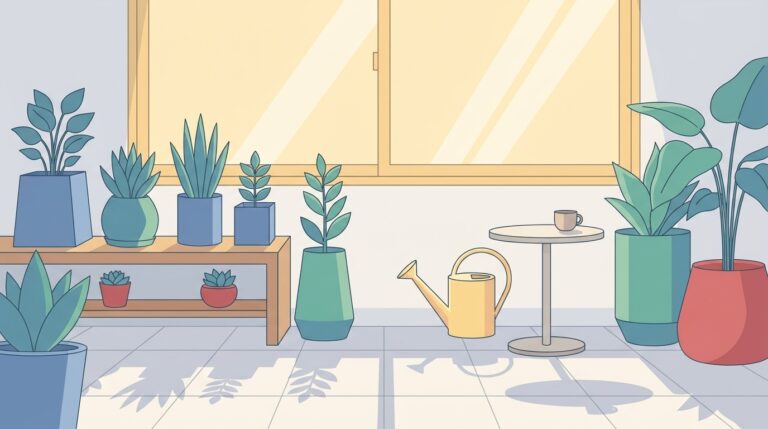
Imagine this: You are staying at a sunlit Airbnb in Seoul or visiting your Korean friend’s apartment in Mapo on a lazy Saturday morning. Gentle sunshine filters through the floor-to-ceiling glass windows of the apartment veranda. Your friend walks out wearing comfy slippers, holds up a cute watering can, turns to you with a warm smile, and says: “꽃에 물 좀 줄래요?” (Kkote mul jom jullaeyo? / Could you water the flowers?)
Suddenly, your mind freezes. You know the word for water (mul), and you know flowers (kkot). But how do you answer? Do you say you will “drink” the water? Do you “pour” it? In Korean, do we say “water the plant” like in English, or is there a completely different cultural way of looking at it?
Taking care of indoor plants is one of the biggest daily rituals in Korean households. In fact, many of our beginner students tell us they feel nervous when invited into a Korean home because everyday plant talk comes up so naturally! Don’t worry. This guide is built directly from real student questions and daily Seoul life to help you speak with total confidence. By the end of this 5-minute chat, you will be watering, caring for, and talking about plants just like a mindful local friend!
Phase 2: 핵심 표현 3선 심층 분석 (Core Expressions Deep Dive)
1. 꽃에 물 줘요 (Kkote mul jwoyo)
- Pronunciation: [Kkot-e mul jwo-yo] (Sounds like “coat-eh” + “mool” + “jwo-yo”)
- Meaning: Literal: “Give water to the flower” | Real Nuance: “I am watering the flowers” or “Please water the plant.”
- K-Culture Moment: In cozy romance K-dramas, the gentle male lead is almost always shown watering small potted plants on his balcony while having an introspective morning moment.
- Editor’s Insight: Notice that Korean does not use a single verb for “to water” like English does. Instead, we use the verb 주다 (juda / to give). You are literally offering water as a gift of life to the plant!
- Situation Spectrum: Casual: ✅ | Semi-formal: ✅ | Formal: ⚠️ (In formal speeches or reports, use 꽃에 물을 줍니다)
- 🤔 Think About It: English treats “water” as an action performed onto an object (“I water the plant”). Why do you think Korean conceptualizes plant care as “giving” something to a living receiver?
2. 흙이 말랐어요 (Heulgi mallasseoyo)
- Pronunciation: [Heul-gi mal-la-sseo-yo] (Sounds like “hool-ghee” + “mal-lah-ssuh-yo”)
- Meaning: Literal: “The soil dried” | Real Nuance: “The soil is dry / It looks thirsty.”
- K-Culture Moment: In Korean lifestyle vlogs, plant owners poke the dark earth with a wooden chopstick and whisper this exact phrase before reaching for the water jug.
- Editor’s Insight: Even though the soil is dry right now, Koreans naturally use the past tense 말랐어요 (mallasseoyo) because the drying process already happened. It tells the listener that action is needed now!
- Situation Spectrum: Casual: ✅ | Semi-formal: ✅ | Formal: ✅
- 🤔 Think About It: When checking if a houseplant needs care, do you say “the soil is dry” or focus on the plant’s leaves in your native language?
3. 햇빛을 좋아해요 (Haetbicheul joahaeyo)
- Pronunciation: [Haet-bi-cheul jo-a-hae-yo] (Sounds like “hat-bee-chul” + “jo-ah-hae-yo”)
- Meaning: Literal: “It likes sunlight” | Real Nuance: “This plant thrives in bright, sunny spots.”
- K-Culture Moment: When visiting a plant nursery at Yangjae Flower Market, the friendly shop owner will gently pat a succulent and tell you this phrase with genuine affection.
- Editor’s Insight: Beginners are often taught that 좋아해요 (joahaeyo / likes) is only for people or pets. But Koreans frequently personify plants! It expresses emotional warmth toward living things.
- Situation Spectrum: Casual: ✅ | Semi-formal: ✅ | Formal: ✅
- 🤔 Think About It: Does personifying nature make people take better care of their environment? How does your culture talk about what plants need?
Phase 3: 교과서 한국어 vs 진짜 한국어 (Textbook vs. Real Korean)
Situation 1: Telling someone you are going to water the plants
- 📖 교과서 한국어 (Textbook): 화분에 물을 줍니다. (Hwabune muleul jumnida.) — “I give water to the flowerpot.”
- 🗣️ 진짜 한국어 (Real Korean): 꽃에 물 줘요. (Kkote mul jwoyo.) / 화초에 물 좀 줘야겠어요. (Hwachoe mul jom jwoyagesseoyo.) — “I water the flowers / I really should give some water to the plants.”
- 💡 왜 다를까? (Why is it different?): Textbooks use rigid, formal endings (-nida) and stiff words like 화분 (flowerpot). Native speakers speak warmly to friends using the polite -a/eoyo style and refer directly to the living blossoms (꽃) or foliage (화초) rather than the container!
Situation 2: Noting that a plant is completely dried out
- 📖 교과서 한국어 (Textbook): 식물이 건조합니다. (Singmuri geonjohamnida.) — “The vegetation is arid.”
- 🗣️ 진짜 한국어 (Real Korean): 흙이 바짝 말랐어요! (Heulgi bajjak mallasseoyo!) — “The soil is bone dry!”
- 💡 왜 다를까? (Why is it different?): The word 건조하다 sounds like an official humidity broadcast on the evening news. Native speakers use evocative sound-symbolic adverbs like 바짝 (bajjak / completely dried up) and point directly to the soil (흙).
Phase 4: K-Culture 딥다이브 & 비언어적 매너 (Deep Dive & Manners)
4-1. 눈치 (Nunchi) & Polite Physical Etiquette
- The Two-Finger Touch: When checking a Korean friend’s plant, never yank or squeeze the leaves. Use the gentle Korean plant-nunchi move: lightly press the surface of the soil with your index and middle fingers to feel moisture.
- Two-Hand Pouring: If you are using a heavy ceramic watering can or if an older host hands you the pitcher, receive and hold it with both hands (or place your left hand gently under your right forearm) to show consideration and respect.
4-2. The Rise of ‘Pet Plants’ (반려식물) in High-Rise Life
Over 60% of South Koreans live in modern apartment complexes. Because many city dwellers cannot keep dogs or cats due to building rules or busy office schedules, the trend of 반려식물 (banlyeosikmul / companion plants) has exploded across Korean society. The glass-enclosed 베란다 (beranda / apartment veranda) has turned into a tranquil oasis. Watering these green friends on weekend mornings is considered top-tier “healing” (힐링) culture!
Phase 5: 실전 롤플레이 시나리오 (Real Roleplay Scenario)
Setting: It is 10:30 AM on a bright Sunday in Seoul. You are standing on the sunny veranda of your Korean friend, Yuna (유나), surrounded by lush monsteras and cute flowering pots.
- Turn 1 (Yuna): 오늘 날씨 진짜 좋다! 우리 꽃에 물 줄까? (Oneul nalssi jinjja jota! Uri kkote mul julkka?) [🎭 Smiling brightly and handing you a vintage green watering can] — “The weather is wonderful today! Shall we give water to the flowers?”
- Turn 2 (You): 좋아요! 제가 물 줄게요. (Joayo! Jega mul julgeyo.) [🎭 Accepting the watering can politely with two hands] — “Sounds great! I will water them.”
- Turn 3 (Yuna): 고마워요! 먼저 이 화분 흙 만져볼래요? (Gomawoyo! Meonjeo i hwabun heulk manjyeobollaeyo?) [🎭 Pointing softly at a terracotta pot on the wooden stool] — “Thank you! Would you like to touch the soil of this pot first?”
- Turn 4 (You): 어, 흙이 바짝 말랐어요! (Eo, heulgi bajjak mallasseoyo!) [🎭 Tapping the dry surface gently with your fingertip] — “Oh, the soil is bone dry!”
- Turn 5 (Yuna): 맞아요, 물이 필요해요. 천천히 부어주세요. (Majayo, muri piryohaeyo. Cheoncheonhi bueojuseyo.) [🎭 Gesturing a slow, gentle pouring motion with her hands] — “Right, it needs water. Please pour it slowly.”
- Turn 6 (You): 이 꽃은 햇빛을 좋아해요? (I kkocheun haetbicheul joahaeyo?) [🎭 Looking toward the warm window and tilting the spout] — “Does this flower like sunlight?”
- Turn 7 (Yuna): 네! 창가 쪽 햇빛을 제일 좋아해요. (Ne! Changga jjok haetbicheul jeil joahaeyo.) [🎭 Beaming proudly as the water sinks into the rich earth] — “Yes! It loves the window sunlight the most.”
- Turn 8 (You): 이제 꽃이 기분 좋아 보여요! (Ije kkochi gibun joa boyeoyo!) [🎭 Wiping your hands on a small towel with a satisfied smile] — “Now the flower looks happy!”
🔀 인터랙티브 분기점 (Interactive Choice)
Yuna suddenly points to a small, spiky cactus sitting in the shade. How do you respond?
* Choice A: “선인장은 물을 자주 안 줘도 돼요?” (Seoninjangeun muleul jaju an jwodo dwaeyo? / Does the cactus not need frequent watering?)
* 👉 [Best Feedback]: Fantastic! You show both great Korean communication and plant common sense. Yuna will admire your conversational curiosity!
* Choice B: “선인장한테 물 많이 부었어요!” (Seoninjanghante mul mani bueosseoyo! / I poured lots of water on the cactus!)
* 👉 [Bad Feedback]: Yikes! Overwatering kills cacti. Yuna might rush over with dry tissues in sheer panic!
* Choice C: “그냥 물 주지 마.” (Geunyang mul juji ma. / Just don’t give it water.)
* 👉 [Risk Feedback]: Dropping the polite -yo ending turns this into blunt banmal (informal talk), which sounds harsh and commanding to a friend who is hosting you.
Phase 6: 10초 감정 섀도잉 드릴 (10-Second Shadowing Drill)
Practice these lines out loud! Pause briefly at the slashes (/) and embody each emotion:
[😊 밝고 활기차게 / Bright and cheerful]- “오늘 / 꽃에 물 / 줘요!” (Oneul / kkote mul / jwoyo!) — “Today, / I water / the flowers!”
[😮 깜짝 놀라며 / Surprised and alert]- “어? / 흙이 / 바짝 말랐어요!” (Eo? / heulgi / bajjak mallasseoyo!) — “Oh? / The soil / is bone dry!”
[🥰 다정하고 따뜻하게 / Loving and tender]- “이 식물은 / 햇빛을 / 아주 좋아해요.” (I singmureun / haetbicheul / aju joahaeyo.) — “This plant / sunlight / likes very much.”
Phase 7: K-Culture 미니 사전 (Mini Dictionary)
- 반려식물 (Banlyeosikmul) | Companion / Pet Plant | Formed by uniting 반려 (companion) and 식물 (plant). It highlights the modern emotional bond between urban Koreans and their greenery.
- 물뿌리개 (Mulppurigae) | Watering Can | A compound word of 물 (water) and 뿌리개 (sprinkler/dispenser). It is the standard native Korean term for a watering can.
- 베란다 (Beranda) | Veranda / Balcony | The enclosed balcony found in Korean apartments where plants, laundry drying, and morning teas converge.
- 분갈이 (Bungari) | Repotting | Combining 분 (flowerpot) and 갈이 (changing). When spring arrives, Korean hardware stores and plant shops fill up with soils and pots for bungari.
Phase 8: 여행자를 위한 생존 키트 (Traveler’s Survival Kit)
Top 3 Survival Expressions
- “꽃집이 어디에 있어요?” (Kkotjibi eodie isseoyo?) — Where is the flower shop?
- Pro Tip: Neighborhood flower shops in Seoul often sell adorable mini-succulents in ceramic mugs that make wonderful aesthetic gifts.
- “물 얼마나 자주 줘요?” (Mul eolmana jaju jwoyo?) — How often do I give water?
- Pro Tip: Use this anytime you buy a plant or ask your Airbnb host how to help around the house.
- “실내에서 키우기 쉬워요?” (Silnaeeseo kiugi swiwoyo?) — Is it easy to raise indoors?
- Pro Tip: Perfect for asking market sellers about hardy, low-light apartment plants.
Editor’s Travel Note
If you love green spaces, you must visit the historic Yangjae Flower Market (양재 꽃시장) in southern Seoul. It is Korea’s largest indoor plant paradise! Before heading out, make sure to finish your 네이버 지도 앱 다운로드 so you can effortlessly ride the Shinbundang subway line to Yangjae Citizen’s Forest Station. Small plant shops welcome credit cards, but carrying ₩5,000 or ₩10,000 cash notes makes buying cute mini-pots much faster!
Phase 9: “한 발 더 깊이” (One Step Deeper)
In Korean culture, nature is never treated as a cold, inanimate object waiting to be tamed. Instead, it is invited indoors as a living guest that shares your living space. Notice how native speakers instinctively say “꽃에 물을 주다” (to give water to a flower), employing the exact same verb 주다 that a mother uses when handing a warm meal to her family. In the middle of Seoul’s relentless high-speed life, taking three quiet minutes on a balcony to share water with a green companion is an essential act of mindfulness.
💬 Your Turn: Do you keep plants on your windowsill or balcony at home? What kind of plant is it, and does it like sunlight? Tell me in Korean in the comments below!
Phase 10: FAQ & 오해 방지 (FAQ Schema)
Q: Can I say “꽃을 물 줘요” instead of “꽃에 물 줘요”?
A: It is much better to use 에 (e / to)! In Korean grammar, the water is the direct object being given (물을 줘요), while the flower is the living recipient (꽃에). Saying 꽃에 물 줘요 sounds crisp, natural, and native.
Q: What is the difference between 식물 (singmul) and 화초 (hwacho)?
A: 식물 (singmul) is the broad biological term for all plant life (flora). 화초 (hwacho) specifically designates ornamental houseplants, flowering potted plants, and balcony greenery grown for beauty.
Q: Is it okay to touch potted plants inside hip Seoul cafes?
A: Look with your eyes and take photos, but avoid touching soil or plucking leaves. If you are shopping at a plant market and want to check a leaf’s texture, always politely ask the owner first: “만져봐도 돼요?” (Manjyeobwado dwaeyo? / May I touch it?).
🚨 흔한 실수 (Common Mistakes) 경고판
- Mistake: Saying “꽃이 물 마셔요” (The flower drinks water) when offering plant care.
- Correct Action: While cute in children’s books, humans and animals drink (마시다). When you are performing the action of watering, say: 꽃에 물 줘요 (Kkote mul jwoyo).
- Mistake: Pronouncing 꽃에 as a disconnected “kkot-eh” with a hard stop.
- Correct Action: Korean sound liaison rules connect the final consonant to the vowel. It sounds smoothly like [꼬체 / kkoche]!
- Mistake: Forgetting the polite ending and saying “물 줘!” to a host or acquaintance.
- Correct Action: Always attach the polite ending -요 (-yo): say “물 줘요” (mul jwoyo) or offer your help with “물 드릴게요” (mul deurilgeyo).
Phase 11: 액션 미션 & 참여 유도 (Action Missions)
- 🥉 Bronze Mission (Solo Drill): Walk up to any potted plant or cup in your home right now. Point at it and say out loud 3 times: “꽃에 물 줘요!” with a big, friendly smile.
- 🥈 Silver Mission (Social Share): Snap a quick photo of a flower or plant you see today. Share it on your Instagram Story with the sticker text: “#반려식물 흙이 말랐어요! 🌿” and tag us at @DailyHangul!
- 🥇 Gold Mission (Real-Life Challenge): Next time you visit a Korean florist, cafe with plants, or talk with a Korean speaker, ask them: “이 식물, 햇빛 좋아해요?” (Does this plant like sunlight?).
- 🎮 K-Culture Mission: Watch one episode of a slice-of-life K-drama (like Hospital Playlist or Summer Strike) and spot an apartment veranda with companion plants!
Phase 12: 인터랙티브 퀴즈 챌린지 (Interactive Quiz Challenge)
1. Situation Judgment: You visit your Korean friend’s studio apartment. You notice her succulent’s pot has completely dry dirt. What is the most natural, helpful phrase to say?
* A) 흙이 바짝 말랐어요! 물 줄까요? (Heulgi bajjak mallasseoyo! Mul julkka?)
* B) 식물이 사망했습니다. (Singmuri samanghaessumnida.)
* C) 물을 빨리 마시세요! (Muleul ppalli masiseyo!)
2. Fill in the Blank: Complete the natural expression:
꽃____ 물을 줘요. (Hint: The particle that means “to the flower”)
3. True or False: In Korea, referring to plants as 반려식물 (companion plants) and saying they 햇빛을 좋아해요 (like sunlight) is considered childish and should never be used by adults.
* True / False
👉 Click to reveal answers & explanations!
- Answer: A — 흙이 바짝 말랐어요! 물 줄까요? (“The soil is bone dry! Shall I give water?”) is caring, polite, and completely native! (Option B sounds like a dramatic police report, and Option C tells your friend to drink water!)
- Answer: 에 (e) — The full sentence is 꽃에 물을 줘요 (Give water to the flower).
- Answer: False — Quite the opposite! Even adults, nursery experts, and lifestyle magazines warmly personify plants using words like 반려식물 and 좋아해요 every single day in Korea.







