

Phase 1: 공감 (Story Immersion Opening)
안녕하세요! 매일한글 에디터입니다.
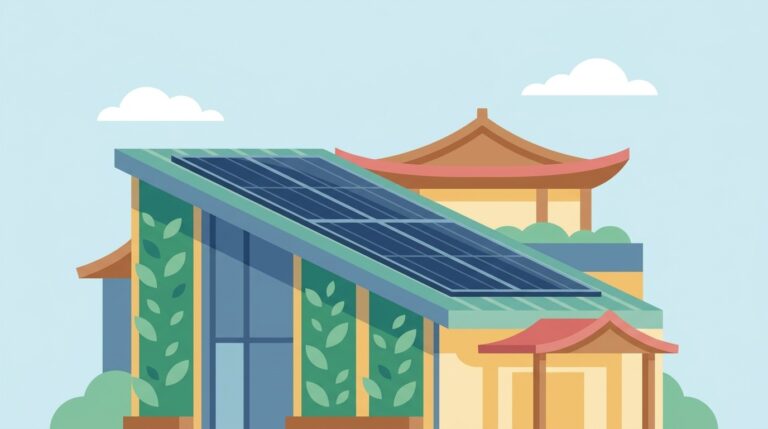
Picture this: You are standing in a glass-walled boardroom on the 32nd floor of a premier architectural firm in Teheran-ro, Gangnam. Across the mahogany table sit the chief structural director, municipal zoning liaisons, and senior sustainability auditors. You open your project portfolio to present the technical blueprint for an ambitious residential high-rise aiming for Tier 1 Zero-Energy Building (ZEB) certification. You know your calculations inside and out in English: solar heat gain coefficients, life cycle assessment (LCA), bioclimatic envelopes, and embodied carbon footprints. But as the executive director leans forward and asks, “이번 설계안에서 외단열 시스템 적용 시 열교 현상 방지와 탄소 저감 자재의 경제성 타당성은 어떻게 입증하실 계획입니까?”, your brain suddenly freezes.
Many high-level non-native engineers and architects hit a daunting wall at this exact juncture. General conversational Korean or even intermediate business honorifics fall drastically short when addressing the rigorous rhetoric of high-stakes infrastructure negotiations. In Korea’s hyper-competitive construction and engineering sphere, technical competence is judged not only by computational data, but by how authoritatively you weave Sino-Korean regulatory terminology into seamless, diplomatically persuasive arguments.
This C2 masterclass is tailored specifically for seasoned engineers, project leads, and urban planners. Built upon extensive debriefs with foreign structural specialists operating in Seoul’s smart-city initiatives, this guide equips you with the native-level lexical precision and pragmatic decorum necessary to command boardroom respect and spearhead sustainable infrastructure projects across South Korea.
Phase 2: 핵심 표현 3선 심층 분석 (Core Expressions Deep Dive)
1. 단열 성능을 극대화하여 패시브 하우스 기준을 충족시키다
- Pronunciation: [Dan-yeol seong-neung-eul geuk-dae-hwa-ha-yeo pae-ssi-beu ha-u-seu gi-jun-eul chung-jok-si-ki-da] (Pronounce ‘Dan-yeol’ smoothly like ‘dahn-yuhl’, with ‘geuk-dae-hwa’ hitting crisp plosives similar to ‘cook-day-hwa’)
- Meaning: Literal: “Maximize insulation performance and satisfy passive house criteria.” / Nuance: Asserting an uncompromising, high-specification thermal envelope design that guarantees structural energy efficiency without external heating or cooling crutches.
- K-Culture Moment: In corporate legal/engineering K-dramas like Agency or Misaeng, when an elite infrastructure specialist defends an elevated construction budget against cynical financial executives, they deploy this phrasing to establish undeniable technical authority.
- Editor’s Insight: The phrase
충족시키다(to satisfy/meet criteria) carries an executive regulatory weight far superior to casual verbs like맞추다(to match). In Korea’s construction sector, where government green mandates tighten annually, stating that you “maximize” (극대화하다) thermal performance demonstrates technical foresight.- Situation Spectrum: Casual: 🚫 | Semi-formal: ⚠️ | Formal: ✅
- 🤔 Think About It: Does your native language separate legal regulatory compliance from technical optimization in one breath, or does it require multiple descriptive clauses?
2. 전과정 평가(LCA)에 기반한 친환경 건축 자재 수급
- Pronunciation: [Jeon-gwa-jeong pyeong-ga-e gi-ban-han chin-hwan-gyeong geon-chuk ja-jae su-geup] (Say ‘Jeon-gwa-jeong’ like ‘jun-gwa-jung’, and connect ‘su-geup’ with a crisp, punchy finale)
- Meaning: Literal: “Procurement of eco-friendly building materials based on Life Cycle Assessment (LCA).” / Nuance: Strategically securing sustainable materials while verifying cradle-to-grave ecological impact, balancing sustainability with supply-chain viability.
- K-Culture Moment: Recalls intense negotiation scenes in urban planning dramas where municipal oversight officers demand transparent verification before approving municipal land development rights.
- Editor’s Insight: Notice the word
수급(supply and demand / procurement balance). In novice Korean, learners rely heavily on구매(purchasing) or가져오기(bringing in). At the C2 level,수급indicates that you possess a comprehensive command over industry supply chains, raw material logistics, and sourcing dynamics.- Situation Spectrum: Casual: 🚫 | Semi-formal: ⚠️ | Formal: ✅
- 🤔 Think About It: How does viewing materials through their “entire life process” (
전과정) reflect holistic ecological accountability in contemporary governance?3. 제로 에너지 건축물 의무화에 선제적으로 대응하다
- Pronunciation: [Je-ro e-neo-ji geon-chung-mul ui-mu-hwa-e seon-je-jeok-eu-ro dae-eung-ha-da] (Flow through ‘ui-mu-hwa’ as ‘wee-moo-hwa’, emphasizing the sharp, forward cadence of ‘seon-je-jeok’)
- Meaning: Literal: “Preemptively respond to the mandatory zero-energy building policy.” / Nuance: Proactively adapting architectural strategy and engineering parameters ahead of shifting state regulations rather than reacting passively to compliance deadlines.
- K-Culture Moment: Heard in corporate shareholder meeting scenes in business thrillers like Reborn Rich, where forward-thinking executives pitch eco-conglomerate transformations to outmaneuver bureaucratic policy shifts.
- Editor’s Insight: The operative adverb
선제적으로(preemptively/proactively) signals leadership and strategic agility. Pairing it with대응하다transforms regulatory pressure into a competitive market advantage.- Situation Spectrum: Casual: 🚫 | Semi-formal: ⚠️ | Formal: ✅
- 🤔 Think About It: In many Western corporate contexts, regulatory adherence is often framed as a box-checking hurdle; in Korea, how does “preemptive alignment” (
선제적 대응) reflect collective civil responsibility?
Phase 3: 교과서 한국어 vs 진짜 한국어 (Textbook vs. Real Korean)
Situation 1: Discussing Structural Thermal Leaks & Insulation Strategy
- 📖 교과서 한국어: 벽에 단열재를 더 넣어서 열이 밖으로 나가는 문제를 해결해야 합니다. (We need to put more insulation into the wall to solve the problem of heat escaping outside.)
- 🗣️ 진짜 한국어: 외피 접합부의 열교 현상을 차단하기 위해 고성능 진공 단열 패널 적용을 우선적으로 검토해야 합니다. (To prevent thermal bridging at the envelope joints, we must prioritize reviewing the application of high-performance vacuum insulation panels.)
- 💡 왜 다를까?: In engineering consultations, vernacular expressions like “putting more insulation” sound amateurish. C2-level real Korean specifies the architectural zone (
외피 접합부), names the physical thermal defect (열교 현상), and utilizes industry-standard material nomenclature (진공 단열 패널).
Situation 2: Addressing Client Hesitation Regarding Green Material Premium Costs
- 📖 교과서 한국어: 친환경 자재는 처음에는 비싸지만 나중에는 에너지 절약으로 돈을 아낍니다. (Eco-friendly materials are expensive at first, but later you save money through energy savings.)
- 🗣️ 진짜 한국어: 초기 공사비 상승분은 BEMP 시뮬레이션 기반 LCC 분석상 운용 단계의 에너지 절감액을 통해 7년 이내에 손익분기점에 도달합니다. (Based on building energy modeling and life-cycle cost analysis, the initial construction cost increment reaches the break-even point within seven years via operational energy savings.)
- 💡 왜 다를까?: Professional clients and consortium stakeholders do not accept vague promises about “saving money later.” You must deploy hard quantitative concepts such as
LCC 분석(Life-Cycle Cost analysis) and손익분기점(break-even point).
Phase 4: K-Culture 딥다이브 & 비언어적 매너 (Deep Dive & Etiquette)
4-1. 눈치(Nunchi) & Architectural Boardroom Gestures
When presenting technical schematics to Korean partners, pointing with an index finger or a single pen at blueprints is perceived as aggressive and casual. Instead, hold your hands cupped slightly inward with thumbs resting naturally, gesturing toward the screen or paper with an open palm (손바닥 전체로 가리키기).
Master the diplomatic art of reading the room during technical approvals. If a senior municipal reviewer murmurs, “기술적으로는 훌륭하나, 예산과 인허가 측면에서 다각적인 검토가 필요해 보입니다” (Technically impressive, but it seems multifaceted review is needed regarding budget and licensing), this is rarely an invitation to debate. It is a culturally coded, indirect red light. Your response should never be defensive counter-arguments; acknowledge the regulatory hurdle first: “지적해 주신 행정적 리스크를 전적으로 감안하여, 보완책을 신속히 수립하겠습니다” (Fully taking into account the administrative risks you noted, we will promptly establish counter-measures).
4-2. Cultural Code: From Concrete Miracles to Smart-Eco Hegemony
For decades following the Korean War, South Korea’s structural development was driven by speed, density, and concrete mass construction, known as the Apartment Myth (아파트 공화국). However, current national policy has pivoted dramatically toward achieving Net-Zero carbon emissions. Today, massive urban renewal projects in Songdo, Sejong Smart City, and Seoul’s Magok R&D Corridor serve as testing grounds for smart microgrids, integrated solar photovoltaics (BIPV), and carbon-sequestering bioconcrete. In contemporary Korea, green infrastructure is no longer an eccentric environmental subculture—it represents national prestige and sovereign industrial resilience.
Phase 5: 실전 롤플레이 시나리오 (Real-Life Roleplay Scenario)
Setting: Executive conference room at Hanguk Engineering & Development, Samseong-dong, Seoul. Director Park (박 전무), a veteran infrastructure executive known for strict regulatory compliance, is scrutinizing your proposed Zero-Energy residential complex design.
- Turn 1 (박 전무): 이번 공공 주택 프로젝트의 ZEB 3등급 달성을 목표로 제시하셨는데, 현 설계로는 에너지 자립률 60%를 맞추기가 물리적으로 빠듯해 보입니다. (I see you targeted ZEB Tier 3 for this public housing project, but with the current design, reaching a 60% energy self-sufficiency rate looks physically tight.)
- Turn 2 (You): 🎭 Confidently adjusting the laser pointer with both hands, bringing up the microgrid envelope slide.
말씀하신 자립률 격차를 보완하고자, 창호 면적비를 최적화하고 지붕 전면에 고효율 BIPV를 통합 연계하는 방안을 확정했습니다. (To offset that self-sufficiency gap you mentioned, we have finalized a plan to optimize the window-to-wall ratio and integrate high-efficiency BIPV across the entire roof surface.) - Turn 3 (박 전무): BIPV는 기술적으로 이상적이지만, 기존 자재 대비 단위 면적당 단가가 상당하지 않습니까? 시공사 측의 반발이 만만치 않을 텐데요. (BIPV is technically ideal, but isn’t the unit cost significantly higher than conventional materials? The general contractors will push back hard.)
- Turn 4 (You): 🎭 Nodding slightly in measured empathy, speaking in a firm, grounded cadence.
초기 조달 단가는 다소 높으나, 정부의 녹색건축 인증 인센티브 및 용적률 완화 혜택을 환산하면 시공 원가 부담을 충분히 상쇄할 수 있습니다. (While initial procurement costs are somewhat high, factoring in government green building incentives and floor area ratio allowances sufficiently offsets the contractor’s construction cost burden.) - Turn 5 (박 전무): 음, 용적률 완화 인센티브라… 인허가 관청과의 사전 조율은 어느 선까지 진행되었습니까? (Hmm, floor area ratio allowances… To what extent has advance consultation with the licensing authorities proceeded?)
- Turn 6 (You): 🎭 Leaning forward subtly to indicate complete regulatory preparedness.
소관 구청 건축과와 녹색건축인증 및 ZEB 예비인증 심사 요건에 관한 사전 기술 협의를 이미 매듭지은 상태입니다. (We have already concluded preliminary technical consultations with the district architecture division regarding Green Building Certification and preliminary ZEB screening requirements.) - Turn 7 (박 전무): 🎭 Adjusting his glasses, nodding with a slight smile.
준비를 아주 치밀하게 하셨군요. 전과정 탄소 배출 저감 지표만 추가로 보완하여 다음 주 이사회에 상정합시다. (You prepared this meticulously. Complement this with the life-cycle carbon reduction metrics, and let us present it to the board next week.) - Turn 8 (You): 🎭 Bowing head crisply at a respectful 15-degree angle.
감사합니다. 명시해 주신 LCA 탄소 저감 지표를 철저히 정량화하여 완벽한 보고서로 갈무리하겠습니다. (Thank you. We will thoroughly quantify the specified LCA carbon reduction metrics and finalize an impeccable report.)
🔀 인터랙티브 분기점 (Interactive Branching Point)
At Turn 4, if Director Park challenged the initial cost, how would you reply?
- Option A: 친환경 건물이니까 돈이 많이 드는 건 당연합니다. 환경 보호가 더 중요하지 않습니까? (Because it’s an eco-friendly building, spending more money is natural. Isn’t environmental protection more important?)
- Option B: 초기 조달 단가는 다소 높으나, 정부 인센티브와 용적률 완화 혜택으로 시공 원가 부담을 상쇄할 수 있습니다. (While initial procurement costs are high, government incentives and floor area ratio allowances offset the contractor’s cost burden.)
- Option C: 그러면 BIPV를 전부 빼고 제일 싼 기본 단열재로 바꿔서 단가를 낮추겠습니다. (Then I’ll strip all BIPV and swap it for the cheapest basic insulation to lower the price.)
Detailed Feedback:
* Option A [Bad]: Displays severe cultural and financial tone-deafness. Accusing an executive of neglecting environmental ethics disregards corporate fiduciary duty and destroys client trust instantly.
* Option B [Best]: Displays C2 structural sophistication by balancing ecological integrity with strategic financial instruments (FAR mitigation, regulatory subsidies).
* Option C [Risk]: A reactive surrender that forfeits the project’s foundational green benchmark and renders you an unreliable engineering lead.
Phase 6: 10초 감정 섀도잉 드릴 (Emotional Shadowing Drill)
Practice matching the exact breath rhythm, pauses (/), and vocal gravitas of an executive engineering specialist.
[💼 결단력 있고 당당하게 - Confident & Executive]
본 프로젝트는 / 단순한 에너지 절감을 넘어 / 국가 제로 에너지 빌딩 의무화 기준을 / 선제적으로 상회하도록 / 설계되었습니다.
(Bon peurojekteu-neun / dansun-han eneoji jeolgam-eul neomeo / gukga jero eneoji bilding uimuhwa gijun-eul / seonjejeog-euro sanghoe-hadorok / seolgyedweeot-seumnida.)
“This project / goes beyond simple energy saving / and is engineered / to preemptively surpass / national mandatory zero-energy building standards.”-
[🤝 차분하고 설득력 있게 - Calm & Persuasive]
초기 투자비 회수 기간은 / 7년 내외로 산출되었으며, / 장기 운용 비용 절감 효과는 / 이를 압도할 것입니다.
(Chogi tuja-bi hoesu giganeun / chilnyeon naeoero sanchuldwee-eot-seumyeo, / janggi unyong biyong jeolgam hyogwaneun / ireul apdohal geosimnida.)
“The initial capital payback period / is calculated at approximately seven years, / and the long-term operational savings / will decisively outweigh it.” -
[📐 정중하지만 단호하게 - Polite yet Resolute]
구조적 안전성과 단열 기밀성은 / 상호 배타적인 요소가 아니며, / 최첨단 복합 신소재를 통해 / 완벽히 양립 가능합니다.
(Gujojeok anjeonseong-gwa danyeol gimilseong-eun / sangho baetajeogin yosoga animyeo, / choecheomdan bokhap sinsojaereul tonghae / wanbyeokhi yangnip ganeunghamnida.)
“Structural safety and thermal airtightness / are not mutually exclusive parameters, / and via state-of-the-art composite materials, / they are completely compatible.”
Phase 7: K-Culture 미니 사전 (Mini Dictionary)
- 기밀성 (Gimilseong) – Airtightness / Seal Integrity
Refers to the degree to which a building envelope isolates internal air from external leakage. In Korean ZEB inspections, achieving flawless기밀성measured via blower-door tests is the absolute baseline of quality. - 열교 현상 (Yeolgyo hyeonsang) – Thermal Bridging
Literal: “Heat-bridge phenomenon.” Describes localized areas where heat bypasses insulation through structural breaks. Used heavily when discussing continuous exterior insulation systems (외단열 시스템). - 에너지 자립률 (Eneoji jarimnyul) – Energy Self-sufficiency Rate
The core quantitative index determining Korea’s ZEB Grade certification (from Grade 5 at 20% up to Grade 1 at 100%+). C2 engineers use this term to ground design proposals in statutory data. - 친환경 건축자재 인증 (Chinhwan-gyeong geonchuk-jajae injeung) – Eco-friendly Construction Material Certification
Korea’s statutory labeling system (such as HB certification or the Environmental Product Declaration) that validates low VOC emissions, recycled content, and carbon footprints.
Phase 8: 여행자를 위한 생존 키트 (Professional Expat Survival Kit)
TOP 3 Survival Expressions on Field Sites
- 현장 시공 시방서대로 단열재 이음새를 틈새 없이 테이핑해 주십시오.
(Hyeonjang sigong sibangseodaero danyeol-jae ieumsaereul teumsae eopsi teiping-hae jusipsio.)
“Please tape the insulation seams without gaps exactly according to the field construction specifications.”
Pro Tip: Korean site foremen (현장 소장님) appreciate direct adherence to the “sibangseo” (시방서 – specification sheet). - 이 자재의 환경성적표지(EPD) 인증 성적서 원본을 요청합니다.
(I jajae-ui hwan-gyeong seongjeok pyoji injeung seongjeokseo wonboneul yocheonghamnida.)
“I request the original certificate of the Environmental Product Declaration (EPD) for this material.”
Pro Tip: Essential during municipal procurement audits to verify low-carbon concrete. - BIPV 인버터 결선 부위의 방수 및 절연 처리를 철저히 확인해 주세요.
(BIPV inbeoteo gyeonseon buwi-ui bangsu mit jeoryeon cheorireul cheoljeohi hwaginhae juseyo.)
“Please thoroughly inspect the waterproofing and electrical insulation treatment around the BIPV inverter connections.”
Pro Tip: Zero tolerance for water ingress is standard practice in monsoon-prone Korean construction.
Editor’s Engineering Field Note
Navigating Korea’s construction clusters requires localized apps. Google Maps lacks live updates for commercial building phases and transit reroutes; install the 네이버 지도 앱 다운로드 to search specialized building supply markets in Euljiro or municipal test facilities in Pangyo. When visiting sustainable landmarks, study the geothermal heat-pump system at Dongdaemun Design Plaza (DDP) or take the high-speed KTX to inspect Songdo Convensia’s LEED-certified bioclimatic façade.
Phase 9: “한 발 더 깊이” (Philosophical Essay)
Traditional Korean architecture (Hanok) was fundamentally a zero-energy system long before the phrase entered global lexicon. Through Baesanimsu (배산임수 – mountain to the back, water to the front), ancient builders harnessed solar incidence angles using calculated eaves (Cheoma), while balancing radiant subfloor heat (Ondol) with draft-cooling cross-ventilation (Daecheongmaru). Modern Korean zero-energy engineering is not a blunt importation of Western technical parameters; rather, it is a high-tech evolution of this ancestral architectural dialectic. For high-level practitioners, speaking the language of eco-materials in Korea is an ethical commitment to continuing this civilizational legacy—where the hyper-modern smart tower honors the bioclimatic wisdom of the pine-and-clay pavilion.
💬 Your Turn: How does sustainable construction in your home country balance ancestral architectural techniques with ultra-modern smart regulations? Share your thoughts below!
Phase 10: FAQ & 오해 방지 (FAQ Schema)
Q: Is Zero-Energy Building certification optional for private commercial real estate in Korea?
A: As of recent regulatory updates by the Ministry of Land, Infrastructure and Transport (MOLIT), mandatory ZEB compliance is expanding systematically from public sector buildings to large-scale private residential and commercial developments. Knowing how to present ZEB integration is no longer a niche marketing asset—it is a legal prerequisite for receiving building permits in South Korea.
Q: What is the semantic difference between 친환경 (Chinhwan-gyeong) and 탄소 중립 (Tanso jungnip)?
A: While 친환경 is an overarching term denoting general eco-friendliness, low toxicity, or ecological sensitivity, 탄소 중립 (Carbon Neutrality) is an exact engineering and policy metric requiring net-zero carbon dioxide release verified via quantitative Life Cycle Assessments.
Q: Can I use conversational verbs like 줄이다 (to reduce) or 늘리다 (to increase) during official technical presentations?
A: In C2 executive registers, replace colloquial verbs with Sino-Korean technical counterparts. Instead of 줄이다, employ 감축하다 (for emissions), 절감하다 (for financial and operational energy costs), or 저감하다 (for environmental noise/defects). Instead of 늘리다, employ 극대화하다 (to maximize) or 확충하다 (to expand infrastructure).
🚨 흔한 실수 (Common Mistakes) 경고판
- Using ‘에너지 제로 빌딩’ instead of ‘제로 에너지 건축물’ (ZEB): Colloquial compounding makes you sound like an outside tourist. The Korean statutory legal term is
제로 에너지 건축물. - Confusing ‘기밀’ (Confidentiality) with ‘기밀’ (Airtightness): Although homonyms in Hangul, in architecture
기밀성refers exclusively to the absence of air leakage. Never translate it as “security” on a construction blueprint. - Translating ‘Green Building’ literally as ‘초록색 건물’: The official statutory term is
녹색건축물. Saying 초록색 건물 literally implies painting a physical structure with green paint.
Phase 11: 액션 미션 & 참여 유도 (Action Missions)
- 🥉 Bronze Tier (Solo Drill): Practice the 10-Second Shadowing Drill in Phase 6 three times while recording your voice. Focus on crisp articulation of technical terms like
열교 현상and손익분기점. - 🥈 Silver Tier (Digital Network): Share an article or post on LinkedIn discussing smart cities or sustainable materials, incorporating one key Korean term (e.g., “Analyzing the balance between
기밀성(airtightness) and sustainable ventilation in modern ZEB design”). - 🥇 Gold Tier (Real-world Execution): Review a real-world blueprint or case study of a Seoul landmark (such as the Seoul Upcycling Plaza or Lotte World Tower’s geothermal grid) and write a 4-sentence executive summary entirely in C2 Korean.
🎮 K-Culture Mission: Watch an episode of a modern corporate drama (such as Search: WWW or Misaeng). Listen carefully for executive board presentations and identify instances where speakers use Sino-Korean nominal clauses ending in ~함, ~음, or ~조치 to convey brevity and authority.
Phase 12: 인터랙티브 퀴즈 챌린지 (Quiz Challenge)
1. 상황 판단 (Situational Judgment)
An architectural review board expresses concern that incorporating high-performance exterior insulation will narrow internal floor plans and anger future tenants. Which response demonstrates optimal executive C2 finesse?
* (A) 실내 면적이 좁아지는 건 환경을 위해 입주자들이 참아야 하는 부분입니다.
* (B) 고효율 에어로젤 복합 진공 단열재를 적용함으로써 외피 두께를 최소화하여 내부 유효 전용 면적을 완벽히 보전할 수 있습니다.
* (C) 그러면 단열재를 다 빼고 창문만 이중창으로 교체하는 쪽으로 절충하시죠.
🔍 정답 및 해설 보기 (Click to Reveal Answer)
정답: (B)
* 해설: Option B addresses the client’s architectural concern directly through sophisticated material science (에어로젤 복합 진공 단열재) and executive vocabulary (내부 유효 전용 면적을 보전하다), proving that environmental specs and marketability can coexist.
2. 빈칸 채우기 (Fill-in-the-Blank)
건축물의 생애주기 동안 발생하는 탄소 배출량을 종합적으로 분석하기 위해서는 반드시 ( _________ )에 입각한 자재 수급 계획이 수립되어야 합니다.
🔍 정답 및 해설 보기 (Click to Reveal Answer)
정답: 전과정 평가 (또는 LCA)
* 해설: Cradle-to-grave architectural sustainability calculations require 전과정 평가 (Life Cycle Assessment).
3. 문화 팩트 체크 (True / False)
문항: South Korea’s statutory Green Building Certification System is known officially in technical administrative Korean as ‘초록 빌딩 제도’.
🔍 정답 및 해설 보기 (Click to Reveal Answer)
정답: False
* 해설: The statutory certification is termed 녹색건축인증제도 (G-SEED: Green Standard for Energy and Environmental Design). Using casual descriptive words like ‘초록 빌딩’ is technically incorrect in professional settings.







