

안녕하세요! 매일한글 에디터입니다.
Picture this: It’s 10:30 PM in Seoul. After walking 20,000 steps through Bukchon Hanok Village and shopping in Hongdae, you’re back in your cozy Airbnb. Your stomach is rumbling, and nothing sounds better than crunchy, glazed Korean fried chicken (chimaek) delivered straight to your door. You bravely open up a delivery app like Baemin or Yogiyo, pick your favorite seasoned chicken, and click checkout. Then—pure panic strikes. A pop-up asks: “주소를 입력해 주세요” (Please enter your address).
You stare at the screen. What is a Doro-myeong? Why are there two different numbers? Where do you write your room number, and what on earth is an entrance passcode? Many Korean learners tell us this exact moment is their ultimate test of courage. Getting your address wrong means your piping hot chicken might end up at the neighbor’s gate—or worse, a puzzled delivery rider (baedal gisa-nim) calling you speaking rapid-fire Korean!
Don’t worry, bestie. Today, we’re unlocking the secret code of Korean delivery addresses together. Based on real-world questions from our Daily Hangul learners, this guide will transform you from a confused tourist into a confident local who orders food without breaking a sweat. Ready? Let’s dive in!
Phase 2: Core Expressions Deep Dive
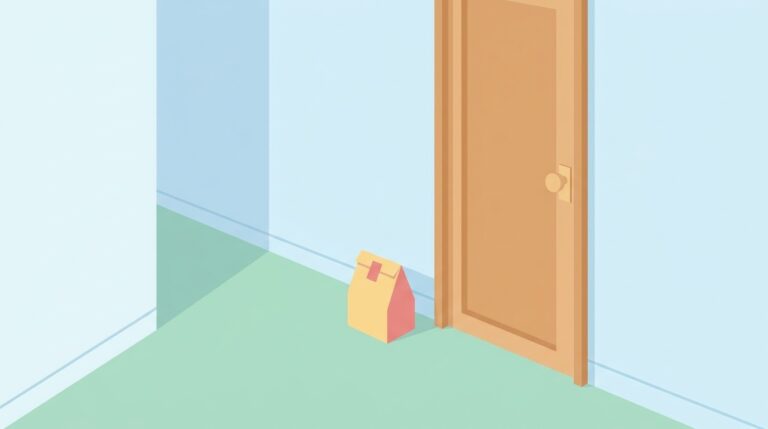
1. 문 앞에 두고 가세요 (Mun ape dugo gaseyo)
- Pronunciation: [Mun a-pe du-go ga-se-yo] (Sounds like: Moon ah-peh doo-go gah-seh-yo)
- Meaning: Literal: “Leave it in front of the door and go.” | Actual Nuance: “Please leave it at my doorstep (contactless delivery).”
- K-Culture Moment: Seen in countless K-Dramas like Hospital Playlist or Weightlifting Fairy Kim Bok-joo when characters binge-order late-night tteokbokki while avoiding face-to-face interaction.
- Editor’s Insight: In Korea, contactless delivery (bidaemyeon baedal) is practically an art form. Saying this ensures the rider drops the bag safely, taps the bell, and heads off.
- Situation Spectrum: Casual: ⚠️ (Use ‘문 앞에 둬’ with close friends) | Semi-formal: ✅ | Formal: ✅
- 🤔 Think About It: In many Western cities, packages left outside might get stolen immediately. Why do you think leaving food right in front of apartment doors is the standard norm in Korea?
2. 몇 동 몇 호예요? (Myeot dong myeot hoyeyo?)
- Pronunciation: [Myeot dong myeot ho-ye-yo?] (Sounds like: Myut dong myut ho-yeh-yo?)
- Meaning: Literal: “Which building, which room number is it?” | Actual Nuance: “What is your building and unit/apartment number?”
- K-Culture Moment: The classic question delivery drivers or reception security guards ask you when you give only a street name.
- Editor’s Insight: Korean apartments are organized by Dong (동, building number) and Ho (호, unit number). Even if you give the street name, without the Dong and Ho, your food is going nowhere!
- Situation Spectrum: Casual: ⚠️ | Semi-formal: ✅ | Formal: ✅
- 🤔 Think About It: Does your hometown prioritize street names or building complex names when navigating?
3. 공동현관 비밀번호 알려주세요 (Gongdong-hyeongwan bimilbeonho allyeojuseyo)
- Pronunciation: [Gong-dong-hyeon-gwan bi-mil-beon-ho al-lyeo-ju-se-yo] (Sounds like: Gong-dong hyun-gwan bee-meel bun-ho ahl-lyuh joo-seh-yo)
- Meaning: Literal: “Please let me know the shared entrance password.” | Actual Nuance: “Please give me the building entrance security code.”
- K-Culture Moment: When your delivery app sends a sudden chat notification because the front lobby door of your apartment building is locked tight.
- Editor’s Insight: Almost every modern Korean villa, officetel, and apartment has an intercom lock at ground level. Koreans usually leave this code in the delivery notes with a
#or*sign! - Situation Spectrum: Casual: 🚫 | Semi-formal: ✅ | Formal: ✅
- 🤔 Think About It: Giving a stranger access codes to your building lobby might feel wild back home, but in Korea, it’s routine speed and trust in action.
Phase 3: Textbook Korean vs. Real Korean
Situation 1: Telling the rider your exact apartment number
- 📖 교과서 한국어 (Textbook): 저의 아파트 번호는 402호입니다. (Jeoui apateu beonhoneun sabaek-i-hoyimnida. – “My apartment number is 402.”)
- 🗣️ 진짜 한국어 (Real-Life): 402호로 올려주세요! (Sabaek-i-horo ollyeojuseyo! – “Please bring it up to unit 402!”)
- 💡 왜 다를까?: Textbook sentences sound like robot translations. Native speakers jump straight into the action using direction particles (
-로, to/toward) to save precious seconds.
Situation 2: Asking the rider to drop food outside
- 📖 교과서 한국어 (Textbook): 현관문 앞에 음식을 놓아두십시오. (Hyeongwanmun ape eumsig-eul nohadusipsio. – “Please place the food before the front door.”)
- 🗣️ 진짜 한국어 (Real-Life): 문 앞 배송 부탁드려요! (Mun ap baesong butakdeuryeoyo! – “Doorstep drop-off, please!”)
- 💡 왜 다를까?: Koreans favor compact noun compounds like
문 앞 배송(doorstep delivery) because delivery requests have character limits in apps.
Phase 4: K-Culture Deep Dive & Non-verbal Manners
4-1. 눈치 (Nunchi) & Lobby Manners
When ordering delivery in Korea, Nunchi (quick social situational awareness) starts at the front gate. If your delivery rider buzzes you through the intercom:
1. Press the open button immediately—don’t keep them waiting in the hallway.
2. If you happen to meet the rider at the door, give a gentle 15-degree bow with both hands held together and say: “감사합니다, 수고하세요!” (Gamsahamnida, sugohaseyo! – Thank you, keep up the good work!). It shows deep respect for their hard hustle.
4-2. The Magic of Korea’s “Palli-Palli” Delivery Culture
Korea has the world’s most sophisticated delivery ecosystem. From midnight deliveries to park deliveries at the Han River (where designated Baedal Zones exist!), speed is everything. In fact, riders navigate using modern Road Name Addresses (도로명주소) combined with building names. Knowing how to write your address in proper order (Big area ➔ Small area ➔ Unit) respects this fast-paced lifestyle.
Phase 5: Real-Life Roleplay Scenario
Setting: You are chilling in your rental officetel in Mapo-gu. The intercom suddenly rings. It’s Rider Min-woo, who can’t get past the lobby door.
- Rider Min-woo: 띵동! 배달입니다. 공동현관 문이 잠겨 있어서요. (Ttingdong! Baedarimnida. Gongdong-hyeongwan muni jamgyeo isseoseoyo.)
🎭 Voice through the intercom, slightly rushed with background motorcycle noise.
(Ding-dong! Delivery. The main building door is locked.) - You: 아, 안녕하세요! 문 열어드릴게요. (A, annyeonghaseyo! Mun yeoreodeurilgeyo.)
🎭 Pressing the lobby door release button on the wall intercom.
(Oh, hello! I will unlock the door for you.) - Rider Min-woo: 감사합니다. 몇 층으로 갈까요? (Gamsahamnida. Myeot cheung-euro galkkayo?)
🎭 Stepping inside the elevator lobby.
(Thank you. Which floor should I go to?) - You: 7층 704호예요. (Chil-cheung chil-baek-sa-hoyeyo.)
🎭 Speaking clearly into the receiver.
(7th floor, unit 704.) - Rider Min-woo: 직접 받으시나요? (Jikjeop badeusinayo?)
🎭 Asking whether you want to open the door in person.
(Will you receive it directly in person?) - You: 아니요, 문 앞에 두고 벨만 눌러주세요! (Aniyo, mun ape dugo belman nulleojuseyo!)
🎭 Friendly and polite.
(No, please leave it in front of the door and just ring the bell!) - Rider Min-woo: 네, 문 앞에 놓고 문자 남길게요! (Ne, mun ape noko munja namgilgeyo!)
🎭 Cheerful elevator chime rings in the background.
(Got it, I’ll place it at the door and text you!) - You: 네, 감사합니다! 조심해서 가세요. (Ne, gamsahamnida! Josimhaeseo gaseyo.)
🎭 Smiling with relief as your stomach growls happily.
(Yes, thank you! Travel safely.)
🔀 Interactive Branching Moment
What if the delivery rider sends you a text asking: “비밀번호를 입력했는데 문이 안 열려요!” (I typed the passcode but the door won’t open!). How do you reply?
- Option A: 그냥 가세요. (Geunyang gaseyo. – “Just go away.”)
- 🚫 Bad: Oh no! This means “just leave,” and you will lose your dinner!
- Option B: 앞에 종 누르고 비밀번호 누른 다음에 샵(#) 눌러주세요! (Ape jong nureugo bimilbeonho nureun da-eume syap(#) nulleojuseyo! – “Press the bell first, then passcode, then the pound (#) key!”)
- 🌟 Best: Perfect! Korean keypads often require pressing the bell icon or
#key at the start or end.
- 🌟 Best: Perfect! Korean keypads often require pressing the bell icon or
- Option C: 몰라요, 제가 내려갈게요. (Mollayo, jega naeryeogalke-yo. – “I don’t know, I will come down.”)
- ⚠️ Risk: It works, but saying 몰라요 can sound blunt. Better to say: 제가 지금 내려갈게요! (I’ll come down right now!).
Phase 6: 10-Second Emotion Shadowing Drill
Practice these natural rhythm pauses (/) with the matching emotion!
[😊 친절하고 또박또박하게 / Kind and clear]
문 앞에 / 두고 가시면 / 돼요.
(Mun ape / dugo gasimyeon / dwaeyo.)
“Leaving it in front of the door / is totally fine.”-
[🚨 다급하고 명확하게 / Urgent and precise]
공동현관 / 비밀번호는 / 1234샵(#)이에요!
(Gongdong-hyeongwan / bimilbeonhoneun / il-i-sam-sa-syap-i-e-yo!)
“The lobby entrance / passcode / is 1234 followed by the pound key!” -
[🙏 진심을 담아 따뜻하게 / Warm and appreciative]
배달해 주셔서 / 정말 감사합니다!
(Baedalhae jusyeoseo / jeongmal gamsahamnida!)
“Thank you so much / for delivering this!”
Phase 7: K-Culture Mini Dictionary
- 도로명주소 (Doro-myeong-juso) | Road Name Address
Usage: Korea’s modern system since 2014 based on street names (e.g., Teheran-ro 14-gil) instead of neighborhood lots (Jibeon). - 공동현관 (Gongdong-hyeongwan) | Main/Shared Building Lobby Entrance
Usage: The ground-floor security gate in villas and apartments requiring an intercom buzz or PIN code. - 호수 (Ho-su) | Unit / Apartment Number
Usage: Vital for multi-family complexes. Always appended to numbers, like 501호 (Room 501). - 배달 요청사항 (Baedal Yocheong-sahang) | Delivery Special Requests
Usage: The notes section in apps where you write instructions like “초인종 누르지 마세요” (Don’t ring the doorbell).
Phase 8: Traveler’s Survival Kit
Top 3 Survival Phrases
- 여기 주소가 어떻게 돼요? (Yeogi jusoga eotteoke dwaeyo?)
Pro Tip: Ask your hotel receptionist or Airbnb host this to get the exact copy-paste address text. - 문 앞에 두고 벨 눌러주세요. (Mun ape dugo bel nulleojuseyo.)
Pro Tip: The golden standard instruction for quiet, effortless delivery. - 1층 로비로 내려갈게요. (Il-cheung robiro naeryeogalke-yo.)
Pro Tip: Use this if building access is too confusing; meeting at the ground lobby solves everything.
🎒 Editor’s Travel Note
Before ordering, install the Naver Map English address search. Paste your Korean accommodation name into the search bar, tap your destination, and click the copy icon next to the street address (도로명). Most foreign credit cards work seamlessly on delivery apps like Coupang Eats (which features English menus!) or Shuttle Delivery.
Phase 9: One Step Deeper (Reflection)
In South Korea, leaving a bag of food sitting in a public hallway outside someone’s door is an emblem of high social trust. While in many global metropolises this might invite theft, in Korea, the blend of neighborhood CCTV culture and communal honesty creates an environment where your late-night chicken remains untouched until you retrieve it.
💬 Your Turn: How does food delivery work in your country? Would you feel comfortable leaving your food on your doorstep, or do you always have to meet the courier at the gate? Let’s chat in the comments below!
Phase 10: FAQ & Common Mistakes
Q: How do I enter an apartment number when filling out the address box?
A: In Korean address fields, you first search and pick the primary road address (e.g., 마포대로 12). A second field called 상세주소 (Detailed Address) will appear beneath it. Write your building and room number there (e.g., 101동 502호).
Q: What should I type if my building doesn’t have an entrance code?
A: In the delivery notes (배달 요청사항), simply select or type: “공동현관 비밀번호 없음 (자유 출입 가능)” which means “No lobby passcode (free entrance).”
Q: How do I know when my food has arrived without opening the door?
A: Korean delivery riders almost always snap a quick photo of your food bag sitting outside your door and send it via in-app notification with the text: “배달이 완료되었습니다” (Delivery completed).
🚨 흔한 실수 (Common Mistakes) Top 3
- Entering only the building name without the unit number: The rider arrives at your 20-story building and has no idea where to take it!
Correct Action: Always verify that your 호 (Unit) is clearly listed in the 상세주소 field. - Forgetting to write the entrance code prefix: Many doors require pressing
*or#before the digits.
Correct Action: Write it exactly as instructed by your host, e.g.,#1234*. - Ignoring the phone when an unknown 010 or 050 number calls: Couriers call when lost or blocked by security!
Correct Action: Answer the call! Even basic phrases like “문 앞에 놔주세요” will quickly solve the issue.
Phase 11: Action Mission
- 🥉 Bronze Level: Open your phone notes and write down your current accommodation address in standard Korean format:
[City/District] + [Road Name] + [Building & Room Number]. - 🥈 Silver Level: Share your practice sentence in the comments below: Write a short delivery instruction note using 문 앞에 두고 가세요.
- 🥇 Gold Level: Actually order a snack or drink via a delivery app in Korea and retrieve it using contactless delivery without a single phone call hurdle!
- 🎮 K-Culture Mission: Next time you watch an urban K-Drama, spot how many times a character opens their front door in sweatpants to pick up a plastic delivery bag sitting on the floor!
Phase 12: Interactive Quiz Challenge
Test your skills before hitting that delivery button!
1. Which information belongs in the 상세주소 (Detailed Address) line?
A) 서울특별시 마포구
B) 102동 405호
C) 배달의민족
2. Fill in the blank:
“현관문 ( ) 두고 벨 눌러 주세요!”
A) 뒤에 (behind)
B) 위에 (on top of)
C) 앞에 (in front of)
3. True or False:
In Korea, it is considered rude to ask the rider to leave the food outside your door without meeting them in person.
👉 Click here to check the answers and explanations!
-
Answer: B (102동 405호)
Explanation: The detailed address (상세주소) is specifically meant for your individual building number (동) and unit number (호). -
Answer: C (앞에)
Explanation: 문 앞에 means “in front of the door.” Putting it on top of or behind the door would definitely spill your soup! -
Answer: False
Explanation: Contactless doorstep delivery (문 앞 배송) is standard, preferred, and considered completely polite and convenient for both customers and busy riders alike!







