

Phase 1: Empathy & Immersion
안녕하세요! 매일한글 에디터입니다.
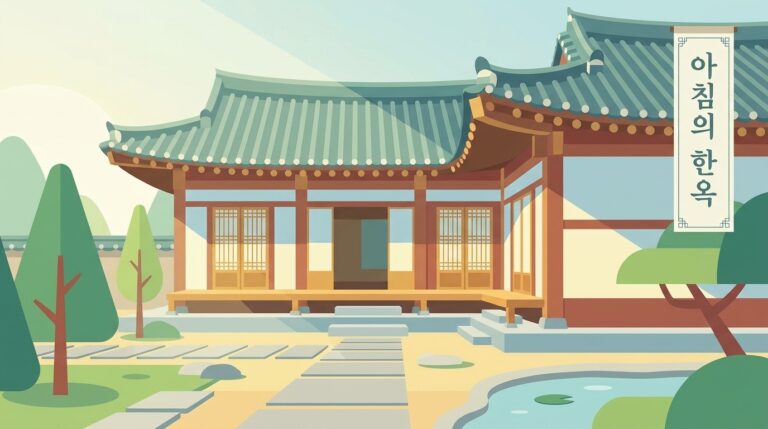
Imagine walking through the stone-walled alleys of Bukchon Hanok Village or Jeonju Hanok Village on a crisp, sunny afternoon. You spot a breathtaking traditional Korean house (Hanok) featuring majestic, dark slate curved roof tiles (Giwa). You want to step in, admire the architecture, take a memorable photo, or ask the friendly owner about the house, but your mind goes completely blank. Did you ever freeze at the entrance wondering, “Do I take off my shoes here?” or “How do I compliment this stunning roofline without sounding like an archaic textbook?”
If you have ever felt nervous about making a cultural faux pas while touring Korea’s historical gems, you are in good company! Hundreds of our A2 learners shared that navigating historical architecture tour etiquette was one of their biggest real-world hurdles. This guide is crafted specifically to turn your hesitation into effortless confidence, giving you natural phrases, acoustic pronunciation hacks, and insider Hanok etiquette that will charm any local host.
Phase 2: Core Expressions Deep Dive
1. 기와 지붕이 정말 멋있어요! (Giwa jibung-i jeongmal meos-isseoyo!)
- Pronunciation: [Gi-wa ji-bung-i jeong-mal meo-si-sseo-yo!] (Sounds like: “Gee-wah jee-boong-ee jung-mahl muh-she-ssuh-yo”)
- Meaning: Literal: “The tile roof is really cool!” | Actual Nuance: “The traditional tiled roofline looks absolutely magnificent!”
- K-Culture Moment: You hear visitors marveling at historical drama filming sites in Alchemy of Souls or The King’s Affection when looking up at grand royal pavilions.
- Editor’s Insight: Giwa (기와) specifically refers to traditional Korean baked roof tiles. Pairing it with 멋있어요 (it’s cool/stylish) gives a modern, enthusiastic compliment that native speakers love hearing.
- Situation Spectrum: Casual: ⚠️ (Use 멋있어! with peers) | Semi-formal: ✅ | Formal: ✅ (멋있습니다)
- 🤔 Think About It: In English, we often praise entire buildings (“What a nice house!”), while Koreans frequently isolate natural lines and elements like roof curves (지붕선). What architectural features does your culture admire first?
2. 신발을 벗고 들어가야 하나요? (Sinbal-eul beotgo deureogaya hanayo?)
- Pronunciation: [Sin-ba-reul beot-go deu-reo-ga-ya ha-na-yo?] (Sounds like: “Seen-bahl-eul buht-go deu-ruh-gah-yah hah-nah-yo?”)
- Meaning: Literal: “Must I take off shoes and enter?” | Actual Nuance: “Should I take off my shoes before going inside?”
- K-Culture Moment: Whenever travelers visit a heritage tea house or a Hanok stay in K-variety shows like Korean Hostel in Spain or Youn’s Stay.
- Editor’s Insight: The ending -아/어야 하나요? is the gold standard of polite inquiry for A2 learners. It shows you want to respect the house rules without sounding blunt.
- Situation Spectrum: Casual: 🚫 | Semi-formal: ✅ | Formal: ✅
- 🤔 Think About It: Why is taking off shoes sacred in Korean architecture? It ties directly to Ondol (underfloor heating) culture, where the floor is a clean living and dining surface!
3. 사진 한 장만 찍어도 될까요? (Sajin han jangman jjigeodo doelkkayo?)
- Pronunciation: [Sa-jin han jang-man jji-geo-do doel-kka-yo?] (Sounds like: “Sah-jeen hahn jahng-mahn jee-guh-doh dwel-kkah-yo?”)
- Meaning: Literal: “Even if I take just one photo, is it okay?” | Actual Nuance: “Would it be alright if I take a quick photo here?”
- K-Culture Moment: Seen in romantic travel K-Dramas when the protagonist asks permission to capture an aesthetic courtyard backdrop.
- Editor’s Insight: Adding 한 장만 (just one sheet/shot) instantly softens the request, making people much more willing to say yes.
- Situation Spectrum: Casual: ⚠️ | Semi-formal: ✅ | Formal: ✅
- 🤔 Think About It: Korean uses specific counter words (like 장 – jang for flat sheets/photos). How does specifying small quantities in your native language soften requests?
Phase 3: Textbook Korean vs. Real Korean
Situation 1: Praising the Traditional Architecture
- 📖 Textbook Korean: 이 전통 가옥의 건축 양식이 매우 아름답습니다. (I jeontong gaog-ui geonchuk yangsig-i maeu areumdapseumnida. / “The architectural style of this traditional house is very beautiful.”)
- 🗣️ Real Korean: 기와 지붕 선이 진짜 예뻐요! (Giwa jibung seon-i jinjja yeppeoyo! / “The curved line of the tile roof is really pretty!”)
- 💡 Why the difference? Textbook phrasing sounds like an academic thesis! Real Koreans focus on vivid visual details like the elegant curve (선 – seon) of the roof using friendly words like 진짜 예뻐요.
Situation 2: Asking If You Can Look Around the Courtyard
- 📖 Textbook Korean: 안으로 출입해도 무방합니까? (An-euro churip-haedo mubanghamnikka? / “Is it permissible for me to enter inside?”)
- 🗣️ Real Korean: 안에 잠깐 들어가 봐도 돼요? (An-e jamkkan deureoga bwado dwaeyo? / “May I quickly take a peek inside?”)
- 💡 Why the difference? Words like 출입 (entry/exit) belong on warning signs. In conversation, combining 잠깐 (for a brief moment) with 들어가 보다 (to try entering) sounds approachable, warm, and polite.
Phase 4: K-Culture Deep Dive & Non-Verbal Manners
4-1. Nunchi (눈치) & Courtyard Gestures
- Never Step on the Door Threshold (Munteok – 문턱): In traditional Hanok, the wooden threshold separating rooms or gates is structurally vital and holds spiritual meaning. Always step over it cleanly—never place your foot directly on it.
- The Two-Handed Pointing Gesture: When asking about roof details or ornaments, avoid pointing with a single index finger (which can look aggressive). Instead, open your palm upward facing the roofline gently.
- Shoe Alignment Etiquette: When stepping up onto the wooden deck (Daecheongmaru), slip off your shoes and turn them around so the toes face outward toward the garden. This makes your departure seamless and shows great etiquette.
4-2. Cultural Code Analysis: The Geometry of Giwa
In K-Dramas like Mr. Sunshine, the contrast between thatched-roof houses (Choga-jip) and tile-roof houses (Giwa-jip) immediately tells the viewer about social status and history. Traditional Giwa roofs feature subtle upward curves at the eaves (Cheoma – 처마), designed intentionally to control sunlight across seasons and channel rainwater gracefully. Admiring this curve shows you appreciate Korea’s harmony between nature and woodwork!
Phase 5: Real-World Roleplay Scenario
Setting: Alex visits a picturesque 100-year-old Hanok guesthouse and tea courtyard in Jeonju.
Characters:
* Alex (알렉스): An enthusiastic A2 Korean learner with a camera.
* Haneul (하늘): The welcoming Hanok master brewing traditional tea on the wooden porch.
- Alex: 안녕하세요! 집이 너무 고즈넉하고 예뻐요. (Annyeonghaseyo! Jibi neomu gojeoneokhago yeppeoyo.)
🎭 Bows slightly at 15 degrees with a warm smile. - Haneul: 어서 오세요! 편하게 구경하세요. (Eoseo oseyo! Pyeonhage gugyeonghaseyo.)
🎭 Welcomes with both hands gesturing toward the courtyard. - Alex: 기와 지붕이 정말 멋있어요! (Giwa jibung-i jeongmal meos-isseoyo!)
🎭 Looks up at the eaves with an open palm gesture. - Haneul: 고마워요. 100년 넘은 전통 기와예요. (Gomawoyo. Baek-nyeon neomeun jeontong giwayeyo.)
🎭 Nods proudly while pouring tea into a ceramic cup. - Alex: 안에 잠깐 들어가 봐도 돼요? (An-e jamkkan deureoga bwado dwaeyo?)
🎭 Points politely toward the wooden floorboards. - Haneul: 네, 신발 벗고 마루로 올라오세요. (Ne, sinbal beotgo maruro ollaoseyo.)
🎭 Taps the edge of the wooden deck gently. - Alex: 신발을 여기 두면 되나요? (Sinbal-eul yeogi dumyeon doenayo?)
🎭 Takes off shoes, turning them outward. - Haneul: 네, 아주 잘 아시네요! 차 한잔 드실래요? (Ne, aju jal asineyo! Cha hanjan deusillaeyo?)
🎭 Pours a cup of fragrant plum tea with a delighted expression.
🔀 Interactive Decision Point
Haneul offers you a warm cup of traditional tea on the wooden porch. How do you respond?
- Option A: “와, 감사합니다! 잘 마실게요.” (Wa, gamsahamnida! Jal masilgeyo.)
- Option B: “아니요, 괜찮아요. 사진만 찍을게요!” (Aniyo, gwaenchanayo. Sajinman jjigeulgeyo!)
- Option C: “신발 신고 들어가서 마셔도 돼요?” (Sinbal sin-go deureogaseo masyeodo dwaeyo?)
Feedback:
- Option A (Best): 🌟 Perfect! Expressing gratitude with 잘 마실게요 (“I will drink it well”) builds immediate warmth and rapport with your host.
- Option B (Risk): ⚠️ Grammatically correct, but rejecting hospitality abruptly to focus only on photos can feel slightly transactional and cold in a traditional setting.
- Option C (Bad): 🚫 Stepping onto a wooden Hanok floor with shoes on is a major cultural mistake that could damage historic wood!
Phase 6: 10-Second Emotion Shadowing Drill
Master the natural melody and rhythm of native speech with these emotion milestones!
- [😊 Amazed & Bright]
기와 지붕이 / 진짜 멋있어요!
(Giwa jibung-i / jinjja meos-isseoyo!)
Rhythm tip: Raise your pitch on “진짜” and drop smoothly on “멋있어요”. -
[🤔 Polite & Inquiring]
신발을 벗고 / 들어가야 하나요?
(Sinbal-eul beotgo / deureogaya hanayo?)
Rhythm tip: Pause briefly after “벗고”, end with an upward questioning lilt on “하나요?”. -
[🥺 Soft & Courteous]
사진 한 장만 / 찍어도 될까요?
(Sajin han jangman / jjigeodo doelkkayo?)
Rhythm tip: Soften your voice on “한 장만” to sound modest and friendly.
Phase 7: K-Culture Mini Dictionary
- 기와 (Giwa): Traditional baked clay roof tiles. Used in daily travel conversation to describe historic architecture or roofs (기와집 = tile-roof house).
- 대청마루 (Daecheongmaru): The wide, open wooden-floored central hall in a Hanok that connects rooms and catches cool breezes in summer.
- 온돌 (Ondol): Korea’s unique underfloor radiant heating system. In winter, sitting on an Ondol floor keeps you warm and cozy.
- 문턱 (Munteok): The wooden threshold at the bottom of a doorframe. Remember: step over it, never on it!
Phase 8: Survival Kit for Travelers
Top 3 Survival Phrases
- 화장실이 어디예요? (Hwajangsil-i eodiyeyo? / “Where is the restroom?”)
Pro Tip: In historical villages, public restrooms are often tucked behind main courtyard gates. - 여기에 앉아도 돼요? (Yeogi-e anj-ado dwaeyo? / “May I sit here?”)
Pro Tip: Use this before relaxing on a Hanok porch (Maru). - 정말 고즈넉해요! (Jeongmal gojeoneokhaeyo! / “It’s so peaceful and tranquil!”)
Pro Tip: Native speakers use 고즈넉하다 exclusively for quiet, historic scenic spots. Saying this will instantly impress your guide!
Editor’s Travel Note
When navigating the winding alleys of traditional neighborhoods, standard global maps often struggle. Be sure to check the Naver Map app download guide to easily locate verified historic tea houses, public restrooms, and Hanok cultural centers.
Phase 9: A Step Deeper (Reflection)
Traditional Korean architecture is designed around Bi-um (비움 – emptying) and harmony with surrounding nature rather than dominating the skyline. The curved eaves of a Giwa roof mirror the gentle mountain ridges behind them, while the open Maru floor brings the breeze inside. In Hanok, architecture is not just a building; it is a philosophy of living in balance with the seasons and welcoming guests with respect.
💬 Your Turn: What traditional architectural style in your country reflects harmony with nature? Share your thoughts below in the comments!
Phase 10: FAQ & Common Mistakes
Q: Can I wear Hanbok when visiting traditional Hanok villages?
A: Yes, absolutely! Wearing Hanbok is warmly welcomed and often grants free admission to major palaces like Gyeongbokgung and Changdeokgung.
Q: Are all Hanok open for public entry?
A: No. Many Hanok in Bukchon and Jeonju are private residences. Look for signs saying “개방 가옥” (Open House) or commercial signs (Café, Guesthouse) before walking in.
Q: Is it rude to touch the wooden pillars?
A: It is best to avoid leaning heavily or touching delicate untreated historical woodwork with sunscreen or lotion on your hands, as it can stain century-old timber.
🚨 Common Mistakes Alert
- Mistake: Stepping on the wooden door threshold (문턱).
Correct Action: Step completely over the threshold. - Mistake: Walking onto the polished wooden floorboards (마루) with outdoor sneakers.
Correct Action: Always check the step stone (디딤돌) and remove shoes. - Mistake: Speaking loudly in residential Hanok alleys.
Correct Action: Maintain a gentle, respectful volume to honor local residents.
Phase 11: Action Missions
- 🥉 Bronze Mission (Solo Drill): Say “기와 지붕이 정말 멋있어요!” out loud 3 times in front of the mirror using our Phase 6 shadowing rhythm.
- 🥈 Silver Mission (Social Share): Find a photo of a Korean Hanok online or in your photo album and post it with the caption: “기와 지붕이 예뻐요! #DailyHangul”.
- 🥇 Gold Mission (Real-World Test): Visit a Korean cultural center, Hanok café, or Korean temple and ask the host “사진 한 장만 찍어도 될까요?”.
- 🎮 K-Culture Mission: Watch an episode of a historical drama (like The King’s Affection) and spot the difference between a royal Giwa roof and a village thatched roof!
Phase 12: Interactive Quiz Challenge
1. [Situational Judgment] You want to enter a beautiful Hanok tea house hall. What should you ask first?
* (A) 신발 신고 들어가도 돼요?
* (B) 신발을 벗고 들어가야 하나요?
* (C) 기와 지붕을 주세요.
2. [Fill in the Blanks] Compliment the traditional roof in Korean:
* “_____ 지붕이 정말 멋있어요!” (Hint: baked traditional roof tile)
3. [True / False Cultural Check] In a traditional Hanok, it is considered polite to stand firmly on top of the door threshold (문턱). (True / False)
🔍 Click here to reveal the Answers and Explanations!
- Answer: (B) (신발을 벗고 들어가야 하나요?)
Explanation: Asking if you need to take off your shoes is the most respectful way to enter a traditional wooden hall. - Answer: 기와 (Giwa)
Explanation: 기와 means traditional clay roof tile, forming the phrase 기와 지붕 (tile roof). - Answer: False
Explanation: You should always step over the threshold (문턱), never on top of it, to protect the wood and follow tradition!







