

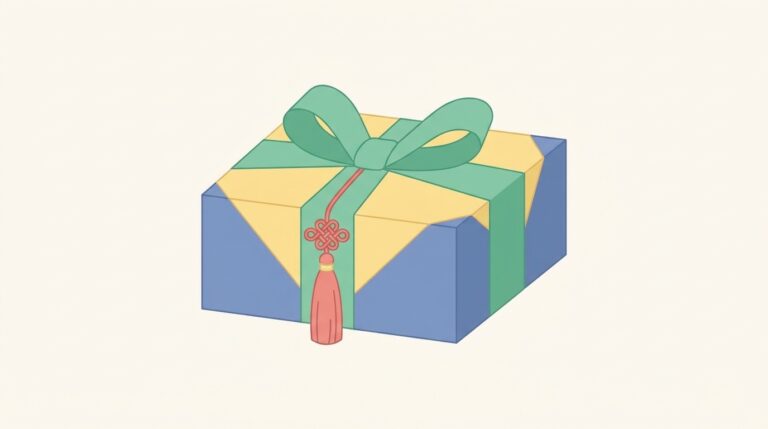
Master Korean Gift Wrapping: How to Ask Like a Native in K-Stores
Phase 1: Empathy (Story-Driven Opening)
안녕하세요! 매일한글 에디터입니다. (Hello! This is your Daily Hangul editor.)
Picture this: You are standing in a chic boutique in Seongsu-dong or wandering through the vibrant aisles of Olive Young in Myeongdong. You just found the most gorgeous hand cream set or a cute K-pop souvenir for your best friend back home. You step up to the counter, your heart fluttering with excitement. You want to present it as a special gift, but as you approach the cashier, your mind goes completely blank.
How do I say ‘Can you wrap this as a gift?’ without sounding robotic or rude? Will they charge extra? What if they leave the price tag on?
If you have ever felt that sudden surge of social anxiety at a Korean checkout counter, take a deep breath. You are definitely not alone! Asking for gift wrapping—or seonmul pojang (선물 포장)—is one of the most common hurdles for intermediate learners. In Korean culture, the presentation of a gift is just as meaningful as what is inside; it represents jeongseong (정성, sincere care and devotion).
In this lesson, crafted with real feedback from our Daily Hangul learners, you will master natural, nuanced B1-level phrases so you can effortlessly ask for gift wrapping, customize price tags, and navigate checkout counters with total confidence. Let’s dive in!
Phase 2: Deep Dive into 3 Core Expressions
1. 선물용인데 포장해 주실 수 있나요? (Seonmulyong-inde pojanghae jusil su innayo?)
- Pronunciation: Seon-mool-yong-een-deh poh-jahng-hae joo-sheel soo een-nah-yoh? (Sounds like “Sun-mool-yong-in-day…”)
- Meaning: “This is for a gift; could you please wrap it for me?”
- K-Culture Moment: In K-Dramas like Business Proposal or Crash Landing on You, whenever a lead character buys a thoughtful accessory or perfume for their crush, they slide the item across the counter with this exact soft-spoken sentence.
- Editor’s Insight: Notice the ending -는데 (-nde). Rather than bluntly demanding “Wrap this,” -는데 acts as a gentle conversational cushion that provides context before making a polite request (-해 주실 수 있나요?). It sounds 100 times smoother and warmer!
- Situation Spectrum: Casual: ⚠️ (A bit too formal for close friends) | Semi-formal / Retail: ✅ (Perfect) | Formal: ✅
- 🤔 Think About It: In English, we often say “Can you wrap this?” right away. Why do you think Korean builds background context first with 선물용인데 (“It is a gift, so…”)?
2. 가격표는 떼어 주시거나 가려 주세요. (Gagyeokpyoneun tteeo jusigeona garyeo juseyo.)
- Pronunciation: Gah-gyuk-pyoh-neun tteh-uh joo-she-guh-nah gah-ryuh joo-seh-yoh.
- Meaning: “Please remove the price tag or cover it up.”
- K-Culture Moment: You will often see clerks in department stores use a small decorative sticker to mask the price on luxury cosmetic boxes so the receiver doesn’t see how much was spent.
- Editor’s Insight: -거나 (-geona) means “or” between verbs. By offering two options—detach (떼다, tteda) OR cover (가리다, garida)—you show consideration for packaging that might tear if the sticker is peeled off.
- Situation Spectrum: Casual: ⚠️ | Semi-formal / Retail: ✅ | Formal: ✅
- 🤔 Think About It: In many cultures, leaving a price tag on a gift is an awkward faux pas. How does Korean etiquette emphasize discreetness through small actions like sticker coverings?
3. 포장비가 따로 드나요? (Pojangbiga ttaro deunayo?)
- Pronunciation: Poh-jahng-bee-gah ttah-roh deu-nah-yoh? (Pojang-bee rhymes with “tea”, ttaro sounds like a quick “tah-ro”).
- Meaning: “Is there an extra charge for wrapping?”
- K-Culture Moment: While traditional department stores and boutique bakeries often provide complimentary basic wrapping, specialized gift boxes or eco-friendly shopping bags in modern lifestyle stores may carry a small fee (usually 500 to 2,000 KRW).
- Editor’s Insight: 따로 (ttaro) means “separately” or “additionally,” and 들다 (deulda) here means “to cost/require expense.” Using -나요? (-nayo?) makes your question sound soft, inquisitive, and polite.
- Situation Spectrum: Casual: ⚠️ | Semi-formal / Retail: ✅ | Formal: ✅
- 🤔 Think About It: Why is asking about extra fees directly yet gently considered good shopping manners in Korea’s eco-conscious retail environment?
Phase 3: Textbook Korean vs. Real Korean
Situation 1: Asking the Staff to Gift-Wrap an Item
- 📖 Textbook Korean: 선물 포장을 부탁합니다. (Seonmul pojangeul butakhamnida. – “I request gift wrapping.”)
- 🗣️ Real Korean: 이거 선물할 건데, 예쁘게 포장 좀 해주세요! (Igeo seonmulhal geonde, yeppeuge pojang jom haejuseyo! – “This is going to be a gift; could you wrap it up nicely for me, please?”)
- 💡 Why is it different? The textbook phrase sounds like an automated public announcement. Real natives use the filler word 좀 (jom – a little/please) and the conversational future-context form 선물할 건데 (-hal geonde) to build a friendly rapport with the clerk.
Situation 2: Asking for an Extra Shopping Bag
- 📖 Textbook Korean: 쇼핑백을 하나 더 주십시오. (Syopingbaegeul hana deo jusipsio. – “Give me one more shopping bag.”)
- 🗣️ Real Korean: 선물 줄 거라서 그런데, 쇼핑백 하나만 더 챙겨주실 수 있나요? (Seonmul jul georaseo geureonde, syopingbaek hanaman deo chaenggyeojusil su innayo? – “Since I’m giving it as a gift, could you spare one extra bag for me?”)
- 💡 Why is it different? In Korea, plastic and paper bags are regulated by environmental laws. Simply ordering “Give me a bag” can sound blunt. Explaining your reason gently (선물 줄 거라서 그런데…) and using the caring verb 챙겨주다 (chaenggyeojuda – to pack/provide thoughtfully) makes the staff much happier to assist you!
Phase 4: K-Culture Deep Dive & Non-Verbal Manners
4-1. Nunchi (눈치) & Body Language at the Counter
- The Two-Handed Handover: When handing over fragile items or receiving your beautifully wrapped gift box, always support your right forearm with your left hand or hold the item with both hands. It instantly conveys respect.
- The Eye Glance at the Sample Board: Most Korean stationery shops (like Artbox or Kakao Friends) and cosmetic stores display a small acrylic stand showcasing wrapping options: 기본 포장 (Basic Wrapping – Free/Small fee) and 상자 포장 (Box Wrapping – Paid). Use your Nunchi (quick social situational awareness) to glance at the board before asking!
4-2. Cultural Codes: The Art of Jeongseong and Bojagi
In Korea, wrapping is not just paper—it is an art form known historically as Bojagi (보자기, traditional wrapping cloth). The act of wrapping symbolizes enclosing good fortune (bok, 복) within the gift. While modern gifts use sleek craft paper and ribbons, high-end holiday sets (such as Chuseok Korean beef or traditional Hangwa sweets) are still wrapped in lustrous silk bojagi. Knowing how to ask for wrapping lets you take part in this centuries-old tradition of showing heartfelt sincerity.
Phase 5: Real-World Roleplay Scenario
Setting: A trendy lifestyle boutique in Insadong, Seoul.
Characters: You (유학생/여행자) and Minji (친절한 매장 직원 – Friendly Staff Member).
- Turn 1 (Minji): 어서 오세요! 결제 도와드릴까요?
(Eoseo oseyo! Gyeolje dowadeurilkkayo?)
“Welcome! May I help you with your payment?”
🎭 Hands ready at the POS terminal with a welcoming smile. -
Turn 2 (You): 네! 저기, 이거 선물용인데 포장해 주실 수 있나요?
(Ne! Jeogi, igeo seonmulyong-inde pojanghae jusil su innayo?)
“Yes! Excuse me, this is for a gift; could you wrap it for me?”
🎭 Handing the product over with both hands. -
Turn 3 (Minji): 네, 가능하세요! 기본 리본 포장은 무료이고, 상자 포장은 천 원 추가되는데 어떤 걸로 해드릴까요?
(Ne, ganeunghaseyo! Gibon ribon pojangeun muryo-igo, sangja pojangeun cheon-won chugadoeneunde eotteon geollo haedeurilkkayo?)
“Yes, of course! Basic ribbon wrapping is free, and box wrapping is an additional 1,000 won. Which one would you prefer?”
🎭 Pointing gently to the sample box at the counter. -
Turn 4 (You): 상자 포장으로 부탁드려요. 그리고 가격표는 좀 가려 주실 수 있나요?
(Sangja pojangeuro butakdeuryeoyo. Geurigo gagyeokpyoneun jom garyeo jusil su innayo?)
“Box wrapping, please. And could you please cover the price tag?” -
Turn 5 (Minji): 그럼요! 바코드 스티커로 가격 깔끔하게 가려 드릴게요. 쇼핑백도 필요하신가요?
(Geureomyo! Bakodeu seutikeoro gagyeok kkalkkeumhage garyeo deurilgeyo. Syopingbaekdo piryohasingayo?)
“Certainly! I will neatly cover the price with a barcode sticker. Will you need a shopping bag as well?” -
Turn 6 (You): 네, 선물 줄 때 담아갈 작은 쇼핑백 하나만 챙겨주세요.
(Ne, seonmul jul ttae damagal jageun syopingbaek hanaman chaenggyeojuseyo.)
“Yes, please include one small shopping bag so I can carry it when giving the gift.” -
Turn 7 (Minji): 네, 결제 금액은 포장비 포함해서 총 25,000원입니다. 카드를 꽂아주세요.
(Ne, gyeolje geum-aegeun pojangbi pohamhaeseo chong imanocheon-won-imnida. Kadeureul kkojajuseyo.)
“Alright, the total including wrapping is 25,000 won. Please insert your card.”
🎭 Gesturing towards the IC card reader. -
Turn 8 (You): 네, 예쁘게 포장해 주셔서 감사합니다!
(Ne, yeppeuge pojanghae jusyeoseo gamsahamnida!)
“Here you go. Thank you so much for wrapping it so nicely!”
🎭 Bowing head slightly with a warm smile.
🔀 Interactive Decision Branching
What if the clerk says: “손님, 죄송하지만 저희 매장은 개별 포장 서비스는 따로 안 되세요.” (Sorry customer, our store does not provide individual wrapping services.)
How do you respond?
- Option A: “아, 그래요? 그럼 혹시 선물용 봉투나 스티커만 따로 구매할 수 있을까요?” (Ah, really? Then could I perhaps purchase a gift bag or sticker separately?)
👉 Feedback [BEST]: Super natural! Many lifestyle stores sell DIY gift pouches even if they don’t wrap items by hand. - Option B: “왜 안 돼요? 그냥 대충 싸주세요.” (Why not? Just wrap it roughly.)
👉 Feedback [BAD]: Too aggressive and blunt. In Korea, store policies regarding packaging are strict due to waste reduction laws. - Option C: “포장 안 되면 환불할게요.” (If no wrapping, I will refund this.)
👉 Feedback [RISK]: Grammatically correct, but socially abrupt if said without politeness markers.
Phase 6: 10-Second Emotion Shadowing Drill
Practice reading these out loud at native speed! Follow the slash marks / for natural pauses:
[😊 Bright & Friendly]
저기요! / 이거 선물용인데 / 예쁘게 포장해 주실 수 있나요?
(Jeogiyo! / Igeo seonmulyong-inde / yeppeuge pojanghae jusil su innayo?)-
[🤫 Polite & Discreet]
선물할 거라서 그러는데 / 가격표는 떼어 주시거나 / 스티커로 가려 주세요.
(Seonmulhal georaseo geureonde / gagyeokpyoneun tteeo jusigeona / seutikeoro garyeo juseyo.) -
[🎁 Inquiring with Curiosity]
혹시 / 선물 상자 포장하면 / 추가 비용이 따로 드나요?
(Hoksi / seonmul sangja pojanghamyeon / chuga biyong-i ttaro deunayo?)
Phase 7: K-Culture Mini Dictionary
-
선물용 (Seonmulyong) | Noun
Literal translation: Gift purpose.
Usage: Attach this after any product to indicate it is a present (e.g., 선물용 세트 = Gift Set, 선물용 포장 = Gift Packaging). -
가격표 (Gagyeokpyo) | Noun
Literal translation: Price ticket / tag.
Usage: Essential when shopping. Common collocations: 가격표를 떼다 (remove the price tag), 가격표를 가리다 (cover the price tag). -
쇼핑백 / 종이봉투 (Syopingbaek / Jong-ibongtu) | Noun
Literal translation: Shopping bag / Paper bag.
Usage: Due to environmental laws in Korea, retail stores charge 100~300 KRW for shopping bags. Knowing this term prevents confusion at checkout. -
보자기 (Bojagi) | Noun
Literal translation: Traditional Korean wrapping cloth.
Usage: Often used in premium traditional markets or holiday department store pop-ups. Signifies elegance, respect, and deep Korean heritage.
Phase 8: Traveler’s Survival Kit
Top 3 Survival Expressions
- 1. 리본 하나만 묶어주세요. (Ribon hanaman mukkeojuseyo.)
Translation: “Just tie a ribbon on it, please.”
Pro Tip: Perfect when full box wrapping is unavailable, but you still want a cute touch! - 2. 영수증은 가격 안 나오게 따로 주실 수 있나요? (Yeongsujeungeun gagyeok an naoge ttaro jusil su innayo?)
Translation: “Could you provide a gift receipt without the price showing?” - 3. 선물용 쇼핑백 작은 걸로 부탁드려요. (Seonmulyong syopingbaek jageun geollo butakdeuryeoyo.)
Translation: “A small gift shopping bag, please.”
Editor’s Travel Note
- Navigation Tip: Finding independent craft and gift shops in Seoul’s alleyways (like Ikseon-dong or Yeonnam-dong) is much easier when using local apps. Make sure you complete your Naver Map navigation app download before heading out, as international map apps often lack updated store hours and alley walking paths.
- Cashless Korea: Almost all gift shops, from underground metro stalls to high-end boutiques, prefer cards or mobile pay (Apple Pay, Kakao Pay, T-money). Keep your card ready while asking for wrapping!
Phase 9: “One Step Deeper” (Reflective Thought)
In Korean society, the concept of 정성 (Jeongseong)—the heart, care, and time you invest into someone—is the soul of gift-giving. When you ask a clerk to wrap a gift and hide the price tag, you are not merely covering up numbers; you are signaling to the receiver that their happiness matters far more than the monetary value of the object. It transforms a simple transaction into a warm human connection.
💬 Your Turn: Have you ever bought a gift in Korea or prepared a gift for a Korean friend? What did you buy, and how did you present it? Share your story in the comments below!
Phase 10: FAQ & Common Mistakes
Q: Is gift wrapping always free in South Korea?
A: Not always. Basic wrapping (like a simple ribbon or brand sticker on a paper bag) is frequently free in department stores and cosmetics boutiques. However, specialized rigid gift boxes, seasonal wrapping paper, and traditional bojagi cloths usually incur a small fee ranging from 1,000 KRW to 10,000 KRW.
Q: What should I do if the clerk asks “봉투 필요하세요?” (Do you need a bag?) during gift wrapping?
A: By law, Korean stores must charge for disposable plastic and paper bags. If you need a bag to carry your gift, answer: “네, 종이봉투 하나 추가해 주세요” (Yes, please add one paper bag). If you already have your own eco-bag, say: “아니요, 괜찮아요!” (No, I’m okay!).
Q: Can I ask for gift wrapping at convenience stores (CU, GS25) or Daiso?
A: Convenience stores and Daiso do not provide gift-wrapping services. However, Daiso has a massive, inexpensive DIY gift packaging section (선물 포장 코너) where you can buy boxes, ribbons, shredded paper fillers, and bags for 500~1,000 KRW!
🚨 Common Mistakes Alert Board
- Mistake: Using “싸 주세요” (Ssa juseyo) carelessly.
Why it’s wrong: While 싸다 means to wrap, in retail, shouting 싸 주세요 can sometimes sound like “make it cheap” (from 싸다 – cheap) or sound slightly coarse.
Correct Action: Always use 포장해 주세요 (Pojanghae juseyo) for gifts and merchandise! - Mistake: Forgetting to request price tag removal before the box is taped shut.
Correct Action: Say 가격표 먼저 떼어 주세요 (Please remove the price tag first) right when handing the item over. - Mistake: Handing payment with one hand while chatting on the phone.
Correct Action: Offer your card with both hands and maintain polite eye contact with the retail staff.
Phase 11: Action Missions & Engagement
- 🥉 Bronze Mission: Stand in front of a mirror with an item on your desk. Practice saying: “저기요, 이거 선물용인데 포장해 주실 수 있나요?” 3 times smoothly without looking at notes.
- 🥈 Silver Mission: Find an Instagram or TikTok reel featuring a Korean haul/shopping vlog. Leave a comment in Korean asking what kind of gift wrapping they chose!
- 🥇 Gold Mission: Walk into an Artbox, Kakao Friends Store, or Olive Young in Korea (or your local Korean stationery store) and successfully ask the staff for a gift bag or gift wrapping in Korean!
🎮 K-Culture Mission: Watch an episode of your favorite contemporary K-Drama. Spot the moment a character gives a gift. Is it wrapped in a box, a shopping bag, or a traditional cloth? Note down how they hand it over!
Phase 12: Interactive Quiz Challenge
1. Situational Judgment:
You are buying a perfume for your host mother at a department store. You want the price covered. What is the most polite and natural way to ask?
(a) 가격표 없애라.
(b) 선물할 거라서 그런데, 가격표 좀 가려 주실 수 있나요?
(c) 가격표를 주지 마세요.
2. Fill-in-the-Blank:
“이거 친구 줄 _______인데 예쁘게 포장해 주세요.” (This is for a gift for a friend, so please wrap it nicely.)
Hint: Noun meaning “for gift use”.
3. True or False (Culture):
In South Korea, all shopping bags and luxury gift boxes are legally required to be given 100% free of charge at all retail shops. (True / False)
👉 Click to reveal answers & explanations!
-
Answer: (b)
Explanation: Option (b) uses the natural soft-opener 선물할 거라서 그런데 and the polite honorific request 가려 주실 수 있나요?. Option (a) is a rude command form, and (c) sounds unnatural. -
Answer: 선물용 (Seonmulyong)
Explanation: 선물용 is the standard term used to designate an item as a gift item. -
Answer: False
Explanation: Due to environmental conservation laws, disposable bags and specialized gift boxes often carry a separate small fee.







