

Phase 1: Empathy & Immersion Opening
안녕하세요! I’m your Daily Hangul editor and your personal Korean culture buddy.
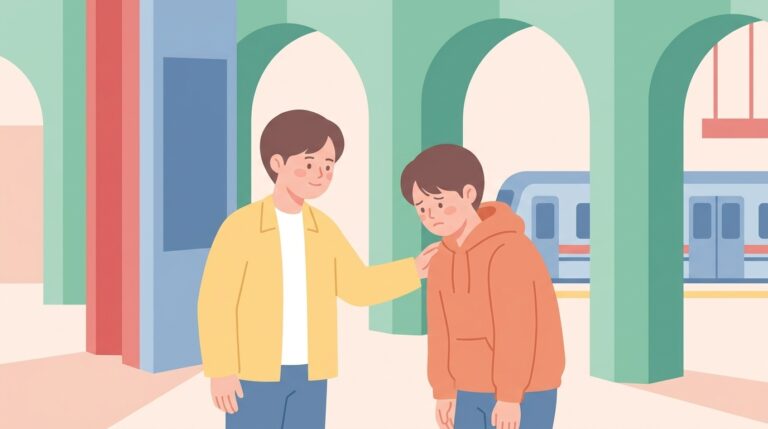
Picture this: You are walking through the buzzing streets of Hongdae with your Korean friend, or navigating the sprawling transfer maze of Express Bus Terminal station. Suddenly, someone drops their phone on the subway tracks, or a friend realizes their passport is missing right before heading to Incheon Airport. Their eyes widen, their hands shake, and their speech speeds up into a panicked spiral: “어떡해, 어떡하지?!” (What do I do? What do I do?!)
In your native language, words like “Hey, calm down! Take a breath!” roll off your tongue instantly. But in Korean? Translating “Calm down” literally on the spot can freeze your brain. If you use the wrong honorific, you might sound unexpectedly cold, bossy, or like a robot from an outdated textbook.
Knowing how to de-escalate tension and comfort someone during an emergency isn’t just about survival vocabulary—it’s about emotional connection and showing true Korean empathy (Jeong, 정). Based on real-world classroom roleplays and feedback from hundreds of elementary learners, I’ve designed this handy A2-level guide to help you sound calm, warm, and reassuring when things get hectic. Let’s master the art of soothing high-stress moments like a local!
Phase 2: 3 Core Expressions for Calming Someone Down
Here are the top three expressions native speakers rely on when someone is on the verge of a panic attack or handling an emergency.
1. 진정하세요 (Jinjeonghaseyo)
- Pronunciation: [Jin-jeong-ha-se-yo] (Sounds like “Jean-jung-ha-say-yo”)
- Meaning: Literal: “Please do calming” ➔ Real Nuance: “Please calm down” / “Take it easy.”
- K-Culture Moment: Heard constantly in K-dramas when emergency responders, doctors, or level-headed leads try to stabilize a crying family member or agitated bystander.
- Editor’s Insight: The root word 진정 (鎭靜) means suppression of agitation or finding peace. Adding the polite ending -세요 makes it respectful and safe to use with strangers, elders, or colleagues in public.
- Situation Spectrum: Casual: 🚫 (Say 진정해) | Semi-formal: ✅ | Formal: ✅
- 🤔 Think About It: In English, “Calm down!” can sometimes feel dismissive or invalidating. In Korean, adding the respectful -세요 softens the command into a gentle plea for physical and emotional safety.
2. 괜찮아요, 숨 쉬어요 (Gwaenchannayo, sum swieoyo)
- Pronunciation: [Gwaen-chan-na-yo, soom-swi-eo-yo] (Sounds like “Gwen-chan-ah-yo, soom she-uh-yo”)
- Meaning: Literal: “It is okay, breathe.” ➔ Real Nuance: “You’re fine, remember to breathe.”
- K-Culture Moment: The iconic backstage scene in K-pop documentaries where idol leaders comfort hyperventilating bandmates before an arena concert.
- Editor’s Insight: Panic makes people hold their breath. Pairing the warm reassurance of 괜찮아요 (It’s okay) with a physical action 숨 쉬어요 (Breathe) brings immediate grounding.
- Situation Spectrum: Casual: ⚠️ (Say 괜찮아, 숨 쉬어) | Semi-formal: ✅ | Formal: ⚠️
- 🤔 Think About It: Notice how Korean uses soft action verbs rather than long analytical explanations when managing immediate fear.
3. 천천히 말해 봐요 (Cheoncheonhi malhae bwayo)
- Pronunciation: [Cheon-cheon-hi mal-hae bwa-yo] (Sounds like “Chun-chun-hee mahl-hey bwah-yo”)
- Meaning: Literal: “Try speaking slowly.” ➔ Real Nuance: “Take your time, tell me what happened.”
- K-Culture Moment: A kind lost-and-found officer or convenience store clerk listening patiently to an overwhelmed tourist who lost their wallet.
- Editor’s Insight: The auxiliary structure -아/어 봐요 adds the nuance of “Give it a gentle try.” It immediately removes the rush and signals, “I am listening to you.”
- Situation Spectrum: Casual: ⚠️ (Say 천천히 말해 봐) | Semi-formal: ✅ | Formal: ⚠️ (Use 천천히 말씀해 보세요)
- 🤔 Think About It: Korean communication values Nunchi (active reading of the room). By slowing down the tempo of speech, you physically lower the collective adrenaline in the room.
Phase 3: Textbook Korean vs. Real Korean
Let’s upgrade your Korean from stiff classroom scripts to authentic everyday speech!
Situation 1: De-escalating an agitated friend or colleague
- 📖 교과서 한국어 (Textbook Korean):
마음을 가라앉히십시오. (Maeumeul garaanjhisipsio. / Please settle your mind.) - 🗣️ 진짜 한국어 (Real-life Korean):
일단 진정하고, 심호흡 한번 해요. (Ildan jinjeonghago, simhoheup hanbeon haeyo. / First, let’s calm down and take a deep breath.) - 💡 왜 다를까? (Why is it different?):
“마음을 가라앉히다” is poetic and literary—you will see it in novels, but rarely hear it spoken aloud. Real Koreans love starting emergency directions with 일단 (first of all / for now) to break the problem into bite-sized steps.
Situation 2: Reassuring someone who is panicking about an error
- 📖 교과서 한국어 (Textbook Korean):
당황하지 마십시오. (Danghwanghaji masipsio. / Do not be flustered.) - 🗣️ 진짜 한국어 (Real-life Korean):
괜찮으니까 당황하지 마요. (Gwaenchanheunikka danghwanghaji mayo. / It’s really okay, so don’t panic.) - 💡 왜 다를까? (Why is it different?):
Direct negative imperatives (-지 마십시오) sound like stern government broadcast warnings. Adding 괜찮으니까 (Since it’s okay) before the request wraps the sentence in emotional warmth.
Phase 4: K-Culture Deep Dive & Non-Verbal Manners
4-1. 눈치 (Nunchi) & Body Language
In Korea, non-verbal cues carry 60% of emotional weight during emergencies:
* The Gentle Palms-Down Motion: Extend both hands in front of you at chest level, palms facing downward, and lower them slowly twice. This is the universal, polite Korean gesture for “Take it easy.”
* Lowering Your Vocal Pitch: High-pitched, loud “괜찮아요?!” increases anxiety. Keep your pitch low, steady, and soften the final syllable (e.g., “진정해요… 괜찮아요…”).
* Appropriate Eye Contact: Don’t stare aggressively into their eyes. Hold soft eye contact, then nod slowly to acknowledge their stress.
4-2. Cultural Code: The Herbal Rescue Drink (Woohwangcheongsimwon)
If you watch family K-dramas, you have definitely seen a character suddenly grab their neck in shock while a relative rushes to bring a tiny brown glass bottle. That’s 우황청심원 (Woohwangcheongsimwon)—a centuries-old traditional herbal calming remedy (available as a chewy pill or liquid shot in every Korean pharmacy). Offering a warm cup of water or a quick trip to the 약국 (pharmacy) for Cheongsimwon is Korea’s ultimate cultural love language for sudden panic!
Phase 5: Real-World Roleplay Scenario
Setting: Outside Exit 9 of Gangnam Station on a rainy Friday evening. Sarah (an exchange student) discovers her purse with her residence card and credit card is missing. Her Korean study buddy Minjun steps in.
- Sarah: (Hands shaking, gasping) 어떡해, 민준 씨! 내 가방이 없어졌어요! (Eotteokhae, Minjun ssi! Nae gabangi eopseojyeosseoyo! / What do I do, Minjun! My bag is gone!)
- Minjun: (🎭 Eyes wide, placing a hand on his chest) 네?! 언제요? 방금 식당에 두고 온 거예요? (Ne?! Eonjeyo? Banggeum sikdange dugo on geoyeyo? / What?! When? Did you leave it at the restaurant just now?)
- Sarah: (🎭 Crying, pacing back and forth) 모르겠어요… 지갑이랑 외국인등록증 다 들어있는데… 망했어요! (Moreugesseoyo… Jigabirang oeguk-in deungnokjeung da deureoinneunde… Manghaesseoyo! / I don’t know… My wallet and residence card are inside… I’m doomed!)
- Minjun: (🎭 Gently holding both palms out and speaking in a calm, soothing voice) 사라 씨, 일단 진정하세요. 괜찮아요. (Sarah ssi, ildan jinjeonghaseyo. Gwaenchannayo. / Sarah, first calm down. It’s okay.)
- Sarah: (🎭 Sniffling, unable to catch her breath) 하지만 카드 분실 신고도 해야 하고… (Hajiman kadeu bunsil singodo haeya hago… / But I have to report lost cards and…)
- Minjun: (🎭 Speaking slowly, matching Sarah’s eye level) 괜찮아요, 숨 깊게 쉬어요. 저기 벤치에 잠깐 앉아요. (Gwaenchannayo, sum gipge swieoyo. Jeogi benchie jamkkan anjayo. / It’s okay, take a deep breath. Let’s sit on that bench for a moment.)
- Sarah: (🎭 Sitting down, exhaling slowly) 후… 네, 알겠어요. (Hoo… Ne, algesseoyo. / Phew… Okay, got it.)
- Minjun: (🎭 Smiling reassuringly) 네, 잘했어요. 이제 천천히 말해 봐요. 어디서 마지막으로 가방을 봤어요? (Ne, jalhaesseoyo. Ije cheoncheonhi malhae bwayo. Eodiseo majimageuro gabangeul bwasseoyo? / Yes, good job. Now tell me slowly. Where did you last see the bag?)
🔀 Interactive Choice Point
Sarah is still trembling. How should you respond next as a caring friend?
- Option A: “울지 마요! 바보 같이 왜 가방을 잃어버려요?” (Don’t cry! Why did you lose your bag like a fool?)
- Option B: “제가 식당에 바로 전화해 볼게요. 걱정하지 마요.” (I will call the restaurant right away. Don’t worry.)
- Option C: “경찰서 가요. 빨리요! 시간이 없어요!” (Go to the police station. Hurry! There’s no time!)
Option Feedback:
* Option A (Bad ❌): Scolding an already panicked person damages trust and makes them feel isolated.
* Option B (Best ✅): Provides actionable support while keeping the tone reassuring and calm.
* Option C (Risk ⚠️): Rushing them abruptly when they haven’t caught their breath creates second-hand panic.
Phase 6: 10-Second Emotion Shadowing Drill
Practice reading these lines aloud with the indicated pause slashes (/) and emotional tone!
[🕊️ Warm & Reassuring]- 괜찮아요 / 일단 / 진정하세요.
- (Gwaenchannayo / ildan / jinjeonghaseyo.)
- “It’s okay / first of all / please calm down.”
[🧘 Guiding Breaths with Care]- 숨 크게 쉬고 / 천천히 / 말해 봐요.
- (Sum keuge swigo / cheoncheonhi / malhae bwayo.)
- “Take a big breath / and slowly / tell me.”
[🤝 Solid & Supportive]- 내가 도와줄 테니까 / 걱정하지 마요.
- (Naega dowajul tenikka / geokjeonghaji mayo.)
- “I’m right here to help you / so don’t worry.”
Phase 7: K-Culture Mini Dictionary (4 Key Terms)
- 멘붕 (Menbung) | Mental Breakdown / Total Panic
- Slang portmanteau of 멘탈 (Mental) + 붕괴 (Collapse). Used when someone’s brain freezes due to sudden chaos.
- 심호흡 (Simhoheup) | Deep Breathing
- Used frequently in wellness and emergencies: “심호흡 하세요” (Please take deep breaths).
- 우황청심원 (Woohwangcheongsimwon) | Calming Herbal Remedy Drink
- Korea’s beloved anti-anxiety herbal drink found at every local drugstore.
- 침착하다 (Chimchakhada) | To be composed / calm
- A high-frequency adjective. Ex: “침착하게 생각해요” (Let’s think calmly).
Phase 8: Emergency Survival Kit for Travelers
Top 3 Immediate Survival Phrases
- 도와주세요! (Dowajuseyo!) ➔ “Please help me!”
- Pro Tip: Use this loudly in public when you need immediate bystander assistance.
- 잠시만요, 숨 좀 돌릴게요. (Jamsimanyo, sum jom dollilgeyo.) ➔ “Just a moment, let me catch my breath.”
- Pro Tip: Perfect when someone is rushing you and you feel overwhelmed.
- 한국어를 잘 못해요. 천천히 말씀해 주세요. (Hangugeoreul jal mothaeyo. Cheoncheonhi malsseumhae juseyo.) ➔ “I can’t speak Korean well. Please speak slowly.”
- Pro Tip: Instantly prompts native speakers to lower their speed and simplify vocabulary.
Editor’s Travel Note
Before roaming around South Korea, make sure to download the [Emergency Ready App (안전디딤돌) on Google Play or iOS]. It offers real-time disaster alerts, English emergency call routing (112 for Police, 119 for Fire/Ambulance), and guides for finding foreign-language medical clinics nearby.
Phase 9: One Step Deeper (Thinking Question)
In many Western cultures, emotional crises are handled with a focus on individual autonomy: giving space and letting the person figure it out. In Korea, however, communal empathy—rooted in the concept of 정 (Jeong)—means stepping in with active, shared responsibility. Telling someone “진정하세요, 내가 같이 있어 줄게요” (Calm down, I’ll stay with you) isn’t crossing boundaries; it’s considered the highest form of warmth and solidarity in Korean society.
💬 Your Turn: Have you ever experienced a moment of sudden panic while traveling in Korea? What words brought you comfort? Drop your story in the comments below!
Phase 10: FAQ & Common Mistakes
Q: Can I use “진정해” (Jinjeonghae) with everyone?
A: No! 진정해 (without 요) is informal banmal (반말). Use it only with close friends of the same age or younger. With elders, taxi drivers, police, or colleagues, always use 진정하세요 or 진정하십시오.
Q: What is the difference between “괜찮아요” and “진정하세요”?
A: 괜찮아요 reassures the person that the situation is manageable (“Everything is fine”), while 진정하세요 specifically directs their physical and mental state to settle down (“Calm down”).
Q: How do I tell someone to calm down in a professional office setting?
A: Use the polite, structured phrasing: “우선 차분하게 상황을 확인해 보겠습니다.” (First, let us calmly check the situation.)
🚨 Common Mistakes Alert
| Common Mistake | Why It Sounds Awkward | Correct Action |
|---|---|---|
| ❌ Yelling “조용히 하세요!” (Be quiet!) | Sounds like a rude classroom teacher shushing loud kids. | ✅ Say “일단 진정하세요” (First, please calm down). |
| ❌ Saying “화내지 마요” when they’re scared | “화내다” means to be angry, not scared or shocked. | ✅ Say “놀라지 마요” (Don’t be startled) or “당황하지 마요”. |
| ❌ Translating literally: “식혀요” (Cool down) | “식히다” only refers to cooling hot food or engines! | ✅ Use “진정하세요” or “숨 쉬어요”. |
Phase 11: Action Missions & K-Culture Hunt
- 🥉 Bronze Mission (Solo Vocalizer): Record a 5-second voice note saying “괜찮아요, 일단 진정하고 심호흡해요” three times with a gentle, calming tone.
- 🥈 Silver Mission (Social Helper): Leave a supportive Korean comment under a K-pop idol or friend’s stressful post: “힘내요, 심호흡 한번 하고 천천히 해요!”
- 🥇 Gold Mission (Real-life Execution): Next time you or a friend feel flustered while ordering food or traveling, practice pausing and saying aloud: “천천히 말해 봐요.”
- 🎮 K-Culture Hunt: While watching your next K-drama episode, listen for whenever a character uses “진정해” or offers “우황청심원”. Note down who said it to whom!
Phase 12: Interactive Quiz Challenge
1. Situation Judgment
Your friend is hyperventilating because they missed the last train home at midnight. What is the most natural and comforting phrase?
* A) 조용히 하십시오.
* B) 일단 진정하고, 심호흡 한번 해 봐요.
* C) 식혀요, 빨리 걸어요.
2. Fill-in-the-Blank
Complete the sentence meaning “It’s okay, try speaking slowly.”
괜찮아요, __________ 말해 봐요. (Ch____ch____hi)
3. True / False Cultural Fact
True or False: In Korea, offering someone 우황청심원 (Woohwangcheongsimwon) or a warm glass of water is a common cultural way to calm someone experiencing sudden shock.
👉 Click here for answers & detailed explanations!
- Answer: B (일단 진정하고, 심호흡 한번 해 봐요) — “조용히 하십시오” means “Be quiet!” (rude here), and “식혀요” means cooling hot food.
- Answer: 천천히 (Cheoncheonhi) — Meaning “slowly / without rushing.”
- Answer: True — Woohwangcheongsimwon is widely recognized in Korea as a standard herbal emergency remedy for sudden fright or anxiety!






