

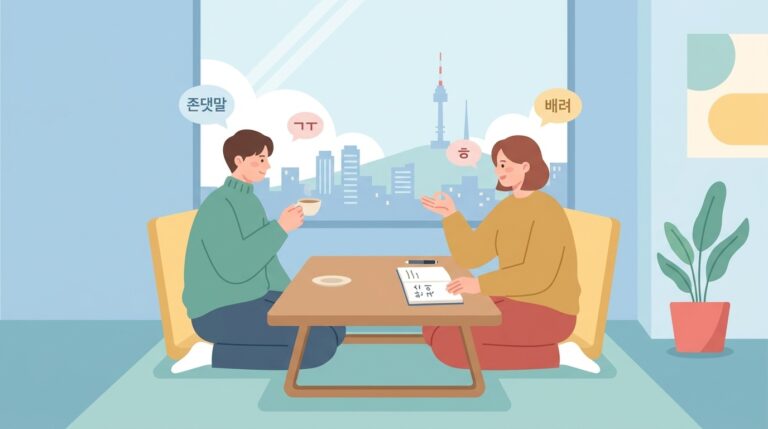
Finding the Invisible Line: How to Speak Your Truth Without Crossing into Rudeness
Phase 1: Empathy & Storytelling Opening
안녕하세요! (Annyeonghaseyo!) It is your Daily Hangul editor and cultural navigator back with another deep dive into the heart of Korean interpersonal dynamics.
Picture this scene from a popular K-Drama: An ambitious foreign consultant walks into a high-stakes board meeting at a Gangnam agency. Eager to display authentic passion and transparency, they point straight at the senior director’s quarterly deck and announce, “이 계획은 완전히 비효율적입니다” (I gyehoegeun wanjeonhi bihyeoyuljeogimnida – “This plan is completely inefficient”). The room freezes into arctic silence. Pencils stop scratching. The air becomes so heavy you could slice it with a barbecue scissor. Back home, this might be praised as radical candor; in Seoul, it felt like an emotional ambush.
Many advanced Korean learners reach the C1-C2 plateau where their grammar is flawless, yet their communicative intent gets lost in cultural translation. Sincerity (jeongseong) and honesty (soljikham) are deeply cherished in Korea, but when stripped of contextual cushioning (kushyeon-eo), candor quickly curdles into perceived arrogance or aggression (muryeham). This guide is built on a decade of coaching global diplomats, corporate leaders, and bilingual creators who wanted to express hard truths with warmth, precision, and social tact.
Phase 2: Core Expressions Deep Dive
1. 솔직히 까놓고 말해서 (Soljikhi kkanoko malhaeseo)
- Pronunciation: [Sol-ji-ki kka-no-ko mal-hae-seo] (Think of the crisp snapping sound of “kka” like cracking a walnut open, followed by a flowing “malhaeseo”)
- Meaning: Literal: “Speaking openly after peeling/uncovering everything” | Nuance: “Off the record / Putting all cards on the table / Stripping away the sugarcoating.”
- K-Culture Moment: Seen frequently on variety talk shows like Running Man or Knowing Bros when cast members drop their polite on-screen personas to reveal hilarious, behind-the-scenes grievances.
- Editor’s Insight: The verb 까놓다 comes from peeling a fruit or shell. Using this signals that you are intentionally shedding social decorum for raw intimacy. Never use this upwards to a boss or client unless they explicitly invite you with an informal tone.
- Situation Spectrum: Casual: ✅ | Semi-formal: ⚠️ | Formal: 🚫
- 🤔 Think About It: Does your native culture value raw transparency immediately, or does it require a relational “warm-up” before unveiling sensitive truths?
2. 조심스럽지만 제 생각에는 (Josimseureopjiman je saenggak-eneun)
- Pronunciation: [Jo-sim-seu-reop-ji-man je saeng-ga-ge-neun] (Soft, cushioned cadence with gentle articulation on “josim”)
- Meaning: Literal: “It is cautious, but in my thought…” | Nuance: “Pardon my presumption, but from my vantage point… / If I may respectfully offer a perspective…”
- K-Culture Moment: The quintessential diplomatic opener used in corporate meetings, panel debates on news programs, and by idol group leaders handling delicate media inquiries during press conferences.
- Editor’s Insight: This phrase acts as linguistic shock-absorber. By declaring your awareness that your opinion might cause friction, you disarm the listener’s defensive walls before stating the critique.
- Situation Spectrum: Casual: ⚠️ | Semi-formal: ✅ | Formal: ✅
- 🤔 Think About It: Why does Korean corporate etiquette emphasize acknowledging potential discomfort before delivering analytical feedback?
3. 뼈를 때리다 (Ppyeoreul ttaerida)
- Pronunciation: [Ppyeo-reul ttae-ri-da] (Emphatic double consonant ‘pp’ like the pop of bubble wrap)
- Meaning: Literal: “To hit the bone” | Nuance: “To deliver a brutally honest, undeniable truth that cuts right to the core (a savage reality check).”
- K-Culture Moment: Flooding YouTube comment sections and webtoon forums whenever a mentor or web-drama protagonist speaks an uncomfortable, piercing truth without malice.
- Editor’s Insight: Often shortened to 뼈때림 (ppyeo-ttae-rim). While it describes harsh truth, it implies admiration for intellectual clarity rather than insult—provided the intent was constructive.
- Situation Spectrum: Casual: ✅ | Semi-formal: ⚠️ | Formal: 🚫
- 🤔 Think About It: How does your language distinguish between an offensive insult and a harsh, constructive wake-up call?
Phase 3: Textbook Korean vs. Real Korean
Situation 1: Pointing out a flaw in a colleague’s creative proposal
- 📖 교과서 한국어 (Textbook):
이 기획안은 논리적이지 않고 현실성이 떨어집니다.
(I gihoeganeun nollijeog-iji ankko hyeonsilsseongi tteoreojimnida. – “This proposal is not logical and lacks realism.”) - 🗣️ 진짜 한국어 (Real-life C2):
기획 의도는 참 신선한데, 실제 예산 집행 단계에서 조금 무리가 따르지 않을까 싶어요.
(Gihoek uidoneun cham sinseonhande, silje yesan jiphaeng dangye-eseo jogeum muriga ttareuji aneulkka sipeoyo. – “The concept is delightfully fresh, but I wonder if we might run into some logistical friction during actual budget execution.”) - 💡 왜 다를까? (Why the difference?):
Advanced Korean discourse relies on “sandwich cushioning”—affirming the creative effort first, then introducing the constraint as a speculative possibility (-ㄹ까 싶어요) rather than a definitive condemnation.
Situation 2: Declining an after-work drinking session without burning bridges
- 📖 교과서 한국어 (Textbook):
저는 오늘 약속이 있고 피곤해서 회식에 가지 않겠습니다.
(Jeoneun oneul yaksogi ikko pigonhaeseo hoesige gaji ankkesseumnida. – “I will not attend the gathering because I have plans and am tired.”) - 🗣️ 진짜 한국어 (Real-life C2):
오늘 정말 함께하고 싶었는데, 하필 선약이 겹쳐서 너무 아쉽네요. 다음 2차나 다음 모임 때는 제가 꼭 먼저 챙기겠습니다!
(Oneul jeongmal hamkkehago sipeonneunde, hapil seonyagi gyeopchyeoseo neomu aswimneyo. Daeum ichana daeum moim ttaeneun jega kkok meonjeo chaenggigessumnida! – “I really wanted to be there tonight, but an unavoidable prior commitment overlapped. I’ll make sure to prioritize the next round!”) - 💡 왜 다를까? (Why the difference?):
Stating raw fatigue sounds dismissive of group bonding. Framing refusal as a personal disappointment with a proactive promise for future engagement maintains social harmony (inhwa).
Phase 4: K-Culture Deep Dive & Non-Verbal Manners
4-1. 눈치 (Nunchi) & Physical Subtleties
In Korea, non-verbal markers frame whether your candor is interpreted as brave leadership or arrogant disrespect.
* Micro-Head Tilt & Softened Gaze: When delivering critical analysis, avoid piercing, unbroken eye contact. Tilt your head slightly down (approx. 5 degrees) while softening your gaze toward the listener’s collar area. This signals deference even while expressing an opposing viewpoint.
* Two-Handed Document Referencing: When referencing flawed data, point using an open palm with both hands lightly aligned, rather than pointing with an index finger or tapping aggressively with a pen.
4-2. Cultural Code Analysis: “정(Jeong)” vs. “선(Seon)”
Modern Korean society operates on a dynamic tension between Jeong (warm communal attachment) and Seon (boundaries). While older generations leaned heavily into communal intrusion in the name of care, contemporary urban Korea—especially the millennial and Gen-Z workforce—values personal psychological safety. Transgressing someone’s “선” (boundary) under the guise of “솔직함” (frankness) is no longer seen as cool; it is classified as lack of self-awareness. True high-register Korean mastery means defending boundaries politely while demonstrating deep empathy.
Phase 5: Real-Life Roleplay Scenario
- Setting: A post-production meeting room at an indie production house in Sangsu-dong. Sunlight spills across raw concrete walls and pour-over coffee carafes.
- NPC: Team Leader Min-woo (30s, sharp creative director who values sincere artistic discourse but despises passive-aggressive evasion).
Dialogue:
1. Min-woo: 이번 숏폼 광고 1차 편집본 말인데, 솔직히 반응이 좀 갈리네요. 앤더슨 씨 보시기엔 어때요?
(Ibeon syotpom gwanggo ilcha pyeonjipbon marinde, soljikhi baneungi jom gallineyo. Aendeoseon ssi bosigien eottaeyo?)
🎭 Arms crossed, leaning over the monitor with an earnest, questioning squint.
“Regarding the first cut of our short-form campaign, feedback is pretty divided. Anderson, what is your genuine take?”
- Learner (You): 네, 팀장님. 연출 톤은 세련됐는데, 초반 3초 후킹이 살짝 약하지 않나 싶습니다.
(Ne, timjangnim. Yeonchul toneun seryeondwaenneunde, choban samcho hooking-i saljjak yakhaji anna sipeumnida.)
🎭 Looking at the timeline with an engaged nod, keeping hands folded on the table.
“Yes, Team Leader. The directorial tone is sleek, but I wonder if the initial 3-second hook might be a bit soft.” -
Min-woo: 역시 그렇게 느끼셨군요. 어디를 덜어내고 어디를 살려야 할까요?
(Yeoksi geureoke neukkisyeotgunyo. Eodireul deoreonaego eodireul sallyeoya halkkayo?)
🎭 Pencil poised over a notepad, waiting for concrete creative rationale.
“So you felt that too. What should we trim, and what should we emphasize?” -
Learner (You): B-roll 인서트 컷을 과감히 줄이고, 반전 사운드를 앞쪽에 배치하면 몰입도가 확 올라갈 것 같습니다.
(B-roll inseoteu keoseul gwagamhi jurigo, banjeon saundeureul apjjoge baechihamyeon morimdoga hwak ollagal geot gatseumnida.)
🎭 Using open palm gestures to illustrate the timeline adjustment.
“If we boldly trim the B-roll inserts and bring the plot-twist sound effect to the front, engagement would likely jump significantly.” -
Min-woo: 오, 그렇게 바꾸면 기존 클라이언트 요구사항이랑 부딪히지 않을까요?
(O, geureoke bakkumyeon gijon keullaeieonteu yogusahang-irang buditchiji aneulkkayo?)
🎭 Rubbing his chin thoughtfully, testing your strategic conviction.
“Oh, but if we do that, wouldn’t it clash with the client’s original brief?” -
Learner (You): 조심스럽지만, 클라이언트의 핵심 목표가 도달률이라면 이 방향이 설득력 있을 겁니다.
(Josimseureopjiman, keullaeieonteu-ui haeksim mokpyoga dodallryuriramyeon i banghyang-i seoldeukryeok isseul geomnida.)
🎭 Maintaining calm eye contact with a grounded, confident posture.
“If I may say cautiously, if the client’s primary KPI is organic reach, this logic will be persuasive.” -
Min-woo: 듣고 보니 일리가 있네요. 뼈 때리는 피드백 고마워요. 바로 시안 B 만들어봅시다.
(Deutgo boni illiga inneeyo. Ppyeo ttaerineun pideubaek gomawoyo. Baro sian B mandeureobopsida.)
🎭 Smiles broadly, jotting notes rapidly.
“That makes total sense. Thanks for the razor-sharp feedback. Let’s draft Option B right away.” -
Learner (You): 네, 팀장님! 바로 작업해서 공유드리겠습니다.
(Ne, timjangnim! Baro jageophaeseo gong-yudeurigessumnida.)
🎭 Nods lightly and starts exporting the edit file.
“Understood, Team Leader! I will render and share the working file immediately.”
🔀 Interactive Decision Branch
What would you say if the director asked: “솔직히 제 이전 연출작보다 별로인가요?” (Be honest, is this worse than my previous work?)
- Choice A: “네, 이전 작품이 훨씬 임팩트 있었고 이번 건 좀 지루합니다.”
❌ Bad: Brutally destructive. Cuts down the person rather than analyzing the work. - Choice B: “이전 작품과는 결이 달라서 직접 비교하긴 어렵지만, 이번 작품은 잔잔한 감정선이 돋보이는 것 같아요.”
🏆 Best: Masterful nuance. Acknowledges distinct genre intent while highlighting strength without deceit. - Choice C: “전혀 문제없습니다! 둘 다 최고입니다!”
⚠️ Risk: Hollow flattery (yeonghon eomneun yeongcheon), which diminishes your intellectual credibility.
Phase 6: 10-Second Emotion Shadowing Drill
Practice these emotional cadences aloud. Pay attention to breath pauses (/) and intonation modulation.
[🧐 Analytical & Diplomatic]
“취지는 충분히 공감하지만 / 현시점에서는 / 리스크가 다소 커 보입니다.”
(Chwijineun chungbunhi gonggamhajiman / hyeonsijjeom-eseoneun / riseukeuga daso keo boimnida.)
“I completely understand the rationale / but at this juncture / the operational risk appears somewhat elevated.”-
[🤝 Affectionately Direct with a Close Peer]
“너 진짜 / 팩트로 뼈 때리지 마라 / 나 오늘 유리 멘탈이야.”
(Neo jinjja / paekteuro ppyeo ttaeriji mara / na oneul yuri mentariya.)
“Hey / stop hitting me with raw facts today / my mental resilience is made of glass right now.” -
[🛡️ Gracefully Deflecting an Inappropriate Personal Question]
“관심 가져주셔서 감사하지만 / 그 부분은 / 개인적인 영역으로 남겨두고 싶네요.”
(Gwansim gajyeojusyeoseo gamsahajiman / geu bubuneun / gaeinjeogin yeong-yeogeuro namgyeodugo simneyo.)
“Thank you for your warm interest / but as for that topic / I prefer to keep it in my personal sphere.”
Phase 7: K-Culture Mini Dictionary
-
쿠션어 (Kushyeon-eo) [Cushion Words]
Etymology/Usage: Linguistic dampeners like “실례지만” (excuse me), “번거로우시겠지만” (troublesome though it may be). Indispensable for business emails and complex negotiations. -
돌직구 (Dol-jik-gu) [Fastball Candor]
Etymology/Usage: A baseball metaphor meaning throwing a heavy stone pitch straight into the zone. Refers to unvarnished, direct truth-telling without euphemisms. -
선 넘다 (Seon neomda) [Crossing the Line]
Etymology/Usage: Violating unspoken social, hierarchical, or psychological boundaries. A dominant modern cultural concept in workplace ethics and media commentary. -
티키타카 (Tiki-taka) [Brisk Conversational Chemistry]
Etymology/Usage: Originating from soccer passing tactics, it signifies rapid, witty, mutual dialogue where both parties balance teasing, banter, and respect effortlessly.
Phase 8: Survival Kit for Travelers & Expats
Top 3 Boundary-Setting Phrases:
- 조금 부담스러워서요. (Jogeum budamseureowoseoyo.)
Pro Tip: Use when vendors or acquaintances push uncomfortably close. It immediately signals boundary without provoking hostility. - 생각해 볼 시간을 조금 주시겠어요? (Saenggakhae bol siganeul jogeum jusigesseoyo?)
Pro Tip: Perfect for high-pressure sales environments or contract negotiations in Dongdaemun or tech markets. - 제 취향은 조금 다른 쪽이라서요. (Je chwihyangeun jogeum dareun jjogiraseoyo.)
Pro Tip: Gentle way to decline unsolicited food recommendations or fashion critique without offending taste.
Editor’s Travel Note
When navigating Seoul’s dynamic urban landscape, keep local navigation apps primed. Instead of foreign map apps, download the Kakao Map Official App Download or Naver Map Navigation App to find quiet cafes (chal-tong cafe) when you need personal breathing room. For public transit, remember that loud speakerphone conversations on the Seoul Subway Line 2 or AREX express train are quintessential examples of “선 넘는 행동” (crossing public decorum).
Phase 9: “한 발 더 깊이” (One Step Deeper)
Korean communicative ethics are not designed to suppress truth, but to protect the psychological dignity (chemyeon) of both the speaker and receiver. In Western analytical tradition, truth is frequently viewed as an objective artifact existing outside relationships; in Korean linguistic consciousness, a truth spoken without relational care ceases to be constructive virtue. True C2 fluency is the realization that politeness is not the opposite of honesty, but its most sophisticated container.
💬 Your Turn: Have you ever experienced a moment in Korea where your honest intention was misinterpreted as bluntness? Share your story in the comments below!
Phase 10: FAQ & Common Mistakes
Q: Can I use “솔직히” (honestly) in a formal job interview?
A: Yes, but pair it with high-register honorifics, such as “솔직히 말씀드리면” (Soljikhi malsseumdeurimyeon), followed immediately by self-reflective analysis rather than complaints about past employers.
Q: What is the cleanest way to disagree with a senior colleague?
A: Use the indirect proposal framing: “선배님 말씀도 맞는데, 이런 측면도 함께 고려해 보면 어떨까요?” (You make a valid point, but how about we also factor in this dimension?)
Q: Is calling someone “돌직구 스타일” a compliment or an insult?
A: Context-dependent! If praised for solving a stalled negotiation, it is a compliment. If used during social drinks after someone made things awkward, it is a polite warning to tone it down.
🚨 Common Mistakes Alert
- Mistake: Starting sentences with “내 말은 그게 아니라” (That’s not what I said!) during debates.
Correct Action: “제가 설명을 다소 미흡하게 드린 것 같은데요” (It seems I didn’t explain it clearly enough). - Mistake: Translating “I hate this” literally as “이거 극혐이에요” in professional company.
Correct Action: “제 선호와는 조금 거리가 있네요” (It is a bit far from my personal preference). - Mistake: Interpreting silence as complete agreement.
Correct Action: In Korea, silence during feedback often indicates deep disagreement wrapped in polite hesitation. Probe gently with: “혹시 우려되시는 부분이 있으실까요?”
Phase 11: Action Missions
- 🥉 Bronze Mission (Solo Shadowing): Record yourself delivering Phase 6 Shadowing Drill #1 with smooth intonation and a calm gaze.
- 🥈 Silver Mission (Community Engagement): Write a 2-sentence movie review in Korean on Instagram using the grammar pattern
~기는 한데 ~것 같아요. - 🥇 Gold Mission (Real-World Execution): Next time you order coffee or discuss plans with Korean friends, use the cushion phrase “혹시 괜찮으시다면” before making a specific modification.
- 🎮 K-Culture Mission: Watch an episode of a workplace K-Drama (e.g., Misaeng or Agency) and jot down 2 instances where a character softens bad news using cushion phrases.
Phase 12: Interactive Quiz Challenge
1. Situational Judgment
Which response demonstrates the highest level of diplomatic tact when an acquaintance wears an unconventional outfit and asks for your honest opinion?
* A) “솔직히 말해서 완전 별로예요. 갈아입으세요.”
* B) “되게 개성 넘치네요! 다만 오늘 격식 있는 자리 톤앤매너랑 맞을지 살짝 고민되긴 해요.”
* C) “아무 생각 없습니다.”
2. Fill-in-the-Blank
Complete the cushion sentence:
“제 의견이 조금 ( ) 조심스럽지만, 데이터 검토가 다시 필요해 보입니다.”
3. True or False
In modern Korean culture, using the term “뼈 때리다” always constitutes a grave insult that damages friendships. (True / False)
🔍 Click here to reveal Answers & Explanations
- Correct Answer: B
Explanation: Option B validates their unique flair (gaeseong) while constructively pointing out contextual dress-code mismatches without attacking personal taste. - Correct Answer: 앞서나가는 것 같아 / 성급할 수도 있어서
Explanation: Any cushion phrase acknowledging premature judgment fits elegantly before “조심스럽지만”. - Correct Answer: False
Explanation: “뼈 때리다” is frequently used between peers with affectionate respect for delivering undeniable, sharp constructive truths.






