

Phase 1: Empathy & Immersion
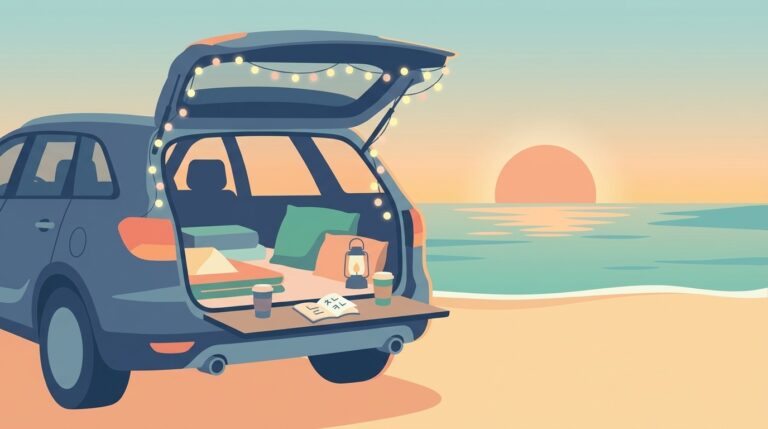
안녕하세요! I am your Daily Hangul editor and your personal Korean culture guide. Have you ever watched a relaxing K-Drama or a Korean travel vlog where the main characters park their SUV right in front of a sparkling ocean or a peaceful pine forest, open the trunk, pull down cozy fairy lights, and sip hot ramen? That dreamy setup is called 차박 (Chabak)—the ultra-popular Korean trend of car camping!
However, when foreign learners actually try to go car camping in Korea, reality can hit hard. You arrive at a scenic spot in Gangwon-do or Taean, but you are not sure if parking overnight is allowed. You want to ask the local store owner or fellow campers, but your mind freezes. Is it rude to pitch a trunk tent here? Where do we throw away food waste? As someone who has guided hundreds of international students through Korean outdoor trips, I have seen beginners panic over simple camping phrases. Don’t worry! This guide will equip you with essential, natural A2-level Korean phrases so you can confidently conquer your first Korean Chabak adventure without awkwardness.
Phase 2: Deep Dive into Top 3 Core Expressions
1. 여기서 차박할 수 있어요? (Yeogiseo chabak-hal su isseoyo?)
- Pronunciation: [Yeo-gi-seo cha-bak-hal su i-sseo-yo?] (Sounds like: ‘Yuh-gi-suh cha-bak-hahl soo ee-ssuh-yo’)
- Meaning: Literal: “Can [we] do car-camping here?” | Real Nuance: “Is overnight car camping permitted in this spot?”
- K-Culture Moment: Asking the campsite manager, village elder, or convenience store clerk before setting up your car mattress.
- Editor’s Insight: Combining 여기서 (here) with the A2 grammar pattern -(으)ㄹ 수 있어요? (Can I / Is it possible to…?). Chabak (차박) is a compound word of 차 (car) + 박 (staying the night).
- Situation Spectrum: Casual: ⚠️ (여기서 차박 돼?) / Semi-formal: ✅ (여기서 차박할 수 있어요?) / Formal: ✅ (이곳에서 차박이 가능합니까?)
- 🤔 Think About It: In Korea, distinguishing between regular parking (주차) and camping overnight (차박) is very important legally and socially. How does your home country regulate sleeping in cars?
2. 뷰가 진짜 대박이에요! (Byuga jinjja daebagieyo!)
- Pronunciation: [Byu-ga jin-jja dae-ba-gi-e-yo!] (Sounds like: ‘View-gah jeen-jjah day-bahg-ee-eh-yo’)
- Meaning: Literal: “The view is real jackpot!” | Real Nuance: “The scenic view from the car is absolutely breathtaking!”
- K-Culture Moment: Opening the car trunk at sunset and expressing genuine excitement to your camping buddy or uploading a video clip on Instagram story.
- Editor’s Insight: 대박 (Daebak) means awesome or jackpot, and 뷰 (Byu) is the loanword for ‘view’. Adding -이에요 makes it friendly and polite.
- Situation Spectrum: Casual: ✅ (뷰 대박이다!) / Semi-formal: ✅ (뷰가 진짜 대박이에요!) / Formal: ⚠️ (경치가 아주 훌륭합니다)
- 🤔 Think About It: Koreans love taking aesthetic ‘trunk view’ photos for social media. Why do you think scenic spots are called ‘뷰 맛집’ (view restaurants) in modern Korean slang?
3. 쓰레기는 챙겨갈게요. (Sseuregineun chaenggyeogalgeyo.)
- Pronunciation: [Sseu-re-gi-neun chaeng-gyeo-gal-ge-yo.] (Sounds like: ‘Ssuh-reh-gee-noon cheng-gyuh-gahl-geh-yo’)
- Meaning: Literal: “I will pack up and take the trash.” | Real Nuance: “I will make sure to take all my garbage with me when leaving.”
- K-Culture Moment: Reassuring local residents or campsite hosts that you practice ‘Clean Chabak’ (클린 차박) and won’t leave a mess.
- Editor’s Insight: 챙기다 (to pack/take care of) + -ㄹ게요 (I will do… [promising to listener]). This expression immediately earns respect and warmth from Korean locals.
- Situation Spectrum: Casual: ⚠️ (쓰레기 챙겨갈게) / Semi-formal: ✅ (쓰레기는 챙겨갈게요) / Formal: ✅ (쓰레기는 수거해가겠습니다)
- 🤔 Think About It: ‘Leave no trace’ is a huge civic etiquette in Korea’s camping community. How does taking responsibility build trust in shared public spaces?
Phase 3: Textbook Korean vs. Real Korean
Situation 1: Asking if a spot has a clean public restroom
- 📖 Textbook Korean: 화장실이 근처에 위치하고 있습니까? (Hwajangsiri geuncheoe wichi-hago isseumnikka? – Is a restroom situated nearby?)
- 🗣️ Real Korean: 근처에 화장실 있어요? (Geuncheoe hwajangsil isseoyo? – Is there a restroom nearby?)
- 💡 Why is it different?: In real outdoor situations, Koreans drop stiff vocabulary like ‘위치하다’ (to be situated) and use simple, conversational patterns with 있어요? (Is there?).
Situation 2: Starting a mini campfire or burner
- 📖 Textbook Korean: 지금부터 모닥불을 점화하겠습니다. (Jigeumbuteo modakbureul jeomhwahagesseumnida. – I will now ignite the bonfire.)
- 🗣️ Real Korean: 이제 불멍 할까요? (Ije bulmeong halkkayo? – Shall we do ‘fire-gazing’ now?)
- 💡 Why is it different?: Korean campers rarely say ‘lighting a fire’. Instead, they suggest 불멍 (Bulmeong)—the beloved trend of silently zoning out while watching campfires!
Phase 4: K-Culture Deep Dive & Non-Verbal Etiquette
4-1. Nunchi (눈치) & Body Language at Chabak Sites
- Dimming Car Lights: When parking at night in a car camping site, immediately switch off your headlights (스텔스 모드 – stealth mode) so you don’t blind neighbors who are relaxing inside their open trunks.
- Two-Handed Greeting: When asking a neighboring camper for help (e.g., borrowing a lighter or asking for directions), bow lightly with your hands clasped in front. It shows you are respectful and approachable.
4-2. Cultural Code: The ‘Bulmeong’ (불멍) & ‘Ramyeon’ Ritual
In Korea, car camping isn’t just about survival in the wild; it’s a cozy lifestyle. The two most iconic parts of Korean Chabak are 불멍 (Bulmeong – relaxing fire meditation) and eating 차박 라면 (car-cooked instant noodles) cooked on a portable single-burner stove. Saying “불멍 하니까 힐링돼요!” (Gazing at the fire makes me feel healed!) is the ultimate way to bond with Korean camping friends.
Phase 5: Real-Life Roleplay Scenario
Setting: Sunset at a scenic beach in Gangneung. You pull up with your rental car. An friendly local campsite keeper, Mr. Park, walks over holding a clipboard.
- Mr. Park: 안녕하세요! 예약하고 오셨어요? (Annyeonghaseyo! Yeyakhago osyeosseoyo?)
🎭 Smiling while adjusting his sunhat. (Hello! Did you arrive with a reservation?) - You: 안녕하세요! 아니요, 예약 안 했어요. 혹시 여기서 차박할 수 있어요? (Annyeonghaseyo! Aniyo, yeyak an haesseoyo. Hoksi yeogiseo chabak-hal su isseoyo?)
🎭 Bowing politely and pointing to an empty parking spot. (Hello! No, I didn’t reserve. By any chance, can I car camp here?) - Mr. Park: 아, 오늘 평일이라 자리 있어요. 1박에 2만 원이에요. (A, oneul pyeong-irira jari isseoyo. Il-bage iman-wonieyo.)
🎭 Nodding and checking his chart. (Ah, it’s a weekday so we have spots. It is 20,000 won for 1 night.) - You: 네, 좋아요! 결제해 드릴게요. (Ne, joayo! Gyeoljehye deurilgeyo.)
🎭 Handing over your credit card with two hands. (Yes, sounds great! I will pay.) - Mr. Park: 저기 바다 바로 앞쪽 3번 자리에 주차하세요. 뷰가 좋아요. (Jeogi bada baro apjjok sambeon jarie juchahaseyo. Byuga joayo.)
🎭 Pointing towards the shoreline with an open palm. (Please park at spot number 3 right in front of the ocean. The view is nice.) - You: 와, 뷰가 진짜 대박이네요! 감사합니다. (Wa, byuga jinjja daebagineyo! Gamsahamnida.)
🎭 Looking at the ocean with sparkling eyes. (Wow, the view is really amazing! Thank you.) - Mr. Park: 밤 10시 이후에는 조용히 해 주시고, 쓰레기는 분리수거해 주세요. (Bam yeolsi ihue-neun joyonghi hae jusigo, sseuregineun bunrisugeohae juseyo.)
🎭 Making a gentle ‘shh’ gesture and pointing to trash bins. (Please keep it quiet after 10 PM and sort your recyclable trash.) - You: 네! 쓰레기는 꼭 잘 챙겨갈게요. (Ne! Sseuregineun kkok jal chaenggyeogalgeyo.)
🎭 Nodding with a confident smile. (Yes! I will definitely take good care of the trash.)
🔀 Interactive Choice Point: Mr. Park asks if you have a camping stove to cook dinner. How do you respond?
- Option A: “버너 없어요. 라면 끓여주세요.” (I don’t have a burner. Boil ramen for me.)
- Feedback [Bad]: Demanding cooking service in a self-serve campsite sounds impolite.
- Option B: “버너 빌릴 수 있어요?” (Can I borrow/rent a burner?)
- Feedback [Best]: Natural, polite A2 Korean! The host will happily rent or lend you one.
- Option C: “불 피워도 돼요?” (Can I just light a bonfire on the ground?)
- Feedback [Risk]: Lighting raw ground fires without fire pits is illegal in most Korean spots.
Phase 6: 10-Second Emotion Shadowing Drill
Practice with pauses ( marked with / ) and mimic the emotion tags!
- [😊 Excited & Curious]
혹시 / 여기서 / 차박할 수 있어요?
(Hoksi / yeogiseo / chabak-hal su isseoyo?) -
[🤩 Astonished & Delighted]
우와! / 트렁크 뷰가 / 진짜 대박이에요!
(Uwa! / teureongkeu byuga / jinjja daebagieyo!) -
[🤝 Polite & Reassuring]
걱정 마세요! / 쓰레기는 / 깨끗하게 / 챙겨갈게요.
(Geokjeong maseyo! / sseuregineun / kkaekkeuthage / chaenggyeogalgeyo.)
Phase 7: K-Culture Mini Dictionary
- 차박 (Chabak): Car camping where you sleep inside your retrofitted vehicle or connected trunk tent.
- 불멍 (Bulmeong): Meditatively staring into a campfire while relaxing. (불 = fire, 멍 = daydreaming).
- 노지 (Noji): An undeveloped, free outdoor camping spot without built-in commercial campsite facilities.
- 매너타임 (Manner Time): The quiet hours at campsites (usually starts at 10 PM or 11 PM) where loud talking and music must stop.
Phase 8: Survival Kit for Travelers
Top 3 Survival Phrases
- 전기 쓸 수 있어요? (Jeongi sseul su isseoyo?) – Can I use electricity here?
(Pro Tip: Essential if you need to plug in an electric car heating blanket!) - 개수대 어디예요? (Gaesudae eodiyeyo?) – Where is the water sink / dishwashing area?
(Pro Tip: Use this to find clean tap water for washing vegetables or utensils.) - 장작 팔아요? (Jangjak parayo?) – Do you sell firewood?
(Pro Tip: Buy kiln-dried firewood at the campsite kiosk to prevent excess smoke.)
Editor’s Travel Note
- Navigation: Download the [Naver Map App for Korean Road Trips] to search for legal rest areas and Chabak zones (search term: ‘차박지’ or ‘오토캠핑장’).
- Garbage Bags: Buy a localized standard trash bag (종량제 봉투 – Jongnyangje bongtu) at any local convenience store in that specific district before camping.
Phase 9: One Step Deeper (Reflection)
Car camping in Korea reflects the harmonious balance between private sanctuary and community respect. Because South Korea has a high population density and precious natural reserves, campers treat nature not as an endless wilderness to conquer, but as a shared garden to protect. When a foreigner says, “쓰레기는 챙겨갈게요” (I’ll take the trash), you instantly become a respected friend of the local Korean community.
💬 Your Turn: Have you ever tried sleeping in your car or camping under the stars? Which Korean camping spot would you like to visit first—the beach or the mountains? Share in the comments below!
Phase 10: FAQ & Common Mistakes
Q: Can I park and camp anywhere near Korean beaches or rivers?
A: No. Free camping (노지 차박) is restricted in national parks, private grounds, and certain protected coastal lines. Always look for official signage or ask: “여기서 차박해도 돼요?”
Q: What does ‘클린 차박’ (Clean Chabak) mean?
A: It is the cultural movement in Korea promoting zero-waste camping—bringing back all food scraps, trash, and leaving no footprint.
Q: How do I ask to buy firewood at night?
A: You can ask the camp store clerk: “장작 한 박스 주세요” (Please give me one box of firewood).
🚨 Common Mistakes Warning Board
- Mistake: Pitching a large tent on ordinary public parking lots without car camping permits.
- Correct Action: Make sure the area is an authorized Auto-camping (오토캠핑장) or designated Chabak site.
- Mistake: Throwing away food waste in regular plastic bags.
- Correct Action: Separate food scraps (음식물 쓰레기) into dedicated food disposal bins.
- Mistake: Playing loud K-Pop after 10 PM.
- Correct Action: Respect 매너타임 (Manner time) by lowering volume and dimming lights.
Phase 11: Action Missions
- 🥉 Bronze Mission (Solo Practice): Practice pronouncing “여기서 차박할 수 있어요?” 5 times aloud until it flows smoothly.
- 🥈 Silver Mission (Social Share): Find a Korean Chabak photo on Instagram and leave a polite comment: “뷰가 진짜 대박이에요!”
- 🥇 Gold Mission (Real Life): Visit a Korean convenience store or campsite and use “쓰레기 봉투 있어요?” (Do you have trash bags?).
- 🎮 K-Culture Mission: Watch an episode of a Korean travel variety show (like House on Wheels – 바퀴 달린 집) and listen for how they describe the camping view!
Phase 12: Interactive Quiz Challenge
1. Situation Check: You want to ask the campsite owner if your spot has a pretty ocean view. What do you say?
a) 뷰가 진짜 대박이에요!
b) 바다 뷰 보여요?
c) 라면 끓여주세요!
2. Fill-in-the-blank: When leaving your camping site, you promise to take your trash:
“쓰레기는 꼭 ____________.” (I will take care of the trash.)
3. True or False: In Korea, it is polite to blast loud music throughout the night during car camping.
👉 Click here to reveal Answers & Explanations!
- Answer: b) 바다 뷰 보여요? (Can I see the ocean view?) or praising it with a) 뷰가 진짜 대박이에요! when you see it!
- Answer: 챙겨갈게요 (chaenggyeogalgeyo). This shows great camping etiquette.
- Answer: False! Campsites strictly enforce 매너타임 (Manner Time) usually starting from 10 PM.







