

Sweet Cravings at 2 AM: Your Easy A1 Guide to Buying Chocolate in a Korean Convenience Store
Phase 1: Empathy (Story-Driven Opening)
안녕하세요! This is your Daily Hangul Editor, your friendly neighborhood cultural navigator!
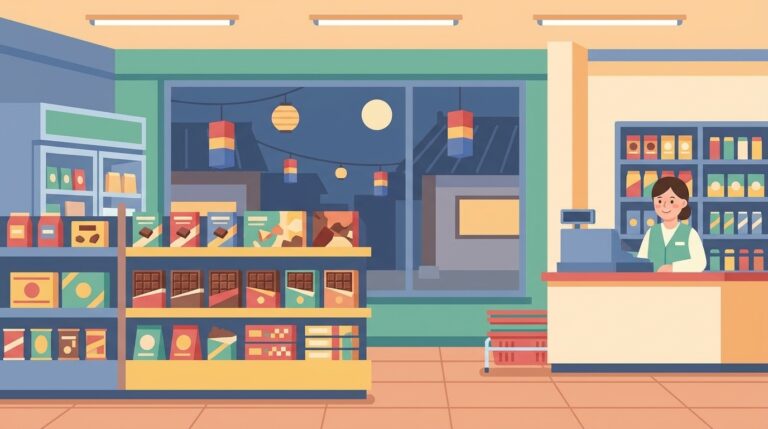
Imagine this: It is 11:30 PM on a crisp evening in Seoul. You’ve walked 15,000 steps exploring Bukchon Hanok Village, your legs are tired, and your brain is desperately crying out for one thing: chocolate. You spot the glowing neon sign of a GS25 or CU convenience store and step inside to the cheerful “Ding-dong!” chime.
You walk past the instant ramen wall and find yourself staring at an entire aisle of gleaming snack packages. You see familiar brands alongside unique Korean chocolate treats like Ghana Milk Chocolate, Market O Brownies, Crunky Rice Crunch, and seasonal Pepero. But wait—some boxes have bright little tags saying “1+1” and “2+1”, while others are dark chocolate, wafer bars, or jelly-filled treats. How do you ask the cashier if it’s milk chocolate? Where do you look? And what on earth do those deal tags mean?
Don’t worry! In today’s guide, tailored specially for A1 absolute beginners, we will master 3 magical phrases to help you find your dream chocolate, score bonus snacks with convenience store promotions, and check out with total confidence. Let’s satisfy that sweet tooth together!
Phase 2: Core Expressions Deep Dive
Here are the 3 essential survival phrases you need when craving chocolate in Korea:
1. 초콜릿 어디에 있어요? (Chokollit eodie isseoyo?)
- Pronunciation: Cho-kol-lit eo-di-e iss-eo-yo? (Sounds like: “Choco-leet uh-dee-eh ee-ssuh-yo?”)
- Meaning: Literal: “Chocolate where is?” | Natural: “Where is the chocolate?”
- K-Culture Moment: You see this in countless K-Dramas when tired university students during exam week burst into a convenience store seeking an instant sugar recharge (dang chungjeon).
- Editor’s Insight: The word 초콜릿 (chokollit) is a loanword from English, so locals will understand you instantly! The magic structure
[Item] + 어디에 있어요?can be used for anything in Korea—just swap the item name!- Situation Spectrum: Casual: ⚠️ (To friends: 초콜릿 어디 있어?) | Semi-formal/Polite: ✅ (To staff: 초콜릿 어디에 있어요?) | Formal: 🚫 (Too rigid for a store)
- 🤔 Think About It: In English, we put “Where” at the beginning (Where is X?), but Korean puts the topic first (X where is?). Why do you think Korean spotlights the desired object first?
2. 이거 1+1이에요? (Igeo won-peulluseu-won-ieyo?)
- Pronunciation: Ee-geo won-peul-leu-seu-won-ee-eh-yo? (Sounds like: “Ee-guh one-plus-one-ee-ay-yo?”)
- Meaning: Literal: “This 1+1 is?” | Natural: “Is this Buy-One-Get-One-Free?”
- K-Culture Moment: Watching your favorite K-Pop idol on a variety show budget-challenge hunting for “1+1” deals to maximize snacks with limited cash!
- Editor’s Insight: In Korea, “Buy One Get One Free” is called “원플러스원 (One-Plus-One)”, and “Buy Two Get One Free” is “투플러스원 (Two-Plus-One)”. If you bring only one item to the register when it’s marked 1+1, the cashier will kindly tell you to grab another one!
- Situation Spectrum: Casual: ⚠️ | Semi-formal/Polite: ✅ | Formal: 🚫
- 🤔 Think About It: Korean convenience stores thrive on “bundle gifting” culture. Sharing your extra free snack with a friend or colleague is an instant bond-builder!
3. 이거 달아요? (Igeo dara-yo?)
- Pronunciation: Ee-geo dah-rah-yo? (Sounds like: “Ee-guh dah-rah-yo?”)
- Meaning: Literal: “This is sweet?” | Natural: “Is this sweet?”
- K-Culture Moment: A character tasting a dessert in a mukbang show and expressing pure happiness with wide eyes.
- Editor’s Insight: Korean has many dark chocolate varieties (like Dream Cacao 72% or 82% which are bitter!). If you want sweet milk chocolate, asking 이거 달아요? ensures you get that sugary comfort.
- Situation Spectrum: Casual: ⚠️ | Semi-formal/Polite: ✅ | Formal: 🚫
- 🤔 Think About It: In Korean cuisine, balanced sweetness is prized. Koreans often compliment desserts by saying, “It’s good because it’s not too sweet!” (많이 안 달아서 맛있어요!).
Phase 3: Textbook Korean vs. Real Korean
Let’s see how textbook Korean compares to how real people speak at the convenience store:
Situation 1: Asking where the chocolate shelf is
- 📖 Textbook Korean: 초콜릿 매대가 어느 위치에 위치하고 있습니까? (Chokollit maedaega eoneu wichiaewichihago isseumnikka? – In which location is the chocolate display stand situated?)
- 🗣️ Real Korean: 저기요, 초콜릿 어디 있어요? (Jeogiyo, chokollit eodi isseoyo? – Excuse me, where is the chocolate?)
- 💡 Why the difference?: Real-life convenience store interactions are fast and friendly. Dropping redundant location nouns and particles makes your speech sound natural rather than robotic.
Situation 2: Asking if a snack deal is active
- 📖 Textbook Korean: 이 초콜릿 상품은 덤 증정 프로모션 행사 품목에 해당합니까? (I chokollit sangpumeun deom jeungjeong peuromosyeon haengsa pummoge haedanghamnikka? – Does this chocolate item correspond to the complimentary bonus promotion?)
- 🗣️ Real Korean: 이거 지금 행사해요? (Igeo jigeum haengsahae-yo? – Is this on promotion right now?)
- 💡 Why the difference?: Locals use the simple word 행사 (haengsa, event/promotion) instead of lengthy business jargon.
Phase 4: K-Culture Deep Dive & Non-Verbal Manners
4-1. 눈치 (Nunchi) & Polite Convenience Store Manners
When you are shopping at a Korean convenience store (CVS):
* The Two-Hand Card Handover: When paying with your credit card or T-Money card, offer it lightly with both hands or with your right hand supported at the wrist by your left hand. It’s a warm sign of respect that cashiers love seeing from visitors!
* The Deal Scan: If the price screen beeps and flashes red or orange, glance at the clerk. They might point back to the aisle showing two fingers—that means you qualified for a 1+1 deal and can run grab your second free item!
4-2. Cultural Codes: The “Dang Chungjeon” (Sugar Rush) & Pepero Day
- 당 충전 (Dang Chungjeon – Sugar Recharge): In fast-paced Korea, stress and long study hours are cured with quick convenience store runs. Saying “당 떨어졌어” (Dang tteoreojyeosseo – “My sugar levels dropped!”) is the universal excuse for treating yourself to a chocolate bar.
- Pepero Day (November 11): Every Nov 11th, Korea celebrates Pepero Day, where chocolate-covered biscuit sticks take over entire aisles and storefronts. Gifting chocolate is an everyday love language in Korea!
Phase 5: Real-World Roleplay Scenario
Setting: A brightly lit GS25 store near Hongik University Station at midnight.
Characters:
* You: A traveler craving midnight chocolate.
* Min-woo (민우): A friendly university student working the night shift.
Dialogue:
1. You: 🎭 [Looking around the aisles, spotting Min-woo restocking drinks] 저기요, 초콜릿 어디에 있어요? (Jeogiyo, chokollit eodie isseoyo? / Excuse me, where is the chocolate?)
2. Min-woo: 🎭 [Smiles and points to Aisle 2] 아, 초콜릿은 2번 통로 과자 코너에 있어요! (A, chokolliteun ibeon tongno gwaja koneoe isseoyo! / Ah, chocolate is in Aisle 2 in the snack section!)
3. You: 🎭 [Walks over, picks up two Ghana chocolate bars, and brings them to the counter] 감사합니다! 이거 1+1이에요? (Gamsahamnida! Igeo won-peulluseu-won-ieyo? / Thank you! Is this 1+1?)
4. Min-woo: 🎭 [Scans the barcode with a beep] 네, 맞아요! 1+1 행사 상품이에요. (Ne, majayo! Won-peulluseu-won haengsa sangpumieyo. / Yes, that’s right! It’s a 1+1 promotional item.)
5. You: 🎭 [Curious about another small box near the register] 이거 많이 달아요? (Igeo mani dara-yo? / Is this very sweet?)
6. Min-woo: 🎭 [Chuckles] 아니요, 다크 초콜릿이라서 쌉싸름해요! (Aniyo, dakeu chokollit-iraseo ssapssareumhaeyo! / No, it is dark chocolate, so it’s a bit bitter!)
7. You: 🎭 [Nodding with a smile] 그렇군요. 이걸로 할게요! (Geureokun-yo. Igeollo halkeyo! / I see. I will take these!)
8. Min-woo: 🎭 [Hands your receipt] 3,000원입니다. 맛있게 드세요! (Samcheon-won-imnida. Mas-itge deuseyo! / That’s 3,000 won. Enjoy your treat!)
🔀 Interactive Branching Decision:
You pick up a chocolate box tagged with “2+1”, but you only have two boxes in your hand at the register. What do you do?
- Choice A: Hand over two boxes and say: “하나 더 가져와도 돼요?” (Hana deo gajyeowado dwaeyo? – May I bring one more?)
- 👉 Feedback (Best! ⭐): Perfect! Min-woo will gladly wait while you dash over to grab your third free chocolate bar.
- Choice B: Walk away silently leaving the chocolate on the counter.
- 👉 Feedback (Bad ❌): This leaves the cashier confused and creates unnecessary restocking work.
- Choice C: Pay for the two and quickly leave without asking.
- 👉 Feedback (Risk ⚠️): You miss out on your free treat! “2+1” means if you buy two, the third is 100% free.
Phase 6: 10-Second Emotion Shadowing Drill
Practice reading these aloud with real human emotion! Focus on the rhythm slashes (/):
[😊 Polite & Inquiring]
저기요, / 초콜릿 / 어디에 있어요?
(Jeogiyo, / chokollit / eodie isseoyo?)-
[🤩 Delighted & Curious]
우와! / 이거 / 1+1이에요?
(Uwa! / igeo / won-peulluseu-won-ieyo?) -
[😋 Anticipating Deliciousness]
이 초콜릿 / 진짜 / 달아요!
(I chokollit / jinjja / dara-yo!)
Phase 7: K-Culture Mini Dictionary
- 편의점 (Pyeon-ui-jeom) | Convenience Store | Korea’s all-in-one culinary and lifestyle hub, open 24/7 with seating areas, hot water dispensers, and microwaves.
- 달콤하다 (Dalkom-hada) | Sweet / Luscious | A richer, warmer word for “sweet” than just 달다 (dalda), often used in drama lines describing romantic moments or delicious desserts.
- 원플러스원 (Won-peul-leu-seu-won) | 1+1 Deal (BOGO) | The holy grail of K-CVS shopping tags where buying one item gets you a second identical item for zero extra won.
- 당 충전 (Dang chung-jeon) | Sugar Recharge | Slang used by students and office workers when needing a sweet snack to survive long days.
Phase 8: Traveler’s Survival Kit
Top 3 Survival Phrases
- 봉투 필요하세요? (Bongtu piryohaseyo? – Do you need a plastic bag?)
- Pro Tip: Reply with “네, 주세요” (Ne, juseyo / Yes, please – 100~200 KRW fee) or “아니요, 괜찮아요” (Aniyo, gwaenchanayo / No, I’m okay).
- 영수증 버려주세요. (Yeongsujeung beoryeojuseyo. – Please discard the receipt.)
- Pro Tip: Say this if you don’t need the paper slip.
- 교차 증정 돼요? (Gyocha jeungjeong dwaeyo? – Can I mix and match flavors for the 1+1?)
- Pro Tip: If Pepero has a 2+1 deal, this phrase lets you ask if you can pick 1 almond and 2 original flavors!
Editor’s Travel Note
- Navigation: Install the Naver Map Navigation App on iOS/Android to locate the closest 24-hour convenience store anywhere in Korea within seconds.
- Payment: T-Money transit cards, Apple Pay (at most major CVS chains), and foreign credit cards are widely accepted.
Phase 9: Think Deeper (한 발 더 깊이)
In Korea, the convenience store is far more than a retail shop—it is a community oasis. Whether it is an exhausted high school student studying for the Suneung (college entrance exam), a salaryman unwinding after overtime, or a traveler resting their feet, the convenience store welcomes everyone under bright lights at any hour. Grabbing a small chocolate bar isn’t just buying food; it’s partaking in the everyday Korean ritual of Dang Chungjeon (caring for your mental stamina with sweetness).
💬 Your Turn: What is your all-time favorite comfort snack when you are traveling late at night? Let us know in the comments below!
Phase 10: FAQ & Common Mistakes
Q: Can I mix different chocolate brands for a 1+1 promotion?
A: Generally no. 1+1 promotions apply to the exact same product brand or line (for example, two flavors of Ghana chocolate), but you cannot pair a Ghana bar with a Snickers bar unless specified.
Q: How do I know if an item is 1+1 or 2+1 if I can’t read Korean?
A: Look for large numbers like 1+1 or 2+1 printed on bright red, yellow, or blue plastic shelf tags right below the item price tag.
Q: What if I only take one item from a 1+1 deal?
A: You will still be charged full price for that single item! The cashier will usually remind you to grab your free one, so don’t be shy to run back and pick it up.
🚨 Common Mistakes Alert:
- Mistake: Pronouncing 1+1 as “Il-plus-il” using Korean numbers.
- Correct Action: Say it in Konglish: “Won-peulluseu-won” (원플러스원)!
- Mistake: Assuming all chocolate is sweet milk chocolate.
- Correct Action: Check the percentage numbers! Boxes labeled 72% or 82% are very bitter dark chocolate.
- Mistake: Throwing away snack trash on the street.
- Correct Action: Convenience stores have sorted trash bins right outside or near the microwave area. Dispose of plastic and paper properly!
Phase 11: Action Missions & K-Culture Challenge
- 🥉 Bronze Mission (Solo Drill): Stand in front of your mirror and repeat “초콜릿 어디에 있어요?” 5 times with a bright smile.
- 🥈 Silver Mission (Social Drill): Next time you watch a K-Drama or K-Pop vlog, screenshot whenever you see a convenience store snack scene and identify if there is chocolate!
- 🥇 Gold Mission (Real Life): Walk into a Korean mart or Asian grocery store in your area, pick up your favorite snack, and ask the clerk or a friend: “이거 달아요?”
- 🎮 K-Culture Bonus Mission: Search on YouTube for “Korean CVS chocolate haul” and list 3 unique Korean chocolate brands you want to try in Seoul!
Phase 12: Interactive Quiz Challenge
Test your knowledge before your next snack run!
1. Situation Judgment
You find a chocolate bar with a yellow tag reading “1+1”. How many chocolate bars should you bring to the cash register to get the full deal?
* (A) 1 bar
* (B) 2 bars
* (C) 3 bars
🔍 Click to reveal the answer & explanation!
Correct Answer: (B) 2 bars
Explanation: 1+1 means “Buy 1, Get 1 Free,” so you take 2 bars to the cashier and only pay for 1!
2. Fill in the Blank
Complete the sentence to ask where chocolate is:
“저기요, 초콜릿 ________ 있어요?”
🔍 Click to reveal the answer & explanation!
Correct Answer: 어디에 (eodie)
Full Sentence: 저기요, 초콜릿 어디에 있어요? (Excuse me, where is the chocolate?)
3. Cultural True or False
True or False: Korean numbers like “일(Il)” are used to say “1+1” in convenience stores.
🔍 Click to reveal the answer & explanation!
Correct Answer: False
Explanation: It is pronounced using the English-derived Konglish phrase “원플러스원” (Won-peul-leu-seu-won).







