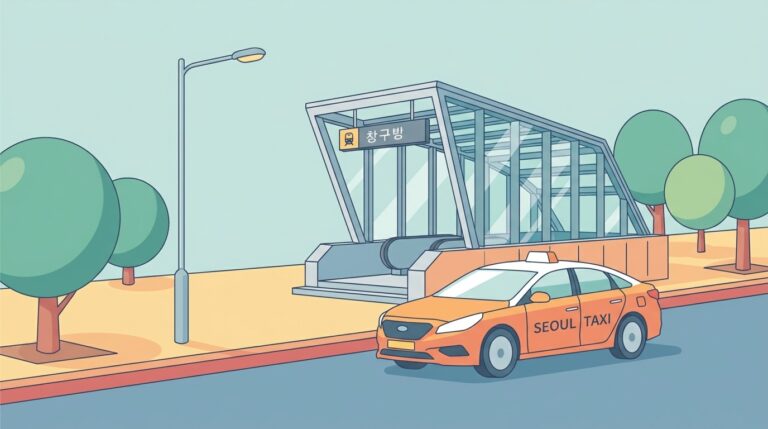
How to Tell a Taxi Driver to Stop in Korea: Easy A1 Guide
Phase 1: Empathy & Storytelling
안녕하세요! I am your Daily Hangul editor, your trusted Korean culture buddy! Have you ever watched a K-Drama where the main character dramatically shouts to the driver to stop the car right in front of a busy Seoul crosswalk? You might imagine doing the same on your dream trip to Seoul. But picture this real-life scenario: You are sitting in the backseat of an orange Seoul taxi after an exciting day in Hongdae. You spot your hotel just ahead across the intersection, but your heart starts racing. What do you say? If you stay silent, the driver will zoom past and make an annoying U-turn 500 meters down the road! Over the past decade tutoring A1 beginners, I have seen so many learners freeze in this exact moment because textbook phrases feel too long or robotic. Today, we will master simple, natural phrases so you can stop any Korean taxi smoothly, politely, and with 100% confidence.
Phase 2: Core 3 Expressions
1. 여기서 세워주세요 (Yeogiseo sewojuseyo)
- Pronunciation: Yeo-gi-seo se-wo-ju-se-yo (Sounds like: Yaw-gee-saw say-woh-joo-say-yo)
- Meaning: Direct: “Please stop here.” / Real Nuance: Polite, standard, and friendly request to pull over right here.
- K-Culture Moment: The staple phrase used whenever a K-Drama lead gets dropped off at their doorstep.
- Editor’s Insight: Yeogi means “here”, and sewoda means “to stop/park a vehicle”. Adding -juseyo turns it into a respectful request.
- Situation Spectrum: Casual ⚠️ | Semi-formal ✅ | Formal ✅
- 🤔 Think About It: In English, we often say “Drop me off here”. In Korean, the focus is on asking the driver to safely “bring the car to a halt” (sewoda).
2. 저기서 내려주세요 (Jeogiseo naeryeojuseyo)
- Pronunciation: Jeo-gi-seo nae-ryeo-ju-seyo (Sounds like: Jaw-gee-saw neh-ryuh-joo-say-yo)
- Meaning: Direct: “Please let me get off over there.” / Real Nuance: Polite way to point out a spot slightly ahead.
- K-Culture Moment: Perfect when pointing toward a subway exit, convenience store, or bright landmark 20 meters ahead.
- Editor’s Insight: Jeogi points to a visible location slightly further away from you. Naerida means “to get off/alight”.
- Situation Spectrum: Casual ⚠️ | Semi-formal ✅ | Formal ✅
- 🤔 Think About It: Notice how Korean uses distinct distance words (Yeogi = right here, Jeogi = over there). How does your native language point out spots ahead?
3. 앞쪽에서 세워주세요 (Apjjogeseo sewojuseyo)
- Pronunciation: Ap-jjo-ge-seo se-wo-ju-se-yo (Sounds like: Ahp-jjoh-geh-saw say-woh-joo-say-yo)
- Meaning: Direct: “Please stop up ahead.” / Real Nuance: Proactive heads-up giving the driver time to change lanes.
- K-Culture Moment: Used by smart locals on wide multi-lane roads like Gangnam Boulevard to prevent sudden braking.
- Editor’s Insight: Apjjok means “front/ahead side”. Drivers love this phrase because it allows safe lane switching!
- Situation Spectrum: Casual ⚠️ | Semi-formal ✅ | Formal ✅
- 🤔 Think About It: Giving someone a polite heads-up reflects the Korean value of consideration for others’ safety and workflow.
Phase 3: Textbook vs. Real Korean
Situation 1: Spotting your exact corner
- 📖 Textbook Korean: 이곳에서 정차해 주시기를 바랍니다. (Igoseseo jeongchahae jusigireul baramnida. – “I desire that you stop at this location.”)
- 🗣️ Real Korean: 여기서 세워주세요! (Yeogiseo sewojuseyo!)
- 💡 Why it is different: Textbook Korean often uses formal Sino-Korean nouns (jeongcha = stopping a vehicle), whereas real Koreans use conversational verbs like sewoda.
Situation 2: Stopping right at the traffic light
- 📖 Textbook Korean: 신호등 근처에서 하차하겠습니다. (Sinhodeung geuncheoeseo hachahagetseumnida. – “I shall disembark near the traffic light.”)
- 🗣️ Real Korean: 신호등 앞에서 내려주세요~ (Sinhodeung apeseo naeryeojuseyo~)
- 💡 Why it is different: Hacha sounds like an automated subway announcement! Natural speech keeps it simple and warm with -juseyo.
Phase 4: K-Culture Deep Dive & Non-Verbal Manners
4-1. Nunchi & Body Language
- Timing is King: Do not shout “Yeogiseo sewojuseyo!” at the exact millisecond you reach your building door. Korean taxi drivers need 3 to 5 seconds to check side mirrors and pull over to the curb safely.
- Two Hands Payment: When paying by T-Money card or credit card, offer your card with both hands (or your right hand supported by your left elbow). This shows instant politeness!
4-2. The K-Travel Code
- Korean taxis have automatic meter navigation linked with real-time traffic updates. If you want to stop just before an intersection, say your phrase early. Also, look at the dashboard meter to verify the fare before tapping your card.
Phase 5: Real-Life Roleplay Scenario
Setting: You are riding a taxi in Myeongdong nearing your hotel entrance on a rainy evening.
Characters: Driver Kim (friendly, middle-aged Seoul cabbie) & You (smart Korean learner).
- Driver Kim: 다 와 갑니다. 어디쯤에서 내리실래요? (Da wa gamnida. Eodijjeumeseo naerisinlaeyo?) 🎭 Checking rearview mirror. – “We are almost there. Where would you like to get off?”
- You: 저기 편의점 앞에서 세워주세요! (Jeogi pyeon-ui-jeom apeseo sewojuseyo!) 🎭 Pointing gently with open palm. – “Please stop in front of that convenience store over there!”
- Driver Kim: 네, 알겠습니다. 비 오니까 조심하세요. (Ne, algetseumnida. Bi onikka josimhaseyo.) 🎭 Turning on hazard lights and smoothly braking. – “Okay, got it. Be careful because it is raining.”
- You: 감사합니다. 얼마예요? (Gamsahamnida. Eolmayeyo?) 🎭 Holding card ready. – “Thank you. How much is it?”
- Driver Kim: 6,500원입니다. (Yukcheon-obaeg-won-imnida.) 🎭 Pointing at the meter. – “It is 6,500 won.”
- You: 카드로 계산할게요. (Kadeuro gyesanhalgeyo.) 🎭 Handing card with both hands. – “I will pay by card.”
- Driver Kim: 네, 결제됐습니다. 안녕히 가세요! (Ne, gyeoljedwaetseumnida. Annyeonghi gaseyo!) 🎭 Handing receipt. – “Yes, payment complete. Goodbye!”
- You: 감사합니다, 수고하세요! (Gamsahamnida, sugohaseyo!) 🎭 Slight bow while stepping out. – “Thank you, have a good day!”
🔀 Interactive Choice
What should you say if the driver is driving past your hotel entrance?
* Choice A: 야! 멈춰! (Ya! Meomchwo! – Hey! Stop!)
* Choice B: 기사님, 여기서 세워주세요! (Gisanim, yeogiseo sewojuseyo!)
* Choice C: 호텔 도착! (Hotel dochak! – Hotel arrival!)
Feedback:
* Choice A (Risk 🚫): Extremely rude! Ya! Meomchwo! is informal and sounds aggressive to elders.
* Choice B (Best ✅): Perfect! Adding Gisanim (Driver-nim) makes it super respectful and clear.
* Choice C (Bad ⚠️): It sounds like a computer robot; the driver might not realize you want to halt immediately.
Phase 6: 10-Second Emotion Shadowing Drill
[😊 Calm & Clear]- 여기서 / 세워주세요 (Yeogiseo / sewojuseyo)
[👉 Pointing Ahead]- 저기 신호등 앞에서 / 내려주세요 (Jeogi sinhodeung apeseo / naeryeojuseyo)
[🙏 Polite & Friendly]- 기사님, / 골목 앞에서 / 세워주세요 (Gisanim, / golmok apeseo / sewojuseyo)
Phase 7: K-Culture Mini Dictionary
- 기사님 (Gisanim) | Respectful title for taxi/bus drivers (Literal: “Honored Driver”).
- 편의점 (Pyeon-ui-jeom) | Convenience store; the best landmark to use when pointing out drop-off points.
- 신호등 (Sinhodeung) | Traffic light; a very common reference point for stopping safely.
- 골목 (Golmok) | Alleyway; essential when your guesthouse is tucked inside Korean neighborhood streets.
Phase 8: Traveler’s Survival Kit
Top 3 Taxi Survival Phrases
- 여기서 세워주세요 (Yeogiseo sewojuseyo) – Please stop here.
- 영수증 주세요 (Yeongsujeung juseyo) – Please give me a receipt (Great if you leave a bag behind!).
- 카드로 할게요 (Kadeuro halgeyo) – I will pay with a card.
Editor’s Travel Note
Download the official Kakao T Taxi App Installation Guide before landing at Incheon Airport. You can hail standard, deluxe, or blue taxis without language barriers. Remember: all Korean taxis accept major credit cards and T-Money transport cards!
Phase 9: A Step Deeper
In Korea, calling a driver 기사님 (Gisanim) instead of 아저씨 (Ajeossi) instantly builds mutual warmth and respect. Korean interpersonal communication centers on honoring the profession and dignity of service providers. When you say “수고하세요” (Sugohaseyo – Keep up the good work) when exiting, you turn a simple ride into a heartwarming cultural connection.
💬 Your Turn: What is the word for taxi driver in your native language, and how do you politely tell them to stop? Share in the comments!
Phase 10: FAQ & Common Mistakes
Q: Can I just say ‘Stop’ in English?
A: Most Seoul taxi drivers will understand “Stop!”, but saying “Yeogiseo sewojuseyo” ensures a smooth, polite response without startling the driver.
Q: How do I address the taxi driver politely?
A: Always use 기사님 (Gisanim). Never use 너 (Neo) or 야 (Ya).
Q: Should I tip taxi drivers in Korea?
A: No, tipping is not practiced in Korea. Just pay the exact metered fare on the screen.
🚨 Top 3 Common Mistakes
- Shouting at the exact moment: Shouting “Stop!” right at the driveway forces hard braking. Give 3-5 seconds notice.
- Using informal speech (Banmal): Saying “여기서 세워” (Yeogiseo sewo) sounds rude to older drivers. Always include -yo.
- Opening doors without looking: Watch out for delivery motorcycles (baedal otobai) passing on the right curb before opening the door!
Phase 11: Action Missions
- 🥉 Bronze Mission: Practice saying “Yeogiseo sewojuseyo!” 5 times in front of the mirror with a polite smile.
- 🥈 Silver Mission: Share your favorite K-Drama taxi chase or drop-off scene in our community thread!
- 🥇 Gold Mission: Use “기사님, 여기서 세워주세요” on your very next taxi ride in Korea and say “수고하세요” upon leaving.
- 🎮 K-Culture Quest: While watching your next K-Drama, listen closely for the words Gisanim or Sewojuseyo!
Phase 12: Interactive Quiz Challenge
Q1. Fill in the blank:
“Please stop here!” = 여기서 ________ (Yeogiseo ________)
Q2. Situation Quiz:
You see a subway station entrance 30 meters ahead. Which phrase is best?
* (A) 저기 지하철역 앞에서 내려주세요.
* (B) 빨리 달려주세요.
Q3. True or False:
In Korea, it is mandatory to leave a 15% tip for taxi drivers.
🔍 Click here to reveal Answers & Explanations!
- A1: 세워주세요 (sewojuseyo) or 내려주세요 (naeryeojuseyo).
- A2: (A) Jeogi jihacheol-yeok apeseo naeryeojuseyo. (B means “Please drive fast”).
- A3: False. Korea does not have a tipping culture. Just pay the exact fare shown on the meter!