

Phase 1: Empathy & Professional Narrative
안녕하세요! 매일한글 에디터입니다. (Hello! This is your Daily Hangul editor.)
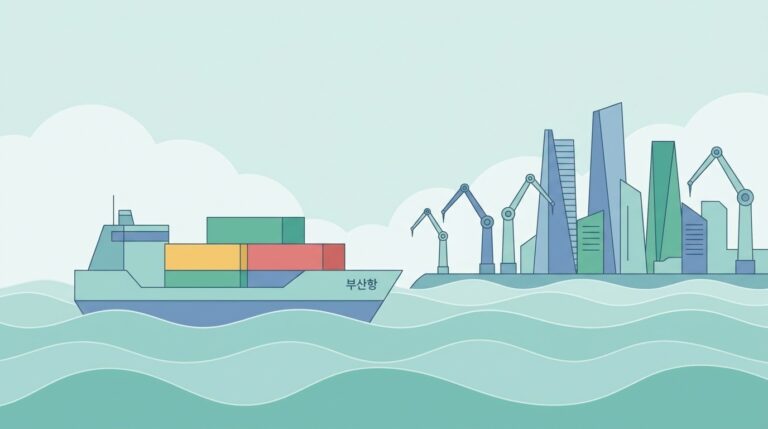
Picture this: You are standing on the observation deck overlooking the sprawling, bustling Busan New Port (부산신항), surrounded by senior marine architects, maritime policy analysts, and software engineers from Hyundai Heavy Industries and Samsung Heavy Industries. As giant autonomous container vessels glide seamlessly into automated docking berths, a high-stakes technical debate breaks out regarding collision avoidance algorithms (충돌 회피 알고리즘) and the integration of satellite-based remote monitoring systems.
You have mastered everyday conversational Korean, but suddenly, the vocabulary of advanced engineering, algorithmic maritime logistics, and high-level corporate negotiation feels like uncharted waters. How do you articulate complex concepts like “optimizing autonomous vessel trajectory algorithms” or “navigating supply chain bottlenecks” without sounding like a translated manual?
Navigating C2-level professional Korean in high-tech sectors requires more than just dictionary terms—it demands an innate grasp of high-register Sino-Korean idioms, subtle institutional nuances, and the collaborative linguistic etiquette of Korea’s engineering elite. Drawing on extensive feedback from global engineers working in Korea’s world-leading shipbuilding and logistics hubs, this guide will empower you to communicate with total authority and cultural fluency.
Phase 2: Core 3 Expressions In-Depth
1. 해상 물류의 패러다임 전환을 견인하다 (Haesang mulryu-ui paereodaim jeonhwaneul gyeon-inhada)
- Pronunciation: [Hae-sang mul-lyu-ui pae-reo-da-im jeon-hwan-eul gyeon-in-ha-da] (Sounds like “Hae-sang mool-ryoo-wee paradigm jun-hwan-eul gyun-een-ha-da”)
- Meaning: Literal: “To tow/lead the paradigm shift of maritime logistics” | Nuance: To spearhead or be the primary driving force behind an industry-wide structural revolution.
- K-Culture Moment: Frequently featured in tech documentaries and high-level executive keynotes at marine tech forums such as the Korea Maritime & Ocean University Global Maritime Forum.
- Editor’s Insight: The verb 견인하다 (to tow/pull) originates from naval towing mechanics, making it an intellectually rich metaphor when discussing market leadership in logistics.
- Situation Spectrum: Casual 🚫 | Semi-formal ⚠️ | Formal/Executive ✅
- 🤔 Think About It: How does utilizing mechanical metaphors like ‘견인’ elevate the perceived dynamism of your technical discourse compared to generic verbs like ‘이끌다’ (to lead)?
2. 자율운항 시스템을 전면 도입하여 리스크를 선제적으로 통제하다 (Jayul-unhang siseutem-eul jeonmyeon do-iphayeo riseukeureul seonjejeog-euro tongjehada)
- Pronunciation: [Ja-yul-un-hang si-seu-tem-eul jeon-myeon do-ip-ha-yeo ri-seu-keu-reul seon-je-jeok-eu-ro tong-je-ha-da]
- Meaning: Literal: “To proactively manage risks by fully adopting autonomous navigation systems” | Nuance: To establish preemptive operational safety and eliminate human error through full-scale technological integration.
- K-Culture Moment: Heard in corporate boardroom dramas like Agency or real-world investor relations briefings by top-tier Korean shipbuilding conglomerates.
- Editor’s Insight: ‘선제적’ (preemptive/proactive) is a staple C2 buzzword in Korean corporate governance, signaling tactical foresight.
- Situation Spectrum: Casual 🚫 | Semi-formal ⚠️ | Formal/Executive ✅
- 🤔 Think About It: In your native tongue, how does ‘preemptive risk mitigation’ convey professional rigor differently than merely saying ‘preventing mistakes early’?
3. 스마트 항만과의 실시간 데이터 연계를 고도화하다 (Seumateu hangman-gwa-ui silsigan de-iteo yeon-gyereul godohwahada)
- Pronunciation: [Seu-ma-teu hang-man-gwa-ui sil-si-gan de-i-teo yeon-gye-reul go-do-hwa-ha-da]
- Meaning: Literal: “To advance the real-time data linkage with smart ports” | Nuance: To upgrade and sophisticate inter-system IoT synchronization between vessels and automated terminal infrastructures.
- K-Culture Moment: A quintessential phrase in Korean government whitepapers on Fourth Industrial Revolution marine tech initiatives.
- Editor’s Insight: The suffix ‘-고도화하다’ (to upgrade to a sophisticated/advanced degree) transforms ordinary IT tasks into cutting-edge strategic initiatives.
- Situation Spectrum: Casual 🚫 | Semi-formal ⚠️ | Formal/Executive ✅
- 🤔 Think About It: Notice how Sino-Korean prefixes and suffixes instantly compress complex technical descriptions into concise, high-impact terminology.
Phase 3: Textbook Korean vs. Real Professional Korean
Situation 1: Discussing Logistics Efficiency & Supply Chain Bottlenecks
- 📖 Textbook Korean: 자율 배를 쓰면 물류가 더 빨라지고 문제가 줄어듭니다. (Jayul baereul sseumyeon mulryuga deo ppallajigo munjega jureodeumnida. / If we use autonomous boats, logistics get faster and problems decrease.)
- 🗣️ Real Professional Korean: 자율운항 선박의 상용화는 물류 병목 현상을 해소하고 운항 효율을 극대화할 것입니다. (Jayul-unhang seonbag-ui sang-yonghwaneun mulryu byeongmok hyeonsang-eul haesohago unhang hyoyul-eul geukdaehwahal geosimnida. / Commercialization of autonomous vessels will resolve supply chain bottlenecks and maximize navigational operational efficiency.)
- 💡 Why the Difference? C2 professional discourse replaces conversational nouns (배, 문제) with industry-standard terminology (선박, 병목 현상, 상용화) to demonstrate domain expertise.
Situation 2: Addressing Safety Concerns and Algorithmic Reliability
- 📖 Textbook Korean: 컴퓨터가 조종하면 사고가 덜 날 것입니다. (Keompyuteoga jojonghamyeon sagoga deol nal geosimnida. / If computers steer, fewer accidents will happen.)
- 🗣️ Real Professional Korean: 딥러닝 기반 충돌 방지 시스템 구축을 통해 인적 과실로 인한 해양 사고를 원천 차단할 수 있습니다. (Dimreoning giban chungdol bangji siseutem guchuk-eul tonghae injeok gwasil-ro inan haeyang sagoreul woncheon chadanhal su itseumnida. / By establishing deep-learning collision avoidance systems, we can fundamentally prevent maritime accidents caused by human error.)
- 💡 Why the Difference? High-level technical Korean explicitly identifies the technological mechanism (딥러닝 기반) and causal relationship (원천 차단) rather than making vague promises.
Phase 4: K-Culture Deep Dive & Non-Verbal Manners
4-1. Nunchi (눈치) & Professional Demeanor in Maritime Tech Conferences
In traditional Korean engineering sectors—particularly naval architecture and shipping—hierarchies remain deeply respected even amidst digital transformation. When presenting alternative technical designs or questioning an algorithmic model proposed by a senior project director (선임 연구원 / 수석):
* The 45-degree angle gaze: Avoid direct, piercing eye contact when refuting an algorithmic approach. Soften your delivery by maintaining open posture and nodding (고개 끄덕임) to acknowledge their baseline premise first.
* Strategic Buffering: Precede sharp technical corrections with indirect markers: “말씀해주신 접근법도 매우 타당하오나, 실시간 데이터 동기화 지연 관점에서 보완점을 검토해보면 좋을 것 같습니다.” (While your perspective is entirely valid, it might be beneficial to review complementary solutions regarding latency in real-time data sync.)
4-2. Cultural Insight: Korea’s Naval Heritage Meets AI Innovation
Korea’s dominance in modern shipbuilding is deeply intertwined with national pride, tracing historical roots back to Admiral Yi Sun-sin’s iconic 16th-century Geobukseon (거북선, Turtle Ship). Today, Korea’s maritime transformation from heavy manufacturing into AI-driven autonomous naval mobility is viewed not just as commercial progress, but as a strategic vanguard of national sovereignty and technological prestige.
Phase 5: Real-World Roleplay Scenario
Setting: A state-of-the-art conference room at the Busan Port Authority (BPA), overlooking fully automated gantry cranes.
Characters:
* 수석 엔지니어 박 부장 (Chief Engineer Director Park): A sharp, veteran naval architect leading the Smart Marine Infrastructure Task Force.
* You (글로벌 해운 물류 컨설턴트 / Global Logistics Consultant): Presenting the implementation roadmap for autonomous feeder vessels.
대화 (Dialogue):
- 박 부장: 이번 자율운항 피더선 실증 사업의 핵심 과제는 무엇이라고 보십니까?
(Ibeon jayul-unhang pideoseon siljeung sa-eob-ui haeksim gwajeneun mueos-irago bosimnikka?)
“What do you see as the core objective of this autonomous feeder vessel demonstration project?” -
You: 🎭 [Confidently adjusting your presentation slide]
단순한 항로 추종을 넘어, 스마트 항만 크레인과의 무인 하역 프로세스 연계율을 극대화하는 것입니다.
(Dansunhan hangno chujong-eul neomeo, seumateu hangman keurein-gwa-ui mu-in ha-yeok peuroseseu yeon-gyeryul-eul geukdaehwahaneun geosimnida.)
“Beyond simple waypoint tracking, it lies in maximizing the interface rate of automated unloading processes with smart port cranes.” -
박 부장: 🎭 [Nodding slowly, taking technical notes]
그렇다면 악천후 시의 센서 융합(Sensor Fusion) 오차율은 어떻게 극복할 계획입니까?
(Geureotamyeon akcheonhu si-ui senseo yunghap ocha-yureun eotteoke geukbokhal gyehoek-imnikka?)
“In that case, how do you plan to overcome sensor fusion error rates during severe weather conditions?” -
You: 🎭 [Making composed eye contact]
라이다(LiDAR)와 다중 레이더 데이터를 상호 보정하는 앙상블 알고리즘을 선제적으로 적용하고자 합니다.
(Ra-ida-wa dajung re-ideo de-iteoreul sangho bojeonghaneun angsangbeul algo-rijeum-eul seonjejeog-euro jeog-yonghagoja hamnida.)
“We plan to proactively apply ensemble algorithms that cross-compensate LiDAR and multi-radar sensor data.” -
박 부장: 🎭 [Leaning forward with a satisfied expression]
매우 현실적인 대안이군요. 국제해사기구(IMO) 표준 규제 준수 여부는 확인되었습니까?
(Mae-u hyeonsiljeogin dae-an-igunyo. Gukjehaesagigu pyojun gyuje junsu yeobuneun hwagindeo-eotsumnikka?)
“That is a highly realistic alternative. Has compliance with International Maritime Organization (IMO) standards been verified?” -
You: 🎭 [Handing over a bound executive brief]
네, MASS(자율운항선박) 3단계 가이드라인에 입각하여 시스템 안정성 검증을 마쳤습니다.
(Ne, MASS sandangye ga-ideu-ra-in-e ipgak-hayeo siseutem anjeongseong geomjeung-eul machyeotsumnida.)
“Yes, we have finalized system stability verification in strict accordance with MASS Level 3 guidelines.” -
박 부장: 🎭 [Extending a firm handshake]
훌륭합니다. 기술 실증 후 글로벌 허브 항만 확대 방안도 함께 논의합시다.
(Hullyunghamnida. Gisul siljeung hu geulrobeol heobeu hangman hwakdae bang-ando hamkke non-uihapsida.)
“Excellent. Let us also discuss plans for scaling this across global hub ports following the tech demonstration.” -
You: 🎭 [Bowing slightly with professional poise]
기대에 부응할 수 있도록 해양 인프라 혁신을 적극 지원하겠습니다.
(Gidae-e bu-eunghal su itdorok haeyang inpeura hyeoksin-eul jeokgeuk jiwonhagetseumnida.)
“I will actively support maritime infrastructure innovation to meet your highest expectations.”
🔀 Interactive Decision Point
How would you respond if Director Park asked: “항만 노동조합과의 자동화 갈등 문제는 어떻게 조율할 것입니까?” (How will you mediate automation conflicts with port labor unions?)”
- Option A: “기술이 발전하면 노조도 결국 따라올 수밖에 없다고 생각합니다.” (Fatalistic & insensitive to labor dynamics)
- ❌ Risk Feedback: Highly inappropriate. Disregards collective harmony and labor negotiations in Korea’s public-private port sector.
- Option B: “단기적 완전 무인화보다는 항만 인력의 디지털 관제 직군 재교육 프로그램을 병행하여 상생 모델을 구축해야 합니다.” (Balanced, strategic C2 proposal)
- 🏆 Best Feedback: Outstanding. Demonstrates high EQ, respects social consensus (상생 모델 – win-win coexistence model), and uses refined policy terminology.
- Option C: “그건 엔지니어가 신경 쓸 문제가 아니므로 경영진이 알아서 할 일입니다.” (Blunt & uncollaborative)
- ⚠️ Bad Feedback: Shows lack of ownership (책임감) and collaborative awareness, which are crucial for senior leaders in Korea.
Phase 6: 10-Second Shadowing Drill
Master rhythmic pauses (/) and professional intonation:
[👔 자신감 넘치고 확신에 찬 목소리로 / With confident conviction]
자율운항 선박의 상용화는 / 단순한 기술 혁신을 넘어 / 해운 물류의 패러다임 전환을 견인할 것입니다.
(Jayul-unhang seonbag-ui sang-yonghwaneun / dansunhan gisul hyeoksin-eul neomeo / haewun mulryu-ui paereodaim jeonhwaneul gyeon-inhal geosimnida.)-
[📊 객관적이고 신뢰감을 주는 어조로 / With measured, authoritative precision]
디지털 트윈 기반의 스마트 항만 인프라 구축을 통해 / 물류 병목 현상을 / 선제적으로 차단하겠습니다.
(Dijiteol teu-win giban-ui seumateu hangman inpeura guchuk-eul tonghae / mulryu byeongmok hyeonsang-eul / seonjejeog-euro chadan-hagetseumnida.)
Phase 7: K-Culture Mini Dictionary
- 무인화 (Mu-in-hwa) | Unmanned Automation
- Context: Refers to converting traditional human-operated vessels, gantry cranes, and terminal tractors into automated, crewless operations.
- 스마트 선박 (Seu-ma-teu Seon-bak) | Smart Ship / Autonomous Marine Mobility
- Context: Advanced marine vessels equipped with IoT, edge computing, situational awareness algorithms, and remote navigation systems.
- 해양 모빌리티 (Hae-yang Mo-bil-li-ti) | Ocean Mobility
- Context: Modern strategic umbrella term in Korea encompassing everything from autonomous surface ships to eco-friendly electric/hydrogen maritime transport.
- 물류 병목 현상 (Mul-ryu Byeong-mok Hyeon-sang) | Logistical Bottleneck
- Context: The sudden congestion and halting of maritime freight flows at quaysides, warehousing gates, or customs checkpoints.
Phase 8: Field Survival Kit for Professionals & Travelers
Top 3 On-Site Expressions
- 실시간 관제 데이터 로그 확인 부탁드립니다. (Silsigan gwanje de-iteo rogeu hwag-in butakdeurimnida.)
- Pro Tip: Use this when communicating with maritime control tower operators during vessel tracking trials.
- 항만 진입 허가(접안 승인) 절차가 어떻게 진행됩니까? (Hangman jin-ip heoga jeolchaga eotteoke jinghaengdoemnikka?)
- Pro Tip: Crucial phrase for terminal coordination and vessel berthing schedules.
- 통신 프로토콜 호환성 테스트를 먼저 거쳐야 합니다. (Tongsin peurotokol howanseong teseuteureul meonje geochyeoya hamnida.)
- Pro Tip: Direct, professional phrasing for systems engineers working across disparate ship-to-shore platforms.
Editor’s Travel & Tech Hub Note
When visiting major maritime R&D complexes in Busan or Ulsan, standard navigation apps may not pinpoint specific shipyard dock gates. Download the KakaoMap Navigation App or Naver Map Marine Guide to locate specialized marine research testbeds (e.g., Korea Institute of Ocean Science and Technology at Yeongdo). For nationwide logistics transit, check train schedules directly on the official Korail application.
Phase 9: “One Step Deeper” — Cultural Reflection
Korea’s contemporary surge in autonomous shipping is not an isolated technological initiative; it reflects the deep cultural value of 선제적 돌파 (Preemptive Breakthrough). Historically facing geographic and resource constraints, Korean industries thrive on preemptively mastering future engineering paradigms before global competitors solidify the standard. When interacting with Korean technical leads, recognizing that technological disruption is intertwined with corporate and national resilience will help you forge profound professional rapport.
💬 Your Turn: How does your home country’s approach to supply chain automation compare with Korea’s aggressive integration of AI and smart port ecosystems? Share your perspective in the comments below!
Phase 10: FAQ & Common Mistakes
Q: Can I use conversational verbs like ‘고치다’ when discussing algorithmic optimization?
A: In casual contexts, yes, but in C2 engineering settings, always substitute ‘고치다’ with precise Sino-Korean technical verbs like ‘보정하다’ (calibrate/compensate), ‘최적화하다’ (optimize), or ‘개선하다’ (improve/refine).
Q: What is the exact distinction between ‘무인선’ and ‘자율운항선박’?
A: ‘무인선’ (Unmanned vessel) simply denotes the physical absence of onboard crew (often remotely controlled), whereas ‘자율운항선박’ (Autonomous vessel) specifically implies algorithmic decision-making and cognitive self-navigation capabilities.
Q: Is English widely accepted in Korean maritime engineering meetings?
A: While global acronyms (e.g., IMO, MASS, LiDAR) are universal, executive alignment, government grant defense, and final consensus building are conducted in high-register Korean. Fluency in Sino-Korean technical vocabulary gives you a distinct strategic edge.
🚨 Common Mistakes Warning Board
- Mistake: Translating “cutting-edge” as “날카로운 기술” (Sharp technology).
- Correct Action: Use “최첨단 기술” (Choe-cheom-dan gisul).
- Mistake: Using “배가 스스로 가다” in project presentations.
- Correct Action: Express it as “선박이 자율적으로 항로를 생성 및 운항하다”.
- Mistake: Saying “더 좋은 항만” in formal proposals.
- Correct Action: Refer to it as “지능형 스마트 항만 인프라”.
Phase 11: Action Missions
- 🥉 Bronze Mission (Self-Practice): Shadow the Phase 6 drills 5 times, focusing on natural phrasing pauses before Sino-Korean compound nouns.
- 🥈 Silver Mission (Social Learning): Write a 2-sentence summary in the comments using ‘고도화하다’ and ‘패러다임 전환’ regarding an engineering trend in your industry.
- 🥇 Gold Mission (Real-World Execution): Use one of the Phase 8 expressions in your next international marine logistics seminar, client email, or professional meeting.
- 🎮 K-Culture Mission: Search Korean maritime news clips on YouTube with the keyword “자율운항 실증” (Autonomous navigation demonstration) and identify at least three technical expressions introduced in this lesson.
Phase 12: Interactive Quiz Challenge
1. Situational Judgment:
You are in an executive pitch meeting. You want to state that automated systems will eliminate human errors entirely. Which phrase delivers the most authoritative C2 impact?
* (A) 사람이 하는 실수를 다 없앨 수 있습니다.
* (B) 인적 과실에 기인한 해양 안전사고를 원천적으로 차단할 수 있습니다.
* (C) 컴퓨터가 사람보다 실수를 덜 하도록 만듭니다.
2. Fill-in-the-Blank:
스마트 항만의 핵심은 자율운항 선박과의 실시간 데이터 연계를 __________(to sophisticate/upgrade)하여 병목 현상을 해소하는 데 있다.
3. True or False:
In Korean maritime business etiquette, when challenging a senior director’s algorithmic framework, direct verbal opposition without honorific hedging is considered admirable and efficient.
🔍 Click to Reveal Answers & Detailed Explanations
- Answer: (B)
- Explanation: Option (B) uses high-register vocabulary (인적 과실, 기인하다, 원천적으로 차단하다), establishing institutional authority.
- Answer: 고도화(하다)
- Explanation: ‘고도화’ is the exact industrial term for elevating systems integration to a higher technological sophistication.
- Answer: False
- Explanation: Indirect framing and respectful linguistic cushioning (말씀해주신 방향성도 타당하오나…) are crucial non-verbal and communicative manners in Korea’s corporate culture.
- Explanation: Indirect framing and respectful linguistic cushioning (말씀해주신 방향성도 타당하오나…) are crucial non-verbal and communicative manners in Korea’s corporate culture.







