

안녕하세요! 매일한글 에디터입니다.
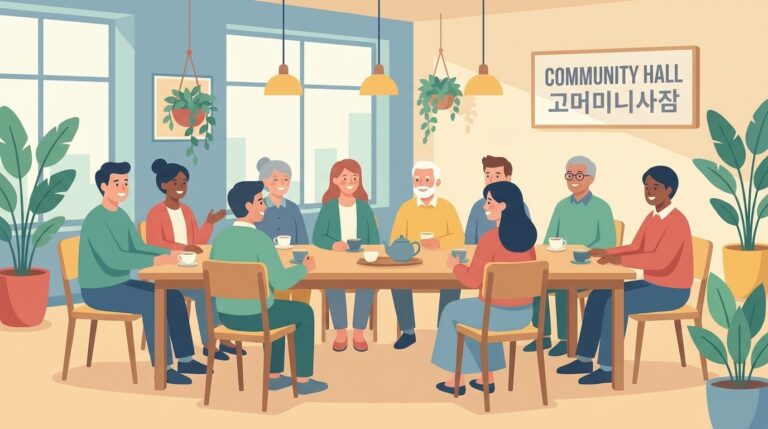
Have you ever watched a K-drama like Sky Castle or Reply 1988 and wondered how neighborhood dynamics actually work in modern Korean apartment complexes? Moving into a Korean apartment (아파트) is an exciting milestone, but attending your first Residents’ Representative Meeting (입주민 대표 회의) can feel like stepping into a high-stakes diplomatic summit!
From debating quiet hours for inter-floor noise (층간소음) to discussing elevator maintenance fees, resident meetings are where real Korean community culture happens. Many intermediate learners tell us, “I know everyday Korean, but when residents start using polite yet assertive meeting expressions, I freeze!” Don’t worry—this guide is built directly from real expat experiences and local resident insights to give you total confidence.
Phase 2: Core Expressions Deep Dive
1. 안건을 상정하다 (An-geon-eul sang-jeong-ha-da)
- Pronunciation: [An-geon-eul sang-jeong-ha-da] (Sounds like “ahn-geon wool sang-jeong-hah-dah”)
- Meaning: Literally “To introduce an agenda item.” In actual nuance, it means formally tabling an issue for official resident discussion.
- K-Culture Moment: In modern apartment drama scenes, the head of the residents’ committee clears their throat and opens the floor with this exact phrase.
- Editor’s Insight: Combining ‘안건’ (agenda item) with ‘상정하다’ (to submit/table) instantly raises your register from casual chatting to structured, respected discussion.
- Situation Spectrum: Casual 🚫 | Semi-formal ⚠️ | Formal ✅
- 🤔 Think About It: How does your native language distinguish between informal complaints and tabling an official topic in a community meeting?
2. 양해를 구하다 (Yang-hae-reul gu-ha-da)
- Pronunciation: [Yang-hae-reul gu-ha-da] (Sounds like “yahng-hae-rool goo-hah-dah”)
- Meaning: Literally “To seek understanding.” In actual practice, it’s a polite, high-level way to ask neighbors for patience regarding temporary disruptions (like interior remodeling or parking maintenance).
- K-Culture Moment: You will see this printed on elevator notices when a neighbor is remodeling their apartment kitchen.
- Editor’s Insight: Using ‘양해를 구하다’ shows that you respect collective harmony and understand the inconvenience caused to others.
- Situation Spectrum: Casual ⚠️ | Semi-formal ✅ | Formal ✅
- 🤔 Think About It: Why is asking for understanding emphasized more than simply saying “I’m sorry” in Korean shared living spaces?
3. 의견을 조율하다 (Ui-gyeon-eul jo-yul-ha-da)
- Pronunciation: [Ui-gyeon-eul jo-yul-ha-da] (Sounds like “we-gyeon-eul joh-yool-hah-dah”)
- Meaning: Literally “To tune opinions like musical instruments.” It means mediating differing views to reach a smooth compromise.
- K-Culture Moment: When residents disagree on parking rules, a mediator steps in to ‘의견을 조율하다’.
- Editor’s Insight: ‘조율’ comes from tuning an instrument. It emphasizes harmony rather than one side winning the argument.
- Situation Spectrum: Casual 🚫 | Semi-formal ✅ | Formal ✅
- 🤔 Think About It: Is compromise viewed as a win-win or a concession in your culture?
Phase 3: Textbook Korean vs. Real Spoken Korean
Situation 1: Asking neighbors to lower noise
- 📖 Textbook Korean: 시끄러우니까 소리를 줄여 주세요. (Please reduce the noise because it’s loud.)
- 🗣️ Real Spoken Korean: 층간소음 때문에 조금만 신경 써 주시면 감사하겠습니다. (I’d appreciate it if you could be a little mindful regarding inter-floor noise.)
- 💡 Why the difference? Direct commands sound confrontation in Korean apartment culture. Framing it around ‘신경 써 주시다’ (being mindful) preserves social harmony while clearly communicating the issue.
Situation 2: Suggesting an update to building rules
- 📖 Textbook Korean: 규칙을 바꾸고 싶습니다. (I want to change the rule.)
- 🗣️ Real Spoken Korean: 이 부분은 규정을 조금 보완하면 어떨까 합니다. (How about we supplement this rule slightly?)
- 💡 Why the difference? Saying “change” sounds critical of existing rules. Using ‘보완하다’ (supplement/reinforce) treats the current system with respect while introducing improvements.
Phase 4: K-Culture Deep Dive & Non-verbal Manners
4-1. Nunchi & Meeting Gestures
In a Korean resident meeting, non-verbal cues carry massive weight:
* Two-handed document delivery: Always hand out proposals or flyers using both hands.
* Slight head tilt with soft nod: When listening to an older resident speak, maintain gentle eye contact with slight nods to show active listening (눈치/Nunchi).
* Softening vocal tone: When raising an objection, begin with an intake of breath and a soft “아, 그 말씀도 맞는데요…” (Ah, that point is also valid, but…).
4-2. Culture Code: The Power of Community Snacks (간식)
Never underestimate the role of Korean hospitality in apartment politics! Bringing a box of warm rice cakes (떡) or drinks to a committee meeting acts as a socio-cultural lubricant. It signals: “I am here to contribute positively to our shared home.”
Phase 5: Real-Life Roleplay Scenario
Setting: Resident Representative Meeting room at Haeundae Green Apartment.
Characters:
* 김수현 (Kim Soo-hyun): B1 Expat Resident living on 7th floor.
* 동대표 (Building Representative): Senior resident passionate about building upkeep.
Dialogue (8 Turns)
- 동대표: 🎭 [Politely tapping the microphone] 자, 그럼 오늘 첫 번째 안건을 상정하겠습니다. (Ja, geu-rom o-neul cheot beon-jae an-geon-eul sang-jeong-ha-geess-neun-di-da. / Now, let us table today’s first agenda item.)
- 김수현: 🎭 [Raising hand gently with a calm smile] 대표님, 제가 반려동물 에티켓 관련 안건에 대해 말씀드려도 될까요? (Dae-pyo-nim, je-ga ban-ryeo-dong-mul e-ti-ket gwan-ryeon an-geon-e a-hae mal-sseum-deu-ryeo-do doel-kka-yo? / Representative, may I speak regarding the pet etiquette agenda?)
- 동대표: 🎭 [Nodding warmly] 네, 702호 입주민님 말씀하세요. (Ne, chil-baek-i-ho ip-ju-min-nim mal-sseum-ha-se-yo. / Yes, resident of Apt 702, please go ahead.)
- 김수현: 🎭 [Holding proposal with both hands] 엘리베이터 내 목줄 착용에 대해 입주민분들의 양해를 구하고 싶습니다. (El-li-be-i-teo nae mok-jul chak-yong-e dae-hae ip-ju-min-bun-deul-ui yang-hae-reul gu-ha-go sip-seub-ni-da. / I would like to request understanding from residents regarding leash usage in elevators.)
- 동대표: 🎭 [Adjusting glasses thoughtfully] 중요한 지적이네요. 주민 간의 의견 조율이 필요해 보입니다. (Jung-yo-han ji-jeok-i-ne-yo. Ju-min gan-ui ui-gyeon jo-yul-i pil-yo-hae bo-im-ni-da. / That is an important point. It seems mediation between residents is needed.)
- 김수현: 🎭 [Nodding respectfully] 네, 서로 불편함이 없도록 안내문 게시를 제안합니다. (Ne, seo-ro bul-pyyeon-ham-i eop-dto-rok an-nae-mun ge-si-reul je-an-ham-ni-da. / Yes, I suggest posting an information notice so everyone stays comfortable.)
- 동대표: 🎭 [Smiling approvingly] 아주 좋은 제안입니다. 다음 주 안내문을 게시하도록 하겠습니다. (A-ju joh-eun je-an-im-ni-da. Da-eum ju an-nae-mun-eul ge-si-ha-do-rok ha-geess-seub-ni-da. / Excellent proposal. We will post notice next week.)
- 김수현: 🎭 [Bowing slightly] 감사합니다. 잘 부탁드립니다. (Gam-sa-ham-ni-da. Jal bu-tak-deu-rim-ni-da. / Thank you. I appreciate your support.)
🔀 Interactive Branching Point
When a neighbor complains about late-night noise, how do you respond at the meeting?
- Option A: “규정이 없으니까 제 마음대로 할래요!” (There’s no rule so I’ll do as I want!)
- Feedback [BAD]: Direct conflict! Creates immediate friction with the whole building committee.
- Option B: “죄송합니다. 앞으로 밤 10시 이후에는 주의하도록 하겠습니다.” (I am sorry. I will be careful after 10 PM in the future.)
- Feedback [BEST]: Perfect B1 response! Demonstrates accountability, consideration, and polite commitment.
- Option C: “다른 집도 시끄러운데 왜 저한테만 그러세요?” (Other apartments are loud too, why only pick on me?)
- Feedback [RISK]: Escalates tension and makes you sound defensive in front of community leaders.
Phase 6: 10-Second Emotion Shadowing Drill
Practice these lines aloud using the emotion marks and pause points (/):
[😐 단호하지만 예의 바르게]/ 이 안건에 대해 / 주민 여러분의 양해를 구하고 싶습니다.
(I would like to request the residents’ understanding regarding this agenda item.)[😊 따뜻하고 협조적으로]/ 서로의 의견을 조율해서 / 더 좋은 아파트를 만들었으면 합니다.
(I hope we can adjust our opinions to build a better apartment community.)[🥺 진정성 있고 정중하게]/ 층간소음으로 불편을 드려 / 진심으로 죄송합니다.
(I am truly sorry for causing inconvenience due to inter-floor noise.)
Phase 7: K-Culture Mini Dictionary
- 입주민 대표 회의 (Ip-ju-min Dae-pyo Hoe-ui) | Residents’ Representative Meeting | The official council where apartment owners/tenants vote on complex budgets, security, and amenities.
- 층간소음 (Cheong-gan-so-eum) | Inter-floor Noise | Noise pollution between floors; the #1 social issue discussed in modern Korean multi-family housing.
- 관리비 (Gwan-ri-bi) | Maintenance Fee | Monthly utility and maintenance bill shared across apartment units.
- 동대표 (Dong-dae-pyo) | Building/Block Representative | An elected resident representing a specific apartment building block.
Phase 8: Traveler & Resident Survival Kit
Top 3 Survival Expressions
- 엘리베이터 공사 중인가요? (El-li-be-i-teo gong-sa jung-in-ga-yo?) — Is the elevator under maintenance?
- 택배는 어디에 두면 될까요? (Ttaek-bae-neun eo-di-e du-myeon doel-kka-yo?) — Where should parcel deliveries be left?
- 분리수거 요일이 언제예요? (Bun-ri-su-geo yo-il-i eon-je-ye-yo?) — Which days are designated for recycling?
Editor’s Travel & Living Note
Living in a Korean apartment complex is extremely convenient once you set up local apps! Download the 네이버 지도 앱 다운로드 for precise apartment complex gate routing, and ask your building management office if your complex uses the 아파트너 앱 공식 가이드 to pay maintenance fees and check community notices right from your smartphone.
Phase 9: One Step Deeper
Korean apartment complexes are not just concrete structures; they are micro-societies built on collective responsibility. While western housing often emphasizes individual sovereignty, Korean housing culture relies on communal courtesy (더불어 사는 문화). Showing effort to participate in meetings or observing quiet hours signals respect for shared harmony. When you speak polite meeting Korean, you transform from an outsider into a valued neighbor.
💬 Your Turn: Has your neighborhood ever had a community meeting? How do people resolve neighbor disagreements in your home country? Share your stories in the comments below!
Phase 10: FAQ & Common Mistakes
Q: Can non-Korean tenants attend the Residents’ Representative Meeting?
A: Yes! As long as you reside in the apartment building, you have the right to attend public resident sessions and listen or present concerns.
Q: What is the polite way to address the meeting chairperson?
A: Address them by their title: 대표님 (Dae-pyo-nim) or 동대표님 (Dong-dae-pyo-nim).
Q: What should I do if inter-floor noise bothers me at night?
A: Avoid knocking directly on your neighbor’s door at late hours. Instead, contact the security office (경비실) or leave a polite note.
🚨 Common Mistakes TOP 3
- ❌ Using direct imperative phrases like “하지 마세요” (Don’t do it)
- 👉 Correct Action: Use soft conditional forms like “~해 주시면 감사하겠습니다”.
- ❌ Addressing older residents as “너” or without honorific titles
- 👉 Correct Action: Always add 님 to room numbers, e.g., 702호 입주민님.
- ❌ Skipping introductory greetings before voicing complaints
- 👉 Correct Action: Always start with “안녕하세요, XX호 주민입니다.” before raising an issue.
Phase 11: Action Mission & K-Culture Challenge
Action Mission 3-Step Challenge
- 🥉 Bronze: Read the Phase 6 Emotion Shadowing drills 3 times out loud.
- 🥈 Silver: Record your voice pronouncing “양해를 구합니다” and upload it to your learning journal or SNS with #DailyHangul.
- 🥇 Gold: Use one polite meeting phrase next time you speak with your building management officer or neighbor!
🎮 K-Culture Mission
Watch an episode of a Korean slice-of-life drama (like Hospital Playlist or Reply 1988). Spot one moment where characters negotiate or apologize using polite neighbor etiquette!
Phase 12: Interactive Quiz Challenge
Test your knowledge from today’s lesson!
Q1. What is the correct expression for tabling an official meeting agenda?
1) 안건을 회피하다
2) 안건을 상정하다
3) 안건을 삭제하다
🔍 Click to reveal answer & explanation
Answer: 2) 안건을 상정하다
Explanation: ‘상정하다’ means to submit/table an agenda item officially for discussion.
Q2. True or False: Direct confrontation late at night is the recommended way to solve inter-floor noise in Korea.
🔍 Click to reveal answer & explanation
Answer: False!
Explanation: It is best to communicate via the security office (경비실) or speak politely during resident discussions to maintain neighborly harmony.







