Phase 1: 공감 (Storytelling Opening)
Hello! Senior Editor here from Daily Hangul, your native cultural navigator. Have you ever stepped into a bustling seaside pojangmacha (street kiosk) or a raw fish restaurant in Sokcho, Yeosu, or Busan, only to feel completely bewildered by handwritten wooden signboards hanging on the wall? While tourist menus display year-round staples, native food lovers bypass them entirely to ask one crucial question: “Yojeum mwoga jecheorimnika?” (What is in season right now?).
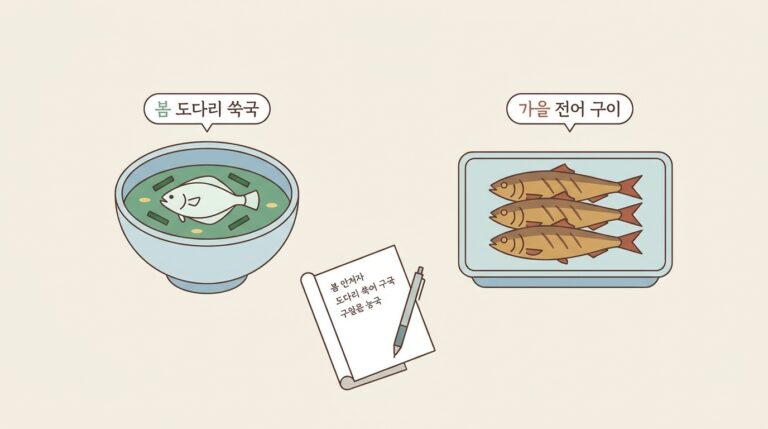
In Korea, dining is deeply intertwined with the natural cadence of the four seasons. Spring brings ‘Dodari’ (flounder) paired with tender, freshly sprouted spring mugwort, while autumn ushers in the fat-rich, intensely aromatic ‘Jeoneo’ (gizzard shad). Navigating these seasonal culinary traditions requires more than standard textbook ordering phrases—it demands a refined grasp of traditional idioms, socio-cultural dining etiquette, and high-level gastronomic vocabulary (제철 음식 챙겨 먹기). When you can fluently converse with a fishmonger about the subtle oil content of autumn shad versus spring flounder, you transcend the realm of a mere traveler and step into the shoes of an authentic Korean epicurean. This guide, honed from years of real learner feedback and cultural insights, will empower you with native C2-level proficiency for seasonal dining.
Phase 2: 핵심 표현 3선 심층 분석 (Core Expressions)
1. 제철을 맞이하다 (Jecheoreul majihada)
- Pronunciation: [Je-cheol-eul ma-ji-ha-da] (Sounds like “Jae-chole” + “ma-jee-ha-da”, rhyming with “welcoming the prime season”)
- Meaning: Literal: To meet its right season. / Actual: To reach its absolute peak seasonal flavor, texture, and nutritional perfection.
- K-Culture Moment: Highlighted in high-end Korean culinary documentaries like K-Food Show when artisanal chefs select live spring flounder at the Noryangjin Fisheries Wholesale Market.
- Editor’s Insight: Beyond gastronomy, advanced Korean speakers metaphorically apply this phrase to artists, athletes, or cultural trends entering their golden age.
- Situation Spectrum: Casual: ✅ | Semi-formal: ✅ | Formal: ✅
- 🤔 Think About It: How does your native culture view the relationship between weather shifts and ingredient quality compared to Korea’s micro-seasonal dining philosophy?
2. 집 나간 며느리도 돌아오게 만든다 (Jimnagan myeneurido doraoge mandeunda)
- Pronunciation: [Jim-na-gan myeo-neu-ri-do do-ra-o-ge man-deun-da] (Flows like “Jim-nah-gahn myuh-nee-ree-doh…”)
- Meaning: Literal: Makes even a runaway daughter-in-law return home. / Actual: An aroma or flavor so overwhelmingly divine that it resolves deeply ingrained family grievances.
- K-Culture Moment: A classic hyperbolic line shouted by grill masters at coastal autumn fish markets while roasting oil-rich gizzard shad over open charcoal embers.
- Editor’s Insight: While rooted in historical family narrative tropes, modern Koreans use this idiom purely for enthusiastic food praise—specifically reserved for grilled autumn gizzard shad (가을 전어).
- Situation Spectrum: Casual: ✅ | Semi-formal: ⚠️ | Formal: 🚫
- 🤔 Think About It: What humorous family-based idioms exist in your native language to exaggerate irresistible aromas?
3. 제철 음식이 보약이다 (Jecheol eumsigi boyagida)
- Pronunciation: [Je-cheol eum-si-gi bo-ya-gi-da] (Flows like “Jae-chole oom-shi-gee boh-yah-gee-dah”)
- Meaning: Literal: Seasonal food is restorative tonic medicine. / Actual: Eating ingredients harvested at their natural seasonal peak is the ultimate holistic healthcare.
- K-Culture Moment: Spoken by elders or hosts during seasonal transitions (환절기) while serving steaming hot spring mugwort flounder soup (쑥도다리국).
- Editor’s Insight: Reflects the East Asian philosophical concept of Yak-sik-dong-won (약식동원), which posits that daily food and natural medicine stem from the exact same root.
- Situation Spectrum: Casual: ✅ | Semi-formal: ✅ | Formal: ✅
- 🤔 Think About It: Do you view culinary health as a seasonal ritual aligned with nature or as a continuous daily metric?
Phase 3: 교과서 한국어 vs 진짜 한국어 (Textbook vs. Real Native)
Scenario 1: Asking for seasonal seafood recommendations
- 📖 교과서 한국어: “지금 시즌에 가장 맛있는 생선은 무엇입니까?”
(Jigeum sijeone gajang masinneun saengseoneun mueosimnikka? / What is the most delicious fish in this season?) - 🗣️ 진짜 한국어: “사장님, 요즘 제철 맞은 고기 어떤 게 잘나가요?”
(Sajangnim, yojeum jecheol majeun gogi eotteon ge jalnagayo? / Boss, which fish that just hit its peak season is selling best right now?) - 💡 왜 다를까?: Native speakers replace foreign loanwords like ‘시즌’ with authentic ‘제철 맞은’, refer to fresh fish colloquially as ‘고기’ in seafood stalls, and ask what is popular (잘나가요).
Scenario 2: Praising roasted autumn seasonal fish
- 📖 교과서 한국어: “이 전어 구이는 기름기가 많고 풍미가 매우 좋습니다.”
(I jeoneo guineun gireumgiga mango pungmiga maeu joseumnida. / This grilled gizzard shad is greasy and has good flavor.) - 🗣️ 진짜 한국어: “와, 가을 전어라 그런지 고소함이 차원이 다르네요! 뼈째 씹을수록 진국이에요.”
(Wa, gaeul jeoneora geureonji gosohami chawoni dareuneyo! Bpyeojjae ssibeulsurok jingugieyo. / Wow, being autumn shad, its savory richness is on another level! The more you chew it bone and all, the richer it gets.) - 💡 왜 다를까?: Advanced C2 speakers evaluate texture (뼈째 씹을수록 – chewing bones and all) and nutty aroma (고소함), applying culinary metaphors like ‘진국’ (deeply concentrated broth/flavor) to convey genuine expertise.
Phase 4: K-Culture 딥다이브 & 비언어적 매너 (Culture & Manners)
4-1. Nunchi & Dining Gestures
When dining on seasonal grilled fish like Jeoneo, leave table forks behind. Hold the fish by its body using specialized wooden chopsticks or clean fingertips, eating around or directly through the soft, fine bones. Before taking your first bite, gently inhale the aroma, nod approvingly, and emit a subtle sound of appreciation (“음~”). Showing hesitation toward fine fish bones in a local seafood establishment can signal an amateur palatal mindset; embracing the crunchy Sekkosi style demonstrates culinary refinement.
4-2. Cultural Code Analysis
Seasonal dining in Korea represents an active celebration of temporal transitions. In Korean television shows and slice-of-life dramas, seasonal dishes function as emotional markers of care and nostalgic memory. Sharing Spring Dodari or Autumn Jeoneo signifies communal solidarity—reaffirming that despite busy modern lives, diners remain synchronized with nature’s timeless cycles.
Phase 5: 실전 롤플레이 시나리오 (Interactive Roleplay)
Setting: A famous seaside raw fish restaurant in Tongyeong during late autumn.
Characters: You (an advanced epicurean diner) and Sajangnim (the charismatic 60-year-old restaurant owner).
- Sajangnim: “어서 오세요! 날씨가 쌀쌀해졌는데, 오늘 어떤 걸로 모실까요?”
(Eoseo oseyo! Nalssiga ssallalhaejeonneunde, oneul eotteon geollo mosilkkayo? / Welcome! It has gotten chilly; what can I serve you today?)
🎭 Action: Wiping down the clean wooden table with a welcoming grin. -
You: “사장님! 요즘 가을 전어가 제철을 맞았다고 해서 일부러 찾아왔어요.”
(Sajangnim! Yojeum gaeul jeoneoga jecheoreul majattago haeseo ilbureo chajawasseoyo. / Boss! I came all the way here specifically because I heard autumn gizzard shad has hit its peak season!)
🎭 Action: Smiling confidently and establishing warm, direct eye contact. -
Sajangnim: “오호, 제철 음식을 아시네! 전어회랑 전어구이 중에 어떤 스타일을 선호하세요?”
(Oho, jecheol eumsigeul asine! Jeoneohoerang jeoneogu-i junge eotteon seutaireul seonhohaseyo? / Oho, you truly know your seasonal delicacies! Do you prefer shad sashimi or grilled shad?)
🎭 Action: Nodding in surprised approval and leaning in closer. -
You: “집 나간 며느리도 돌아오게 만든다는 가을 전어구이의 고소한 향을 안 맡아볼 수 없죠!”
(Jimnagan myeneurido doraoge mandeundaneun gaeul jeoneogu-i-ui gosohan hyangeul an mata-bol su eopjjo! / I can’t possibly miss the savory aroma of grilled autumn shad that supposedly lures back runaway daughters-in-law!)
🎭 Action: Chuckling lightheartedly while gently waving your hand to waft imaginary aromas toward your nose. -
Sajangnim: “하하! 유머 감각까지 갖추셨네. 뼈째 드시는 꼬시래기 전어구이로 아주 바삭하게 구워드릴게요.”
(Haha! Yumeo gamgakkaji gat chusyeonne. Bpyeojjae deusineun kkosiraegi jeoneogu-iro aju basakage guweodeurilgeyo. / Haha! You even have great humor. I’ll grill it nice and crispy so you can crunch right through the bones.)
🎭 Action: Slapping his knee with laughter and shouting the order toward the kitchen. -
You: “감사합니다! 제철 음식이 보약이라는데, 오늘 제대로 몸보신하고 가겠네요.”
(Gamsahamnida! Jecheol eumsigi boyagiraneunde, oneul jedaero mombosinhago gagenneyo. / Thank you! They say seasonal food is medicine, so I am truly going to nourish my vitality today.)
🎭 Action: Rubbing hands together in eager anticipation. -
Sajangnim: “맞아요! 계절의 기운을 그대로 드시는 겁니다. 서비스로 멍게도 좀 썰어드릴게!”
(Majayo! Gyejeorui giuneul geudaero deusineun geomnida. Seobiseuro meonggedo jom sseoreodeurilge! / Spot on! You are consuming the energy of the season. I’ll slice up some complimentary sea squirt for you!)
🎭 Action: Giving a hearty thumbs-up. -
You: “와, 사장님 인심이 역시 최고네요. 맛있게 잘 먹겠습니다!”
(Wa, sajangnim insimi yeoksi choegoneyo. Masitge jal meokgetseumnida! / Wow, your hospitality is unmatched. I will savor this meal thoroughly!)
🎭 Action: Bowing slightly with hands clasped politely.
🔀 Interactive Choice Point
When the aromatic grilled shad arrives whole with delicate visible bones, how do you respond to Sajangnim?
* Choice A: “사장님, 잔가시가 너무 많아서 먹기 힘든데 전부 발라주시겠어요?”
* Choice B: “역시 전어는 잔뼈째 씹어 먹어야 제맛이죠! 고소함이 정말 끝내주네요.”
* Choice C: “생선 크기가 생각보다 작은데 먹을 살이 별로 없네요.”
Feedback:
* Choice A (Risk): Valid concern for beginners, but requesting a deboning service for autumn shad strips away the crunchy texture (세꼬시) central to its seasonal charm.
* Choice B (Best): Exceptional native response! Demonstrates culinary mastery and complimenting the chef’s seasonal craft.
* Choice C (Bad): Cultural gaffe. Autumn gizzard shad is prized for its high oil density and tender bone crunch, not bulky fillet mass.
Phase 6: 10초 감정 섀도잉 드릴 (Emotional Shadowing Drill)
- [😊 Exuberant & Cultured]
“역시 / 봄 도다리는 / 쑥국으로 먹어야 / 제맛이라니까요!”
(Yeoksi / bom dodarineun / ssukguguro meogeoya / jemasiranikkayo! / As expected, spring flounder is truly at its prime when cooked in mugwort soup!) -
[😋 Eager & Playful]
“가을 전어구이 냄새 / 맡아보셨어요? / 집 나간 며느리도 / 돌아온다잖아요!”
(Gaeul jeoneogu-i naemsae / mat-a-bosyeosseoyo? / jimnagan myeneurido / doraondajanayo! / Have you caught the scent of roasted autumn shad? They say it summons runaway daughters-in-law back home!) -
[😌 Deeply Satisfied & Wise]
“제철 음식이 / 괜히 보약이 아니에요. / 몸이 먼저 / 알아채거든요.”
(Jecheol eumsigi / gwenhi boyagi anieyo. / Momi meonjeo / arachegeodeunyo. / Seasonal food isn’t called medicine for nothing. The body senses it immediately.)
Phase 7: K-Culture 미니 사전 (Mini Dictionary)
- 제철 (Jecheol) | Peak Seasonal Time | Ingredients harvested at their precise peak of flavor, texture, and nutritional value during specific weather windows.
- 세꼬시 (Sekkosi) | Bone-in Sashimi Technique | A traditional preparation method where small fish are sliced thinly along with soft fine bones to yield a signature nutty crunch.
- 몸보신 (Mombosin) | Stamina-Restoring Dining | The intentional practice of consuming nutrient-dense seasonal dishes to replenish energy during climatic shifts.
- 서비스 (Seobiseu) | Complimentary Culinary Gift | Free side dishes or delicacies gifted by hospitality-minded owners as a gesture of warmth (Insim).
Phase 8: 여행자를 위한 생존 키트 (Traveler’s Survival Kit)
Top 3 Survival Expressions
- “오늘 제일 싱싱한 제철 생선이 뭐예요?” (Oneul jeil singsinghan jecheol saengseoni mwoyeyo?)
Pro Tip: Asking this unlocks seasonal off-menu specials available only on market days. - “쑥도다리국 1인분도 주문 가능한가요?” (Ssukdodariguk irinbun-do jumun ganunghangayo?)
Pro Tip: Seasonal soups often require minimum 2-person orders; asking politely secures single portions. - “전어구이 바삭하게 구워주세요!” (Jeoneogu-i basakage guweojuseyo!)
Pro Tip: Ensures fine bones are roasted extra crispy, making them completely edible and delicious.
Editor’s Travel Note
Before embarking on a seafood tour in coastal cities, open the Naver Map Application to search for authentic 제철회 전문점 (seasonal raw fish establishments). Avoid tourist traps by looking for native reviews featuring keywords like 가성비 (great value) and 사장님 인심 (generous owner). Remember that seasonal catch prices often display as 시가 (Market Daily Rate).
Phase 9: 한 발 더 깊이 (One Step Deeper)
In Western gastronomy, seasonality frequently centers on agricultural harvest calendars. In Korea, however, seasonal dining (제철 문화) is a holistic philosophy bridging human health, community connection, and ecological harmony. Partaking in spring flounder or autumn shad is a shared social ritual that reconnects urban dwellers with nature’s quiet rhythms. It serves as a gentle cultural reminder that human life flourishes best when aligned with the natural cadence of the earth.
💬 Your Turn: What seasonal ingredient in your home country marks the official arrival of spring or autumn? Have you ever tasted Korean Sekkosi style fish? Let’s discuss in the comments below!
Phase 10: FAQ & 오해 방지 (FAQ & Common Mistakes)
Q: What is the primary difference between spring flounder (도다리) and autumn gizzard shad (전어)?
A: Spring flounder is lean, clean, and traditionally simmered with wild spring mugwort in soups (쑥도다리국), celebrating renewal after winter. Autumn gizzard shad is fat-dense, fragrant, and usually grilled whole or served raw to mark autumn’s harvest abundance.
Q: Is it safe to swallow the fine bones in autumn grilled shad?
A: Yes! When prepared by seasoned chefs or grilled thoroughly crispy, the delicate internal bones soften completely, providing high calcium and a rich, nutty flavor (고소함).
Q: Why do menus list ‘시가’ (Market Price) instead of set numeric prices?
A: Siga indicates that prices fluctuate daily according to morning fish auction rates, weather impact, and daily harvest volume. You can comfortably ask “오늘 전어 시가가 어떻게 돼요?” before ordering.
🚨 Common Mistakes TOP 3
- Drowning seasonal sashimi in heavy red pepper paste (초장): Masking delicate flavors. Correct Action: Lightly dip seasonal raw fish in sesame oil with salt or soy sauce with minimal wasabi to honor natural notes.
- Dissecting whole grilled shad with a fork like a fillet: Losing the crisp skin and fragrant oils. Correct Action: Hold the fish gently with chopsticks or fingertips, eating whole sections down to the main backbone.
- Demanding out-of-season seafood dishes: Misunderstanding seasonal specialty houses. Correct Action: Trust the chalkboards or ask the owner for the day’s peak seasonal catch.
Phase 11: 액션 미션 & 참여 유도 (Action Missions)
- Bronze Mission: Read the 3 core phrases aloud three times, emphasizing the emotional pause marks (
/). - Silver Mission: Post a photo of your favorite seasonal meal on social media using the hashtag
#DailyHangulJecheol. - Gold Mission: Visit an authentic Korean restaurant and order using the phrase “제철 맞은 추천 생선이 뭐예요?”.
🎮 K-Culture Mission: Watch a Korean travel vlog or K-Drama market scene. Count how many times speakers utter the words 고소하다 (savory/nutty) or 제철 (in-season)!
Phase 12: 인터랙티브 퀴즈 챌린지 (Quiz Challenge)
- Situation Quiz: You are visiting a seaside raw fish stall in October. Which order displays authentic seasonal mastery?
- A) Spring Flounder Mugwort Soup
- B) Autumn Grilled Gizzard Shad
- C) Cold Summer Raw Fish Soup
Click to view Answer & Explanation
Answer: B! October represents the peak autumn window for grilled gizzard shad (가을 전어), world-famous for its rich, irresistible aroma.
-
Fill-in-the-blank: Complete the classic food idiom: “가을 전어 구이는 [ ? ]도 돌아오게 만든다.”
Click to view Answer & Explanation
Answer: 집 나간 며느리 (Runaway daughter-in-law). This traditional hyperbolic idiom highlights how extraordinarily magnetic the scent of roasting autumn shad is!
-
True / False: Eating seasonal food (제철 음식) in Korea is viewed merely as a way to save money on daily calories. (T/F)
Click to view Answer & Explanation
Answer: False! Seasonal dining is considered restorative medicine (보약), a social ritual, and a way to live in harmony with nature’s seasonal transformations.