

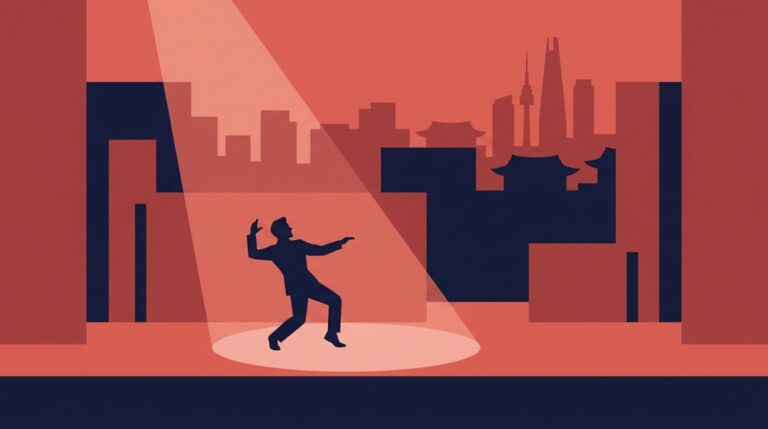
Phase 1: Why “It Was Good” Isn’t Enough Anymore
Hello! This is your Daily Hangul editor (안녕하세요! 매일한글 에디터입니다). Imagine stepping out of a gripping modern play in Seoul’s Daehakro theater district. Your Korean theater-buff friend turns to you, eyes sparkling, and asks what you thought of the director’s bold reinterpretation. You want to dissect the haunting stage design and the actors’ electrifying physical presence, yet all that comes out is, “It was really good!” Frustrating, right? At Level 5, simple praise no longer captures your aesthetic taste. Based on real feedback from advanced learners navigating Korea’s vibrant arts scene, this guide equips you with authentic critical vocabulary to analyze mise-en-scène, textual adaptation, and physical acting like a seasoned Seoul critic.
Phase 2: 3 Essential Critical Expressions
Okay, confession time—even as a native Korean, the first time I grabbed coffee with a theater-critic friend in Hyehwa-dong, I felt like I needed a dictionary just to keep up! Once you master these three powerhouse phrases, though, you will sound effortlessly articulate.
1. 원작을 입체적으로 재해석하다 (Wonjageul ipchejeogeuro jaehaeseokhada)
- Pronunciation: Won-ja-geul ip-che-jeo-geu-ro jae-hae-seo-ka-da (Think of ip-che like “eep-cheh”—tight and crisp, and jae-hae-seo-ka-da gliding smoothly like “jeh-heh-suh-kah-dah”.)
- Meaning: Literally “to three-dimensionally reinterpret the original work.” In practice, it means giving a classic text fresh depth, psychological nuance, and modern relevance rather than just retelling it flatly.
- K-Culture Moment: Picture a post-show talk (관객과의 대화, gwangaekgwaui daehwa) at the National Theater of Korea after a Changgeuk (traditional Korean opera) adaptation of Shakespeare’s King Lear. The moderator praises how the director transformed a 17th-century European tragedy using traditional pansori rhythms and modern gender perspectives.
- Editor’s Insight: Calling a play “입체적” (three-dimensional) is one of the highest compliments in Korean arts criticism. Its opposite, “평면적” (pyeongmyeonjeok, two-dimensional/flat), is a polite yet devastating critique for shallow character writing.
- Situation Spectrum: Casual (✅ With artsy friends) / Semi-formal (✅ Book clubs & post-show Q&As) / Formal (✅ Cultural reviews & essays)
- 🤔 Think About It: In English, critics often say an adaptation “subverts” or “reimagines” a text. Korean leans heavily on spatial metaphors like 입체적 (3D) vs. 평면적 (flat). How does your native language visually describe depth in storytelling?
2. 무대 미장센이 압도적이다 (Mudae mijangseni apdojeogida)
- Pronunciation: Moo-dae mi-jang-se-ni ap-do-jeo-gi-da (The loanword mi-jang-sen sounds very close to the French “mise-en-scène” without the trailing nasal vowel, and ap-do hits hard like “ahp-doh”.)
- Meaning: Literally “the stage mise-en-scène is overwhelming.” It means the synergy of lighting, set architecture, costumes, and spatial composition completely commands the audience’s senses.
- K-Culture Moment: Imagine watching a dark, atmospheric Korean musical at Seoul’s LG Arts Center where towering hanok-inspired sliding panels shift seamlessly under moody crimson spotlights, visually trapping the protagonist without a single spoken word.
- Editor’s Insight: While English speakers mostly reserve “mise-en-scène” for film or academic theater essays, Korean theatergoers use 미장센 (mijangsen) constantly in everyday reviews! Pairing it with 압도적이다 (apdojeogida, overwhelming) signals awe—not frustration—at how powerful the visual storytelling was.
- Situation Spectrum: Casual (✅ Over drinks after a show) / Semi-formal (✅ Podcasts & vlogs) / Formal (✅ Newspaper arts columns)
- 🤔 Think About It: Why do you think Korean arts discourse embraced a French loanword like 미장센 instead of sticking solely to 무대 연출 (mudae yeonchul, stage direction)? Hint: Korean often adopts foreign aesthetic terms to isolate a hyper-specific sensory vibe!
3. 배우의 신체성이 극적 긴장감을 고조시키다 (Baeuui sincheseongi geukjeok ginjanggameul gojosikida)
- Pronunciation: Bae-oo-eui sin-che-seo-ngi geuk-jjeok gin-jang-ga-meul go-jo-si-ki-da (Notice the double-tense “jj” sound in geuk-jjeok, snappy like the “ch” in “ketchup” held tightly, and sin-che-seong flowing like “shin-cheh-sung”.)
- Meaning: Literally “the actor’s physicality elevates the dramatic tension.” It highlights how breath, posture, stillness, and movement—not just spoken lines—drive the emotional stakes of a scene.
- K-Culture Moment: Think of an intense two-person psychological thriller in a tiny Daehakro black-box theater. Even when both actors are silent for twenty seconds, the slight tremor of a shoulder or a sudden shift in distance across the floorboards makes the whole room hold its breath.
- Editor’s Insight: Beginners say 연기를 잘한다 (yeongireul jalhanda, “acts well”). At Level 5, isolating 신체성 (sincheseong, physicality) proves you noticed the craft behind the performance—the choreography of tension in the body.
- Situation Spectrum: Casual (⚠️ Might sound slightly academic with casual friends, though arts majors love it!) / Semi-formal (✅ Theater meetups & reviews) / Formal (✅ Critique articles & academic panels)
- 🤔 Think About It: In Western realistic acting, dialogue often carries the main weight, whereas Korean traditional and contemporary stagecraft frequently borrows from madanggeuk (outdoor folk theater) and physical ritual. Do you notice actors’ bodies more when dialogue disappears?
Phase 3: Textbook Korean vs. Real Korean
Even advanced textbooks tend to make you sound like a 1990s art museum brochure. Here is how Seoul’s actual theatergoers sound when debating a show over late-night makgeolli.
Scenario 1: Raving about jaw-dropping stage visuals
* 📖 교과서 한국어 (Textbook Korean): 무대 장치가 매우 훌륭하고 아름다웠습니다. (Mudae jangchiga maeu hullyunghago areumdawotseumnida. — The stage equipment was very splendid and beautiful.)
* 🗣️ 진짜 한국어 (Real Korean): 서사를 삼킬 듯한 미장센이었어요! (Seosareul samkil deuthan mijangsenieosseoyo! — The mise-en-scène was so powerful it practically swallowed the narrative!)
* 💡 왜 다를까? (Why the difference?): Calling it “무대 장치” (stage equipment) sounds mechanical. Real Korean critics blend literary imagery like “서사를 삼키다” (to swallow the narrative) with 미장센 to express that the visual design carried its own dramatic weight.
Scenario 2: Praising wordless, gripping physical acting
* 📖 교과서 한국어 (Textbook Korean): 배우가 몸을 잘 써서 연기가 인상적이었습니다. (Baeuga momeul jal sseoseo yeongiga insangjeogieotseumnida. — Because the actor used their body well, the acting was impressive.)
* 🗣️ 진짜 한국어 (Real Korean): 배우의 신체 언어가 대사 이상의 여운을 남기네요. (Baeuui sinche eoneoga daesa isangui yeouneul namgineyo. — The actor’s body language leaves a lingering resonance beyond the dialogue.)
* 💡 왜 다를까? (Why the difference?): In Korean aesthetics, “여운” (yeoun—the lingering echo after a bell stops ringing) is prized above flashy displays. Saying physicality left yeoun is a deeply cultured compliment.
Phase 4: K-Culture Deep Dive & Non-Verbal Manners
4-1. Nunchi (눈치) & Theater Etiquette in Korea
Korean theater etiquette is famously strict—so much so that fans coined the term 관크 (gwanke, audience disaster). Here is your non-verbal survival guide:
* Zero-Light Policy: Do not check your smartwatch or phone even for one second during a show; ushers will immediately shine a discreet laser or flashlight at your seat, and neighboring patrons will shoot icy glares.
* The “Lean-Forward” Taboo (수구리, suguri): Leaning forward in your seat blocks the sightline for people behind you in steep Seoul theaters. Keep your back pressed firmly against the seat!
* Post-Show Critique Gestures: When debating stage blocking (동선, dongseon) in the lobby afterward, Korean theater fans often trace spatial triangles in the air with open palms, while lowering their voices if actors or production staff might be nearby.
4-2. Cultural Code: Daehakro & Korea’s “Revolving Door” (회전문) Culture
If you want to experience Korea’s living performance laboratory, head to Daehakro (대학로) around Hyehwa Station—Seoul’s answer to Off-Broadway, packed with over 100 intimate theaters. Here, you will witness 회전문 관객 (hoejeonmun gwangaek, “revolving-door audiences”): devoted fans who watch the exact same play ten or twenty times across different cast combinations (페어, peeo). Why? Because in Korean theater culture, a single script is treated like a living organism—every subtle shift in an actor’s breath, pacing, or physical distance from their co-star creates a brand-new work of art.
Phase 5: Interactive Roleplay Scenario
- Setting: A cozy indie wine bar tucked into an alley in Hyehwa-dong (Daehakro), 10:30 PM. Rain taps softly against the window right after you and your friend watched a bold, modern Korean reinterpretation of Hamlet.
- Character: Ji-hoon (지훈), a passionate indie stage director and theater critic who notices every micro-detail.
Ji-hoon: 오늘 공연 어땠어요? 원작을 꽤 과감하게 각색했더라고요. (Oneul gongyeon eottaesseoyo? Wonjageul kkwae gwagamhage gaksaekhaetdeoragoyo. — How was tonight’s performance? They adapted the original work pretty boldly.)
🎭 Ji-hoon leans forward, swirling his glass thoughtfully while waiting for your take.
You: 맞아요, 단순히 고전을 재현한 게 아니라 현대적으로 입체적으로 재해석한 점이 인상 깊었어요. (Majayo, dansunhi gojeoneul jaehyeonhan ge anira hyeondaejeogeuro ipchejeogeuro jaehaeseokhan jeomi insang gipeosseoyo. — Right, rather than merely reproducing a classic, I was deeply impressed by how three-dimensionally they reinterpreted it in a modern way.)
Ji-hoon: 오, 딱 핵심을 짚으셨네요! 저는 특히 2막에서 조명이 붉게 변할 때 무대 미장센이 압도적이라고 느꼈어요. (O, ttak haeksimeul jipeusyeonneyo! Jeoneun teukhi imag-eseo jomyeongi bulkge byeonhal ttae mudae mijangseni apdojeogirago neukkyeosseoyo. — Oh, you hit the nail right on the head! I especially felt the stage mise-en-scène was overwhelming in Act 2 when the lighting turned crimson.)
🎭 He gestures upward to mimic the stark overhead spotlights.
You: 저도요! 그 차가운 철제 구조물 사이로 배우들의 신체성이 극적 긴장감을 극대화하더라고요. (Jeodoyo! Geu chagaun cheolje gujomul sairo baeudeurui sincheseongi geukjeok ginjanggameul geukdaehwahadeoragoyo. — Me too! Amidst those cold iron structures, the actors’ physicality maximized the dramatic tension.)
Ji-hoon: 맞아요, 대사가 거의 없던 침묵의 장면에서조차 숨 막히는 호흡이 느껴졌잖아요. (Majayo, daesaga geoui eopdeon chimmugui jangmyeoneseojocha sum makhineun hoheubi neukkyeojyeotjanayo. — Exactly, even in the silent scene with almost no dialogue, you could feel their breathtaking rhythm.)
You: 다만 후반부 전개가 조금 급박해서 인물의 내면 변화가 덜 설득력 있게 다가온 점은 아쉬웠어요. (Daman hubanbu jeongaega jogeum geupbakhaeseo inmurui naemyeon byeonhwaga deol seoldeungnyeok itge dagaon jeomeun aswiwosseoyo. — However, because the pacing in the final act felt a bit rushed, the character’s internal shift came across as slightly less convincing, which was a pity.)
Ji-hoon: 날카로우시네요! 확실히 결말의 개연성이 살짝 약하긴 했죠. 혹시 그 부분, 연출가 의도를 어떻게 보셨어요? (Nalkarousineyo! Hwaksilhi gyeolmarui gaeyeonseongi saljjak yakhagin haetjyo. Hoksi geu bubun, yeonchulga uidoreul eotteoke bosyeosseoyo? — You’re sharp! The narrative plausibility of the ending was definitely a bit weak. By any chance, how did you read the director’s intention there?)
🔀 Your Turn! Choose Your Response (A / B / C):
- A: “아마 완결된 해답보다는 관객에게 윤리적 질문을 던지려는 의도적 여백이었던 것 같아요.” (Ama wangyeoldoen haedapbodaneun gwangaeg-ege yullijeok jilmuneul deonjiryeoneun uidojeok yeobaegieotdeon geot gatayo. — “Perhaps rather than a tidy answer, it was an intentional negative space meant to pose an ethical question to the audience.”)
- B: “그냥 작가가 시간이 없어서 대충 끝낸 것 같아요. 별로였어요.” (Geunyang jakgaga sigani eopseoseo daechung kkeutnaen geot gatayo. Byeolloyeosseoyo. — “I think the writer just ran out of time and ended it lazily. It sucked.”)
- C: “관객의 상상력에 맡긴 열린 결말이긴 한데, 서사적 설득력은 여전히 아쉽네요.” (Gwangaegui sangsangnyeoge matgin yeollin gyeolmarigin hande, seosajeok seoldeungnyeogeun yeojeonhi aswimneyo. — “It is an open ending left to the audience’s imagination, though the narrative persuasiveness is still lacking.”)
Editor’s Feedback:
* Option A (🏆 Best!): Master-level Korean criticism! Using “의도적 여백” (intentional negative space) shows deep cultural literacy in Korean aesthetics while constructively analyzing directorial intent.
* Option B (🚫 Bad): Way too blunt and dismissive (“대충 끝낸”, “별로였어요”). In Korean cultural circles, even harsh criticism is wrapped in analytical reasoning rather than flat insults.
* Option C (⚠️ Risky/Balanced): Very articulate and fair! It acknowledges the artistic device (열린 결말, open ending) while standing firm on your critique—just make sure your tone stays warm so it doesn’t sound overly rigid!
Phase 6: 10-Second Emotional Shadowing Drill
Read these lines aloud! Pause sharply at each / and step fully into the emotional cue.
[✨ Deeply Awestruck & Slow]
이 작품은 / 고전의 틀을 깨고 / 원작을 입체적으로 / 재해석했어요.
(I jakpumeun / gojeoneui teureul kkaego / wonjageul ipchejeogeuro / jaehaeseokhaesseoyo.)
— “This piece / breaks the classical mold and / reinterprets the original work / three-dimensionally.”-
[😲 Breathless & Intense]
말 한마디 없이 / 무대 미장센만으로 / 관객을 완전히 / 압도하더라고요!
(Mal hanmadi eopsi / mudae mijangsenmaneuro / gwangaeg-eul wanjeonhi / apdohadeoragoyo!)
— “Without a single word / through stage mise-en-scène alone / it completely overwhelmed / the audience!” -
[🧐 Analytical & Whisper-Quiet]
대사 사이의 침묵 속에서 / 배우의 신체성이 / 극적 긴장감을 / 팽팽하게 고조시켰어요.
(Daesa saiui chimmuk sogeseo / baeuui sincheseongi / geukjeok ginjanggameul / paengpaenghage gojosikyeosseoyo.)
— “Inside the silence between lines / the actor’s physicality / tautly heightened / the dramatic tension.”
Phase 7: K-Culture Mini Dictionary
- 동선 (Dongseon) | Stage blocking / movement path | Used everywhere from theater rehearsals to K-Pop choreography critiques (e.g., “동선이 꼬이다” = the blocking gets tangled).
- 여백의 미 (Yeobaegui mi) | Beauty of negative space / restraint | Originally from traditional Korean ink painting, now widely used when minimal sets or quiet pauses carry huge emotional weight.
- 개연성 (Gaeyeonseong) | Narrative plausibility / logical probability | The #1 word Korean K-Drama and theater fans use when debating whether a plot twist actually makes sense!
- 여운 (Yeoun) | Lingering emotional resonance | The hollow, aching, or glowing feeling that stays with you on the subway ride home after the curtain falls.
Phase 8: Traveler’s Survival Kit (Theater Edition)
Top 3 Theater Survival Phrases
- 예매자 이름이랑 전화번호 뒷자리 말씀드리면 되나요? (Yemaeja ireumirang jeonhwabeonho dwitjari malsseumdeurimyeon doenayo?)
- Pro Tip: At Korean box offices (매표소, maepyoso), you rarely need paper printouts—just give your name and the last 4 digits of your phone number!
- 오늘 공연에 영문 자막이나 오픈 캡션이 제공되나요? (Oneul gongyeone yeongmun jamagina opeun kaepsyeoni jegongdoenayo?)
- Pro Tip: Major venues like the National Theater or LG Arts Center sometimes offer English subtitles on designated days or via seat-side tablets.
- 인터미션은 몇 분 정도인가요? (Inteomisyeoneun myeot bun jeongdoingayo?)
- Pro Tip: Always ask about intermission length right away—restroom lines in Korean theaters move fast but fill up instantly!
Editor’s Travel Note
- Getting Around: Before heading to Daehakro’s maze of basement black-box theaters, be sure to download the Naver Map app for accurate Seoul theater walking routes, as Google Maps doesn’t always pinpoint small side-alley entrances.
- Booking Shows: If you are visiting from abroad, reserve musical and play seats via Interpark Ticket Global or Yes24 Global—and check the seating chart (좌석 배치도) carefully for “시야 제한석” (obstructed-view seats), which are heavily discounted in Korea.
- Timing: Arrive at least 20 minutes early! Korean theaters strictly close doors the exact second the show starts, and latecomers (지연 입장, jiyeon ipjang) must wait in the lobby until a designated cue.
Phase 9: One Step Deeper — The Aesthetics of Yeoun and Yeobaek
In Western classical drama, climax and resolution often arrive through explicit confrontation—every motive explained aloud, every conflict neatly sealed. Korean performing arts, shaped by centuries of madang folk aesthetics, pansori, and Zen-influenced ink painting, frequently embrace 여백의 미 (the beauty of emptiness) and 여운 (lingering resonance). A silent, hunched shoulder on an empty stage can speak louder than a three-page monologue because Korean audiences are culturally trained to read what is withheld—through 눈치 (nunchi, situational intuition) and shared emotional empathy (정, jeong). When you critique a Korean performance, paying attention to the unspoken pauses and spatial emptiness unlocks the very soul of Korean aesthetics.
💬 Your Turn: Have you ever watched a Korean play, musical, or K-Drama scene where a silent gesture or empty stage hit harder than the dialogue? Drop your favorite moment in the comments below!
Phase 10: FAQ & Common Mistakes
Q: Is “미장센 (mijangsen)” only used for movies, or can I really use it for stage plays in Korea?
A: Yes, you can absolutely use it for stage plays and musicals! While it originated in French theater and became famous via film theory, modern Korean arts discourse uses 무대 미장센 (mudae mijangsen) all the time to describe the unified visual atmosphere of lighting, set, props, and blocking.
Q: What is the polite Korean way to criticize a performance without sounding arrogant?
A: Frame your critique around your personal reception or structural curiosity rather than absolute judgment! Phrases like “~한 점이 다소 아쉽게 다가왔어요” (…came across as slightly unfortunate) or “~의 의도는 흥미로웠지만 설득력이 부족했어요” (the intention was intriguing, though the persuasiveness felt lacking) sound thoughtful, balanced, and truly Level 5.
Q: How do Korean critics distinguish between good “신체성 (physicality)” and exaggerated overacting?
A: Critics praise 신체성 when movement feels organically tied to the character’s psychology and spatial rhythm (호흡, hoheup). When movement feels disconnected or overly theatrical without internal truth, Koreans call it “과잉 연기” (gwaing yeongi, excessive acting) or “신파” (sinpa, overly melodramatic).
🚨 Common Mistakes TOP 3
- Overusing “재미있었어요” (It was fun/interesting): For a devastating tragedy or experimental performance, calling it “재미있다” sounds tone-deaf. Correct Action: Use 인상 깊었어요 (insang gipeosseoyo, deeply memorable) or 울림이 컸어요 (ullimi keosseoyo, deeply resonant).
- Saying “원작을 복사했어요” (Copied the original): Using 복사 (boksa, photocopy) sounds accidental or robotic. Correct Action: Use 각색하다 (gaksaekhada, adapt for stage/screen) or 재해석하다 (jaehaeseokhada, reinterpret).
- Using “몸짓” (gestures) for holistic physical acting: 몸짓 feels small and surface-level, like waving hands. Correct Action: Use 신체성 (sincheseong, physicality) or 신체 언어 (sinche eoneo, body language) for artistic depth.
Phase 11: Action Missions
- 🥉 Bronze Mission (Solo Practice): Record yourself doing the 3 lines from Phase 6’s Emotional Shadowing Drill—pay special attention to the tense jj in 극적 (geukjjeok) and smooth pause pacing!
- 🥈 Silver Mission (Share Online): Leave a 2-sentence Korean review on Instagram, Letterboxd, or a Korean theater clip on YouTube using 입체적으로 재해석하다 or 미장센이 압도적이다.
- 🥇 Gold Mission (Real-World Challenge): Next time you talk with a Korean friend or tutor about a show—whether an indie play or a theatrical K-Drama—deliver at least one balanced critique combining praise for physical acting and a constructive point about pacing.
🎮 K-Culture Mission: Watch a famous behind-the-scenes theater rehearsal clip or a National Changgeuk Company teaser on YouTube, and spot how Korean directors talk about 동선 (blocking) and 호흡 (rhythm/breath) in the comments or interviews!
Phase 12: Interactive Quiz Challenge
Test your inner Seoul theater critic! Click the toggles below only after making your guess.
1. Situation Judgment: Your Korean friend asks how you felt about a tense, wordless confrontation scene in a minimalist play. Which response sounds most like a natural Level 5 critic?
* A) 배우들이 말을 안 해서 조금 지루하고 어색했어요.
* B) 대사 없는 침묵 속에서 배우들의 신체성이 극적 긴장감을 팽팽하게 고조시키더라고요.
* C) 무대 장치가 너무 없어서 돈이 부족했나 봐요.
🔍 Click to check Answer & Explanation for Q1
Correct Answer: B! Option A misses the intentional power of silence, and Option C misreads minimalism (여백의 미) as a budget flaw. Option B brilliantly highlights how physicality elevated the dramatic tension!
2. Fill-in-the-Blank:
“이 연극은 셰익스피어의 고전을 현대 서울의 맥락으로 옮겨와 원작을 ______ 재해석했다는 평가를 받았습니다.”
(This play received acclaim for bringing Shakespeare’s classic into a modern Seoul context and ______ reinterpreting the original work.)
* Word Bank: [평면적으로 / 입체적으로 / 단순하게]
🔍 Click to check Answer & Explanation for Q2
Correct Answer: 입체적으로 (three-dimensionally / with depth)! Remember, 평면적으로 (flatly) and 단순하게 (simply) indicate a lack of depth, whereas 입체적으로 praises rich, multifaceted reinterpretation.
3. True/False Cultural Quiz:
“In Korean theater culture, leaning forward in your seat (수구리) so you can see the actor’s facial expressions better is considered an enthusiastic compliment to the performers.”
🔍 Click to check Answer & Explanation for Q3
Correct Answer: False! Leaning forward blocks the view of everyone behind you and is considered major 관크 (gwanke, audience interference) in Korea. Keep your back comfortably against the seat!
🎬 Watch Our Daily Videos! (Daily Hangul Official Instagram)
Review the expressions you learned in this article with our fun daily short videos! Check out native pronunciation and real-life nuances in action.
- Instagram @dailyhangul_en







