

Phase 1: Empathy & Storytelling
안녕하세요! 매일한글 에디터입니다. Welcome back to another immersive deep dive into nuanced Korean!
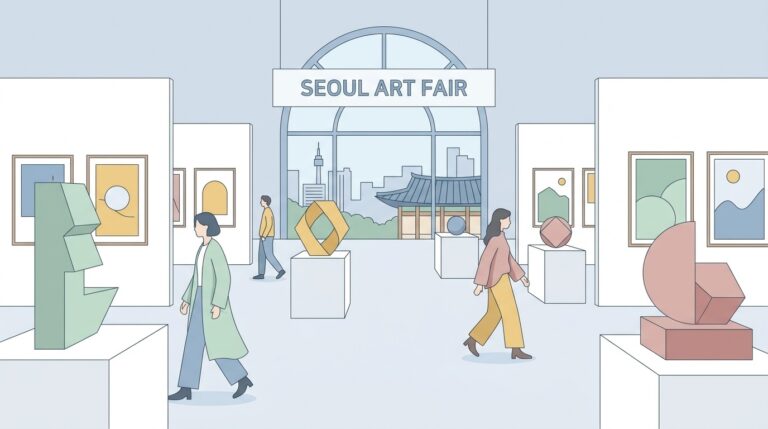
Picture this: You are standing inside the sleek, dimly lit halls of the Gwangju Biennale or navigating the bustling VIP booths at Frieze Seoul. Surrounding you are world-renowned art critics, contemporary curators, and chic local collectors holding warm oat lattes, passionately discussing the overarching narrative of a ground-breaking multimedia installation. You step closer, eager to share your analytical perspective, but suddenly you feel a pang of hesitation. You know basic vocabulary like 작품 (artwork) or 미술관 (art gallery), but how do you articulate complex thematic resonance, aesthetic nuances, or social commentary without sounding like a translated textbook?
As a C1 advanced learner, navigating specialized cultural events like biennials and art fairs requires a shift from mere functional vocabulary to sophisticated, culturally anchored expressions. At this level, expressing opinions about art isn’t just about grammar—it is about entering the subtle flow of Korean intellectual discourse. Based on real feedback from our advanced learners, mastering art-focused Korean elevates your status from a passive spectator to an insightful cultural insider.
Phase 2: Core Expressions (핵심 표현 3선)
1. 결을 같이하다 (Gyeol-eul gatti-hada)
- Pronunciation: [결을 같이하다 / Gyeol-eul gatti-hada] (Sounds like “gyeol” as in texture, paired with “gatti-hada” meaning to do together.)
- Meaning: Literal: To share the same grain/texture. | Actual Nuance: To share a similar ethos, philosophy, artistic trajectory, or underlying thematic direction.
- K-Culture Moment: Commonly heard in contemporary curatorial statements or panel discussions at Kiaf Seoul when comparing an artist’s modern philosophy to classic traditional movements.
- Editor’s Insight: 결 (Gyeol) refers to natural grain (like wood grain or fabric weave). Using this term shows you understand subtle conceptual alignments rather than simply saying “비슷하다” (to be similar).
- Situation Spectrum: Casual ⚠️ | Semi-formal ✅ | Formal ✅
- 🤔 Think About It: Why does Korean culture use organic textures (결) to describe abstract mental or thematic harmony?
2. 담론을 형성하다 (Damron-eul hyeongseong-hada)
- Pronunciation: [담론을 형성하다 / Damron-eul hyeongseong-hada] (Pronounce ‘담론’ as [담논 / dam-non] due to nasalization rules.)
- Meaning: Literal: To form a discourse. | Actual Nuance: To spark meaningful critical dialogue or inspire broad intellectual discussion across society.
- K-Culture Moment: Art critics frequently use this phrase when reviewing thought-provoking biennial themes at the Busan Biennale.
- Editor’s Insight: This is the pinnacle of C1 academic and professional dialogue. Pair it with subjects like 시각 예술 (visual arts) or 현대 사회 (modern society).
- Situation Spectrum: Casual 🚫 | Semi-formal ✅ | Formal ✅
- 🤔 Think About It: How does changing the conversation from individual impressions to “forming discourse” reflect the community-minded Korean approach to contemporary art?
3. 시사하는 바가 크다 (Sisahaneun ba-ga keuda)
- Pronunciation: [시사하는 바가 크다 / Sisahaneun ba-ga keuda] (Focus on smooth pacing: Si-sa-ha-neun ba-ga keu-da.)
- Meaning: Literal: The suggested point is large. | Actual Nuance: To carry profound implications; to offer significant insight or warning regarding an issue.
- K-Culture Moment: Used by documentary narrators and exhibition curators evaluating historical retrospective installations.
- Editor’s Insight: Instead of saying “이 작품은 중요해요” (This artwork is important), this phrase elevates your analysis to an expert level.
- Situation Spectrum: Casual ⚠️ | Semi-formal ✅ | Formal ✅
- 🤔 Think About It: How does indirect evaluation (“implication is large”) align with Korean speech etiquette?
Phase 3: Textbook Korean vs. Real Korean
Situation 1: Expressing how an artwork deeply touches a social issue
- 📖 Textbook Korean: 이 작품은 사회적 문제를 다루고 있습니다. (This artwork deals with social issues.)
- 🗣️ Real Korean: 이 작품, 사회적 메시지를 되게 감각적으로 풀어냈더라고요. (This piece unpacked its social message in such a sophisticated, sensory way.)
- 💡 Why the difference?: Native speakers in the art scene favor terms like 풀어내다 (to unravel/express) and 감각적으로 (sensory/stylish) to highlight aesthetic execution rather than plain topic delivery.
Situation 2: Praising an artwork that matches your aesthetic taste
- 📖 Textbook Korean: 저는 이 미술품이 마음에 듭니다. (I like this artwork.)
- 🗣️ Real Korean: 완벽히 제 취향 저격이에요. 여운이 되게 오래 가네요. (It completely hits my aesthetic sweet spot; the lingering impression lasts so long.)
- 💡 Why the difference?: 취향 저격 (taste sniper) combined with 여운이 가다 (lingering resonance) conveys emotional depth beyond simple personal preference.
Phase 4: K-Culture Deep Dive & Non-Verbal Manners
4-1. Nunchi & Exhibition Etiquette
- The Contemplative Distance: At Korean art fairs like Frieze Seoul, standing too close to an artwork blocks others and can trigger security alerts. Maintain a 1.5-meter buffer while displaying subtle 눈치 (Nunchi).
- Silent Head Nod (묵례): When locking eyes with an artist or gallery director during an opening, refrain from loud greetings. A gentle, slow 15-degree bow with soft eye contact communicates respect and sophistication.
4-2. Cultural Code: The Rise of Art Collecting Culture
In Korea, attending biennials and art fairs has shifted from an exclusive high-society activity to a mainstream lifestyle choice among young art enthusiasts (MZ 세대). Korean collectors value artworks that bridge heritage with modern tech—such as media art utilizing digital displays. Understanding terms like 도슨트 (Docent) and 오프닝 갤러리 톡 (Opening Gallery Talk) will help you blend effortlessly into Seoul’s creative circles.
Phase 5: Real Roleplay Scenario
Setting: Navigating a modern art fair VIP preview in Seongsu-dong.
Characters: You (C1 Korean Learner) & Curator Min (Senior Curator at a renowned Seoul gallery).
- Curator Min: 안녕하세요! 이번 비엔날레 특별전에 오신 걸 환영합니다. 작품들은 좀 둘러보셨나요?
(Annyeonghaseyo! Ibeon biennalle teukbyeoljeone osin geol hwanyyeonghamnida. Jakpumdeureun jom dulleobosyeonnayo?)
Hello! Welcome to this biennial special exhibition. Have you had a chance to look around the artworks? -
You: 네, 천천히 둘러봤는데 작가님의 철학이 기존 현대 미술의 흐름과 결을 같이하는 것 같아 인상 깊었어요.
(Ne, cheoncheonhi dulleobwanneunde jakganimui cheolhagi gijon hyeondae misurui heureumgwa gyeoleul gatti-haneun geot gata insang gipeosseoyo.)
Yes, I took my time looking around. I was deeply impressed because the artist’s philosophy seems to share the same grain as modern art trends.
(🎭 Action: Nods slowly while maintaining eye contact with the main sculpture) -
Curator Min: 아, 정확히 짚어주셨네요! 이번 신작은 특히 디지털 매체를 활용해 기후 위기 담론을 형성하고자 했습니다.
(A, jeonghwakhi jipeojusyeotneyeo! Ibeon sinjageun teukhi dijiteol maechereul hwaryonghae gihu meche damroneul hyeongseonghajoga haessumnida.)
Ah, you caught that precisely! This new piece specifically utilizes digital media to form a discourse around climate crisis. -
You: 맞아요. 단순히 문제를 제시하는 것에 그치지 않고 환경 문제를 되게 감각적으로 풀어내서 시사하는 바가 크더라고요.
(Majayo. Dansunhi munjereul jesihaneun geose geuchiji anko hwangyeong munjereul doege gamgakjeoguro pureonaeseo sisahaneun baga keudeoragoyo.)
Indeed. It doesn’t merely present the problem; it unpacks environmental issues in such a sensory way that carries profound implications.
(🎭 Action: Pointing gently toward the installation’s projection screen with an open palm) -
Curator Min: 어머, 미술 식견이 정말 높으시네요! 혹시 작가와의 대화 세션에도 참여하실 생각인가요?
(Eomeo, misul sikgyeoni jeongmal nopeusineyo! Hoksi jakgawaui daehwa sesyeonedo chamyeohasil saenggagingayo?)
Oh my, your artistic insight is truly remarkable! Do you perhaps plan to join the Artist Talk session as well? -
You: 그럼요. 작가님이 어떤 맥락에서 이 메타포를 구상하셨는지 직접 들어보고 싶네요.
(Geureomyo. Jakganimi eotteon maengnageseo i metaporeul gusanghasyeotneunji jirjeop deureobogo simneyeo.)
Of course. I’d love to hear directly from the artist about the context in which this metaphor was conceived. -
Curator Min: 좋습니다. 옆쪽 세미나실로 안내해 드릴게요. 컬렉팅 관련 문의도 언제든 말씀해 주세요!
(Jotsumnida. Yeopjjok seminasillo annaehae deurilgeyo. Keollekting gwanryeon munido eonjedeun malsumhae juseyo!)
Wonderful. Let me guide you to the adjoining seminar room. Feel free to ask if you have questions regarding collecting! -
You: 안내 감사합니다. 오늘 전시가 오랫동안 여운이 남을 것 같네요.
(Annae gamsahamnida. Oneul jeonsiga oraedong-an yeoueni nameul geot ganneyeo.)
Thank you for the guidance. I feel this exhibition will leave a lingering impression for a long time.
🔀 Interactive Branching Option
**Curator Min asks:
Frequently Asked Questions (FAQ)
Q: What does "결을 같이하다 (Gyeol-eul gatti-hada)" mean in Korean and how do you pronounce it?
A: In Korean, "결을 같이하다 (Gyeol-eul gatti-hada)" is pronounced [결을 같이하다 / Gyeol-eul gatti-hada] and means: Literal: To share the same grain/texture. | Actual Nuance: To share a similar ethos, philosophy, artistic trajectory, or underlying thematic direction.
Q: What does "담론을 형성하다 (Damron-eul hyeongseong-hada)" mean in Korean and how do you pronounce it?
A: In Korean, "담론을 형성하다 (Damron-eul hyeongseong-hada)" is pronounced [담론을 형성하다 / Damron-eul hyeongseong-hada] and means: Literal: To form a discourse. | Actual Nuance: To spark meaningful critical dialogue or inspire broad intellectual discussion across society.
Q: What does "시사하는 바가 크다 (Sisahaneun ba-ga keuda)" mean in Korean and how do you pronounce it?
A: In Korean, "시사하는 바가 크다 (Sisahaneun ba-ga keuda)" is pronounced [시사하는 바가 크다 / Sisahaneun ba-ga keuda] and means: Literal: The suggested point is large. | Actual Nuance: To carry profound implications; to offer significant insight or warning regarding an issue.







