

Phase 1: Empathy & Storytelling Opening
안녕하세요! I’m your Daily Hangul chief editor and local cultural navigator. Picture this: You’ve just stepped down into a vibrant, neon-lit PC Bang (PC방) in Hongdae after a long day of sightseeing. The ambient sound of mechanical keyboards clicking, colorful RGB lights syncing with hyper-fast gaming monitors, and the intoxicating aroma of freshly fried So-Tteok So-Tteok fill the air. You want nothing more than to sink into an ultra-comfortable leather chair, log into a high-speed gaming rig, and order some delicious food directly to your screen.
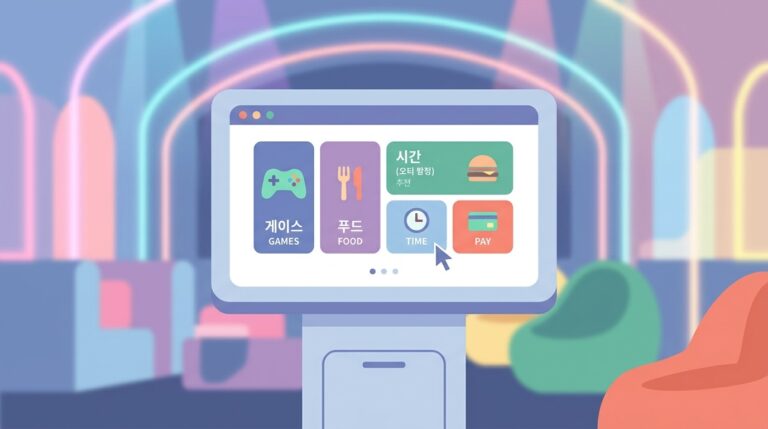
Then you face your first hurdle: the sleek, modern touchscreen kiosk standing right near the entrance. The screen is flashing rapidly with choices—회원 (Member), 비회원 (Non-member), 시간 충전 (Time Recharge), and 좌석 선택 (Seat Selection). You hesitate, feeling the invisible pressure of local gamers lining up behind you. Should you register as a member to get cheaper rates, or stick to a guest pass? How do you even activate the account if you don’t have a Korean phone number?
Don’t worry! Every foreign learner goes through this exact moments of uncertainty. Mastering PC Bang registration and pricing isn’t just about playing games—it’s a gateway into modern Korean youth culture and interactive digital spaces. Based on real feedback from hundreds of foreign students in Seoul, this guide will equip you with natural, intermediate-level (B2) phrases so you can effortlessly register, navigate kiosks, and command your PC bang experience like a true insider.
Phase 2: Key Expressions Deep Dive (B2 Level)
1. 회원가입 하려고 하는데요 (Hoewon-gaip haryeogo handeoyo)
- Pronunciation: [hoe-won-ga-ip ha-ryeo-go han-dae-yo] (Sounds like “Hey-one guy-pe-go han-day-yo”)
- Meaning: “I’d like to sign up for a membership.” (Literal: “I am intending to do member registration, so…”)
- K-Culture Moment: Seen frequently in K-Dramas when characters visit neighborhood spots and use soft, conversational background endings like
-는데요to sound polite yet natural rather than demanding. - Editor’s Insight: The soft tail
-는데요softens your statement into a gentle conversation starter. It signals to the counter staff that you might need a small tip or assistance without outright pleading. - Situation Spectrum:
- Casual: 회원가입 할게 (Friends only) 🚫
- Semi-formal: 회원가입 하려고 하는데요 (Staff/Counter) ✅
- Formal: 회원가입을 진행하고자 합니다 (Official documents) ⚠️
- 🤔 Think About It: Notice how Korean speakers rarely use direct imperative commands (“Sign me up!”). Why do you think Korean uses open-ended sentence tails when initiating interactions with staff?
2. 선불 기기에서 충전하면 돼요? (Seonbul gigieseo chungjeonhamyeon dwaeyo?)
- Pronunciation: [seon-bul gi-gi-e-seo chung-jeon-ha-myeon dwae-yo?]
- Meaning: “Can I recharge time at the prepaid kiosk?”
- K-Culture Moment: Korean PC Bangs operate almost entirely on automated self-service payment terminals called 선불기 (prepaid machines).
- Editor’s Insight: Combining 선불 (prepay) and 충전 (recharge/charge) is essential across urban Korea—whether for gaming time, transport cards (T-money), or mobile top-ups.
-면 돼요?is your go-to intermediate structure for asking “Is it okay to do X?” - Situation Spectrum:
- Casual: 선불기에서 충전해? 🚫
- Semi-formal: 선불 기기에서 충전하면 돼요? ✅
- Formal: 선불기에서 충전 진행하시면 됩니다 ⚠️
- 🤔 Think About It: How does the concept of prepaying time reflect high-efficiency and trust in Korean digital services?
3. 잔여 시간이 얼마나 남았어요? (Janyeo sigani eolmana namasseoyo?)
- Pronunciation: [jan-yeo si-gan-i eol-ma-na na-mas-seo-yo?]
- Meaning: “How much remaining time do I have left?”
- K-Culture Moment: Used when your screen alerts you that your balance is running low while you’re in the middle of a gaming match or streaming session.
- Editor’s Insight: 잔여 (remaining/residual) elevates your Korean to a refined intermediate level (B2), moving beyond beginner words like 남은 시간 (leftover time).
- Situation Spectrum:
- Casual: 시간 얼마 남았어? ⚠️
- Semi-formal: 잔여 시간이 얼마나 남았어요? ✅
- Formal: 잔여 시간을 확인해 주시겠습니까? ⚠️
- 🤔 Think About It: Why is precise time tracking so embedded in Korean gaming center interfaces?
Phase 3: Textbook Korean vs Real Korean
Situation 1: Expressing intent to register at the counter
- 📖 Textbook Korean: 회원가입 절차를 시작하고 싶습니다. (I wish to initiate the membership registration procedure.)
- 🗣️ Real Korean: 회원가입 하려고 하는데요, 외국인도 가능한가요? (I’m looking to sign up, is it possible for foreigners too?)
- 💡 Why the difference?: Textbook Korean uses overly formal administrative phrasing. Native speakers use conversational intent (
-하려고 하다) combined with contextual inquiry (-인데요).
Situation 2: Asking where to pay for time
- 📖 Textbook Korean: 어디에서 요금을 지불해야 합니까? (Where must I pay the fee?)
- 🗣️ Real Korean: 이거 선불기에서 계산하면 돼요? (Can I just pay for this at the prepaid machine?)
- 💡 Why the difference?: 계산하다 (calculate/pay) is used universally in real life instead of 지불하다, and specifying 선불기 gets you straight to the point.
Phase 4: K-Culture Deep Dive & Non-verbal Manners
4-1. Nunchi (눈치) & Kiosk Etiquette
- Queue Positioning: When waiting behind someone at a PC Bang kiosk, stand at least two steps back to grant them screen privacy.
- Screen Speed: If you take longer than 30 seconds setting up your account, glance back with a quick bow and say “먼저 하세요” (Please go ahead) to demonstrate thoughtful 눈치.
- Seat Manners: Once seated, avoid speaking loudly into your headset unless you are in a dedicated team room (팀룸).
4-2. Culture Code: The Gourmet PC Bang Evolution
In modern Korea, PC Bangs are no longer dark, dusty basements for die-hard gamers; they are high-tech culinary hubs! Thanks to services like Cookat and custom PC Bang dining brands, young Koreans visit PC Bangs specifically for gourmet food. You can order K-popcorn chicken, Kimchi Fried Rice, and Iced Americano directly through desktop software while gaming.
Phase 5: Real Roleplay Scenario
Setting: A stylish PC Bang near Sinchon Station. You approach the front counter staff (Staff NPC) because the automated kiosk is requesting a Korean phone verification.
- Staff: 안녕하세요! 회원 로그인하셨어요, 아니면 비회원이세요? (Hello! Have you logged in as a member, or are you a non-member?)
- Learner: 안녕하세요! 회원가입 하려고 하는데요, 본인 인증이 잘 안돼요. 🎭 (Points politely at phone screen with a gentle tilt of the head)
- Staff: 아, 외국인 분이시구나. 비회원 카드로 발급해 드릴까요? (Ah, you’re a foreigner. Shall I issue a non-member card for you?)
- Learner: 비회원이랑 회원 요금제 차이가 큰가요? 🎭 (Tilts head slightly with curious expression)
- Staff: 회원은 1시간에 1,500원이고, 비회원은 2,000원이에요. 회원가입은 이름이랑 아이디만 입력하시면 돼요! (Member rate is 1,500 KRW/hr, non-member is 2,000 KRW/hr. For member sign-up, just enter name and ID!)
- Learner: 아, 그렇군요! 그럼 여기서 회원가입 진행하면 돼요? 🎭 (Nods in understanding)
- Staff: 네, 모니터 화면에서 ‘신규 회원’ 누르시고 정보 입력해 주세요! (Yes, press ‘New Member’ on the monitor and enter your details!)
- Learner: 감사합니다! 충전은 저기 선불기에서 하면 되죠? 🎭 (Gently points toward the kiosk with an open hand)
🔀 Interactive Choice Point
The staff asks: “충전은 현금으로 하시겠어요, 카드로 하시겠어요?” (Will you recharge with cash or card?)
- Option A: 현금으로 결제할게요! 카운터에서 돼요? (I’ll pay with cash! Can I do it at the counter?)
- Feedback (Best): Excellent! Highly natural and practical if the kiosk cash slot is full.
- Option B: 아무거나 상관없습니다. (It doesn’t matter either way.)
- Feedback (Risk): Too blunt and vague. Staff needs a decisive payment method to prompt the right terminal.
- Option C: 카드 지불을 실행하겠습니다. (I shall execute card payment.)
- Feedback (Bad): Overly robotic and formal for a informal service setting.
Phase 6: 10-Second Emotion Shadowing Drill
Practice pronouncing these sentences with accurate pitch and speed:
- [😊 Friendly & Inquiring]
회원가입 / 하려고 하는데요 / 외국인도 / 가능한가요?
(Hoe-won-ga-ip / ha-ryeo-go han-dae-yo / woe-guk-in-do / ga-neung-han-ga-yo?) -
[🤔 Curious & Polished]
선불 기기에서 / 충전하면 돼요? / 아니면 / 카운터에서 하나요?
(Seon-bul gi-gi-e-seo / chung-jeon-ha-myeon dwae-yo? / a-ni-myeon / ka-un-teo-e-seo ha-na-yo?) -
[😮 Surprised & Happy]
와, / 요금이 / 생각보다 / 진짜 싸네요!
(Wa, / yo-geum-i / saeng-gak-bo-da / jin-jja ssa-ne-yo!)
Phase 7: K-Culture Mini Dictionary
- 선불기 (Seonbulgi) | Prepaid Kiosk
- Essential self-service touchscreen machine used to purchase time seats and top-up gaming hours.
- 비회원 (Bihoewon) | Non-Member / Guest
- Paying standard rate without registering an account. Great for fast one-time visits.
- 시간 충전 (Sigan Chungjeon) | Time Recharge
- The act of adding purchased hours to your registered account or guest ticket.
- 좌석 지정 (Jwaseok Jijeong) | Seat Assignment
- Selecting your designated PC seat layout on the digital floor plan at the kiosk.
Phase 8: Traveler Survival Kit
Top 3 Survival Phrases
- 비회원으로 할게요. (Bihoewon-euro halgeyo.) – I’ll go with a guest/non-member pass.
- 선불기 사용법 좀 알려주세요. (Seonbulgi sayongbeop jom allyeojuseyo.) – Could you show me how to use the prepaid machine?
- 자리 먼저 잡아야 하나요? (Jari meonjeo jabaya hanayo?) – Should I pick a seat first?
Editor’s Travel Note
Before heading out, download Naver Map App Download to search for nearby top-rated PC Bangs (프리미엄 PC방). Look out for chains like 3POP PC방 or XENO PC방 for modern kiosk setups and foreigner-friendly staff.
Phase 9: One Step Deeper
In Korean society, the PC Bang represents a seamless blend of high-speed connectivity, affordable youth entertainment, and communal digital spaces. The transaction style at kiosk terminals reflects the cultural value of Ppalli-Ppalli (빠르기, speed and efficiency), where system flows are streamlined for maximum user convenience.
💬 Your Turn: Have you ever used an automated kiosk in Korea? What was your biggest challenge? Share your experiences in the comments below!
Phase 10: FAQ & Common Mistakes
Q: Do I need a Korean phone number to register at a PC Bang?
A: Not always! While many kiosks ask for mobile verification (본인인증), modern premium PC Bangs allow registration using just an ID, password, and birthdate. If stuck, ask the staff for a 비회원 카드 (Non-member card).
Q: Can I pay with an international credit card?
A: Most automated kiosks accept local Korean credit cards and cash. International cards like Visa or Mastercard sometimes fail at local kiosks; keep cash (5,000 KRW or 10,000 KRW bills) handy as a backup!
Q: What happens to my leftover time if I leave early?
A: If you are logged in as a registered member (회원), your remaining time is automatically saved to your account for your next visit! Guest/non-member time expires once logged out.
🚨 Common Mistakes TOP 3
- Mistake: Sitting down at an empty PC before paying at the kiosk.
- Correct Action: Pick and pay for your time at the kiosk near the entrance first, then sit at your assigned seat number.
- Mistake: Trying to pay with large 50,000 KRW cash bills at small kiosks.
- Correct Action: Use 1,000, 5,000, or 10,000 KRW bills, or request bill exchange at the main counter.
- Mistake: Forgetting to log out (로그아웃) on your desk screen when leaving.
- Correct Action: Always click 종료/로그아웃 on your computer desktop so your remaining member time doesn’t drain!
Phase 11: Action Mission & Engagement
- Bronze: Practice saying “회원가입 하려고 하는데요” out loud 3 times using correct pitch.
- Silver: Write a mock dialogue in the comments registering at a Korean kiosk.
- Gold: Visit a local Korean PC Bang, successfully recharge 2 hours using the kiosk, and order a drink via desktop software!
🎮 K-Culture Mission: Watch a video or K-Drama scene set in a PC Bang (e.g., Crash Landing on You) and spot the kiosk machine or desk meal ordering screen!
Phase 12: Interactive Quiz Challenge
Q1. What is the most natural way to tell the counter staff you want to sign up for a PC Bang account?
1) 회원가입해라!
2) 회원가입 절차를 집행하십시오.
3) 회원가입 하려고 하는데요.
4) 비회원 가입을 지불합니다.
Click to reveal answer
Correct Answer: 3) 회원가입 하려고 하는데요.
Explanation: Option 3 uses the conversational -는데요 tail, making it polite, natural, and friendly for intermediate Korean speech.
Q2. True or False: If you log in as a member (회원), your remaining time stays saved in your account for future visits.
Click to reveal answer
Correct Answer: True
Explanation: Member accounts automatically store your unused minutes for your next visit at that PC Bang branch!







