

Phase 1: Empathy (Story-Driven Opening)
안녕하세요! 매일한글 에디터입니다.
Have you ever received a small gift or snack from a Korean acquaintance out of nowhere, accompanied by a quick, almost bashful wave of their hand? Or perhaps you’ve watched a classic K-Drama scene where two neighbors exchange homemade dishes across a garden wall without saying a word of grand gratitude. If you’ve lived or traveled in Korea, you’ve likely felt this invisible, comforting warmth. Yet, when you try to translate it, dictionary definitions like ‘affection’ or ‘attachment’ feel completely empty.
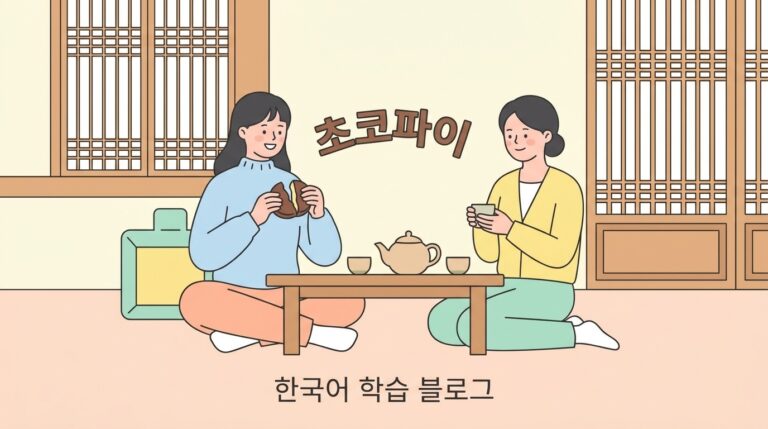
This mysterious emotional backbone of Korean society is 정 (Jeong). One of the most legendary cultural milestones that explained Jeong to the nation was the famous ‘Choco Pie Jeong’ commercial series from the 1990s and 2000s. In these TV ads, a quiet student sneaks a Choco Pie onto an overworked teacher’s desk, or a stern bus driver quietly hands one to a tired passenger. The taglines never used loud declarations of love; instead, they showed that real connection happens through silent, thoughtful actions.
Many intermediate Korean learners hit a wall here: how do you express Jeong in spoken Korean without sounding overly dramatic or textbook-stiff? Expressing warmth naturally requires subtle nuances, the right emotional delivery, and an understanding of non-verbal cues. In this guide, built upon real feedback from hundreds of advanced-intermediate learners, you’ll learn how to express genuine Korean warmth seamlessly in your everyday conversations!
Phase 2: Core Expressions Deep Dive
1. 정을 나누다 (Jeong-eul nanuda)
- Pronunciation: [Jeong-eul na-nu-da] (Sounds like “jung-eul nah-noo-dah”)
- Meaning: Literal: To divide/share Jeong | Nuance: To build mutual affection or exchange unspoken warmth through shared moments or treats.
- K-Culture Moment: In the famous Choco Pie commercials, coworkers leave a small treat on a colleague’s desk with a sticky note. That simple act is described as ‘정을 나누다’.
- Editor’s Insight: Jeong isn’t built overnight. When you share food, time, or small favors regularly with someone, Koreans say you are sharing Jeong. It moves a relationship from formal acquaintanceship to personal closeness.
- Situation Spectrum: Casual ✅ | Semi-formal ✅ | Formal ⚠️
- 🤔 Think About It: Does your native culture have a concept for bonding that relies entirely on silent sharing rather than spoken compliments?
2. 말하지 않아도 알아요 (Malhaji anado arayo)
- Pronunciation: [Mal-ha-ji a-na-do a-ra-yo] (Sounds like “Mahl-hah-jee ah-nah-doh ah-rah-yoh”)
- Meaning: Literal: Even if you don’t speak, I know | Nuance: We understand each other’s feelings without needing explicit words.
- K-Culture Moment: This exact phrase was the iconic song lyrics and slogan of the Orion Choco Pie commercials for decades in Korea!
- Editor’s Insight: While Western communication often values explicit verbal confirmation, Korean Jeong culture places heavy value on intuitive emotional alignment. Saying this phrase with a gentle smile adds a warm, retro humor to any friendship.
- Situation Spectrum: Casual ✅ | Semi-formal ✅ | Formal 🚫
- 🤔 Think About It: Why do you think Korean society values unspoken understanding over constant verbal reassurance?
3. 챙겨주다 (Chaenggyeojuda)
- Pronunciation: [Chaeng-gyeo-ju-da] (Sounds like “Chaeng-gyuh-joo-dah”)
- Meaning: Literal: To pack/take care of and give | Nuance: To proactively take care of someone’s needs, often with food, comfort, or practical help.
- K-Culture Moment: A senior colleague making sure you ate lunch, or a friend bringing you cold medicine without you asking.
- Editor’s Insight: Chaenggyeojuda is the active verb form of Jeong. If Jeong is the feeling, chaenggyeoda is the action. It shows you are keeping the other person in your thoughts.
- Situation Spectrum: Casual ✅ | Semi-formal ✅ | Formal ✅
- 🤔 Think About It: How is proactively anticipating a friend’s needs different from simply helping them when asked?
Phase 3: Textbook Korean vs. Real Native Korean
Situation 1: Offering a small snack or favorite dessert to a friend
- 📖 Textbook Korean: 이 과자를 드세요. 아주 맛있습니다. (Please eat this snack. It is very delicious.)
- 🗣️ Real Native Korean: 이거 오다 주웠어. 너 생각나서 좀 챙겼지! (I picked this up on the way. Thought of you, so I grabbed some!)
- 💡 Why the difference? Directly telling someone to eat can sound like an instruction. Pretending you effortlessly remembered them (“너 생각나서”) reduces the pressure on the recipient while highlighting your silent care.
Situation 2: Expressing appreciation for a colleague caring for you during overtime
- 📖 Textbook Korean: 도와주셔서 매우 감사합니다. (Thank you very much for helping me.)
- 🗣️ Real Native Korean: 역시 우리 팀원밖에 없네요! 늘 이렇게 챙겨주셔서 진짜 감동이에요. (There’s really no one like our team! I’m genuinely touched by how you always look out for me.)
- 💡 Why the difference? Native speakers often combine emotional appreciation (감동이다) with a sense of team solidarity (우리) to strengthen relational warmth.
Phase 4: K-Culture Deep Dive & Non-Verbal Manners
4-1. Nunchi (눈치) & Silent Gestures
In Korean Jeong culture, how you give is just as important as what you give. When handing over a small token of affection like a Choco Pie or a cup of warm coffee:
* Two-Handed Delivery: Even in casual settings, using both hands (or touching your elbow with your free hand) when offering a item shows respect and warmth.
* The Disarming Wave: Often, Koreans will place a snack on your desk, give a brief wave of the hand, and immediately walk away with a light brush-off like “맛있게 먹어!” (Enjoy!). This prevents the receiver from feeling obligated to make a big speech of thanks.
4-2. Cultural Code Analysis: The Legend of Choco Pie
Why did a simple marshmallow-filled chocolate snack become the national symbol of emotional bonding? Launched in 1974, Orion Choco Pie launched its famous ‘Jeong (情)’ marketing campaign in 1989. Instead of advertising sweet flavor, they showed heartwarming stories: a boy sharing his pie with a solitary security guard, or soldiers in mandatory military service tearing up over a single pie shared among comrades. Today, Choco Pie represents accessible, non-pretentious love—a snack meant not for solo enjoyment, but for sharing.
Phase 5: Real-Life Roleplay Scenario
Setting: Late evening at a Seoul marketing agency office. Minjun (a senior colleague) notices you working late on a project proposal.
- Minjun: 🎭 (Places a Choco Pie and a warm canned coffee quietly on your desk) 피곤하지? 잠깐 쉬었다 해. (Pigonhaji? Jamkkan swieotta hae.) – You look tired! Take a short break.
- You: 🎭 (Surprised, looking up with two hands on the coffee) 어? 민준 선배님, 이게 뭐예요? (Eo? Minjun seonbaenim, ige mwoyeyo?) – Huh? Minjun-sunbae, what is this?
- Minjun: 🎭 (Chuckles gently, scratching the back of his neck) 뭘 뭐긴 뭐야, 초코파이지. 출출할 때 됐잖아. (Mwol mwogin mwoya, chocopaiji. Chulchulhal ttae dwaetjanha.) – What else? It’s a Choco Pie. It’s about time you got hungry.
- You: 🎭 (Smiling warmly) 늦은 시간까지 저까지 이렇게 챙겨주시고… 정말 감동이에요. (Neujeun sigankkaji jeokkaji ireohke chaenggyeojusigo… jeongmal gamdongieyo.) – Thank you so much for looking out for me even this late… I’m really touched.
- Minjun: 🎭 (Waving hand lightly) 말하지 않아도 알잖아. 우리 사이에 무슨 감동까지! (Malhaji anado aljanha. Uri saie museun gamdongkkaji!) – You know how it is without me saying it. Between us, no need to be overly touched!
- You: 🎭 (Nodding cheerfully) 네! 역시 선배님밖에 없어요. 맛있게 잘 먹겠습니다! (Ne! Yeoksi seonbaenim-bakke eopseoyo. Masitge jal meokgetseumnida!) – Yes! Truly, there’s no one like you. I’ll enjoy it!
- Minjun: 🎭 (Thumbs up while turning around) 그래, 힘내고! 적당히 하고 퇴근하자. (Gerae, himnaego! Jeokdanghi hago toegeunhaja.) – Right, hang in there! Wrap it up reasonably and let me know when you leave.
- You: 🎭 (Waving warmly) 네, 조심히 들어가세요! (Ne, josimhi deureogaseyo!) – Yes, get home safely!
🔀 Interactive Branching Point
Minjun offers you his last snack. How do you respond to show the best natural Jeong balance?
- Option A: “선배님도 드셔야죠! 반 나눠서 같이 먹어요.” (Let’s split it in half and eat together!)
- Option B: “저는 비싼 디저트만 먹는데, 그래도 감사히 받겠습니다.” (I only eat expensive desserts, but thanks anyway.)
- Option C: “죄송하지만 다이어트 중이라서 안 먹겠습니다.” (Sorry, but I’m on a diet so I won’t eat it.)
Feedback:
* Option A (BEST): 🌟 Perfect! Sharing food in half (반 나눠 먹기) is the ultimate expression of Jeong. It converts a simple acceptance into a shared bonding moment.
* Option B (BAD): 🚫 Ouch! This breaks social harmony and comes off as sarcastic or ungrateful.
* Option C (RISK): ⚠️ Truthful, but rejecting a small kindness bluntly can feel cold. If declining due to diet, combine it with warm gratitude: “어머, 마음만 감사히 받을게요!” (Oh, I’ll warmly accept the thought!)
Phase 6: 10-Second Emotion Shadowing Drill
Practice these lines with the exact pauses (/) and emotional tone indicated:
[😊 Warm and Appreciative]- Korean: 늘 이렇게 / 챙겨주셔서 / 진짜 감동이에요.
- Romanization: Neul ireohke / chaenggyeojusigo / jinjja gamdongieyo.
- English: I’m genuinely touched by how you always look out for me.
[🥺 Playful and Tender]- Korean: 말하지 않아도 / 다 알죠! / 늘 고마워요.
- Romanization: Malhaji anado / da aljo! / neul gomawoyo.
- English: Even without saying it, I know everything! Always thankful.
[🤗 Modest and Friendly]- Korean: 오다 주웠어요! / 맛보세요.
- Romanization: Oda juwonneyo! / Matboseyo.
- English: Picked this up on the way! Give it a try.
Phase 7: K-Culture Mini Dictionary
- 정 (Jeong / Warm Attachment): The invisible emotional thread connecting people through shared experiences, acts of kindness, and time.
- 덤 (Deom / Free Bonus): An extra item given for free by a vendor out of generosity, representing commercial Jeong in local markets.
- 눈치 (Nunchi / Social Tact): The quick ability to gauge others’ feelings and needs without explicit speech.
- 마음 (Maeum / Heart & Mind): Used frequently in phrases like “마음만 받을게요” (I’ll take the warm thought), emphasizing intention over material value.
Phase 8: Traveler’s Survival Kit
Survival Expressions TOP 3
- 마음만 받을게요. (Maeum-man bat-get-geo-yo)
- Meaning: I’ll accept just your kind thought/heart.
- Pro Tip: Use this when politely declining an offer or gift without hurting feelings.
- 덤으로 더 주셨어요! (Deom-euro deo ju-syeos-seo-yo)
- Meaning: They gave me extra as a free bonus!
- Pro Tip: Say this happily when a street market vendor gives you extra snacks.
- 잘 챙겨먹어! (Jal chaeng-gyeo-meok-eo!)
- Meaning: Make sure you eat well!
- Pro Tip: The ultimate friendly Korean farewell phrase showing practical care.
Editor’s Travel Note
When navigating traditional markets like Mangwon Market or Gwangjang Market to experience local Jeong, carrying cash and using a reliable map service is essential. Make sure you get the Naver Map App Download to easily locate traditional snack stalls that still offer generous deom! Paying with local transport cards or cash at small food stalls often earns you an extra dumpling or a bigger smile from the friendly Imo (auntie).
Phase 9: One Step Deeper (Reflection)
In many modern societies, personal boundaries and individual autonomy are paramount. However, Korean Jeong creates a unique bridge where boundaries occasionally blur in favor of warm community support. While it might feel surprising at first when a colleague asks if you’ve eaten or leaves a snack on your desk, it reflects a deep-rooted cultural desire to ensure no one feels isolated.
💬 Your Turn: Have you ever experienced an act of Jeong during your visits to Korea or when interacting with Korean friends? Leave a comment below sharing your favorite warm memory!
Phase 10: FAQ & Common Mistakes
Q: Is Jeong the same as romantic love (사랑)?
A: No. While romantic love can contain Jeong, Jeong is broader and calmer. It develops over time between friends, neighbors, colleagues, and even long-time pet owners.
Q: What should I do if someone leaves food on my desk in a Korean office?
A: Acknowledge it promptly! You don’t need to give a speech; simply send a quick KakaoTalk message or say “잘 먹겠습니다!” (I will enjoy it!) when you see them.
Q: Can Jeong be negative?
A: Yes! There is a concept called 미운 정 (Mi-un Jeong), which is attachment formed through fond memories with someone you frequently bicker or disagree with.
🚨 Common Mistakes TOP 3
- Mistake: Responding to a gift with rigid business formality when a personal connection exists.
- Correct Action: Replace formal “감사합니다” with emotional expressions like “이렇게 챙겨주셔서 감동이에요!”
- Mistake: Loudly asking how much a snack cost when someone gives you one.
- Correct Action: Focus on the thoughtful action (마음), not the monetary price.
- Mistake: Flatly rejecting offered food without a gentle emotional reason.
- Correct Action: Say “마음만 감사히 받을게요” or accept it gently and share it with others later.
Phase 11: Action Mission
- 🥉 Bronze Level: Practice saying “챙겨주셔서 감사합니다” out loud 3 times using emotional shadowing.
- 🥈 Silver Level: Next time you offer a coffee or snack to a friend, use the phrase “생각나서 좀 챙겼어요!”
- 🥇 Gold Level: Share a story on social media or in our comments section about a moment you felt Jeong using the hashtag
#DailyHangulJeong!
🎮 K-Culture Mission: Watch a retro Korean TV commercial or a slice-of-life drama scene (like Reply 1988). Spot three moments where characters share food without saying “thank you” directly!
Phase 12: Interactive Quiz Challenge
Test your knowledge of Korean Jeong culture!
Quiz 1: What is the most appropriate way to accept a snack left by a senior colleague? (Click to expand)
Question: Minjun leaves a snack on your desk with a note.
Choices:
A) Ignore it until he asks.
B) Pay him the cash value of the snack immediately.
C) Smile, say “잘 챙겨먹겠습니다!”, and offer a light token of gratitude later.
Correct Answer: C
Explanation: Acknowledging the care (챙김) warmly builds mutual Jeong without making it transactional.







