

Before You Knock: How to Gracefully Visit a Friend in Korea Without Surprise Panic
Phase 1: Empathy & K-Culture Scene
안녕하세요! 매일한글 에디터입니다. (Hello! I’m your lead editor at Daily Hangul!)
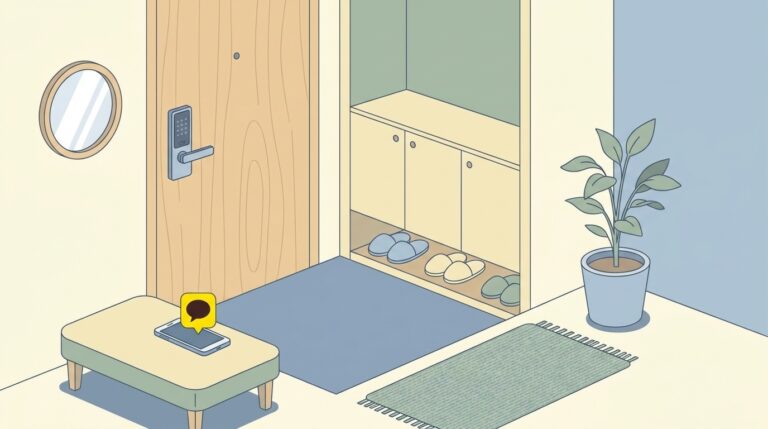
Picture this: You are having an amazing time in Seoul. You remember that your Korean friend, Minjun, lives nearby in Mapo-gu. You feel spontaneous and decide to head straight to his apartment building, press the door buzzer, and shout, “Surprise! I was in the neighborhood!” In many Western cultures, this spontaneous drop-in might be seen as warm, relaxed, and delightfully friendly. But in Korea? You might hear a prolonged silence over the intercom followed by a flustered, hesitant voice.
Why does this happen? In Korea, home is considered a private sanctuary that requires preparation before hosting guests—whether that means tidying up, buying drinks, or mentally transitioning into ‘host mode.’ Drop-in visits without prior notice are often viewed as a slight breach of Nunchi (눈치, social situational awareness). Even best friends almost always text or call before making a move!
If you want your visits to feel smooth, welcoming, and culturally natural, mastering the art of pre-visit messaging is your secret superpower. Based on real feedback from over 500 intermediate Korean learners, learning how to give polite, friendly advance notice will elevate your relationships from casual acquaintances to trusted inner-circle friends. Let’s master these essential B1-level expressions together!
Phase 2: Core Expressions Deep Dive
1. 미리 연락하고 갈게요
- Pronunciation: [Miri yeollak-hago gal-ge-yo] (Sounds like: MEE-ree yuhl-lahk-hah-goh kahl-geh-yoh)
- Meaning: Literal: “I will contact you in advance and go.” / Real Nuance: “I’ll make sure to text or call you before I come over.”
- K-Culture Moment: In K-Dramas, when a character promises to drop by an older friend’s studio or workplace, they rarely just show up. They say this phrase to show respect for the other person’s schedule.
- Editor’s Insight: The key word here is 미리 (in advance). Using this word signals that you respect their personal space and time. It puts the host’s mind at ease.
- Situation Spectrum: Casual ✅ | Semi-formal ✅ | Formal ⚠️ (Use ‘연락드리고 가겠습니다’ for formal settings)
- 🤔 Think About It: How many hours or days in advance do people in your home country usually inform someone before visiting? How does that compare to texting 1–2 hours ahead in Korea?
2. 지금 잠깐 들러도 돼요?
- Pronunciation: [Jigeum jamkkan deulleodo dwaeyo?] (Sounds like: JEE-geum jahm-kkahn deul-luh-doh dwae-yoh?)
- Meaning: Literal: “Is it okay if I drop by for a short moment now?” / Real Nuance: “Hey, are you free if I swing by real quick?”
- K-Culture Moment: Often heard when delivering food, returning a borrowed item, or bringing a gift to a friend’s house in popular lifestyle vlogs.
- Editor’s Insight: 잠깐 (for a short moment) softens the request tremendously. It assures the host that you won’t stay long or burden them with hosting duties.
- Situation Spectrum: Casual ✅ | Semi-formal ✅ | Formal 🚫
- 🤔 Think About It: Notice how Korean uses permission-seeking endings like ‘-도 돼요?’ (Is it okay if…?). Why do you think Korean communication prefers permission over direct statements?
3. 출발하기 전에 카톡 남길게요
- Pronunciation: [Chulbal-hagi jeone katok namgil-ge-yo] (Sounds like: * Chool-bahl-hah-gee juh-neh kah-tohk nahm-geel-geh-yoh*)
- Meaning: Literal: “Before departing, I will leave a KakaoTalk.” / Real Nuance: “I’ll shoot you a message on KakaoTalk right before I leave.”
- K-Culture Moment: The quintessential modern Korean agreement! KakaoTalk (카톡) is central to daily life in Korea. Giving a heads-up when leaving gives the host a precise arrival timeframe.
- Editor’s Insight: Korean etiquette thrives on real-time updates. Texting when leaving, when getting on the subway, and when arriving at the station are standard courtesies.
- Situation Spectrum: Casual ✅ | Semi-formal ✅ | Formal ⚠️ (Use ‘메시지 남기겠습니다’ for formal)
- 🤔 Think About It: In your culture, is updating someone at every step of your trip considered attentive or overly noisy?
Phase 3: Textbook Korean vs. Real Native Korean
Situation 1: Asking if you can visit today
- 📖 Textbook Korean: 오늘 당신의 집에 방문해도 됩니까? (Oneul dangsin-ui jibe bangmun-haedo doebnikka?)
- 🗣️ Real Native Korean: 오늘 혹시 집에 들러도 괜찮아요? (Oneul hoksi jibe deulleodo gwaenchan-ayo?)
- 💡 Why the difference? ‘당신’ (dangsin) sounds unnatural or overly confrontation/literary in spoken Korean, and ‘방문하다’ sounds like an official corporate inspection! Real Koreans use 혹시 (by any chance) to cushion the question and 들르다 (to drop by) for natural warmth.
Situation 2: Telling someone you are on your way
- 📖 Textbook Korean: 나는 지금 당신의 집으로 가고 있습니다. (Naneun jigeum dangsin-ui jibeuro gago isseubnida.)
- 🗣️ Real Native Korean: 저 지금 출발해요! 금방 도착해요. (Jeo jigeum chulbal-haeyo! Geumbang dochak-haeyo.)
- 💡 Why the difference? Present continuous forms (‘-고 있습니다’) sound overly mechanical in casual personal updates. Native speakers state the action directly (‘출발해요’) and add an reassuring ETA (‘금방 도착해요’).
Phase 4: K-Culture Deep Dive & Non-Verbal Manners
4-1. Nunchi & Non-Verbal Manners
- The Doorstep Shoes Lineup: When arriving at a friend’s home after calling ahead, take off your shoes at the 현관 (entryway/foyer). Always turn your shoes around so the toes point toward the front door—this shows high respect and prepares your shoes for an easy exit!
- Bring Hands, Not Empty: Never show up entirely empty-handed (빈손으로 가다). Even if you texted just 30 minutes prior, grabbing a small drink pack from a convenience store (like a box of Vita500 or warm canned coffee) shows immense Jeong (정, emotional bond).
4-2. Cultural Code: The KakaoTalk Pre-Visit Ritual
In Korea, home visits usually follow a 3-step digital heads-up routine:
1. The Feeler (1-2 days before or morning of): “오늘 시간 있어?” (Are you free today?)
2. The Departure Signal: “나 지금 출발해!” (I’m leaving now!)
3. The Station Check: “나 OO역 도착했어, 이제 걸어갈게!” (I arrived at XX station, walking over now!)
This gives your host exact timing to hide clutter, throw on decent loungewear, and prepare refreshments!
Phase 5: Real-Life Roleplay Scenario
Scenario: You are near Hongdae and want to pop by your Korean friend Yuna’s apartment to give her a souvenir you bought.
- Yuna: 여보세요? 어, 민우야! 무슨 일이야?
(Hello? Oh, Minwoo! What’s up?) - Minwoo (You): 어, 유나야! [🎭 Smiling warmly] 나 지금 홍대 근처거든. 혹시 집에 있어?
(Hey Yuna! I’m near Hongdae right now. By any chance, are you home?) - Yuna: 응, 나 집에 있지! 왜?
(Yeah, I’m home! Why?) - Minwoo (You): [🎭 Expressing polite hesitation] 지난번에 여행 다녀온 선물 주고 싶어서. 지금 잠깐 들러도 돼?
(I wanted to give you the gift from my trip. Is it okay if I drop by real quick?) - Yuna: 아 정말? 고마워! 그런데 나 지금 집 정리가 좀 안 되어 있어서…
(Oh really? Thanks! But my place is a bit messy right now…) - Minwoo (You): [🎭 Reassuringly] 아, 들어가진 않고 문앞에서 선물만 전해주고 바로 갈게!
(Oh, I won’t come inside, I’ll just give you the gift at the door and head out right away!) - Yuna: 히히, 그래! 그럼 천천히 와~
(Hehe, okay! Take your time coming over~) - Minwoo (You): 응, 출발하기 전에 카톡 남길게!
(Okay, I’ll text you on KakaoTalk right before I leave!)
🔀 Interactive Choice Point
What should you do after hanging up?
* Choice A: Head straight over immediately without sending another message.
* Choice B: Send a KakaoTalk text right as you step onto the subway/bus: “지금 출발해! 15분 뒤 도착!”
* Choice C: Stop at a cafe for an hour, then show up at her door unannounced.
Feedback:
* Choice A (Risk): Yuna knows you’re coming, but she won’t know your exact timing. She might be in the shower or mid-cleaning!
* Choice B (BEST ✨): Perfect! Giving an accurate ETA gives her peace of mind and time to get ready.
* Choice C (Bad 🚫): Arriving late without notice breaks trust and creates awkwardness.
Phase 6: 10-Second Emotion Shadowing Drill
Practice repeating these lines out loud with native emotion! Follow the / pause marks.
[😊 Politely asking]오늘 혹시 / 집에 들러도 / 괜찮아요?
(Oneul hoksi / jibe deulleodo / gwaenchan-ayo?)[🥺 Reassuring & Gentle]안 들어가고 / 문앞에서 / 잠깐만 볼게요!
(An deureogago / mun-ap-eeseo / jamkkanman bolgeyo!)[🎵 Upbeat & Friendly]출발하기 전에 / 꼭 / 카톡 남길게요!
(Chulbal-hagi jeone / kkok / katok namgilgeyo!)
Phase 7: K-Culture Mini Dictionary
- 선약 (Seonyak): Previous commitment / Prior appointment. (e.g., “미안해, 오늘 선약이 있어.” = Sorry, I have a prior engagement.)
- 집순이 / 집돌이 (Jipsuni / Jibdori): Homebody (female/male). Respecting a homebody’s private space requires clear prior notice!
- 마중 나오다 (Majung na-oda): To come out to meet/greet someone nearby (like at the subway exit or apartment gate).
- 빈손 (Binson): Empty hands. Visiting someone’s house with ‘빈손’ is a social taboo; bring a small drink or fruit!
Phase 8: Traveler’s Survival Kit
Top 3 Survival Phrases
Frequently Asked Questions (FAQ)
Q: What does "미리 연락하고 갈게요" mean in Korean and how do you pronounce it?
A: In Korean, "미리 연락하고 갈게요" is pronounced [Miri yeollak-hago gal-ge-yo] and means: Literal: "I will contact you in advance and go." / Real Nuance: "I'll make sure to text or call you before I come over."
Q: What does "지금 잠깐 들러도 돼요?" mean in Korean and how do you pronounce it?
A: In Korean, "지금 잠깐 들러도 돼요?" is pronounced [Jigeum jamkkan deulleodo dwaeyo?] and means: Literal: "Is it okay if I drop by for a short moment now?" / Real Nuance: "Hey, are you free if I swing by real quick?"
Q: What does "출발하기 전에 카톡 남길게요" mean in Korean and how do you pronounce it?
A: In Korean, "출발하기 전에 카톡 남길게요" is pronounced [Chulbal-hagi jeone katok namgil-ge-yo] and means: Literal: "Before departing, I will leave a KakaoTalk." / Real Nuance: "I'll shoot you a message on KakaoTalk right before I leave."







