

Phase 1: Empathy & Context
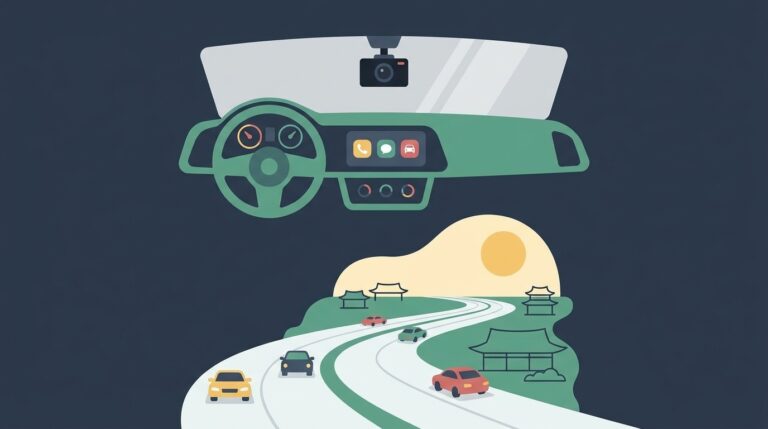
안녕하세요! 매일한글 에디터입니다. Have you ever watched a intense K-drama scene where a frustrated driver aggressively cuts off another car, hits the brakes abruptly, and steps out in the middle of a bustling Seoul highway? While dramatic confrontations make for captivating television, real-life driving in South Korea is governed by remarkably strict legal boundaries—particularly concerning retaliatory driving (보복 운전) and reckless driving (난폭 운전). Navigating Korean roads requires more than driving technicality; it demands a sophisticated understanding of the fine line between traffic violations and criminal offenses. In Korea, where nearly every vehicle is equipped with a high-definition dashboard camera (블랙박스) and citizens actively utilize reporting apps, aggressive driving escalates into serious legal ramifications instantly. Based on insights from foreign professionals and long-term expats driving in Korea, this C2-level guide will equip you with nuanced legal vocabulary, precise native phrasing, and cultural insights required to handle high-stress traffic situations authoritatively and legally.
Phase 2: Core Expressions Deep Dive
1. 보복 운전 (Bobok Unjeon)
- Pronunciation: [Bo-bok Un-jeon] (Sounds like bow-bok oon-jeon)
- Meaning: Retaliatory Driving / Road Rage Targeted at a Specific Vehicle.
- K-Culture Moment: Commonly referenced in evening news broadcasts (뉴스) and crime-reconstruction shows when describing targeted road hostility after an insult or cut-off.
- Editor’s Insight: Unlike general reckless driving, 보복 운전 requires targeted intent against a specific driver. Under Korean law, a vehicle can be classified as a dangerous weapon (특수협박/특수폭행), leading to criminal prosecution rather than simple traffic fines.
- Situation Spectrum: Casual 🚫 | Semi-formal ⚠️ | Formal ✅
- 🤔 Think About It: Why does Korean criminal law classify targeted aggressive driving as ‘special intimidation’ using a deadly weapon?
2. 난폭 운전 (Nanpok Unjeon)
- Pronunciation: [Nan-pok Un-jeon] (Sounds like nahn-pohk oon-jeon)
- Meaning: Reckless / Aggressive Driving (Multiple continuous violations threatening public safety).
- K-Culture Moment: Used by traffic police officers during highway patrols when pulling over drivers who continuously weave through traffic without signaling.
- Editor’s Insight: While 보복 운전 targets one individual out of revenge, 난폭 운전 refers to repeated, dangerous maneuvers—such as speed racing, continuous tailgating, or random emergency braking—that endanger traffic in general.
- Situation Spectrum: Casual ⚠️ | Semi-formal ✅ | Formal ✅
- 🤔 Think About It: How does your home country distinguish between targeted road rage and general reckless driving in legal terms?
3. 급제동 및 진로 방해 (Geup-je-dong mit Jin-ro Bang-hae)
- Pronunciation: [Geup-je-dong mit Jin-ro Bang-hae] (Sounds like goop-jay-dong meet jin-ro bahng-hae)
- Meaning: Sudden Brake Checking and Obstruction of Right of Way.
- K-Culture Moment: Standard legal terms used in black box video submission evidence forms filed with the Korean National Police Agency.
- Editor’s Insight: C2 speakers must distinguish precise actions. 급제동 (abrupt braking) without a valid hazard is the single most common proof used to establish criminal intent in retaliatory driving cases.
- Situation Spectrum: Casual 🚫 | Semi-formal ⚠️ | Formal ✅
- 🤔 Think About It: How does objective video evidence alter driver accountability compared to verbal testimonies in court?
Phase 3: Textbook Korean vs. Real Native Korean
Situation 1: Explaining a dangerous brake check to an insurance agent or officer
- 📖 Textbook Korean: 앞 차가 갑자기 멈춰서 사고가 날 뻔했습니다. (The car in front stopped suddenly so an accident almost happened.)
- 🗣️ Real Native Korean: 상대 차량이 의도적으로 급제동을 해서 충돌할 뻔했어요. 블랙박스 영상 확보되어 있습니다. (The opposing vehicle intentionally brake-checked me, almost causing a collision. I have secured the dashcam footage.)
- 💡 Why the Difference?: At a C2 level, using legal/formal terms like 의도적 (intentional) and 급제동 (sudden braking) alongside clear evidence mentions (블랙박스 영상 확보) conveys legal composure and exact factual clarity.
Situation 2: Discussing potential legal consequences of aggressive driving
- 📖 Textbook Korean: 나쁜 운전을 하면 면허가 취소될 수 있습니다. (If you drive badly, your license can be canceled.)
- 🗣️ Real Native Korean: 보복 운전으로 입건되면 형사 처벌은 물론이고 행정 처분으로 면허 취소나 정지까지 이어질 수 있습니다. (If booked for retaliatory driving, it leads not only to criminal penalties but also administrative actions like license revocation or suspension.)
- 💡 Why the Difference?: Precise legal distinctions between criminal punishment (형사 처벌) and administrative action (행정 처분) mark true advanced fluency.
Phase 4: K-Culture Deep Dive & Non-Verbal Manners
4-1. Nunchi & Traffic Gestures
In Korean traffic culture, communicating non-verbal intent is vital for preventing road friction. Pressing the hazard lights (비상등) 3 to 5 times is the universal road gesture for both “thank you for yielding” and “I sincerely apologize for cutting in.” Neglecting to use hazard lights after an abrupt maneuver is often what triggers emotional escalation into 보복 운전. A light tap on the horn (클랙슨/경적) serves as a polite heads-up, whereas holding the horn down for over two seconds is perceived as an open provocation.
4-2. Culture Code: The Black Box Ecosystem
South Korea has one of the highest densities of dashcams (블랙박스) in the world. Moreover, citizens actively upload traffic infractions to government portals. Driving behavior in Korea operates under total transparency; illegal retaliatory maneuvers are nearly guaranteed to be recorded from multiple angles by neighboring cars, rendering emotional outbursts legally fatal.
Phase 5: Real-life Roleplay Scenario
Setting: Reporting a severe targeted tailgating and brake-checking incident at a local Korean police station (경찰서 교통조사계).
Characters: You (Advanced Driver) & Officer Park (교통조사관)
- Officer Park: 어떻게 오셨습니까? 교통사고 접수이신가요?
(How can I help you today? Are you filing a traffic accident report?) - You: 🎭 [Composed and serious] 아니요, 고속도로에서 보복 운전을 당해 정식으로 고소 접수를 하러 왔습니다.
(Aniyo, gosokdoro-eseo bobok unjeoneul danghae jeongsigeuro goso jeopseureul hareowatseumnida. / No, I was a victim of retaliatory driving on the highway and came to file an official complaint.) - Officer Park: 구체적으로 어떤 상황이었는지 말씀해 주시겠습니까?
(Could you describe the specific situation?) - You: 🎭 [Pointing to a USB drive] 1차선에서 서행하던 차량에게 비상등을 켜고 경적을 살짝 울렸더니, 제 차 앞으로 급하게 끼어들어 위협적으로 급제동을 반복했습니다.
(1chaseoneseo seohaenghadeon charyang-ege bisangdeungeul kyeogo gyeongjeogeul saljjak ullyeotdeoni, je cha apeuro geup-hage kkieodeureo wiheobjeoguro geup-jedongeul bambokhaetseumnida. / When I flashed my hazard lights and lightly tapped my horn at a slow vehicle in the passing lane, they abruptly cut in front of me and repeatedly brake-checked me menacingly.) - Officer Park: 상대방의 고의성을 입증할 객관적인 증거 자료가 있습니까?
(Do you have objective evidence to prove the other party’s intent?) - You: 🎭 [Handing over the storage device] 네, 전후방 FHD 블랙박스 원본 영상과 전방 차량의 번호판이 명확히 찍힌 캡처본을 제출합니다.
(Ne, jeonhubang FHD beullaekbakseu wonbon yeongsang-gwa jeonbang charyang-ui beonhopani myeonghwak-hi jjig-in kaepcheoboneul jechulhamnida. / Yes, I am submitting the original front and rear FHD dashcam footage along with high-res screenshots clearly showing the license plate.) - Officer Park: 확인했습니다. 특수협박 혐의 적용 여부를 검토한 뒤 피의자를 출석 요구하겠습니다.
(Understood. We will review whether special intimidation charges apply and summon the suspect.) - You: 🎭 [Nodding politely] 철저한 조사 부탁드립니다. 필요하다면 추가 진술서도 작성하겠습니다.
(Cheoljeohan josa 부탁deureimnida. Pilyohadamyeon chuga jinsulseodo jakseonghagessumnida. / Please conduct a thorough investigation. If necessary, I am ready to prepare an additional statement.)
🔀 Interactive Choice Point
After filing the report, the investigating officer asks if you want to try mediating through insurance first or proceed directly with criminal prosecution.
- Option A: “형사 처벌을 원하므로 법적 절차대로 엄정하게 진행해 주세요.”
- Option B: “상대방이 사과하면 그냥 합의하고 넘어가고 싶어요.”
- Option C: “보험회사에 알아서 다 처리해 달라고 할게요.”
Feedback & Analysis:
* 🏆 Best (Option A): Excellent choice! 보복 운전 falls under criminal law (특수협박). Demanding strict legal procedure reflects full understanding of the severity of the crime in Korea.
* ⚠️ Risk (Option B): Generous, but legally complex. Once a criminal investigation begins for special intimidation, simple personal settlement does not automatically erase criminal record liabilities.
* 🚫 Bad (Option C): Incorrect approach. Insurance companies process civil damages, whereas criminal traffic offenses require police investigation and prosecution.
Phase 6: 10-Second Emotion Shadowing Drill
[😠 Firm & Assertive]
명백한 / 보복 운전입니다. / 블랙박스 영상을 / 확인해 주십시오.
(Myeongbaekhan / bobok unjeon-imnida. / Beullaekbakseu yeongsang-eul / hwaginhae jusipsio.)-
[🏛️ Calm & Legal]
위협적인 급제동은 / 단순한 교통 위반이 아니라 / 형사 처벌 대상입니다.
(Wiheobjeogin geup-jedongeun / dansunhan gyotong wiban-i anira / hyeongsa cheobeol daesang-imnida.) -
[🛑 Firm Stance]
정당한 사유 없는 / 도로 점거와 보복 행위에 대해 / 엄중한 법적 책임을 묻겠습니다.
(Jeongdanghan sayu eomnneun / doro jeomgeowa bobok haeng-wi-e daehae / eomjunghan beopjeok chaegimeul mutgentseumnida.)
Phase 7: K-Culture Mini Dictionary
- 특수협박죄 (Teuk-su-hyeop-bak-joe) | Special Intimidation Offense
- Definition: Using a dangerous object (including a motor vehicle) to intimidate or threaten others. Carries severe criminal penalties including imprisonment.
- 스마트 국민제보 (Seumateu Gungminjebo) | Smart Citizen Reporting System
- Definition: The public police reporting app where citizens submit dashcam footage of traffic violations directly to law enforcement.
- 운전면허 행정처분 (Unjeonmyeonheo Haengjeongcheobun) | Administrative Driver’s License Penalty
- Definition: Non-criminal penalties executed by police agencies, such as demerit points (벌점), temporary license suspension (면허 정지), or revocation (면허 취소).
- 삼진아웃제 (Samjin-A-ut-je) | Three-Strikes Rule
- Definition: A legal system where accumulating severe violations three times within a set timeframe leads to mandatory license revocation and escalated punishment.
Phase 8: Traveler & Expat Survival Kit
Top 3 Survival Phrases
- “블랙박스 영상 녹화되어 있습니다.”
(Beullaekbakseu yeongsang nokhwadae-eo itduemnida. / The dashcam video is recorded.)- Pro Tip: Say this calmly if another driver confronts you aggressively on the road to immediately de-escalate the situation.
- “경찰에 신고했으니 이동하지 마세요.”
(Gyeongchare singohaesseuni idonghaji maseyo. / I have reported this to the police, so do not move.)- Pro Tip: Clear statement to lock down the scene safely without arguing.
- “사고 현장을 사진과 영상으로 남겨두세요.”
(Sago hyeonjang-eul sajin-gwa yeongsang-euro namgyeoduseyo. / Keep photos and video footage of the accident scene.)
Editor’s Travel Note
If you experience reckless or retaliatory driving in Korea, do not engage in verbal altercations. Safely park your car, lock the doors, and call 112 immediately. You can check official traffic law violations and driver points on the 경찰청 교통민원24 웹사이트 or upload video evidence straight through public safety applications.
Phase 9: Deeper Thinking (Cultural Insight Essay)
In South Korea, road safety has evolved from a matter of personal etiquette into a high-tech civic responsibility. The transition from physical arguments on roads to legal resolution via dashcam evidence reflects modern Korean society’s high value on order, digital transparency, and legal accountability. Understanding this shift allows advanced speakers to navigate conflict with legal dignity rather than emotional confrontation.
💬 Your Turn: What are the legal standards and social norms regarding road rage and reckless driving in your country? Share your insights in the comments below!
Phase 10: FAQ & Common Mistakes
Q: What is the primary difference between 난폭 운전 and 보복 운전 under Korean law?
A: 난폭 운전 (reckless driving) involves continuous dangerous driving behaviors that pose a general threat to road safety (e.g., repeated speed weaving, tailgating multiple cars). 보복 운전 (retaliatory driving) is a targeted criminal act against a specific driver triggered by an event, even if committed only once.
Q: Can driving aggressively result in criminal charges in Korea even if no physical contact/crash occurred?
A: Yes. Intentionally blocking a car, performing a sudden brake check, or forcing another driver to stop dangerously can lead to charges of Special Intimidation (특수협박), resulting in prison sentences or heavy criminal fines regardless of actual physical collision.
Q: How do legal demerit points (벌점) affect driving privileges in Korea?
A: Accumulating 40 demerit points results in immediate license suspension (1 day per point). Accumulating 121 points in 1 year, 201 in 2 years, or 242 in 3 years leads to complete license revocation (면허 취소).
🚨 Common Mistakes Warning Board
- ❌ Mistake 1: Stepping out of your car on a highway to argue with an aggressive driver.
- Correct Action: Stay inside with doors locked, keep hazard lights on, and record everything using dashcam or phone.
- ❌ Mistake 2: Assuming that flashers or horns give you the legal right of way.
- Correct Action: Horns and hazard lights are communication tools; they do not grant legal immunity if a maneuver obstructs traffic.
- ❌ Mistake 3: Deleting dashcam footage if no accident took place.
- Correct Action: Save footage immediately. Non-collision retaliatory acts are actively prosecuted via video evidence.
Phase 11: Action Missions
- 🥉 Bronze Mission: Pronounce 보복 운전 and 특수협박 correctly using the emotion shadowing guide.
- 🥈 Silver Mission: Write a mock statement explaining a road incident using formal legal terms (의도적, 급제동, 증거 제출).
- 🥇 Gold Mission: Analyze a news clip about Korean road safety regulations and identify 3 key legal terms used by prosecutors or police.
🎮 K-Culture Mission: Watch an episode of a Korean investigative TV show (like 한문철 TV) and spot how video evidence is analyzed legally!
Phase 12: Interactive Quiz Challenge
Quiz 1: Situation Judgment
Which of the following actions is legally classified as 보복 운전 (Retaliatory Driving)?
1. Forgetting to turn on headlights at night.
2. Getting angry at a car that cut you off and overtaking it to slam on your brakes abruptly.
3. Accidentally missing a highway exit and changing lanes quickly with turn signals.
Click to view Answer & Explanation
Answer: 2
Explanation: Targeted aggressive acts (such as sudden brake checking) committed out of revenge against a specific vehicle meet the legal definition of retaliatory driving (보복 운전).
Quiz 2: Fill-in-the-Blank
상대방의 () 행위로 인해 고속도로 한가운데서 충돌 사고가 발생할 뻔했습니다. (Because of the other party’s sudden brake-checking action, an accident almost occurred on the highway.)
* Words: [급제동 / 비상등 / 서행]
Click to view Answer & Explanation
Answer: 급제동 (Geup-je-dong)
Explanation: 급제동 translates directly to sudden braking or brake checking.
Quiz 3: True / False Culture Quiz
In South Korea, retaliatory driving can only be punished criminally if a physical car accident actually happens. (T/F)
Click to view Answer & Explanation
Answer: False
Explanation: Threatening maneuvers that create extreme danger or force a vehicle to stop can be criminally prosecuted as Special Intimidation (특수협박) even without physical contact.







