

Phase 1: Empathy (Story-driven Opening)
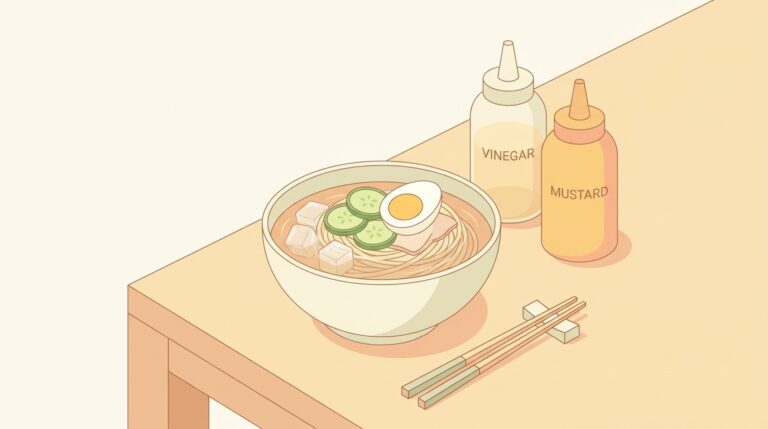
안녕하세요! I’m your Daily Hangul editor, back with another fun session! Have you ever sat down at a cold noodle joint in Seoul, feeling like a seasoned foodie, only to be confronted by a shiny pair of scissors and two mystery squeeze bottles on the table?
You order mul-naengmyeon (iced soup noodles) or bibim-naengmyeon (spicy mixed noodles). The steaming server sets down a bowl floating with ice cubes and hands you vinegar and mustard. Suddenly, panic hits! How much vinegar goes into the broth (yuksu)? Why on earth is there beef bone broth served in a teacup before the main meal?
Don’t worry! This confusion is a rite of passage for every local and expat alike. Today, we are breaking down the exact cultural etiquette, subtle flavour adjustments, and natural phrasing you need to master Korean Naengmyeon dining like a true local. Based on feedback from hundreds of intermediate Korean learners, this guide will boost your dining confidence to B2 level and beyond!
Phase 2: Core Expressions Deep Dive
1. 육수 좀 더 주실 수 있나요? (Yuks-u jom deo jus-il su issnayo?)
- Pronunciation: [Yook-soo jom deo joo-shil soo eess-na-yo?] (Think of ‘Yook’ as ‘pork’ without the p, and ‘soo’ like a warm bowl of soup).
- Meaning: Literal: “Can you give me a bit more broth?” | Nuance: Politely asking for a broth refill, a standard request in Korean cold noodle restaurants.
- K-Culture Moment: In a Korean food show or travel v-log, you’ll see host actors sipping warm onsuyu (hot meat broth) while waiting for their freezing mul-naengmyeon to balance their stomach temperature.
- Editor’s Insight: ‘육수’ (yuksu) refers to meat-based stock. In Naengmyeon spots, warm broth is usually self-service or given free upon request!
- Situation Spectrum: Casual ⚠️ / Semi-formal ✅ / Formal ✅
- 🤔 Think About It: In your country, is broth served warm as a free appetizer before cold meals? Why do you think Koreans drink hot broth before eating ice-cold noodles?
2. 식초랑 겨자는 취향껏 넣으세요. (Sikcho-rang gyeoja-neun chwijang-kkeos neoh-useyo.)
- Pronunciation: [Seek-cho-rang gyeo-ja-neun chwi-hyang-kkeot neo-heu-se-yo.] (‘Sikcho’ sounds like ‘seek-choke’ without the last ‘ke’).
- Meaning: Literal: “Put vinegar and mustard to your taste preference.” | Nuance: Adjust the seasoning freely according to your preference.
- K-Culture Moment: Server hands you the clear vinegar bottle and yellow mustard container while uttering this classic line.
- Editor’s Insight: ‘취향껏’ (chwijang-kkeot) means “to one’s heart’s content / according to personal preference.” You can use ‘취향껏’ in cosmetics, fashion, or coffee orders!
- Situation Spectrum: Casual ⚠️ / Semi-formal ✅ / Formal ✅
- 🤔 Think About It: How does customising your dish at the table reflect the balance between individual taste and standardized menu offerings in Korea?
3. 면 좀 가위로 잘라 드릴까요? (Myeon jom gawi-ro jalla deuril-kkayo?)
- Pronunciation: [Myeon jom gah-wee-ro jal-lah deu-ril-kka-yo?]
- Meaning: Literal: “Shall I cut the noodles with scissors for you?” | Nuance: A standard hospitality gesture offered before you take your first bite.
- K-Culture Moment: In dramas, when a character takes a date for Naengmyeon, the attentive partner often cuts the noodles or refuses cutting to show respect for authentic chewy noodle texture.
- Editor’s Insight: Traditionalists prefer not cutting Pyongyang-style buckwheat noodles, but chewy Hamheung sweet potato starch noodles usually require one or two scissor snips!
- Situation Spectrum: Casual ⚠️ / Semi-formal ✅ / Formal ✅
- 🤔 Think About It: Cutting food with scissors at the table can be surprising for foreigners. What unusual kitchen tool is used at tables in your culture?
Phase 3: Textbook Korean vs. Real Korean
Situation 1: Asking how to eat Naengmyeon properly
- 📖 Textbook Korean: 식초와 겨자를 얼만큼 넣어야 합니까? (How much vinegar and mustard should I insert?)
- 🗣️ Real Korean: 식초랑 겨자는 얼마나 넣어야 맛있어요? (How much vinegar and mustard makes it taste best?)
- 💡 Why the difference?: B2 speakers ditch dry passive verbs like ‘넣어야 합니까’ and use ‘맛있어요?’ to ask for authentic personal recommendations.
Situation 2: Asking for cold broth in spicy noodles
- 📖 Textbook Korean: 비빔냉면에 차가운 육수를 추가해 주십시오. (Please add cold broth to spicy noodles.)
- 🗣️ Real Korean: 비빔냉면에 자작하게 부어먹게 냉육수 좀 부탁드려요! (Could I get some cold broth on the side so I can make my spicy noodles a bit slushy/soupy?)
- 💡 Why the difference?: Onomatopoeia/Adverbs like ‘자작하게’ (slightly submerged/slushy) highlight advanced food fluency that native Koreans love to hear.
Phase 4: K-Culture Deep-Dive & Non-Verbal Manners
4-1. Nunchi & Gestures
- Broth Etiquette: When receiving warm broth (온육수) in a small kettle, use two hands to hold the kettle handle and pour for your dining companions first before yourself.
- The Scissors Rule: If the server holds scissors over your bowl, offer a subtle nod or a gentle hand wave. One nod means “Yes, cut it once in a cross shape (+)”, while a soft hand wave with “아, 안 잘라주셔도 돼요!” means “No need to cut!”
4-2. Culture Code Analysis
In Korean food culture, Mul-naengmyeon (iced broth) vs. Bibim-naengmyeon (spicy mix) is an eternal rivalry, right up there with Tangsuyuk dip-vs-pour! The choice of broth (yuksu) sets Pyongyang-style noodles apart from Hamheung style. Pyongyang style features a delicate beef-and-pheasant or radish water kimchi (dongchimi) broth served cold, where adding too much vinegar is seen as masking the broth’s subtle flavor. Hamheung style features spicy chili paste on super chewy starch noodles, where vinegar and mustard provide that essential zing.
Phase 5: Real Roleplay Scenario
Setting: A bustling 30-year-old Naengmyeon restaurant in Euljiro, Seoul during lunch hour.
NPC: Ahjumma (Friendly Restaurant Owner/Server)
- Turn 1 (Ahjumma): 어서오세요! 몇 분이세요? 물냉, 비냉 어떤 걸로 드릴까?
- (Eoseo-oseyo! Myeot bun-iseyo? Mul-naeng, bi-naeng eotteon geollo deurikka?)
- “Welcome! How many people? Would you like Mul-naeng or Bi-naeng?”
- Turn 2 (You): 안녕하세요! 두 명인데요, 저는 물냉면, 친구는 비빔냉면으로 주세요.
- (Annyeonghaseyo! Du myeong-indeyo, jeoneun mul-naengmyeon, chingu-neun bibim-naengmyeon-uro juseyo.)
- “Hello! Table for two. I’ll have Mul-naengmyeon, and my friend will have Bibim-naengmyeon.”
- Turn 3 (Ahjumma): [온육수 컵을 놓으며] 🎭 Hands over hot cup of broth 자, 따뜻한 온육수 먼저 드시고 계세요.
- (Ja, ttatseut-han on-yuksu meonjeo deusigo gyeseyo.)
- “Here, enjoy some warm bone broth first while you wait.”
- Turn 4 (You): 🎭 Takes a sip with both hands on the cup 와, 육수가 진짜 깊고 구수하네요! 혹시 리필 되나요?
- (Wa, yuksuga jin-jja gipgo gusu-haneyo! Hoksi ripil doenayo?)
- “Wow, the broth is really rich and savory! Is a refill available by any chance?”
- Turn 5 (Ahjumma): 그럼요! 저기 셀프바에서 마음껏 갖다 드시면 돼요. [냉면이 나오며] 면 잘라 드릴까요?
- (Geureomyo! Jeogi selpeu-ba-eseo maeum-kkeot gat-da deusimyeon doeyo. Myeon jalla deuril-kkayo?)
- “Of course! Feel free to get more at the self-bar. Shall I cut the noodles for you?”
- Turn 6 (You): 🎭 Nods politely 네, 한 번만 십자로 잘라주세요!
- (Ne, han beon-man sipja-ro jalla-juseyo!)
- “Yes, please cut it once in a cross shape!”
- Turn 7 (Ahjumma): 식초랑 겨자는 취향껏 넣어서 잘 비벼 드세요!
- (Sikcho-rang gyeoja-neun chwijang-kkeos neoh-eoseo jal bibyeo deuseyo!)
- “Add vinegar and mustard to your taste and mix well!”
- Turn 8 (You): 네, 감사합니다! 맛있게 잘 먹겠습니다!
- (Ne, gamsahamnida! Mas-issge jal meok-seos-seumnida!)
- “Yes, thank you! I will enjoy this meal!”
🔀 Interactive Choice Point
The server brings your Bibim-naengmyeon, but it looks a bit too spicy and dry for your taste. What do you say?
- Choice A: 저기요, 이거 너무 매워 보이는데 다른 걸로 바꿀 수 있나요? (Excuse me, this looks too spicy, can I exchange it for another dish?)
- Choice B: 이모님, 여기에 자작하게 넣어서 비벼먹게 냉육수 조금만 주실 수 있나요? (Auntie/Server, could you give me a little cold broth so I can pour it in and mix it nicely?)
- Choice C: 얼음물 많이 주세요. 매워서 못 먹겠어요. (Give me lots of ice water. It’s too spicy to eat.)
— Feedback —
* Choice A (Bad): 🚫 Requesting a dish swap after food is already served is considered rude in Korean casual dining.
* Choice B (Best): ✅ Perfect B2 mastery! Asking for a cup of cold broth (냉육수) to make your Bibim-naengmyeon semi-soupy is exactly how Korean foodies eat!
* Choice C (Risk): ⚠️ Not impolite, but drinking excessive plain water dilutes the seasoning and damages the meal flavor.
Phase 6: 10-Second Emotion Shadowing Drill
Practice these lines focusing on natural speed and pitch shifts!
[😊 Expressing delightful appreciation]- Sentence: 와 / 육수가 / 진짜 깔끔하고 / 깊은 맛이 나네요!
- Romanization: Wa / yuksuga / jin-jja kkal-kkeum-ha-go / gip-eun mas-i naneyo!
- Translation: “Wow, the broth tastes so clean and deep!”
[🥺 Polite and eager request]- Sentence: 이모님 / 냉육수 / 조금만 더 / 부어주실 수 있으세요?
- Romanization: Imonim / naeng-yuksu / jogeum-man deo / bueo-jus-il su isseuseyo?
- Translation: “Auntie, could you pour just a tiny bit more cold broth for me?”
Phase 7: K-Culture Mini Dictionary
- 온육수 (On-yuksu) | Warm Meat Broth | Served free in teacups or kettles at traditional cold noodle spots to warm the digestive system.
- 다데기 (Dadeagi) | Spicy Seasoning Paste | A concentrated chili-garlic spice paste added to noodle broths or soups to boost heat.
- 자가제면 (Jaga-jemyeon) | House-made Noodles | A sign on restaurants indicating they knead and press their own fresh noodle dough in-house.
- 면치기 (Myeon-chigi) | Noodle Slurping Technique | The popular Korean media trend of slurping long strands of noodles continuously without cutting them with teeth.
Phase 8: Traveler’s Survival Kit
Survival Top 3 Phrases
- 육수 더 주세요. (Yuksu deo juseyo.) – “More broth, please.”
- 가위 좀 주시겠어요? (Gawi jom jusigesseoyo?) – “Could you give me a pair of scissors?”
- 양념장 따로 주실 수 있나요? (Yangnyeom-jang ttaro jus-il su issnayo?) – “Can I get the spicy sauce on the side?”
Editor’s Travel Note
When hunting for authentic Naengmyeon places in Seoul, avoid generic search engines. Use Naver Map App and search for ‘냉면 맛집’ or ‘자가제면’ near stations like Euljiro-3ga or Dongdaemun. Most traditional spots accept all digital card payments, but warm broth refills (온육수) are often self-service near the kitchen corner!
Phase 9: A Step Deeper (Reflection)
In Korean food culture, cold dishes are rarely served completely stripped of warmth. The tradition of serving hot beef broth (온육수) prior to a freezing bowl of Mul-naengmyeon embodies the Oriental medicine philosophy of Eum-Yang (Yin and Yang balance). Protecting the stomach with warmth before introducing ice cold noodles displays subtle culinary care embedded deep within everyday dining hospitality.
💬 Your Turn: What combinations of hot and cold culinary elements exist in your culture? Have you ever tried drinking hot broth before eating iced noodles? Share your experiences in the comments below!
Phase 10: FAQ & Common Mistakes
Q: Do I need to cut Naengmyeon noodles with scissors every time?
A: Not strictly! Pyongyang-style buckwheat noodles snap easily with your teeth. However, Hamheung-style noodles made from potato or sweet potato starch are extremely springy, so cutting them once or twice prevents choking.
Q: Should I put vinegar directly into the broth or onto the noodles?
A: Authentic foodies recommend dropping vinegar directly onto the noodle strands rather than dumping it straight into the cold broth, as this preserves the clean broth profile while seasoning the noodles.
Q: Is warm bone broth (온육수) charged separately on the bill?
A: No! At almost all authentic Naengmyeon specialty joints, warm bone broth is complimentary and often unlimited.
🚨 Common Mistakes
- Mistake: Drenching Pyongyang Naengmyeon broth in heavy mustard and vinegar before tasting it.
- Correct Action: Sip the clear broth first! Pyongyang broth is prized for its subtle, delicate flavor.
- Mistake: Trying to bite through starch noodles without cutting them if you have dental sensitivity.
- Correct Action: Confidently ask for scissors using “가위 좀 주시겠어요?”
- Mistake: Throwing away the hard-boiled egg or eating it last.
- Correct Action: Eat the egg half first to coat your stomach lining before consuming cold/spicy broth!
Phase 11: Action Mission & Engagement
- 🥉 Bronze Mission: Practice saying “식초랑 겨자는 취향껏 넣으세요” aloud 3 times with realistic facial expressions.
- 🥈 Silver Mission: Order your favorite noodle dish online or at a local Korean diner using at least two phrases learned today, and tag @DailyHangul on Instagram!
- 🥇 Gold Mission: Spot a scene in a K-Drama where characters drink 온육수 or cut noodles, record a 5-second clip, and explain the context in Korean!
🎮 K-Culture Mission: Next time you watch a Korean food mukbang, listen carefully for the phrase “자작하게” or “면치기”! Write down how many times you spot it.
Phase 12: Interactive Quiz Challenge
Q1. What is the main reason for eating the hard-boiled egg half FIRST in Naengmyeon?
* A) To make the soup look pretty
* B) To protect your stomach before eating spicy/acidic cold noodles
* C) To show respect to the chef
Q2. Fill in the blank with the correct expression for “to one’s taste/preference”:
* “식초는 ________ 넣으시면 됩니다.”
Q3. True or False? Pyongyang Naengmyeon broth has a very strong, salty chili flavor.
🔍 Click to reveal Answers & Explanations!
- A1. Correct Answer: B | The egg yolk coats your stomach lining, preparing it for cold temperature and chili acidity!
- A2. Correct Answer: 취향껏 (chwijang-kkeot) | Means “according to your taste preference.”
- A3. Correct Answer: False | Pyongyang Naengmyeon broth is known for its light, subtle, and savory beef/radish broth flavor, whereas Hamheung style is spicy!







