

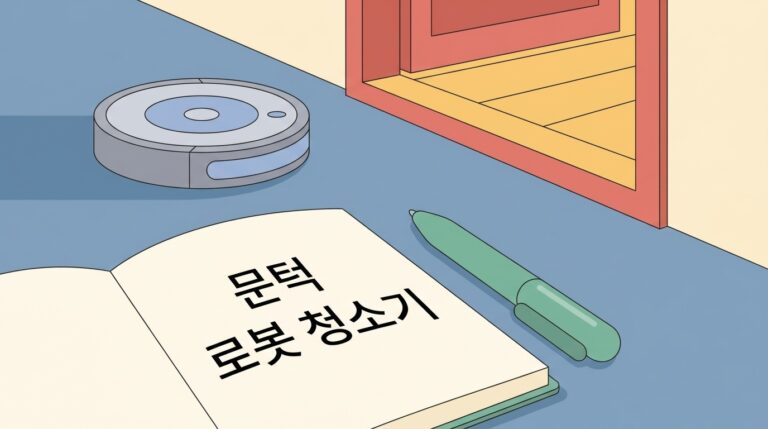
Master the Art of Home Tech: Recommending Robot Cleaners & Navigating ‘Mthresholds’ like a True Seoulite
Phase 1: Empathy (Connection & Storytelling)
안녕하세요! Welcome back to Daily Hangul, your favorite Korean culture navigator.
Imagine this: you’ve finally moved into your dream apartment in Seoul. It has that cozy, classic vibe, but there is one major catch—those pesky wooden door sills (문턱, munteok) separating every single room. You decided to invest in the ultimate Korean modern-life savior, the “Robotic Vacuum Cleaner” (affectionately dubbed 이모님 or Imonim / “Auntie” by Korean households because she does so much heavy lifting).
But as you watch your expensive new helper get helplessly stuck on a 2-centimeter wooden threshold, crying out in error beeps, you realize you need help. How do you ask your Korean friends for advice on high-clearance vacuums? How do you describe this very specific architectural struggle without sounding like a dictionary?
Today, we are diving deep into C2-level Korean home-management discourse. You will learn how to casually refer to household appliances as family members and discuss domestic design flaws like a seasoned resident. Let’s get your home cleaning game to the master level!
Phase 2: Deep Dive into 3 Essential Expressions
1. 이모님 (Imonim)
- Pronunciation: [I-mo-nim] (Sounds like “ee-mo-neem”)
- Meaning: Lit. “Maternal Aunt” (Respectful) -> Figuratively used to describe life-changing, labor-saving home appliances (especially robot vacuums, dishwashers, and dryers).
- K-Culture Moment: In modern Korean lifestyle vlogs or community forums like Momsholic, you will constantly see threads titled: “Our robotic ‘Imonim’ just retired today, I need a replacement ASAP!”
- Editor’s Insight: Calling a machine “Imonim” reflects a deep cultural appreciation for domestic help. Historically, wealthy households had live-in aunts or helpers. Now, tech has taken over, but the affectionate title remains. If you call your robot vacuum “이모님,” Koreans will instantly view you as an insider who understands the local humor.
- Situation Spectrum: Casual ✅ | Semi-formal ✅ | Formal ⚠️
- 🤔 Think About It: Why does Korean culture easily personify inanimate appliances into family titles, whereas English-speaking cultures tend to keep them strictly technical (“my robovac”)?
2. 문턱을 넘다 (Munteogeul neomda)
- Pronunciation: [Mun-teok-eul neom-da] (Sounds like “moon-teok-eul num-dah”)
- Meaning: To cross a threshold / To overcome an obstacle.
- K-Culture Moment: Used literally when discussing whether a robot vacuum can climb over the traditional wooden frames between rooms, but also metaphorically in dramas when a couple overcomes family opposition to marry.
- Editor’s Insight: Traditional Korean houses (Hanok) used raised wooden door frames to keep drafts out. Even in modern apartments built before the mid-2000s, these munteok persist. When shopping for a robot vacuum in Korea, checking its “threshold-crossing spec” (문턱 등판 능력) is an absolute must.
- Situation Spectrum: Casual ✅ | Semi-formal ✅ | Formal ✅
- 🤔 Think About It: What physical boundaries in your home country’s architecture have created unique idioms in your native language?
3. 문턱을 깎다 / 없애다 (Munteogeul kkakda / eopsaeda)
- Pronunciation: [Mun-teok-eul kkak-da / eop-sae-da] (Sounds like “moon-teok-eul kkahk-dah / up-sae-dah”)
- Meaning: To shave down / completely remove the door threshold.
- K-Culture Moment: Highly relevant in home remodeling (interior / 인테리어) discussions. Many young Koreans moving into older apartments choose to do this first so their robot vacuum can roam freely.
- Editor’s Insight: This phrase showcases the transition of Korean living spaces from traditional segmented rooms to open-plan westernized layouts designed specifically for smart home automation.
- Situation Spectrum: Casual ✅ | Semi-formal ✅ | Formal ✅
- 🤔 Think About It: How does technology directly reshape physical architecture in your country?
Phase 3: Textbook Korean vs. Real-World Korean
Scenario 1: Asking if a vacuum can go over obstacles
- 📖 Textbook: 이 로봇 청소기는 장애물을 통과할 수 있습니까? (Does this robotic vacuum pass through obstacles?)
- 🗣️ Real-World: 이 모델 문턱 잘 넘어요? (Does this model cross thresholds well?)
- 💡 Why the difference? Textbooks use formal, Latinate vocabulary like “장애물” (obstacle) and “통과” (pass through). Real Koreans use the highly visual, active verb “넘다” (to climb over/cross) and focus specifically on “문턱” (thresholds), which is the number one physical obstacle in Korean apartments.
Scenario 2: Recommending a great home appliance
- 📖 Textbook: 이 청소 기기를 매우 추천합니다. 삶의 질을 향상시킵니다. (I highly recommend this cleaning device. It improves quality of life.)
- 🗣️ Real-World: 삼신가전은 역시 이모님이죠. 삶의 질이 수직 상승해요! (Among the ‘Three Sacred Appliances’, the ‘Auntie’ is the best. Your quality of life will shoot up vertically!)
- 💡 Why the difference? “삼신가전” (The Three Divine Appliances: Robot vacuum, Dryer, Dishwasher) is modern Korean slang. “수직 상승” (vertical rise) is a very common idiomatic hyperbole used to describe a massive upgrade in lifestyle.
Phase 4: K-Culture Deep Dive & Non-Verbal Manners
4-1. Nunchi (눈치) & Non-Verbal Etiquette
When discussing apartment renovations or appliance complaints with a landlord (임대인) or a technician, avoid pointing directly at the floor with your foot. While it’s tempting to tap the offending door sill with your toe to demonstrate, this is considered highly rude (버릇없다) in Korea. Instead, crouch slightly, gesture with an open palm toward the threshold, and tilt your head to express mild frustration.
4-2. The “Three Sacred Appliances” (삼신가전) Culture
In Korea, young newlyweds and single professionals alike worship the “Three Sacred/God Appliances” (삼신가전, Samsingajeon). If you are invited to a housewarming party (집들이, Jipdeuri), commenting on their “이모님” (the robot vacuum) is the ultimate conversation starter. It shows you understand modern Korean domestic values: efficiency, cleanliness, and tech integration.
Phase 5: Real-Life Roleplay Scenario
Characters & Background
- 민지 (Minji): A savvy interior designer who knows all about smart homes.
- Alex (You): An expat living in a charming but older apartment in Mapo-gu, struggling with a stubborn robot vacuum.
-
민지: (자랑스럽게 새로 산 로봇 청소기를 가리키며) 🎭 Gently pointing to the sleek metallic disk gliding smoothly across her floor.
이번에 저희 집에 새로 모신 이모님이에요. 문턱도 척척 넘고 진짜 똑똑해요.
(This is the new ‘Auntie’ we brought into our house. She crosses thresholds so easily and is super smart.) - Alex: (한숨을 쉬며 자기 휴대폰 속 로봇 청소기 사진을 보여주며) 🎭 Sighing deeply and showing a photo of a vacuum stuck on a wooden sill.
아, 부러워요. 우리 집 이모님은 방 문턱에 걸려서 매일 살려달라고 삐삐 울려요.
(Ah, I’m so jealous. My ‘Auntie’ gets stuck on the room threshold and beeps for help every single day.) - 민지: (안타까운 표정으로 머리를 짚으며) 🎭 Placing her hand on her forehead in deep sympathy.
아이구, 옛날 아파트라 문턱이 높은가 봐요. 등판 각도가 안 나오나 보네요.
(Oh dear, since it’s an older apartment, the threshold must be high. The climbing angle probably isn’t working out.) - Alex: (답답하다는 듯 가슴을 치며) 🎭 Lightly tapping their chest to show frustration.
맞아요. 2센티미터는 족히 넘는데, 이거 문턱을 다 깎아버릴 수도 없고 어떡하죠?
(Exactly. It’s easily over 2cm. I can’t just shave down all the thresholds, so what should I do?) - 민지: (눈을 반짝이며 꿀팁을 주듯이 손가락을 세우며) 🎭 Raising an index finger as if sharing a top-secret tip.
요즘은 문턱 전용 경사로 패드가 나와요! 그거 붙이면 이모님이 가뿐하게 넘어 다녀요.
(These days, they sell specialized threshold ramp pads! If you stick those on, your ‘Auntie’ will cross over them effortlessly.) - Alex: (눈이 휘둥그레지며) 🎭 Eyes widening in surprise.
진짜요? 그런 게 있어요? 당장 검색해 봐야겠네요!
(Really? There is such a thing? I need to search for that right away!) - 민지: (웃으며 핸드폰을 꺼내 링크를 보여주며) 🎭 Smiling, pulling out her phone to show a shopping link.
네, ‘로봇청소기 진입방지’나 ‘경사로’라고 검색해 보세요. 신세계가 열릴 거예요.
(Yes, try searching for ‘robot vacuum entry barrier’ or ‘ramp’. A whole new world will open up.) - Alex: (안도하는 미소를 지으며) 🎭 Flashing a relieved smile.
와, 구세주를 만났네요. 이번 주말엔 제발 청소 스트레스에서 벗어나고 싶어요!
(Wow, I’ve met my savior. I desperately want to escape cleaning stress this weekend!)
🔀 Interactive Choice Point
What would you say next to Minji to keep the conversation going like a C2 speaker?
* Choice A: “이 모델 이름이 뭐예요? 저도 지름신 올 것 같아요!”
* Choice B: “청소기가 비싸네요. 저는 그냥 빗자루 쓸게요.”
* Choice C: “대박! 그런데 그 패드 붙이면 인테리어 망치지 않을까요?”
Feedback:
- Choice A (Best): Fantastic! “지름신 오다” (to feel an urge to impulse buy) is highly idiomatic and fits perfectly. Minji will laugh and give you her exact model number.
- Choice B (Bad): A bit of a buzzkill. It halts the exciting smart-home conversation and feels too basic.
- Choice C (Risk/Advanced): Excellent C2-level concern. Discussing “인테리어 망치다” (ruining the interior design aesthetics) shows deep cultural understanding of how much Koreans value home styling.
Phase 6: 10-Second Emotional Shadowing Drill
Practice speaking with the authentic emotional cadence of a native speaker. Focus on the pauses (/) and tone cues!
- [🥺 Frustrated & Helpless]
우리 집 이모님은 / 문턱에 걸려서 / 매일 살려달라고 삐삐 울려요.
(Uri jip imonim-eun / munteog-e geollyeoseo / maeil sallyeodalrago ppi-ppi ulryeoyo.) -
[🤩 Amazed & Excited]
경사로 패드 하나 붙였다고 / 삶의 질이 / 진짜 수직 상승했어요!
(Gyeong-saro paedeu hana but-yeot-dago / salm-ui jiri / jinjja sujik sangseung-haess-eoyo!)
Phase 7: K-Culture Mini-Dictionary
- 삼신가전 (Samsingajeon) | The Three Sacred Household Appliances (Robot vacuum, clothing dryer, dishwasher).
- 지름신 (Jireumsin) | The “Urge-to-Buy God” (used when you feel an intense, sudden desire to buy a product).
- 등판 능력 (Deungpan neungryeok) | Climbing/ascending capability (used technically for cars and robot vacuums navigating inclines or thresholds).
- 신세계가 열리다 (Sinsegyega yeollida) | A whole new world opens up (used when experiencing a life-altering technology or food for the first time).
Phase 8: Expat Survival Kit
Survival Expressions TOP 3
- “이 모델 문턱 몇 cm까지 넘을 수 있어요?” (How many centimeters of threshold can this model cross?)
- Pro Tip: Use this when shopping at a physical electronics store like Hi-Mart (하이마트).
- “집에 문턱이 높아서 경사로를 설치해야겠어요.” (The threshold at home is high, so I should install a ramp.)
- Pro Tip: Useful when talking to a handyman or dynamic shopping helper.
- “이모님 돌려놓고 나갔다 올게요.” (I will turn on the ‘Auntie’ [vacuum] and step out.)
- Pro Tip: Use this casually with roommates or family members.
Editor’s Travel & Living Note
If you need to buy threshold ramps or smart home accessories in Korea, bypass general search engines and download the 오늘의집 (Ohou/House Today) app immediately. It is the absolute holy grail for Korean home decor, offering user reviews with photos of older apartments similar to yours.
(Note: App policies and item prices in online markets may vary over time.)
Phase 9: A Step Deeper (Reflection)
In Korea, space is deeply tied to collective comfort. The traditional system of Ondol (온돌, floor heating) required people to sit, eat, and sleep directly on the floor, making cleanliness paramount. Therefore, even as Korea modernized into high-rise apartments, the zero-tolerance policy for dust on the floor remained. The robot vacuum is not just a luxury; it is the modern preservation of a centuries-old floor-living hygiene standard.
💬 Your Turn: How does your culture view floor hygiene, and would you trust an “이모님” to keep it spotless?
Phase 10: FAQ & Avoiding Mistakes
Q: Can I use the word “이모님” to refer to any robot vacuum?
A: Yes! It is incredibly common in casual and online spaces. However, do not use it in a highly formal business presentation or when filing an official warranty claim with Samsung or LG customer service. Use “로봇 청소기” in official settings.
Q: What is the difference between ‘문턱’ and ‘문지방’?
A: They are practically synonyms. ‘문턱’ refers more to the actual raised edge/step itself, while ‘문지방’ (Munjibang) refers to the entire wooden bottom frame of the doorway. In conversation about robot vacuums, ‘문턱’ is much more frequently used.
Q: How do I tell my landlord I want to shave down the thresholds?
A: Be careful! Always ask: “문턱 제거 공사를 해도 괜찮을까요?” (Is it okay if I do threshold removal construction?) modifying the structure without permission can cost you your deposit.
🚨 Common Mistakes Alert!
- Mistake 1: Saying “로봇 청소기가 등산을 잘해요” to mean climbing thresholds.
- Correction: Use 등판(登坂) (climbing a slope) or simply 넘다 (cross/climb over), not 등산 (hiking a mountain).
- Mistake 2: Calling the robot “식모” (historical term for maid).
- Correction: This is extremely outdated and carries derogatory classist undertones. Stick to the warm, modern 이모님.
- Mistake 3: Saying “문턱을 자르다” (to cut).
- Correction: Use 문턱을 깎다 (shave down) or 없애다/제거하다 (remove).
Phase 11: Action Mission
- Bronze: Take a photo of a threshold or obstacle in your house and write a Korean caption: “우리 집 문턱… 넘어갈 수 있을까?”
- Silver: Share a post on social media calling your favorite chore-saving appliance “이모님” and tag #DailyHangul.
- Gold: Visit a Korean appliance store (or search on Naver shopping) and ask/search: “문턱 몇 cm까지 등판 가능한가요?”
Phase 12: Interactive Quiz Challenge
Try your hand at these questions to test your C2 lifestyle-Korean mastery!
1. Which appliance is NOT traditionally included in the “삼신가전” (Three Sacred Appliances)?
- A) 로봇 청소기 (Robot vacuum)
- B) 식기세척기 (Dishwasher)
- C) 전자레인지 (Microwave)
👉 Click to reveal Answer & Explanation
Answer: C) 전자레인지 (Microwave)
Explanation: The “Three Sacred Appliances” that drastically save labor and time are the Robotic Vacuum (로봇 청소기), Clothes Dryer (건조기), and Dishwasher (식기세척기). Microwaves are standard kitchen appliances!
2. Fill in the blank: “로봇청소기가 문턱에 걸려서 안 움직여요. 마트에서 ( )을/를 사서 붙여야겠어요.”
- A) 문지방 (Munjibang)
- B) 경사로 패드 (Gyeong-saro pad)
- C) 청소 솔 (Cleaning brush)
👉 Click to reveal Answer & Explanation
Answer: B) 경사로 패드 (Gyeong-saro pad – Ramp pad)
Explanation: To help a vacuum cross a high threshold, you need to install a small ramp pad (경사로 패드).







