

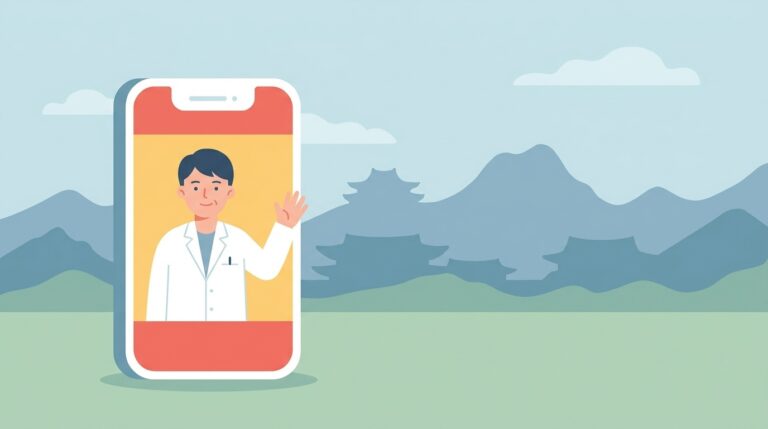
Debate: The Pros and Cons of Telemedicine in Korea (원격 진료 도입 찬반 논쟁)
Phase 1: Empathy (공감 – Connection & Pain Point)
안녕하세요! (Annyeonghaseyo!) Welcome back to Daily Hangul, your trusty cultural navigator!
Imagine this: You wake up in your Seoul officetel with a pounding headache and a fever. You want to consult a doctor, but the thought of navigating a crowded local clinic (nae-gwa) when you can barely stand is exhausting. You think, “Can’t I just video-call a doctor on my phone and get my prescription sent to the nearest pharmacy?”
In many countries, this is normal. But in South Korea—despite having some of the world’s fastest internet and most advanced medical tech—telemedicine (원격 진료) remains a highly controversial, heavily regulated topic.
As a C1-level learner, you’re not just ordering coffee anymore; you are ready to engage in complex societal debates. Discussing the pros and cons of telemedicine is the perfect arena to flex your advanced Korean vocabulary, nuance, and cultural insight. Let’s master the expressions that will make you sound like a sophisticated debater!
Phase 2: Core Expressions Deep Dive (핵심 표현 3선 심층 분석)
1. 의료 사각지대 (ui-ryeo sa-gak-ji-dae)
- Pronunciation: Ui-ryeo sa-gak-ji-dae (Sounds like “wee-ryuh sah-gahk-jee-dae”)
- Meaning: Medical blind spot (underserved areas/communities lacking adequate medical access)
- K-Culture Moment: In medical K-dramas like Romantic Doctor, Teacher Kim (낭만닥터 김사부), you often see local clinics in rural areas struggling due to a lack of specialists. These remote towns are classic examples of an 의료 사각지대.
- Editor’s Insight: ‘사각지대’ literally means “blind spot” (from driving). In social debates, it refers to any marginalized area or group that doesn’t benefit from public systems (e.g., 복지 사각지대 – welfare blind spot).
- Situation Spectrum: Casual 🚫 | Semi-formal ⚠️ | Formal ✅
- 🤔 Think About It: How does your home country handle “medical blind spots” compared to Korea’s ultra-dense urban healthcare concentration?
2. 오진의 우려 (o-jin-ui u-ryeo)
- Pronunciation: Oh-jeen-ui oo-ryuh (Sounds like “oh-jean-ee oo-ryuh”)
- Meaning: Concerns of misdiagnosis
- K-Culture Moment: Imagine a high-stakes debate on a news program like JTBC Newsroom. A representative from the Korean Medical Association (KMA) passionately argues against telemedicine, emphasizing the risk of missing critical physical symptoms: “비대면 진료는 오진의 우려가 있습니다.”
- Editor’s Insight: ‘우려’ is a sophisticated Hanja (Sino-Korean) word for “concern/worry,” much more formal than ‘걱정’ (geok-jeong). Use ‘우려’ when writing essays or participating in formal discussions.
- Situation Spectrum: Casual 🚫 | Semi-formal ⚠️ | Formal ✅
- 🤔 Think About It: In an online consultation, do you think the convenience outweighs the 오진의 우려?
3. 편의성 제고 (pyeon-ui-seong je-go)
- Pronunciation: Pyeon-ee-seong jeh-goh (Sounds like “pyuhn-ee-suhng jeh-go”)
- Meaning: Enhancing/improving convenience
- K-Culture Moment: Startup CEOs on tech talk shows often pitch their healthcare apps by saying they exist for 국민 편의성 제고 (enhancing the convenience of the citizens).
- Editor’s Insight: ‘제고’ (提高) means to raise or enhance something intangible, like awareness, image, or convenience. It is a key vocabulary item for C1 learners to replace basic verbs like ‘높이다’ (nop-i-da).
- Situation Spectrum: Casual 🚫 | Semi-formal ⚠️ | Formal ✅
- 🤔 Think About It: Is “convenience” a valid justification when it comes to human health, or should safety always take absolute priority?
Phase 3: Textbook Korean vs. Real Korean (교과서 한국어 vs. 진짜 한국어)
Situation 1: Expressing agreement with a caveat
- 📖 Textbook style: 저는 그 의견에 찬성하지만 문제가 있습니다.
- (Jeo-neun geu ui-gyeon-ae chan-seong-ha-ji-man mun-jae-ga is-seum-ni-da. / I agree with that opinion, but there is a problem.)
- 🗣️ Real Native C1 style: 취지에는 적극 공감하나, 부작용에 대한 대책이 선행되어야 합니다.
- (Chwi-ji-e-neun jeok-geuk gong-gam-ha-na, bu-ja-yong-e dae-han dae-chaek-i seon-haeng-deo-ya ham-ni-da. / I deeply empathize with the intent, but countermeasures against side effects must come first.)
- 💡 Why the difference? Advanced speakers don’t just say “I agree but…” They separate the intent (취지) of the policy from its practical execution to sound objective and constructive.
Situation 2: Dismissing an opponent’s point gently
- 📖 Textbook style: 당신의 말은 틀렸습니다.
- (Dang-sin-ui mal-eun teul-ryeot-seum-ni-da. / Your word is wrong.)
- 🗣️ Real Native C1 style: 일리 있는 말씀이시지만, 지나치게 기우에 불과합니다.
- (Il-ri in-neun mal-sseum-i-si-ji-man, ji-na-chi-ge gi-u-e bul-gwa-ham-ni-da. / You have a point, but that is merely an excessive worry/groundless fear.)
- 💡 Why the difference? Directly telling someone they are “wrong” (틀렸다) is extremely taboo in Korean debate culture. Using ‘일리 있다’ (to have some truth/reason) first softens the blow, while ‘기우’ (groundless fear) intellectually refutes the point.
Phase 4: K-Culture Deep Dive & Non-verbal Manners (비언어적 매너)
4-1. The Art of “K-Debate” Etiquette
When debating hot-button social issues in Korea, raw passion must be tempered with extreme respect.
* The Softening Nod: Even when you disagree completely with the other panelist, you must nod slowly while they speak. This shows you are digesting their points, not just waiting to attack.
* Indirect Passive Voice: Instead of saying “You are ignoring rural patients,” say “의료 사각지대 환자들의 목소리가 소외될 우려가 있습니다” (There is concern that the voices of patients in medical blind spots might be marginalized).
4-2. The Healthcare Culture of Korea
To understand this debate, you must understand Korea’s “3-minute consultation” (3분 진료) culture. Due to low insurance co-pays under the National Health Insurance (NHI), Koreans visit local clinics very frequently. Because of high patient volume, doctors spend very little time per patient. Proponents of telemedicine argue this quick, transactional style is perfect for digital migration, while opponents argue that going digital will make these brief consultations even more dangerous.
Phase 5: Real-Life Roleplay Scenario (실전 롤플레이)
Setting: A panel discussion on a fictional current affairs show “Issue Debate 100 Minutes” (이슈 토론 100분).
* Characters:
* Dr. Kim (김 박사): A conservative representative of the medical association who values medical safety.
* CEO Park (박 대표): An ambitious health-tech startup founder advocating for digital transformation.
[Debate Stage: Spotlights on both, looking professional and tense]

김 박사: 🎭 (단호한 표정으로 마이크를 조정하며)
        원격 진료는 결국 오진의 우려를 키우고 의료의 질을 떨어뜨릴 것입니다. 대면 진료가 원칙이 되어야 합니다.
        (Telemedicine will eventually increase the risk of misdiagnosis and degrade the quality of care. In-person treatment must remain the principle.)

박 대표: 🎭 (고개를 저으며 안경을 고쳐 쓰고)
        김 박사님의 우려도 이해합니다만, 기술의 발전으로 정밀 진단이 충분히 가능한 시대가 왔습니다.
        (I understand Dr. Kim's concerns, but with technological advancement, we have reached an era where precise diagnosis is fully possible.)

김 박사: 🎭 (미소를 지으며 차분하게 대응하려 애쓰며)
        정밀 기기 센서가 아무리 발달해도, 의사가 직접 촉진(触診)하고 환자의 목소리 톤을 듣는 것과는 다릅니다.
        (No matter how advanced precision device sensors become, it is different from a doctor physically palpating and hearing the patient's voice tone in person.)

박 대표: 🎭 (설득력 있는 어조로 손짓을 섞어가며)
        그렇다면 도서산간 지역에 사시는 고령의 만성 질환자분들은 어떻게 합니까? 의료 사각지대를 방치하자는 말씀이십니까?
        (Then what about the elderly chronic disease patients living in remote island and mountain areas? Are you saying we should neglect these medical blind spots?)

김 박사: 🎭 (목소리를 조금 낮추며 무겁게)
        그 문제는 보건소 인프라 확충으로 해결해야지, 검증되지 않은 원격 시스템에 국민 안전을 맡길 수는 없습니다.
        (That issue should be resolved by expanding public health center infrastructure; we cannot entrust public safety to unverified remote systems.)

박 대표: 🎭 (자신감 넘치는 눈빛으로 카메라를 응시하며)
        언제까지 규제에 막혀 세계적인 디지털 헬스케어 흐름에서 뒤처져야 합니까? 이는 국민의 편의성 제고를 위해 반드시 필요합니다.
        (How long must we be blocked by regulations and lag behind the global digital healthcare trend? This is absolutely necessary to enhance citizen convenience.)
🔀 Interactive Choice: How would you intervene as the Moderator?
- Choice A: “둘 다 일리 있습니다. 다음 질문으로 넘어가죠.” (Both have points. Let’s move to the next question.)
- Choice B: “박 대표님의 말씀은 규제 완화에 초점이 맞춰져 있고, 김 박사님은 안전성에 치우쳐 계시네요. 두 가치의 균형을 맞출 합의점은 없을까요?”
- Choice C: “의사 협회가 밥그릇 지키기를 하는 것 아닙니까?” (Isn’t the medical association just protecting its own interests?)
💡 Feedback on Your Choice:
- Choice A (Risk): Too passive. For a C1-level moderator, this lacks the linguistic depth required to synthesize arguments.
- Choice B (Best!): Perfect! It uses advanced vocabulary (초점, 치우치다, 균형, 합의점) and summarizes both positions respectfully and constructively.
- Choice C (Bad): Highly aggressive and unprofessional. The phrase ‘밥그릇 지키기’ (protecting one’s rice bowl) is extremely informal and offensive in a formal debate.
Phase 6: 10-Second Emotion Shadowing Drill (10초 감정 섀도잉 드릴)
Practice reading these out loud to master native phrasing and pauses (/ indicates a natural pause).
- [🧐 Analytical and Firm]
- “원격 진료의 취지에는 / 적극 공감하나, / 환자의 생명과 직결된 만큼 / 신중한 접근이 필요합니다.”
- (Won-gyeok jin-ryo-ui chwi-ji-e-neun / jeok-geuk gong-gam-ha-na, / hwan-ja-ui saeng-myeong-gwa jik-gyeol-doen man-keum / sin-jung-han jeop-geun-i pyo-yo-ham-ni-da.)
- (“I deeply agree with the intent of telemedicine, but since it is directly linked to patient life, a cautious approach is required.”)
- [🔥 Passionate and Progressive]
- “언제까지 / 규제 장벽에 가려 / 혁신의 가능성을 / 가로막고 있을 것입니까?”
- (Eon-je-kka-ji / gyu-jae jang-byeok-e ga-ryeo / hyeok-sin-ui ga-neung-seong-eul / ga-ro-mak-go is-seul geos-im-ni-ka?)
- (“How long are we going to block the possibility of innovation, hidden behind regulatory walls?”)
Phase 7: K-Culture Mini Dictionary (K-Culture 미니 사전)
- 비대면 (Bi-dae-myeon) | Untact / Non-face-to-face
- Usage: Made highly popular during the pandemic. In Korea, you’ll see “비대면 서비스” (contactless services) everywhere, from bank apps to ordering food.
- 도서산간 (Do-seo-san-gan) | Islands and mountainous areas
- Usage: A formal term used in logistics and policy debates referring to hard-to-reach, isolated geographic locations in Korea.
- 디지털 격차 (Di-ji-teol gyeok-cha) | Digital Divide
- Usage: Discussing how the elderly struggle with smart devices when physical clinics transition to digital platforms.
- 규제 샌드박스 (Gyu-jae saen-deu-baek-seu) | Regulatory Sandbox
- Usage: A term heavily used in Korean tech startups where regulations are temporarily suspended to test new technologies like remote healthcare.
Phase 8: Travel & Tech Survival Kit (여행자를 위한 생존 키트)
Should you fall ill while traveling in Korea, knowing how to find a physical pharmacy or hospital is vital.
Survival Expressions:
- “가장 가까운 야간 약국이 어디인가요?”
- Pronunciation: Ga-jang ga-kka-un ya-gan yak-guk-i eo-di-in-ga-yo?
- Meaning: Where is the nearest night-operating pharmacy?
- “외국어 진료가 가능한 병원을 찾고 있어요.”
- Pronunciation: Oe-gug-eo jin-ryo-ga ga-neung-han byeong-won-eul chat-go is-seo-yo.
- Meaning: I’m looking for a hospital that offers consultations in foreign languages.
- “처방전 재발급이 가능한가요?”
- Pronunciation: Cheo-bang-jeon jae-bal-geub-i ga-neung-han-ga-yo?
- Meaning: Can I get this prescription reissued?
💡 Editor’s Travel Note:
To find clinics and pharmacies around you instantly, download the KakaoMap Kakao Map App or Naver Map. Type ‘약국’ (Pharmacy) or ‘내과’ (Internal Medicine) in the search bar. Note: Information regarding operating hours may vary, so always call ahead to confirm.
Phase 9: “A Step Deeper” – Cultural Reflection (한 발 더 깊이)
Korea’s debate over telemedicine shows the clash between two core Korean cultural forces: “Pali-Pali” (빨리빨리 – Fast-paced convenience) and “Shin-Tto-Bul-I” (신토불이/신중함 – Extreme caution regarding bodily health). Koreans demand absolute convenience in daily life, making them quick to adopt apps. However, health is viewed as a sacred, collective responsibility. The medical system is deeply socialized, and any move that feels like “privatizing” or compromising healthcare safety triggers immense public resistance.
💬 Your Turn: Is telemedicine legal and widely used in your country? Do you face similar socio-cultural resistance? Let us know in the comments below!
Phase 10: FAQ & Common Mistakes (자주 묻는 질문 & 오해 방지)
Q: Why can’t I just use telemedicine apps like ‘Dr. Now’ (닥터나우) freely in Korea?
A: During COVID-19, regulations were temporarily relaxed. However, after the health emergency ended, Korea reverted to limiting first-time consultations mainly to in-person visits, restricting remote care mostly to returning patients in specific rural areas or during holiday/night hours.
Q: What is the difference between ‘원격 의료’ and ‘비대면 진료’?
A: ‘원격 의료’ (telemedicine/telehealth) is a broad academic and policy term. ‘비대면 진료’ (non-face-to-face consultation) is the specific term used in Korean legislation to refer to a doctor diagnosing a patient via phone or video.
Q: Can foreigners use Korean telemedicine services?
A: Yes, but since these apps generally require identity verification using a Korean phone number and registration with the National Health Insurance system, tourists may find it highly challenging to use them without local credentials.
🚨 Common Mistakes Alert!
- Mistake 1: Saying “원격을 하고 싶어요” to a doctor.
- Correct Action: Say “비대면 진료를 신청하고 싶습니다” (I want to apply for a non-face-to-face consultation).
- Mistake 2: Mixing up ‘오진’ (misdiagnosis) with ‘외진’ (outpatient treatment/out-of-base pass in military).
- Correct Action: Ensure you pronounce the ‘오’ clearly when discussing errors: 오진 (誤診).
Phase 11: Action Mission & Participation (액션 미션)
- 🥉 Bronze Mission: Read the Core Expressions in Phase 2 out loud three times to perfect your pronunciation.
- 🥈 Silver Mission: Write a 3-sentence opinion in Korean about telemedicine in the comments below, using the word ‘오진의 우려’ or ‘편의성 제고’.
- 🥇 Gold Mission: Watch a clip of a Korean news debate on YouTube search query “비대면 진료 찬반 토론” (Telemedicine Debate) and try to spot at least two of the terms we learned today!
Phase 12: Interactive Quiz Challenge (인터랙티브 퀴즈 챌린지)
1. Vocabulary Match
What is the most natural term for “medical blind spot” in Korean?
* A) 의료 어둠 지대
* B) 의료 사각지대
* C) 의료 차단지역
Reveal Answer & Explanation
Correct Answer: B) 의료 사각지대
Explanation: ‘사각지대’ (blind spot) is the standard idiomatic term used in Korea for social, welfare, or medical gaps.
2. True or False
In Korean debate culture, it is highly recommended to directly tell your opponent they are wrong by saying “당신 생각은 틀렸습니다” to show confidence.
* True
* False
Reveal Answer & Explanation
Correct Answer: False
Explanation: Direct confrontation is considered rude in formal Korean speech. It is much better to say “의견은 일리 있으나…” (Your opinion has some point, but…) to keep the conversation polite and professional.







