

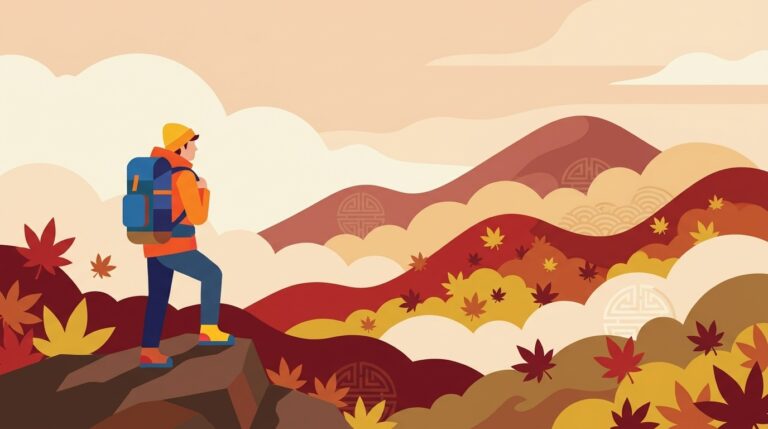
Autumnal Radiance: Navigating Korea’s Peak Foliage Trails Like a Local (Seasons & Hiking)
Phase 1: Empathy (스토리 몰입형 오프닝)
안녕하세요! Daily Hangul’s Chief Editor and your resident K-Culture Navigator is here. 🍂
Picture this: You are standing at the base of Seoraksan (설악산) or Naejangsan (내장산) in late October. The air is crisp, and the canopy above is an explosion of crimson, amber, and gold. You’ve got your hiking poles ready, but as you look around, you realize Korean hiking culture is a whole different beast. It’s not just about walking; it’s a sensory, social, and linguistic ritual.
Many advanced learners tell me, “I know the dictionary words for ‘autumn’ and ‘mountain,’ but when I talk to local hikers, my Korean feels so stiff and textbook-ish!” If you’ve ever felt overwhelmed trying to blend in with the vibrant, colorful-windbreaker-clad deungsan-maniacs (hiking enthusiasts) or struggled to express the sheer, breathtaking beauty of Korean peak foliage (danpung), this guide is for you. Derived from years of trail-tested encounters, we are diving deep into C2-level nuances so you can converse like a seasoned Korean mountaineer. Let’s hit the trail!
Phase 2: Core Expression Depth Analysis (핵심 표현 3선 심층 분석)
1. 단풍이 흐드러지다 (Danpung-i heudeureojida)
- Pronunciation: Dan-pung-i heu-deu-reo-ji-da (Sounds like “heu-deu-reo-jee-dah”)
- Meaning: Autumn leaves are in dazzling, lavish, full bloom.
- K-Culture Moment: You will hear this in scenic travel documentaries or high-end lifestyle vlogs capturing the breathtaking views of Naejangsan’s famous “Maple Tunnel” (danpung-teoneol). It portrays a scene where the colors are so dense they seem to spill over.
- Editor’s Insight: While pida (피다) is for flowers blooming, heudeureojida (흐드러지다) indicates a state of overwhelming abundance and beauty. It’s a highly poetic, C2-level verb that instantly elevates your descriptive prowess.
- Situation Spectrum: Casual ✅ | Semi-formal ✅ | Formal ⚠️
- 🤔 Think About It: English often uses static adjectives (“vibrant,” “spectacular”), whereas Korean utilizes dynamic verbs to show how the landscape actively transforms. How does viewing nature through active verbs change your connection to the environment?
2. 금강산도 식후경 (Geumgangsando sik-hu-gyeong)
- Pronunciation: Geum-gang-san-do shik-hu-gyeong (Sounds like “Geum-gang-san-do sheek-hoo-gyung”)
- Meaning: Even sightseeing at Mt. Geumgang comes after eating. (First things first: let’s eat!)
- K-Culture Moment: Essential vocabulary when stopping by the trail-side taverns (matjib) at the base of Seoraksan for some haemul-pajeon (seafood scallion pancake) and makgeolli (rice wine).
- Editor’s Insight: Mt. Geumgang is historically famed as Korea’s most beautiful mountain. Saying that even such majestic beauty must wait until one’s stomach is full is the ultimate Korean way of celebrating food as part of nature appreciation.
- Situation Spectrum: Casual ✅ | Semi-formal ✅ | Formal ✅
- 🤔 Think About It: How does your culture view the relationship between physical sustenance and aesthetic appreciation? Is eating a ritualistic part of your outdoor adventures?
3. 산신령이 나올 법하다 (Sansillyeong-i naol beophada)
- Pronunciation: San-shil-lyeong-i na-ol buhp-ha-da (Sounds like “San-sheel-lyung-ee nah-ohl buhp-hah-dah”)
- Meaning: It looks mysterious enough for a mountain spirit (sansillyeong) to appear.
- K-Culture Moment: Commonly used in historical fantasy K-dramas when characters trek through mist-shrouded, ancient forests filled with giant crags and golden leaves.
- Editor’s Insight: This phrase uses the grammar structure
-을 법하다(highly likely/natural for something to happen). It pays homage to Korean shamanistic roots where mountains are protected by benevolent spirits. - Situation Spectrum: Casual ✅ | Semi-formal ✅ | Formal 🚫
- 🤔 Think About It: Using folklore references in everyday speech adds deep cultural layer. How often do you refer to mythical elements in your native language when describing nature?
Phase 3: Textbook Korean vs. Real-Life Korean
Situation 1: Expressing that the trail is steep and challenging
- 📖 Textbook: 경사가 심해서 등산하기가 아주 힘듭니다. (The slope is severe, so hiking is very difficult.)
- 🗣️ Real-Life: 경사가 장난이 아니라 숨이 턱밑까지 차올라요! (The incline is no joke; my breath is literally catching in my throat!)
- 💡 Why the Difference? Real hikers use visceral, physical expressions. Sumi teok-mitkkaji chaoreuda (숨이 턱밑까지 차오르다) perfectly captures that high-intensity cardio feeling on Seoraksan’s rocky ascents.
Situation 2: Praising the stunning autumn colors
- 📖 Textbook: 단풍 색깔이 매우 아름답습니다. (The autumn leaves’ colors are very beautiful.)
- 🗣️ Real-Life: 단풍이 아주 그냥 빨갛게 흐드러지게 물들었네요! (The autumn leaves are just spectacularly dyed in brilliant crimson!)
- 💡 Why the Difference? Adding fillers like aju geunyang (아주 그냥) adds a casual, authentic flavor to your exclamation, emphasizing your genuine awe.
Phase 4: K-Culture Deep Dive & Non-Verbal Manners
4-1. Hiking Etiquette & Body Language (눈치 & 제스처)
- The Trail Greeting: When passing other hikers on a narrow ridge in Seoraksan, turn slightly sideways to make room, nod your head slightly, and say “수고하십니다!” (You are doing great work!) or “힘내세요!” (Cheer up!).
- The “Eye-Contact Sharing” of Snacks: On summits, Koreans love to share sliced cucumbers, cherry tomatoes, or yeot (Korean taffy). If someone offers you a snack, accept it with both hands (양손), bow slightly, and say “잘 먹겠습니다!” Refusing bluntly can break the communal mountain vibe.
4-2. Cultural Code: The ‘Deungsan’ Phenomenon
In Korea, hiking is a lifestyle subculture. It’s not just physical exercise; it’s a fashion runway of high-end outdoor brands and a vital social outlet. After descending from Naejangsan, the journey is only half-complete without a post-hike feast. This blend of nature appreciation, high-tech gear, and culinary indulgence defines the modern Korean Deungsan culture.
Phase 5: Real-Life Roleplay Scenario
Characters
- Ji-su (지수): A local hiking expert who knows Naejangsan like the back of her hand.
- You (Advanced Adventurer): A passionate hiker aiming to master both the peaks and local lingo.
Ji-su: 벌써 내장산 국립공원 입구네요! 가을 단풍철이라 그런지 인파가 어마어마해요.
       (Beol-sseo Nae-jang-san guk-rip-gong-won ip-gu-ne-yo! Ga-eul dan-pung-cheol-i-ra geu-reon-ji in-pa-ga eo-ma-eo-ma-hae-yo.)
       [😊 Excitedly gesturing toward the crowded colorful trail head]
       "We're already at the entrance of Naejangsan National Park! Because it's peak foliage season, the crowd is massive!"

You: 과연 명불허전이네요! 입구부터 단풍 터널이 아주 흐드러지게 물들었어요.
     (Gwa-yeon myeong-bul-heo-jeon-i-ne-yo! Ip-gu-bu-teo dan-pung teo-neol-i a-ju heu-deu-reo-ji-ge mul-deul-eoss-eo-yo.)
     [🤩 Looking around in awe at the spectacular red canopy]
     "It truly lives up to its reputation! From the very entrance, the maple tunnel is beautifully and lavishly dyed."

Ji-su: 맞아요. 그런데 저희가 오늘 오를 코스가 서래봉 코스인데, 초반 계단 구간이 좀 가팔라요. 각오 단단히 하셔야 해요!
       (Ma-ja-yo. Geu-ren-de jeo-hui-ga o-neul o-reul ko-seu-ga Seo-rae-bong ko-seu-in-de, cho-ban gye-dan gu-gan-i jom ga-pal-ra-yo. Gak-o dan-dan-hi ha-syeo-ya hae-yo!)
       [⚠️ Pointing upward with a playful, warning smile]
       "Exactly. But the course we are climbing today is the Seoraebong course, and the initial stair section is quite steep. Prepare yourself!"

You: 걱정 마세요! 다리 근육 단련 좀 해왔거든요. 숨이 턱밑까지 차올라도 끝까지 올라갈 겁니다.
     (Geok-jeong ma-se-yo! Da-ri geun-yuk dal-ryeon jom hae-wat-geun-yo. Sum-i teok-mit-kka-ji cha-o-ra-do kkeut-kka-ji ol-ra-gal geom-ni-da.)
     [💪 Patting your thighs confidently with a grin]
     "Don't worry! I've been training my leg muscles. Even if my breath catches in my throat, I will make it to the top."

Ji-su: 오, 눈빛에서 내공이 느껴지는데요? 그럼 낙오자 없이 정상에서 야호 한번 외쳐보자고요!
       (O, nun-bit-e-seo nae-gong-i neu-kkyeo-ji-neun-de-yo? Geu-reom nag-o-ja eop-si jeong-sang-e-seo ya-ho han-beon oe-chyeo-bo-ja-go-yo!)
       [👍 Giving you a double thumbs-up of approval]
       "Oh, I can feel your inner strength in your eyes! Let's make sure no one gets left behind and shout 'Yaho!' at the summit!"
🔀 Interactive Choice Point
At the summit, after a grueling 2-hour hike, Ji-su pulls out some food. What do you say?
- Choice A: “배고프니까 대충 아무거나 먹고 빨리 내려가요.” (Let’s just eat whatever quickly because I’m hungry, and head down.)
- Choice B: “금강산도 식후경이라는데, 경치를 보면서 김밥 한 줄 먹는 맛이 기가 막히네요!” (They say even Mt. Geumgang is best viewed after eating, and eating gimbap while looking at this view is absolutely sensational!)
- Choice C: “저는 다이어트 중이라서 산에서는 아무것도 안 먹습니다.” (I am on a diet, so I do not eat anything on mountains.)
💡 Feedback & Results
- Choice A (Bad): Breaks the mood completely. Hiking in Korea is highly social and leisure-oriented. Rushing through the eating phase defeats the purpose of the experience.
- Choice B (Best!): Perfect! It elegantly utilizes a classic proverb in context, acknowledges the communal eating culture, and shows deep appreciation for both the food and the view.
- Choice C (Risk): While respectable, rejecting food completely might make your Korean companion feel self-conscious about eating in front of you. Try sharing even a small piece of fruit instead.
Phase 6: 10-Second Emotional Shadowing Drill
Practice the rhythm and physical pauses of these high-level natural expressions.
- Sentence 1:
- “단풍이 / 아주 그냥 / 흐드러지게 / 물들었네요!”
- [😊 Expressing delightful, jaw-dropping awe at the scenery]
- Sentence 2:
- “경사가 장난이 아니라 / 숨이 턱밑까지 / 차올라요!”
- [🥵 Expressing heavy panting but determined, cheerful energy]
Phase 7: K-Culture Mini Dictionary
- 명불허전 (Myeong-bul-heo-jeon): Lit. Fame is not spread by false rumors. Used to express when a famous place (like Seoraksan in autumn) truly lives up to its legendary reputation.
- 내공 (Nae-gong): Lit. Inner martial arts power. Used colloquially to describe someone’s deep, quiet expertise or seasoned skills in any activity.
- 알록달록 (Al-rok-dal-rok): Mottled, variegated colors. A beautiful sensory word describing the colorful leaves or the bright mountain gear worn by hikers.
- 뒤풀이 (Dwi-pu-ri): The after-party / post-event gathering. The essential final step of hiking where teammates bond over food and drinks at the base of the mountain.
Phase 8: Survivor Kit for Travelers
Survival Expressions TOP 3
- “대피소가 어디에 있나요?” (Daepi-soga eodi-e innayo?) | Where is the emergency shelter?
- “무릎 보호대가 필수인 코스인가요?” (Mureup boho-daega pilsu-in coseu-ingayo?) | Is knee support/bracing essential for this trail?
- “정상까지 얼마나 더 가야 하나요?” (Jeongsang-kkaji eolmana deo gaya hanayo?) | How much further to the summit?
Editor’s Travel Note
For the ultimate autumn hiking experience, download the National Parks of Korea Website to check trail conditions, congestion maps, and seasonal fire prevention trail closures. Note that peak foliage season in Seoraksan usually starts mid-October, moving down to Naejangsan by late October to early November. Local transportation can get heavily booked, so reserving KTX tickets to Jeongeup Station (for Naejangsan) weeks in advance is highly recommended.
Phase 9: “Going One Step Deeper” (Thought Provoking Question)
In Korea, mountains occupy a sacred space. Nearly 70% of the peninsula is mountainous, making hiking not just a weekend hobby, but a return to cultural roots. It’s a collective ritual where corporate stress is left on the trail and companionship is reinforced through shared makgeolli. This collective bonding on steep slopes reflects Korea’s strong community-focused culture (uri-munhwa).
💬 Your Turn: How does your home country’s relationship with nature compare? Do people seek solitude in the wild, or is it a shared, festive gathering like in Korea? Let us know in the comments below!
Phase 10: FAQ & Avoiding Misunderstandings
Q: Can I wear regular sneakers to climb Seoraksan?
A: While some low-lying walking paths are paved, courses heading toward peaks like Daecheongbong are exceptionally rocky and rugged. High-traction hiking boots are highly recommended to prevent slipping on loose stones.
Q: Is shouting “Yaho!” (야호) at the summit actually practiced?
A: Yes, historically it was a common custom to celebrate reaching the top. However, modern environmental guidelines discourage loud shouting to protect nesting birds and mountain wildlife. A quiet, joyous selfie or a low-voiced “Yaho” is preferred today!
Q: Are there entry fees for Seoraksan and Naejangsan?
A: National Park entry is free, but some specific historic temple areas near the entrances may charge a small cultural heritage maintenance fee (usually around 3,000 to 5,000 KRW).
🚨 Common Mistakes Alert!
- Mistake: Saying “단풍이 꽃처럼 피었어요” (The autumn leaves bloomed like flowers).
- Correction: Leaves do not bloom. Use “단풍이 곱게 물들었어요” (The autumn leaves are beautifully dyed/colored) to sound natural.
Phase 11: Action Mission
- Bronze Medal: Say “단풍이 아주 그냥 흐드러지게 물들었네요!” out loud while looking at a photo of Korean autumn mountains.
- Silver Medal: Share your favorite autumn hiking photo on Instagram, tag
@DailyHangul, and write #명불허전 한국의 가을! - Gold Medal: Head to your local trail, offer a snack to your hiking partner, and cheerfully declare “금강산도 식후경!” before eating.
Phase 12: Interactive Quiz Challenge
1. Situation-Based Vocabulary Quiz
Which phrase is best suited when looking at an exceptionally beautiful, mist-covered peak in the early autumn morning?
* A) 비가 올 것 같네요. (It looks like it will rain.)
* B) 산신령이 나올 법하네요! (It looks like a mountain spirit might appear!)
* C) 길이 아주 가파르네요. (The road is very steep.)
Reveal Answer
Correct Answer: B
Reason: ‘산신령이 나올 법하다’ is a highly expressive, C2-level cultural expression used to describe majestic, mystical, and beautiful mountainous scenery.
2. True or False Culture Quiz
Statement: When someone offers you food on a Korean mountain peak, it is considered polite to decline at least twice before accepting.
Reveal Answer
Answer: FALSE
Reason: While modest hesitance is common in traditional dining, on a mountain peak, refusing food can disrupt the friendly, shared community spirit. Accepting with both hands and expressing gratitude immediately is much warmer and highly appreciated!







