

Finding Your True Glow: Navigating Personal Color Analysis in Seoul Like a Native
Phase 1: Empathy (Welcome, My Friend!)
안녕하세요! Welcome back to Daily Hangul, your trusted guide to the beating heart of Seoul’s trendiest scenes. I’m your senior editor, and today we are diving headfirst into one of the most exciting, life-changing self-care rituals taking over Korea right now: Personal Color Analysis (퍼스널 컬러 진단 – peoseoneol keolleo jindan).
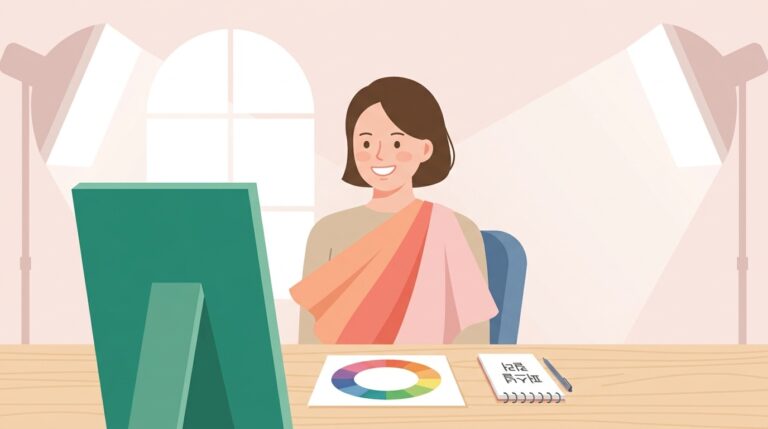
Imagine this: You are sitting in a sleek, sunlit studio in Hongdae or Gangnam. A professional color analyst is draping dozens of vibrant fabric swatches under your chin. Suddenly, with a drape of a specific muted olive, the dark circles under your eyes seem to vanish, and your skin instantly brightens. “Ah, look at that! You are definitely an Autumn Warm Mute!” the stylist exclaims.
But here is the real pain point. You’ve booked this premium 1:1 session (which can cost anywhere from 100,000 to 250,000 KRW), but as a C1-level learner, you want more than just “Yes, I like blue.” You want to articulate the subtle differences in your skin tone, argue why a certain cool-toned pink makes you look pale rather than bright, and confidently ask for alternative makeup recommendations. This guide is crafted from real-life feedback from our global premium members who wanted to sound like seasoned beauty editors during their consults. Let’s master the art of color talk!
Phase 2: Deep Dive into Key Expressions
Here are three premium, highly nuanced expressions that will instantly elevate your communication during a personal color consultation.
1. 형광등이 켜지다 (hyeong-gwang-deung-i kyeo-ji-da)
- Pronunciation: Hyeong-gwang-deung-ee kyeo-jee-da (Sounds like “hyeong-gwang” + “dung” with a quick tongue flick, followed by “kyeo-jee-da”)
- Meaning: Literally “the fluorescent light turns on.” Idiomatically, it means a color instantly brightens up your complexion, making you look radiant and alive.
- K-Culture Moment: You’ll see this phrase splashed across beauty blogs and K-beauty YouTube videos (like those by LeoJ or Risabae). When an idol wears a lip tint that perfectly matches their undertone, fans comment: “이 립스틱 바르자마자 얼굴에 형광등 켜졌어!” (The moment they applied this lipstick, a light bulb turned on on their face!)
- Editor’s Insight: Use this when a drape makes your skin look instantly healthy. It’s highly colloquial yet perfectly understood by professional consultants.
- Situation Spectrum: Casual ✅ | Semi-formal ✅ | Formal ⚠️
- 🤔 Think About It: In many Western cultures, glowing skin is often associated with tan or bronze tones. In Korea, the focus is on a clear, bright, and harmonious “lit-from-within” clarity (투명함). How does your culture describe that moment a color truly flatters someone?
2. 톤그로가 끌리다 (ton-geu-ro-ga kkeol-li-da)
- Pronunciation: Tone-geu-ro-ga kkeol-lee-da (A portmanteau of “Tone” + “Aggro/Aggression”)
- Meaning: Wearing a makeup shade or clothing color that clashes terribly with your natural skin tone, creating an awkward, unharmonious look that “attracts negative attention” (aggro).
- K-Culture Moment: Used extensively in online fashion communities (like Yeowoo-ya or Instiz). Someone might post a selfie saying, “Cool-toned pink lipsticks make me look so washed out. Is this tongro?”
- Editor’s Insight: This is a fantastic slang term to show you are in on modern Korean internet culture. It playfully describes that clash where your face and your makeup look like they belong to two different people.
- Situation Spectrum: Casual ✅ | Semi-formal ⚠️ | Formal 🚫
- 🤔 Think About It: This term highlights how deeply Koreans analyze visual harmony (조화). Instead of just saying “that color looks bad,” they coined a specific word for the systemic clash of color seasons!
3. 이목구비가 또렷해 보이다 (i-mok-gu-bi-ga tto-ryeot-hae bo-i-da)
- Pronunciation: Ee-mok-goo-bee-ga ttoh-ryeot-hae bo-ee-da (Pronounce “tto-ryeot” with a crisp, tense double ‘t’ sound)
- Meaning: To make one’s facial features (eyes, nose, mouth—collectively called 이목구비) look sharp, defined, and clear.
- K-Culture Moment: Analysts use this constantly. A dark winter color drape might make a pale winter type’s facial features stand out sharply, whereas a dusty pastel might wash them out.
- Editor’s Insight: Unlike the previous slang, this is a highly elegant, professional term. If you use this, the consultant will realize you have a sophisticated vocabulary.
- Situation Spectrum: Casual ✅ | Semi-formal ✅ | Formal ✅
- 🤔 Think About It: “이목구비” literally translates to “ears, eyes, mouth, and nose.” Why do you think Korean beauty standards place such emphasis on the clarity of these individual features rather than just general facial structure?
Phase 3: Textbook Korean vs. Real Native Korean
Let’s compare what you might find in a standard language app with what fashionistas actually say in a trendy Gangnam studio.
Situation 1: Expressing that a cool-toned lipstick doesn’t suit you
- 📖 Textbook Korean: 이 분홍색 립스틱은 저에게 어울리지 않아요. (This pink lipstick does not suit me.)
- 🗣️ 진짜 한국어: 이 쿨톤 핑크는 제 얼굴에서 너무 동동 떠서 안 어울려요. (This cool-toned pink floats off my face too much, so it doesn’t look right.)
- 💡 Why the Difference? Natives use the verb 떠서 (뜨다 – to float) to describe makeup that doesn’t blend seamlessly into the skin, looking like a separate layer. It’s a crucial term in K-beauty.
Situation 2: Asking if a pastel yellow looks good on you
- 📖 Textbook Korean: 이 노란색 천이 제 피부색과 맞습니까? (Does this yellow cloth match my skin color?)
- 🗣️ 진짜 한국어: 이 파스텔 노란색을 대니까 얼굴이 확실히 사네요! (Now that you’ve draped this pastel yellow, my face definitely comes alive/pops!)
- 💡 Why the Difference? The verb 살다 (to live) is used dynamically in beauty to mean “to pop,” “to look radiant,” or “to come alive.”
Phase 4: K-Culture Deep Dive & Non-Verbal Manners
4-1. The Art of the “Nunchi” (눈치) during Diagnosis
When a stylist drapes a color that makes you look tired or yellow, do not react with dramatic negativity. Instead, tilted head posture (고개를 약간 갸우뚱하며) and a soft, thoughtful “음…” (Hmm…) is the polite way to express doubt. When you find the perfect match, wide eyes, a gentle smile, and a subtle nod are highly appreciated. Korean beauty consultants pride themselves on their intuitive eye; acknowledging their analysis with positive body language builds an immediate rapport.
4-2. The “Tone-Spanning” Culture in K-Pop
In Korea, matching your personal color is a science, but idols often “break” their tones for specific concepts. For example, a warm-toned idol might wear cool-toned ash-gray hair dye and use heavy lavender blush to force a cool-toned look—this is called 톤파괴 (ton-pa-gwoe – tone destruction) or 톤그로 컨셉 (ton-geu-ro concept). Knowing this demonstrates that you understand the playful, artistic side of K-beauty beyond the rigid seasonal boxes.
Phase 5: Real-Life Roleplay Scenario
Setting: A premium personal color studio in Sinsa-dong.
Characters:
* 민지 (Minji): A professional personal color stylist who has diagnosed thousands of clients.
* 유진 (Yujin – You): A discerning client who wants to find the perfect daily makeup palette.
민지: (천을 번갈아 대며) 유진 님, 지금 봄 웜 브라이트 천을 댔을 때랑 가을 뮤트 천을 댔을 때 차이가 확실히 보이시죠?
      (Cheon-eul beon-gal-a dae-myeo) Yujin-nim, ji-geum bom wom beu-ra-i-teu cheon-eul daet-eul ttae-rang ga-eul myu-teu cheon-eul daet-eul ttae cha-i-ga hwak-sil-hi bo-i-si-jyo?
      *🎭 [With a keen eye, swapping the drapes rapidly]* Yujin, do you see the clear difference when we apply the Spring Warm Bright drape versus the Autumn Mute drape?

유진: (거울을 유심히 보며) 와, 정말 신기하네요. 봄 웜 천을 대니까 얼굴에 형광등이 탁 켜지는 느낌이에요!
      (Geo-ul-eul yu-sim-hi bo-myeo) Wa, jeong-mal sin-gi-ha-ne-yo. Bom wom cheon-eul dae-ni-kka eol-gul-e hyeong-gwang-deung-i tak kyeo-ji-neun neuk-kim-i-e-yo!
      *🎭 [Staring closely into the mirror with awe]* Wow, that is amazing. When you put the Spring Warm drape on, it feels like a light bulb instantly switched on over my face!

민지: 맞아요! 가을 뮤트를 대면 살짝 노란기가 올라오면서 이목구비가 묻히는 경향이 있어요.
      Ma-ja-yo! Ga-eul myu-teu-reul dae-myeon sal-jjak no-ran-gi-ga ol-la-o-myeon-seo i-mok-gu-bi-ga mut-hi-neun gyeong-hyang-i isseo-yo.
      *🎭 [Smiling, pointing to the jawline]* Exactly! When we apply the Autumn Mute, a bit of yellow undertone creeps up, and your facial features tend to get washed out.

유진: 역시 그렇군요. 제가 평말 가을 뮤트 립스틱을 바르면 톤그로가 끌리는 것 같더라고요.
      Yeop-si geu-reoh-gun-yo. Je-ga pyeong-so ga-eul myu-teu rip-seu-tik-eul ba-reu-myeon ton-geu-ro-ga kkeol-li-neun geot gat-deo-ra-go-yo.
      *🎭 [Nodding in agreement]* I knew it. No wonder I felt like I was pulling a major 'tone-clash' whenever I wore Autumn Mute lipsticks in my daily life.

민지: (웃음) 맞아요, 얼굴색이 칙칙해 보였을 거예요. 유진 님은 봄 브라이트가 인생 톤이십니다.
      (Ut-eum) Ma-ja-yo, eol-gul-saek-i chik-chik-hae bo-yeost-eul geo-ye-yo. Yujin-nim-eun bom beu-ra-i-teu-ga in-saeng ton-i-sip-ni-da.
      *🎭 [Giggling softly]* Haha, yes, your skin probably looked a bit dull. Yujin, Spring Warm Bright is definitely your lifetime personal color!
🔀 Interactive Choice Point
How do you respond to Minji to get recommendations for your pouch makeup check?
* A. “그럼 제가 가져온 화장품 중에서 봄 브라이트에 맞는 게 있는지 봐주실 수 있나요?”
* B. “봄 브라이트는 너무 화려해서 싫어요. 그냥 가을 뮤트로 살래요.”
* C. “봄 웜은 화장 안 해도 예쁜가요?”
💡 Choice Feedback
- Choice A (Best): Perfect! This is exactly how you transition to the “Pouch Check (파우치 점검)” phase of the consultation. It’s practical, fluent, and highly polite.
- Choice B (Bad): While honest, it dismisses the analyst’s professional advice a bit too bluntly. If you want a softer alternative, you could say: “제가 차분한 느낌을 좋아하는데, 봄 브라이트 안에서 차분하게 연출하는 방법이 있을까요?” (I like a calm vibe; is there a way to style Spring Bright more calmly?)
- Choice C (Risk): Too casual and off-topic. While cute, it doesn’t help you get practical makeup tips!
Phase 6: 10-Second Emotion Shadowing Drill
Practice expressing realization and excitement with the natural rise and fall of Korean intonation. / indicates a micro-pause for breath.
- [😊 Discovering your best color with joy]
- “대박… / 이 색깔 대자마자 / 얼굴이 확실히 사네요!”
- dae-bak… / i saek-kkal dae-ja-ma-ja / eol-gul-i hwak-sil-hi sa-ne-yo!
- “Oh my god… / the moment you drape this color / my face completely pops!”
- [🥺 Realizing past makeup mistakes with a sigh]
- “어쩐지… / 제가 핑크 바르면 / 입술만 동동 떠 보였어요.”
- eo-jjeon-ji… / je-ga ping-keu ba-reu-myeon / ip-sul-man dong-dong tteo bo-yeost-eo-yo.
- “No wonder… / whenever I wore pink / my lips looked like they were completely floating.”
Phase 7: K-Culture Mini-Dictionary
- 인생 톤 (Insaeng-tone)
- Translation: Life-defining color palette.
- Usage: The single most flattering color palette of your entire life. “드디어 제 인생 톤을 찾았어요!” (I finally found my lifetime tone!)
- 톤그로 (Ton-geu-ro)
- Translation: Color clashing/Tone-aggro.
- Usage: When a hair dye or makeup color completely fights with your skin undertones.
- 갈웜 (Gal-wom)
- Translation: Autumn Warm (Abbreviation of 가을 워머).
- Usage: Extremely common slang. You’ll hear “갈웜 딥 (Autumn Warm Deep)” or “갈웜 뮤트 (Autumn Warm Mute)” in daily conversations.
- 여쿨 (Yeo-kul)
- Translation: Summer Cool (Abbreviation of 여름 쿨러).
- Usage: Known for light, pastel, and elegant aesthetics. “여쿨 라이트 (Summer Cool Light)” is highly coveted for its clean look.
Phase 8: Traveler’s Survival Kit
Survival Phrases for Your Session
- “저 혹시 웜톤인지 쿨톤인지 대충 보이시나요?”
- jeo hok-si wom-ton-in-ji kul-ton-in-ji dae-chung bo-i-si-na-yo?
- Pro Tip: Ask this at the very beginning to test if you have an obvious primary undertone.
- “제 파우치 탈탈 털어주세요!”
- je pa-u-chi tal-tal teol-eo-ju-se-yo!
- Pro Tip: A playful way to say, “Please inspect my makeup pouch thoroughly and ruthlessly!”
- “이 색깔은 저한테 워스트인가요?”
- i saek-kkal-eun jeo-han-te wo-seu-teu-in-ga-yo?
- Pro Tip: Crucial for identifying colors you should absolutely avoid buying.
Editor’s Travel Note 🗺️
Most premium color analysis studios require booking 1 to 2 months in advance, especially for English/foreign-language translation services. You can easily find and book popular spots like Dustmoth Strophy or Colorize through reservation systems. Use the Naver Map App to locate the exact studio in Hongdae or Sinsa, as Google Maps is not fully updated in Korea.
Note: Studio pricing and availability are subject to change depending on seasonal demand.
Phase 9: “A Step Deeper” (Cultural Essay)
In Western beauty culture, makeup is often used to dramatically alter or sculpt the face—think heavy contouring, baking, and changing skin shades with self-tanners. In contrast, Korea’s obsession with Personal Color Analysis highlights a deeply rooted cultural value: 조화 (Johwa – Harmony) and 자연스러움 (Jayeonseoreoum – Naturalness). The goal of a personal color diagnosis in Seoul is not to hide your face behind a mask of makeup, but to discover the exact natural frame that highlights your innate features. It’s a pursuit of looking like “the best, most radiant version of yourself” rather than someone else.
💬 Your Turn: Do you think matching your clothes strictly to your color season is liberating, or does it limit your fashion freedom? Tell us your thoughts in the comments below!
Phase 10: FAQ & Common Mistakes
Q: Can my personal color change if I get a deep summer tan?
A: No! Your underlying genetic undertone (how your skin reflects light) remains the same. However, your brightness scale might shift slightly, meaning you might move from a Light type to a Mute/Deep type within your same seasonal family.
Q: Is it rude to bring a huge bag of my own makeup to the session?
A: Not at all! In fact, it is highly encouraged. Stylists love doing a 파우치 점검 (pouch check). Bring everything from your daily foundation to lip tints you bought but never wore because they felt “off.”
Q: I don’t speak perfect Korean. Will I survive a Korean-only studio?
A: Yes, because the visual cue (before-and-after in the mirror) is so strong! But using the key words from this guide like hyeong-gwang-deung and ton-geu-ro will bridge any language gap instantly.







