

Phase 1: Empathy (스토리 몰입형 오프닝)
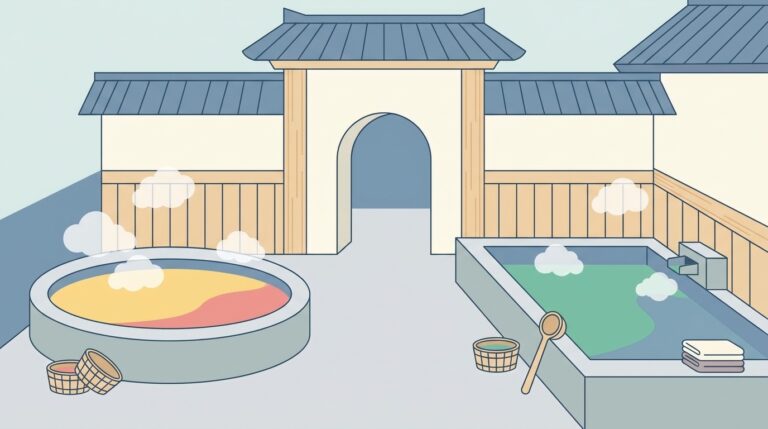
안녕하세요! Your favorite Korean editor from “Daily Hangul” is here! Have you ever stood at the edge of a steaming hot pool (온탕) and a shivering cold pool (냉탕) in a Korean bathhouse, wondering if you’ll survive the transition?
In Korea, moving back and forth between these two pools—what we call naeng-on-tang gyo-cha-yok (냉온탕 교차욕)—is a fine art and a cultural ritual. Many of our intermediate B1 learners have told me, “I wanted to ask my Korean friend how to do this or express how relaxed I was, but I froze in front of the tubs!” Don’t worry. Today, you’ll learn the exact natural phrases to navigate this therapeutic ritual like a true local, along with the unwritten rules of Korean bathhouse culture.
Phase 2: Three Key Expressions Deep Dive
1. 왔다 갔다 하다 (wat-da gat-da ha-da)
- Pronunciation: [wat-da gat-da ha-da] (Sounds like wat-dah gat-dah ha-dah)
- Meaning: To go back and forth (Literally: “came and went”)
- K-Culture Moment: You’ll hear this in K-dramas when characters discuss pacing their bathhouse sessions, or when someone is nervously pacing a hallway.
- Editor’s Insight: This verb is incredibly versatile! While textbooks teach “교대로 이용하다” (to use alternately), native speakers simply say “왔다 갔다 해요.” It’s casual, vivid, and highly descriptive.
- Situation Spectrum: Casual (✅) / Semi-formal (✅) / Formal (⚠️)
- 🤔 Think About It: English uses “back and forth” (direction), but Korean uses “came and went” (action). How does focusing on the completed actions reflect a different way of experiencing movement?
2. 냉탕 (naeng-tang) & 온탕 (on-tang)
- Pronunciation: [naeng-tang] & [on-tang] (Sounds like nang-tang & own-tang)
- Meaning: Cold tub & Hot tub
- K-Culture Moment: In family variety shows, you often see kids splashing in the naeng-tang while parents relax deeply in the on-tang.
- Editor’s Insight: Naeng (냉) means cold, and On (온) means hot/warm. Together with tang (탕 – bath/tub), they form the core geography of any Korean bathhouse (목욕탕).
- Situation Spectrum: Casual (✅) / Semi-formal (✅) / Formal (✅)
- 🤔 Think About It: Why do you think the bathhouse keeps these two extreme temperatures right next to each other?
3. 피로가 싹 풀리다 (pi-ro-ga ssak pul-li-da)
- Pronunciation: [pi-ro-ga ssak pool-li-da] (Sounds like pee-ro-gah ssak pool-lee-dah)
- Meaning: Fatigue is completely washed away / relieved
- K-Culture Moment: An exhausted office worker sinks into the warm water, lets out a deep sigh, and declares this exact line.
- Editor’s Insight: Ssak (싹) is a delicious onomatopoeic word meaning “completely” or “in one clean sweep.” Pul-li-da (풀리다) means to untangle or loosen up.
- Situation Spectrum: Casual (✅) / Semi-formal (✅) / Formal (✅)
- 🤔 Think About It: How does “untangling” fatigue differ from “resting” or “recharging” in your own culture?
Phase 3: Textbook Korean vs. Real Korean
- Situation 1: Recommending the alternating bath routine
- 📖 Textbook: “온탕과 냉탕을 번갈아 이용하면 건강에 좋습니다.” (Alternating between the hot and cold tub is good for your health.)
- 🗣️ Real Korean: “온탕이랑 냉탕 왔다 갔다 해 봐요. 진짜 개운해요!” (Try going back and forth between the hot and cold tubs. It’s so refreshing!)
- 💡 Why is it different? Koreans prefer the active, sensory verb “왔다 갔다 하다” and use “개운하다” (feeling refreshed/cleansed) to describe physical relief.
- Situation 2: Describing how relaxing it is
- 📖 Textbook: “신체의 긴장이 완화되었습니다.” (The tension in my body has been relaxed.)
- 🗣️ Real Korean: “몸이 사르르 녹는 것 같아요.” (I feel like my body is melting away smoothly.)
- 💡 Why is it different? “사르르” (smoothly melting/dissolving) captures the sensory feeling of warm water much better than clinical medical terms.
Phase 4: K-Culture Deep Dive & Non-verbal Manners
4-1. Nunchi & Gestures: Bathhouse Etiquette
- The Pre-wash Ritual: Never, ever jump straight into any tub! You must sit at the washing stations and scrub yourself clean first. If you skip this, you will get very intense glares (nunchi) from the locals.
- The Hair Rule: Tie your hair up or wear a shower cap before entering the water. Letting long hair float in the public tubs is considered a major etiquette slip-up.
- No Splashing: The cold tub (naeng-tang) looks like a mini-pool, but splashing or swimming is strictly for small children (and even they get scolded!).
4-2. The “Si-won-ha-da” Paradox
In Korea, when elders enter a scorching hot bath, they often groan, “아, 시원하다!” (Ah, so cool/refreshing!). Don’t be fooled! “시원하다” (si-won-ha-da) literally means “cool,” but metaphorically it describes a deep, satisfying release of heat, congestion, or stress. It’s a key linguistic concept you must understand to truly appreciate Korean sauna culture.
Phase 5: Real-world Roleplay Scenario
Background: Alex is visiting a traditional Korean neighborhood bathhouse (목욕탕) with his close Korean friend, Ji-won. They have just finished washing and are standing between the steaming hot pool and the freezing cold pool.
- Ji-won: 🎭 (Pointing to the hot pool) “알렉스, 온탕 먼저 들어갈래요? 몸 좀 풀어야죠.”
(Alex, do you want to go into the hot tub first? We should loosen up our bodies.) - Alex: 🎭 (Testing the water with a toe) “우와, 물이 꽤 뜨거워 보이네요! 괜찮을까요?”
(Wow, the water looks quite hot! Will I be okay?) - Ji-won: 🎭 (Stepping in smoothly) “처음에는 뜨겁지만, 조금만 참고 있으면 엄청 시원해져요.”
(It’s hot at first, but if you hold on for a bit, it becomes incredibly refreshing.) - Alex: 🎭 (Stepping in and sighing) “아! 진짜로 뜨거운데… 어? 진짜 몸이 사르르 녹네요.”
(Ah! It’s really hot… oh? My body is truly melting away.) - Ji-won: 🎭 (Pointing to the shivering pool next door) “그죠? 이제 온탕에서 몸 좀 불렸으니까 냉탕으로 가요!”
(Right? Now that we’ve soaked and softened our skin in the hot tub, let’s head to the cold tub!) - Alex: 🎭 (Shivering just by looking) “악! 냉탕은 너무 차가워 보여요! 꼭 가야 해요?”
(Ack! The cold tub looks too cold! Do we really have to go?) - Ji-won: 🎭 (Grinning) “냉탕이랑 온탕을 왔다 갔다 해야 피로가 싹 풀려요. 절 믿어봐요!”
(Going back and forth between the cold and hot tubs is how fatigue gets completely washed away. Trust me!) - Alex: 🎭 (Taking a deep breath) “좋아요, 딱 1분만 참아볼게요! 왔다 갔다 가보자고!”
(Okay, I’ll endure it for just one minute! Let’s go back and forth!)
🔀 Interactive Choice Points:
What should Alex do next as he steps into the freezing cold tub?
* Choice A: Jump in quickly with a loud splash to get it over with.
* Choice B: Dip his feet in slowly, taking deep breaths, and gently ease in.
* Choice C: Refuse to go in and run back to the changing room.
💡 Feedback:
- Choice A (Bad): 🚫 Be careful! Splashing cold water on others will disturb the peaceful elderly locals. You might receive some sharp words.
- Choice B (Best): ✅ Perfect! Easing in slowly is safe for your heart and respects the quiet atmosphere of the bathhouse.
- Choice C (Risk): ⚠️ Missed opportunity! You’ll miss out on the incredible “hot-cold” tingling sensation that cures all jetlag!
Phase 6: 10-Second Emotion Shadowing Drill
Let’s practice speaking with local emotion! Pay attention to the pauses (/) and the emotional guidance in brackets.
- “냉탕이랑 온탕이랑 / 왔다 갔다 하니까 / 피로가 싹 풀려요!”
- [😊 Feeling incredibly refreshed and energetic]
- Pronunciation: Naeng-tang-i-rang on-tang-i-rang / wat-da gat-da ha-ni-kka / pi-ro-ga ssak pul-ryeo-yo!
- “아, 온탕은 너무 뜨거워요! / 냉탕으로 도망갈래요!”
- [🥶 Shivering playfully, running away from the heat]
- Pronunciation: Ah, on-tang-eun neo-mu tteu-geo-wo-yo! / naeng-tang-eu-ro do-mang-gal-rae-yo!
Phase 7: K-Culture Mini Dictionary
- 목욕탕 (mogyoktang) | Public Bathhouse
- A traditional neighborhood bathhouse, distinct from the larger 24-hour Jjimjilbangs (찜질방).
- 양머리 (yangmeori) | Sheep Head Towel
- The iconic way of folding a small towel to wear on your head, famously seen in K-dramas.
- 세신사 (sesinsa) | Professional Body Scrubber
- Experts who scrub away dead skin (때 – ttae) with colorful exfoliating mitts. It’s a life-changing experience!
- 바나나맛 우유 (banana-mat uyu) | Banana Milk
- The undisputed, legendary post-bath drink that every Korean craves after sweating.
Phase 8: Survival Kit for Travelers
Survival Expressions TOP 3
- “수건 하나만 더 주세요.” (su-geon ha-na-man deo ju-se-yo.)
- Pro Tip: “Can I have one more towel, please?” (Useful at the front desk).
- “여탕은 어디예요?” / “남탕은 어디예요?” (yeo-tang-eun eo-di-yeo-yo? / nam-tang-eun eo-di-yeo-yo?)
- Pro Tip: “Where is the women’s bath?” / “Where is the men’s bath?” (Avoid entering the wrong door!).
- “식혜 대짜 하나 주세요.” (sik-hye dae-jja ha-na-man ju-se-yo.)
- Pro Tip: “One large sweet rice punch, please.” (The ultimate thirst quencher!).
Editor’s Travel Note:
To find the best local neighborhood baths, avoid searching on basic global search engines. Instead, download the Naver Map app and search for “목욕탕” (mogyoktang) or “사우나” (sauna) near your location. Don’t forget to bring some cash if you want to get a professional scrub (sesin)!
Note: Business hours and pricing may vary, so check the latest Naver Map updates before visiting.
Phase 9: “One Step Deeper” (Thinking Question)
In Korea, there is a concept called al-mom to-keu (알몸 토크) or “naked talk.” Bathing naked together strips away social status, expensive clothes, and formal barriers. Friends, co-workers, and even parents and children build a unique, deep bond (jeong / 정) by sharing this vulnerable space. It shows how Korean culture values dropping facades to connect on a raw, human level.
💬 Your Turn: Would you feel comfortable going to a bathhouse with your close friends or co-workers? Why or why not? Let us know in the comments below!
Phase 10: FAQ & Common Mistakes
Q: Do I have to be completely naked?
A: Yes, in the bathing area (목욕탕), clothes and swimsuits are strictly prohibited for hygiene reasons. However, in the shared unisex lounging areas (찜질방), everyone wears the provided t-shirt and shorts.
Q: What is the ideal time to spend in the cold and hot tubs?
A: Locals usually spend about 10-15 minutes in the hot tub to warm up and loosen their muscles, followed by 1-2 minutes in the cold tub to refresh, repeating this cycle 2 to 3 times.
Q: Can I bring my own soap and shampoo?
A: Absolutely! While public bathhouses provide communal soap bars, most locals bring their own toiletries in small baskets.
🚨 Common Mistakes Board
- Mistake 1: Dipping your towel into the tub water.
- Correct Action: Keep your towel on your head or place it on the ledge outside the tub.
- Mistake 2: Entering the tubs with dry hair or without washing.
- Correct Action: Shower thoroughly from head to toe before stepping foot into any pool.
- Mistake 3: Swimming laps in the cold tub.
- Correct Action: Keep movement minimal so you don’t disturb others who are meditating.
Phase 11: Action Mission
- 🥉 Bronze Mission: Pronounce “왔다 갔다 하다” out loud 5 times using our pronunciation guide.
- 🥈 Silver Mission: Share this post on your social media and tag a friend you want to take to a Korean sauna!
- 🥇 Gold Mission: Next time you visit a sauna, tell the staff: “피로가 싹 풀렸어요!” (My fatigue is completely gone!) as you leave.
🎮 K-Culture Discovery Mission:
Watch a classic Korean variety show (like Running Man) or a K-drama and spot the characters wearing “Sheep Head” towels (양머리). Write down what they are drinking!
Phase 12: Interactive Quiz Challenge
Test your bathhouse knowledge! Click the boxes below to reveal the answers.
❓ Q1. What is the correct way to say “going back and forth” in casual Korean?
Answer: 왔다 갔다 하다 (wat-da gat-da ha-da).
Explanation: This is the most natural way to express moving between the hot and cold pools!
❓ Q2. What is the absolute first thing you must do before entering any public tub?
Answer: Take a thorough shower (shower from head to toe).
Explanation: Hygiene is highly respected in Korean public baths. Entering without washing is a major social error!
❓ Q3. True or False: “시원하다” only means “physically cold.”
Answer: False.
Explanation: While it literally translates to “cool,” Koreans use “시원하다” to describe the deep, satisfying relief felt when soaking in a hot bath or eating hot soup!







