

Phase 1: 공감 (스토리 몰입형 오프닝)
안녕하세요! 매일한글(Daily Hangul)의 에디터입니다.
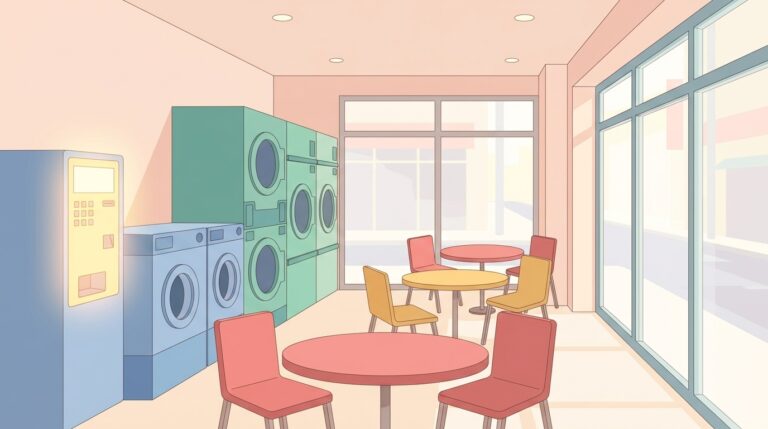
Imagine this: You have a bag full of laundry, and you finally find a cozy, clean self-service laundromat (셀프 빨래방 – self ppal-rae-bang) in Seoul. You’re ready to wash your clothes, but you realize the washing machines only accept 500-won coins. You look inside your wallet and only see a 10,000-won paper bill. Panic sets in. You look around, wondering, “How do I exchange my money?”
Don’t worry! This is a classic challenge that almost every traveler and expat faces in Korea. In today’s guide, we will learn exactly how to ask for a coin exchange with confidence. Based on real feedback from our global learners, we have designed this lesson to make your next laundry day in Korea completely stress-free!
Phase 2: 핵심 표현 3선 심층 분석
1. 동전 교환기 어디에 있어요? (dong-jeon gyo-hwan-gi eo-di-e is-seo-yo?)
- Pronunciation: “Dong-jeon gyohwan-gee uh-dee-eh eess-uh-yo?” (Sounds like dong-jun with a soft yo at the end)
- Meaning: “Where is the coin changer?” (Literal: Coin changer + where + exists?)
- K-Culture Moment: You often see cozy coin laundromats in K-Dramas like Weightlifting Fairy Kim Bok-joo, where characters chat while waiting for their clothes.
- Editor’s Insight: “동전” means coin, and “교환기” means exchange machine. If you can’t spot the machine, simply ask a nearby local using this phrase.
- Situation Spectrum: Casual ✅ | Semi-formal ✅ | Formal ⚠️
- 🤔 Think About It: In Korea, asking for help in public spaces is very common and warmly received. Do you find it easy to ask strangers for help in your home country?
2. 만 원짜리 지폐를 천 원짜리로 바꿀 수 있어요? (man won-cca-ri ji-pye-reul cheon won-cca-ri-ro ba-ccul su is-seo-yo?)
- Pronunciation: “Man won-jjari jee-pye-reul chun won-jjari-ro bah-ccool soo eess-uh-yo?”
- Meaning: “Can I change a 10,000-won bill into 1,000-won bills?”
- K-Culture Moment: Essential when buying street snacks like hotteok (sweet pancakes) at traditional markets that only accept small bills or coins.
- Editor’s Insight: “짜리” (jjari) means “worth of.” So, “만 원짜리” means “a ten-thousand-won worth item/bill.”
- Situation Spectrum: Casual ✅ | Semi-formal ✅ | Formal ✅
- 🤔 Think About It: Did you know that King Sejong, the creator of the Korean alphabet (Hangeul), is the face on the 10,000-won bill?
3. 500원짜리 동전으로 교환해 주세요. (o-baek-won-cca-ri dong-jeon-eu-ro gyo-hwan-hae ju-se-yo.)
- Pronunciation: “Oh-baek-won-jjari dong-jun-eu-ro gyohwan-hae joo-seh-yo.”
- Meaning: “Please exchange it for 500-won coins.”
- K-Culture Moment: Perfect for arcades (오락실), capsule toy machines, or laundromats.
- Editor’s Insight: “주세요” (ju-se-yo) is the ultimate magic word for “please give/do it for me.”
- Situation Spectrum: Casual ⚠️ | Semi-formal ✅ | Formal ✅
- 🤔 Think About It: Even in our highly digital world, physical coins hold a nostalgic charm in Korea’s retro spots.
Phase 3: 교과서 한국어 vs 진짜 한국어
- Situation 1: Asking where the coin machine is located
📖 교과서 한국어: 동전 교환 기계가 어디에 위치해 있습니까? (Where is the coin exchange machine located? – Too stiff!)🗣️ 진짜 한국어: 동전 교환기 어디 있어요? (Where is the coin changer? – Natural and conversational!)💡 왜 다를까?: Locals drop unnecessary particles like “가” and use the friendly, active verb “있어요” instead of formal terms like “위치해 있습니까.”
- Situation 2: Asking if a bill works in the machine
📖 교과서 한국어: 이 기계는 일만 원권을 수용합니까? (Does this machine accept 10,000-won banknotes? – Sounds like a manual!)🗣️ 진짜 한국어: 이거 만 원짜리 돼요? (Does this take 10,000-won bills?)💡 왜 다를까?: “돼요?” (Does it work/Is it okay?) is the most versatile verb in spoken Korean. It replaces complex words easily.
Phase 4: K-Culture 딥다이브 & 비언어적 매너
- 4-1. 눈치(Nunchi) & Gestures: When receiving your exchanged coins or handing cash to an owner, always use both hands (or support your right elbow with your left hand). This small gesture shows incredible respect and high cultural awareness!
- 4-2. 문화 코드 분석: Korean laundromats (셀프 빨래방) are designed as community hubs. Many feature small libraries, board games, coffee makers, and free Wi-Fi. It’s a space where people relax rather than just run an errand.
Phase 5: 실전 롤플레이 시나리오
Setting: A modern neighborhood laundromat in Seoul. You meet Ji-young, a friendly regular.
- Ji-young: 🎭 (Smiling warmly) 안녕하세요! 오늘 빨래 많으시네요. (An-nyeong-ha-se-yo! O-neul ppal-rae manh-eu-si-ne-yo. / Hello! You have a lot of laundry today.)
- User (You): 🎭 (Politely bowing) 네, 일주일 치예요. 그런데 동전 교환기 어디에 있어요? (Ne, il-ju-il chi-yeo-yo. Geon-de dong-jeon gyo-hwan-gi eo-di-e is-seo-yo? / Yes, it’s a week’s worth. By the way, where is the coin changer?)
- Ji-young: 🎭 (Pointing to the corner) 저기 자판기 옆에 있어요. (Jeo-gi ja-pan-gi yeop-e is-seo-yo. / It’s over there next to the vending machine.)
- User (You): 🎭 (Looking in wallet) 아, 고맙습니다. 그런데 혹시 만 원짜리도 돼요? (Ah, go-map-seum-ni-da. Geon-de hok-si man won-cca-ri-do dwoe-yo? / Ah, thank you. But by any chance, does it take 10,000-won bills?)
- Ji-young: 🎭 (Nodding) 네, 돼요! 천 원짜리랑 오백 원짜리로 바꿀 수 있어요. (Ne, dwoe-yo! Cheon won-cca-ri-rang o-baek-won-cca-ri-ro ba-ccul su is-seo-yo. / Yes, it does! You can change it into 1,000-won bills and 500-won coins.)
- User (You): 🎭 (Relieved) 다행이네요. 오백 원짜리 동전으로 교환할게요. (Da-haeng-i-ne-yo. O-baek-won-cca-ri dong-jeon-eu-ro gyo-hwan-hal-ge-yo. / That’s a relief. I’ll exchange it for 500-won coins.)
- Ji-young: 🎭 (Showing you the machine) 여기 지폐 투입구에 넣으면 바로 나와요. (Yeo-gi ji-pye tu-ip-gu-e neo-eu-myeon ba-ro na-o-yo. / Put it in this bill slot here and it will come out right away.)
- User (You): 🎭 (Smiling) 우와, 진짜 나오네요! 도와주셔서 감사합니다. (U-wa, jin-cca na-o-ne-yo! Do-wa-ju-syeo-seo gam-sa-hap-ni-da. / Wow, it really comes out! Thank you for helping me.)
🔀 Interactive Choice Point:
You want to ask if the machine gives change back. What do you say?
* Option A: 잔돈 나와요? (Jan-don na-o-yo? / Does change come out?)
* Option B: 거스름돈을 환불해 주십시오. (Geos-eu-reum-don-eul hwan-bul-hae ju-sip-si-o. / Please refund the change.)
* Option C: 돈 다시 줘요. (Don da-si jwo-yo. / Give money back.)
Feedback:
* Option A (Best): Perfect! “잔돈” is the natural word for change, and “나와요?” is polite and easy.
* Option B (Risk): Too robotic and formal. Avoid this in daily conversation.
* Option C (Bad): Sounds a bit demanding and rude.
Phase 6: 10초 감정 섀도잉 드릴
Let’s practice speaking with real emotions! The / represents a natural pause.
[😊 Friendly & Polite]동전 교환기 / 어디에 있어요? (dong-jeon gyo-hwan-gi / eo-di-e is-seo-yo?)[🤔 Curiously Asking]이거 / 만 원짜리도 돼요? (i-geo / man won-cca-ri-do dwoe-yo?)[😄 Excitedly Relieved]와, / 진짜 편리하네요! (wa, / jin-cca pyeon-ri-ha-ne-yo!)
Phase 7: K-Culture 미니 사전 (핵심 키워드 4개)
- 동전 교환기 (Dong-jeon Gyo-hwan-gi) | Coin Changer | A machine that dispenses physical coins when you insert paper bills.
- 지폐 (Ji-pye) | Paper Bill / Banknote | Cash currency. Standard Korean bills are 1,000, 5,000, 10,000, and 50,000 won.
- 500원짜리 (O-baek-won-cca-ri) | 500-won coin | The largest coin in circulation in South Korea, featuring a beautiful crane design.
- 셀프 빨래방 (Self Ppal-rae-bang) | Coin Laundromat | Popular 24-hour self-service laundromats commonly found in residential districts.
Phase 8: 여행자를 위한 생존 키트
- Survival Expressions TOP 3:
- 카드로 돼요? (Ka-deu-ro dwoe-yo? / Can I pay with a card?) – Pro Tip: Many modern laundromats now let you register and pay at a kiosk with a card!
- 세제 어디서 사요? (Se-je eo-di-seo sa-yo? / Where do I buy detergent?) – Pro Tip: Vending machines inside sell single-use sheets of detergent!
- 건조기 몇 분 걸려요? (Geon-jo-gi myeot bun geol-ryeo-yo? / How many minutes does the dryer take?) – Pro Tip: Dryers usually take about 30–40 minutes.
- Editor’s Travel Note:
Before leaving your room, download the “네이버 지도 (Naver Map)” app and search for “셀프 빨래방” to find the nearest and best-rated laundry spots nearby. Make sure to keep some 1,000-won bills in hand just in case card payments are unavailable! Note: Prices and payment systems can vary by location.
Phase 9: “한 발 더 깊이” (생각 질문)
South Korea is famously known for being almost completely cashless. However, self-service coin laundromats and retro street food stalls remain the few places where paper currency and coins are highly valued. Carrying a little cash in your wallet is not just a backup plan; it’s a doorway to experiencing the cozy, nostalgic pockets of Korean daily life.
💬 Your Turn: Have you ever used a coin-operated laundromat in your home country? Let us know your experiences in the comments!
Phase 10: FAQ & 오해 방지 (FAQ Schema)
Q: Can I use 50,000-won bills in the coin changer?
A: Most coin changers at laundromats only accept 1,000, 5,000, and 10,000-won bills. If you only have a 50,000-won bill, it is best to break it at a nearby convenience store first.
Q: Do I need to bring my own laundry detergent?
A: No, you don’t have to! Almost all laundromats have a vending machine selling individual-sized laundry detergent (세제) and dryer sheets (바운스) for around 500 to 1,000 won.
Q: Are Korean laundromats open late at night?
A: Yes! Most “셀프 빨래방” operate 24 hours a day, 7 days a week, making them perfect for late-night laundry sessions.
- 🚨 Common Mistakes Watch:
- The Error: Saying “돈 바꿔” (Don ba-gwo) to a stranger. This is informal and rude.
- The Correction: Always use “돈 바꿔 주세요” (Don ba-gwo ju-se-yo) to remain polite!
Phase 11: 액션 미션 & 참여 유도
- Action Mission 3단계:
- 🥉 Bronze: Say “동전 교환기 어디에 있어요?” out loud three times in front of the mirror.
- 🥈 Silver: Translate your local country’s currency denominations into Korean (e.g., “1달러짜리” for a 1-dollar bill).
- 🥇 Gold: The next time you visit a local market, ask “이거 만 원짜리 돼요?” when paying.
- 🎮 K-Culture Mission: Watch a K-Drama this week and spot a laundry scene. Share the name of the drama in our comments section!
Phase 12: 인터랙티브 퀴즈 챌린지
Test your knowledge!
- What does the word “동전” (dong-jeon) mean?
- A) Paper bill
- B) Coin
Click to reveal the answer
Correct Answer: B
Explanation: “동전” means coin, while “지폐” refers to paper bills!
- Which verb ending should you use to ask if a payment method is accepted/works?
- A) 돼요?
- B) 입니다?
Click to reveal the answer
Correct Answer: A
Explanation: “돼요?” is the standard conversational way to ask if something works or is accepted in Korea.







