

Phase 1: Empathy (Immersive Opening)
Hello! I’m your Daily Hangul Editor, your local culture navigator and veteran Korean tutor.
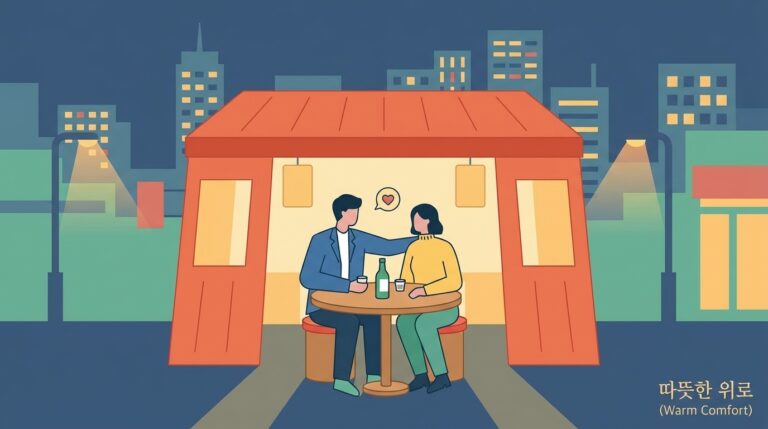
Imagine this: It’s 11 PM in Seoul. Rain is pouring outside. Inside a cozy, orange-lit Pojangmacha (street tent bar), you hear the clinking of green Soju glasses. A friend pats another’s shoulder and says something with a deep sigh. The subtitles just say, “Forget about them.” But the actual Korean expression used in this classic K-Drama scene carries so much more weight and poetry.
Breakups are universally painful, but the way Koreans comfort each other, heal, and talk about moving on is a unique cultural experience. If you only rely on textbooks, you might sound like a robot reading a news report about your broken heart. Today, we’re diving into the poetic, the practical, and the comforting phrases Koreans actually use when a relationship ends, centering around the famous mindset: “Love is forgotten by another love” (사랑은 다른 사랑으로 잊혀진다).
Don’t worry—this guide isn’t just about sadness. It’s about how to be an amazing, culturally-fluent friend (or how to heal yourself) in Korea. Let’s dive in!
Phase 2: Core Expression Deep Dive
1. 사랑은 다른 사랑으로 잊혀지는 거야
- Pronunciation: Sa-rang-eun da-reun sa-rang-eu-ro it-hyeo-ji-neun geo-ya [The ‘eu’ (으) sounds like the disgusted sound you make when stepping in gum!]
- Meaning: (Literal) Love is forgotten by another love. / (Real nuance) The best way to get over someone is to meet someone new.
- K-Culture Moment: This is actually the title of a legendary Korean ballad by the singer Hareem. When someone is crying over an ex at a cafe, a close friend will look them in the eye, say this exact phrase, and then immediately suggest setting them up on a blind date (Sogaeting).
- Editor’s Insight: This isn’t just advice; it’s practically a proverb in modern Korean dating culture. It’s meant to be encouraging, pulling you out of your misery and pushing you toward the future.
- Situation Spectrum:
- Casual (Close friends): ✅
- Semi-formal (Coworkers): ⚠️ (Only if you are close enough to talk about dating)
- Formal (Boss/Elders): 🚫
- 🤔 Think About It: Why do Koreans emphasize finding someone new as a cure, rather than just taking time alone? Does your culture encourage jumping back into the dating pool, or taking a break to heal?
2. 시간이 약이야
- Pronunciation: Shi-gan-i yak-i-ya
- Meaning: (Literal) Time is medicine. / (Real nuance) Time heals all wounds.
- K-Culture Moment: You’re sitting by the Han River, eating instant ramen in silence. Your friend hands you a warm canned coffee from the convenience store and softly says, “시간이 약이야.”
- Editor’s Insight: ‘Yak’ (약) means medicine. Koreans view time not just as a passing element, but as an active, healing remedy. It’s the most polite, safe, and universal way to comfort someone who is grieving a breakup.
- Situation Spectrum:
- Casual: ✅
- Semi-formal: ✅
- Formal: 🚫 (It can sound patronizing if said to an elder)
- 🤔 Think About It: In Korean culture, food is often considered medicine (약식동원 – medicine and food share the same origin). How does viewing ‘time’ as medicine reflect the Korean mindset of enduring hardship?
3. 미련 버려
- Pronunciation: Mi-ryeon beo-ryeo
- Meaning: (Literal) Throw away your lingering attachments. / (Real nuance) Move on. Let it go.
- K-Culture Moment: You are holding your phone, about to text your ex “자니?” (Are you sleeping?) at 2 AM. Your friend snatches your phone away and yells, “미련 버려!”
- Editor’s Insight: ‘Mi-ryeon’ (미련) is a beautiful, complex word. It means the lingering feelings, regrets, or foolish attachments you have toward someone or something. ‘Beo-ryeo’ (버려) means to throw it away like trash. It’s tough love.
- Situation Spectrum:
- Casual: ✅
- Semi-formal: 🚫
- Formal: 🚫
- 🤔 Think About It: Why does Korean have a specific noun just for “lingering romantic regrets”?
Phase 3: Textbook vs Real Korean
[Situation 1: Explaining your breakup]
* 📖 Textbook Korean: 저는 남자친구와 헤어졌습니다. (I broke up with my boyfriend.)
* 🗣️ Real Korean: 나 차였어. (Na cha-yeoss-eo – I got dumped.) OR 우리 끝났어. (U-ri kkeut-nass-eo – We are finished/over.)
* 💡 Why the difference?: Textbooks teach mutual partings, but real life is messy. “차이다” literally means “to be kicked,” vividly illustrating the pain of being dumped!
[Situation 2: Telling a friend they deserve better]
* 📖 Textbook Korean: 더 좋은 사람을 만날 수 있을 거예요. (You will be able to meet a better person.)
* 🗣️ Real Korean: 똥차 가고 벤츠 온다. (Ttong-cha ga-go ben-cheu on-da!)
* 💡 Why the difference?: This is a legendary Gen Z/Millennial slang. It literally translates to “The garbage truck leaves, and the Mercedes-Benz arrives.” It perfectly captures the Korean humor of contrasting a toxic ex (garbage truck) with an amazing future partner (Mercedes)!
Bottom Note: For B1 learners, using “똥차 가고 벤츠 온다” will instantly make Koreans’ jaws drop. Use it exclusively with close friends of similar age to show off your insider knowledge!
Phase 4: Cultural Context — K-Culture Deep Dive
4-1. Non-verbal Comfort: The Art of Pouring
In Korea, comforting a brokenhearted friend isn’t just about words; it’s about action. If you are drinking together, never let their glass sit empty, but also never pour your own drink. You pour for them, they pour for you. This mutual serving is a non-verbal way of saying, “I am here for you, we are in this together.” You also need high Nunchi (social awareness) here—if they want to cry, let them cry. Just keep grilling the pork belly (Samgyeopsal) and put a cooked piece on their plate.
4-2. K-Drama Tropes: The Karaoke Catharsis (Noraebang)
After a breakup, you don’t just stay in your room. The ultimate K-Culture healing process involves going to a Noraebang (Karaoke). But you don’t sing happy pop songs. You deliberately select the most tragic, high-pitched ballad songs about breakups (usually by singers like Ailee, IU, or Park Hyo-shin) and scream-sing them until your throat hurts.
Critical Viewpoint: While K-Dramas make post-breakup drinking look cinematic and romantic, in reality, drinking too much on an empty stomach just leads to sending embarrassing texts to your ex. The real modern trend? Ordering a massive, incredibly spicy bowl of Malatang or Tteokbokki on a delivery app to “sweat out” the stress!
Phase 5: Real-World Roleplay Scenario
Setting: Friday night. An Izakaya in Hongdae. The mood is dim, rain is tapping against the window. You are sitting with your close Korean friend, Minji, after going through a tough breakup.
Characters:
– YOU: An expat in Seoul, B1 Korean learner, heartbroken.
– Minji (28): Your best friend in Korea. She has a ‘tough love’ personality but cares deeply.
Dialogue:
Minji: 야, 그만 울고 이거 마셔. (Ya, geu-man ul-go i-geo ma-syeo.)
Stop crying and drink this.
(🎭 Stage Direction: Minji hands you a glass of beer)
YOU: 고마워. 근데 나 진짜 너무 슬퍼. (Go-ma-wo. Geun-de na jin-jja neo-mu seul-peo.)
Thanks. But I’m seriously so sad.
Minji: 시간이 약이야. 며칠 지나면 괜찮아질 거야. (Shi-gan-i yak-i-ya. Myeo-chil ji-na-myeon gwaen-chan-a-jil geo-ya.)
Time is medicine. You’ll feel better in a few days.
YOU: 우리가 왜 헤어졌을까? 내가 전화를 해볼까? (U-ri-ga wae he-eo-jyeoss-eul-kka? Nae-ga jeon-hwa-reul hae-bol-kka?)
Why did we break up? Should I try calling him/her?
(🎭 Stage Direction: You pick up your phone, looking desperately at the screen)
Minji: 미쳤어? 절대 안 돼. 미련 버려! (Mi-chyeoss-eo? Jeol-dae an dwae. Mi-ryeon beo-ryeo!)
Are you crazy? Absolutely not. Throw away those lingering feelings!
YOU: 하지만… (Ha-ji-man…)
But…
Minji: 똥차 가고 벤츠 온다잖아. 넌 더 좋은 사람 만날 수 있어. (Ttong-cha ga-go ben-cheu on-da-ja-na. Neon deo jo-eun sa-ram man-nal su iss-eo.)
You know they say ‘garbage truck leaves, Mercedes arrives.’ You can meet someone better.
🔀 Your Turn! How do you reply to Minji?
– A) 맞아요. 저는 훌륭한 사람입니다. (Maj-a-yo. Jeo-neun hul-lyung-han sa-ram-ip-ni-da.)
– B) 사랑은 다른 사랑으로 잊혀진대. 나 소개팅 좀 시켜줘! (Sa-rang-eun da-reun sa-rang-eu-ro it-hyeo-jin-dae. Na so-gae-ting jom si-kyeo-jwo!)
– C) 싫어. 나는 그 사람뿐이야. (Sil-eo. Na-neun geu sa-ram-ppun-i-ya.)✅ Best Choice: B — Reason: You perfectly quoted the “Love is forgotten by another love” rule and boldly asked for a blind date. Minji will be extremely impressed by your fast recovery and your perfect use of local dating culture!
⚠️ Choice A Analysis: Grammatically perfect, but way too formal (존댓말) for a close friend. You sound like you’re giving a presidential speech in a pub!
[Bonus K-Culture Scenario: Noraebang Escape]
Minji drags you to a Coin Noraebang to sing your feelings out.
Minji: 노래 골라! 슬픈 거 부르고 다 잊자. (No-rae gol-la! Seul-peun geo bu-reu-go da it-ja.)
Pick a song! Let’s sing a sad one and forget it all.
YOU: 그럼 나 에일리의 ‘보여줄게’ 예약할게. (Geu-reom na Ailee-ui ‘Bo-yeo-jul-ge’ ye-yak-hal-ge.)
Then I’ll reserve ‘I Will Show You’ by Ailee. (The ultimate Korean empowerment breakup song!)
Phase 6: 10-Second Shadowing Drill
Read these sentences out loud. Pay attention to the slashes for pauses and the emojis for the emotional tone!
- 😢 시간이 / 약이야… (shi-gan-i / yak-i-ya…)
Speak softly, with a comforting sigh. - 😤 야! / 제발 / 미련 좀 / 버려! (ya! / je-bal / mi-ryeon jom / beo-ryeo!)
Speak forcefully, like a frustrated but caring friend. - 😊 사랑은~ / 다른 사랑으로 / 잊혀지는 거야! (sa-rang-eun~ / da-reun sa-rang-eu-ro / it-hyeo-ji-neun geo-ya!)
Speak brightly, with an encouraging smile.
Phase 7: K-Culture Mini Dictionary
1. 눈치 (Nunchi)
* Romanization: Nunchi
* English: Social awareness / “Reading the room”
* Context: The crucial Korean survival skill. If your friend is crying, having “nunchi” means knowing whether to offer advice or just quietly pour them another drink.
2. 환승이별 (Hwanseung Ibyeol)
* Romanization: Hwanseung Ibyeol
* English: Transit Breakup (Rebound Breakup)
* Context: “Hwanseung” means transferring (like a train). This refers to when someone breaks up with you because they already have someone else lined up. Highly frowned upon, but a popular drama theme!
3. 소개팅 (Sogaeting)
* Romanization: Sogaeting
* English: Blind Date (Arranged by a mutual friend)
* Context: A combination of “Sogae” (introduction) and “Meeting”. It’s the most common way Koreans meet new partners. The ultimate cure for a breakup!
4. 포장마차 (Pojangmacha)
* Romanization: Pojangmacha
* English: Street tent bar
* Context: The classic K-Drama location for a post-breakup drink. Serving Udon, Soju, and spicy chicken feet. (Though modern Koreans often just go to trendy Izakayas now).
Phase 8: Traveler’s Survival Kit (The Breakup Escape Trip!)
When a breakup hits hard, what do Koreans do? They go on a spontaneous trip! The classic destination is the winter sea, especially Busan or Gangneung, to clear their minds. If you find yourself needing a healing trip, use these phrases:
🆘 Survival Phrases for the “Healing Trip”
– 🇰🇷 “가장 빠른 부산행 기차표 주세요.” (Ga-jang ppa-reun Busan-haeng gi-cha-pyo ju-se-yo.)
– 🗣️ English: Please give me the earliest train ticket to Busan.
– 📍 Where to use: Seoul Station ticketing counter.
– 💡 Pro Tip: Say “바다 보러 가고 싶어요” (I want to go see the sea) to your Korean friends. They will immediately understand you are going through a hard time and need space.📌 Editor’s Travel Note
– Useful Apps: KorailTalk (for booking KTX trains to escape the city), Naver Map (to find quiet cafes by the sea).
– Eating Alone: Historically, eating alone in Korea was awkward, but now “혼밥” (Hon-bap: eating alone) is super common! Don’t be afraid to take yourself out on a solo dinner date to heal.
Phase 9: Critical Thinking Corner — “Going Deeper”
Media vs Reality: The Romanticization of Breakups in Korea
🧠 Think Deeper:
If you watch K-Dramas, you might think every Korean experiences a beautifully tragic breakup involving running in the rain, drinking Soju until passing out, and being piggybacked home by a handsome friend. While the emotional depth is real, modern reality is much more digital. Breakups often happen over KakaoTalk messages, and the “healing” process usually involves silently unfollowing the ex on Instagram and deleting shared photos from the cloud. Media creates a romanticized, communal image of heartbreak, but urban Korean life is becoming increasingly individualized.💬 Your Turn: How does the media in your country portray breakups versus how they actually happen in reality? Let’s discuss in the comments!
Phase 10: FAQ & Avoiding Misunderstandings
Q: Can I tell my older coworker “미련 버려” (Move on) if they get divorced?
A: Absolutely NOT! “미련 버려” is casual language (반말) and is only for close friends. If you say this to a superior, they will forget their breakup and get mad at you instead! Just stick to “힘내세요” (Please cheer up).
Q: Do Korean friends actually set you up on blind dates (소개팅) right after a breakup?
A: Yes! Because of the “Love is forgotten by another love” mindset, Korean friends are incredibly proactive. They consider it their duty as a friend to help you find a new, better partner.
❌ Common Mistake #1: Saying “저는 기분이 나빠요” (I feel bad/mad) when you are heartbroken.
✅ Do this instead: “기분이 나쁘다” usually implies you are offended or angry at someone’s bad manners. If your heart is broken, say “마음이 아파요” (My heart hurts) or “너무 슬퍼요” (I am so sad).
Phase 11: Summary & Action Items
One-Liner Summary: When a relationship ends in Korea, remember that Time is medicine (시간이 약이야), and the ultimate cure is finding someone new (사랑은 다른 사랑으로 잊혀지는 거야)!
Action Mission:
– 🥉 Bronze (Solo): Stand in front of the mirror, pretend you are acting in a K-Drama, and say with deep emotion: “시간이 약이야…”
– 🥈 Silver (Online): Go to your favorite K-Pop music video (a sad breakup song) and leave a comment using “미련 버려!”
– 🥇 Gold (Real Life): Next time a friend (even in English!) is sad about an ex, teach them the Korean phrase “똥차 가고 벤츠 온다!” (Garbage truck leaves, Mercedes comes!).
🎬 K-Culture Mission:
Tonight, search for “Ailee I Will Show You” (보여줄게) on YouTube with English subtitles. It is the absolute anthem of throwing away attachments and becoming a better version of yourself after a breakup.
Did you ever have a ‘garbage truck’ leave so a ‘Mercedes’ could arrive? Share your story in the comments below! 👇
Phase 12: Quiz — Interactive Challenge
1. Situational Judgment: Your best friend is crying over an ex who cheated on them. What is the most culturally appropriate and savage thing to say?
– A) 축하합니다. (Congratulations.)
– B) 똥차 가고 벤츠 온다. (Garbage truck leaves, Mercedes comes.)
– C) 시간이 약이야. (Time is medicine.)
Click for the Answer
Answer: B! While C is a safe and polite choice, B perfectly fits the situation of dealing with a toxic ex and cheering up a best friend with a bit of humor.
2. Fill in the Blank:
“사랑은 다른 __________(으)로 잊혀지는 거야.”
(Love is forgotten by another _________.)
Click for the Answer
Answer: 사랑 (sa-rang / love).
3. True or False – K-Culture Edition:
If your friend is heartbroken and you go drinking, you should pour your own drink to show you are independent and don’t want to burden them. (T/F)
Click for the Answer
Answer: False! In Korea, pouring your own drink is considered a bit sad or lonely. You should pour for your friend, and they will pour for you. It’s a sign of mutual care!
Frequently Asked Questions (FAQ)
Q: What does "사랑은 다른 사랑으로 잊혀지는 거야" mean in Korean and how do you pronounce it?
A: In Korean, "사랑은 다른 사랑으로 잊혀지는 거야" is pronounced [Sa-rang-eun da-reun sa-rang-eu-ro it-hyeo-ji-neun geo-ya [The 'eu' (으] and means: (Literal) Love is forgotten by another love. / (Real nuance) The best way to get over someone is to meet someone new.
Q: What does "시간이 약이야" mean in Korean and how do you pronounce it?
A: In Korean, "시간이 약이야" is pronounced [Shi-gan-i yak-i-ya] and means: (Literal) Time is medicine. / (Real nuance) Time heals all wounds.
Q: What does "미련 버려" mean in Korean and how do you pronounce it?
A: In Korean, "미련 버려" is pronounced [Mi-ryeon beo-ryeo] and means: (Literal) Throw away your lingering attachments. / (Real nuance) Move on. Let it go.







