

Phase 1: Empathy (The K-Drama Dream vs. Reality)
Hello! It’s your Daily Hangul Editor.
Picture this: You are watching your favorite K-Drama. The main characters just had a long, emotional day. What do they do? They grab some beer, head to the Han River, and ride green bicycles into the beautiful Seoul night. The city lights reflect on the water, the breeze is perfect, and you think, ‘I need to do that when I go to Korea!’
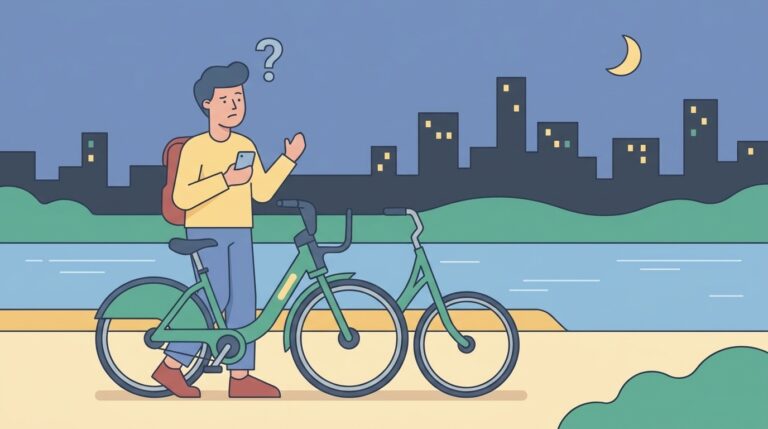
Fast forward to your trip: You are standing in Yeouido Hangang Park. You find the iconic green bikes. You feel like the main character… until you look at the app and the docking station. Suddenly, you are faced with endless Korean menus, verification codes, and flashing screens.
Renting a 따릉이 (Ttareungi – Seoul’s public bike) is a massive milestone for expats and travelers. But the language barrier on Korean tech platforms can be intimidating. Don’t worry! This guide is built from the real SOS messages I’ve received from my B1 students standing helplessly next to a bike dock. Let’s turn this tech battle into your perfect K-Drama moment!
Phase 2: Core Expressions Deep Dive
1. 따릉이 어떻게 빌려요?
- Pronunciation: ttareung-i eotteoke billyeoyo? (ttah-reung-ee / oh-tuh-kay / beel-lyuh-yo?)
- Meaning: Literal: How do I rent a Ttareungi? / Real nuance: How does this bike app/system work?
- K-Culture Moment: Ttareungi (따릉이) comes from the onomatopoeia for a bicycle bell ringing (ring-ring). You will often see locals tapping their phones to the bike and riding off in 2 seconds. When you are stuck, asking a friendly local passing by with this phrase works wonders.
- Editor’s Insight: The verb 빌리다 (to borrow/rent) is super versatile. You can use it for bikes, umbrellas, or borrowing a pen.
- Situation Spectrum:
- Casual (Friends): ✅
- Semi-formal (Strangers/Staff): ✅
- Formal (Boss): ⚠️ (You probably wouldn’t ask your boss this, but it’s grammatically fine)
- 🤔 Think About It: Why does the Korean government use cute sound words (like ‘Ttareungi’ for bikes or ‘Tayo’ for buses) for public facilities? How does this change the relationship between citizens and the city?
2. 비회원으로 결제할게요.
- Pronunciation: bihoewon-euro gyeoljehalgeyo. (bee-hoe-won-eu-ro / gyuhl-jjeh-hal-ggeh-yo)
- Meaning: Literal: I will pay as a non-member. / Real nuance: Please let me bypass the complicated sign-up process!
- K-Culture Moment: Korean apps are notorious for requiring local phone number verification. As a tourist, the word 비회원 (non-member) is your best friend.
- Editor’s Insight: ‘비’ (bi) means ‘non-‘ or ‘anti-‘. ‘회원’ (hoewon) means ‘member’. You will see this button on kiosk screens at restaurants, cafes, and bike apps.
- Situation Spectrum:
- Casual: 🚫 (You don’t say this to friends)
- Semi-formal: ✅ (Perfect for clerks or navigating apps)
- Formal: 🚫
- 🤔 Think About It: Korea’s digital infrastructure is deeply tied to identity verification. How does your home country handle public tech services? Is it easier or harder for tourists?
3. 다른 대여소에 반납해도 되나요?
- Pronunciation: dareun daeyeosoe bannapaedo doenayo? (dah-reun / dae-yuh-so-eh / bahn-nah-pae-do / doe-nah-yo?)
- Meaning: Can I return it to a different docking station?
- K-Culture Moment: Unlike some cities where you can drop a rented scooter anywhere on the sidewalk, Ttareungi must be returned to designated green docking stations (대여소). Otherwise, you might get a penalty fee!
- Editor’s Insight: ‘반납하다’ (bannapada) means to return something you borrowed. It sounds much more natural than saying ‘다시 주다’ (give back).
- Situation Spectrum:
- Casual: ✅
- Semi-formal: ✅
- Formal: ✅
- 🤔 Think About It: Korean society relies heavily on mutual trust and following public rules. Returning items strictly to their designated spots reflects this collective mindset.
Phase 3: Textbook vs. Real Korean
[Looking for a Bike]
* 📖 Textbook Korean: 자전거 대여소가 어디에 있습니까? (Where is the bicycle rental station?)
* 🗣️ Real Korean: 근처에 따릉이 어디 있어요? (Where’s a Ttareungi nearby?)
* 💡 Why the difference?: Koreans rarely say ‘bicycle rental station’ in daily life. Brand names like ‘Ttareungi’ completely replace the generic noun, much like ‘Googling’ instead of ‘web searching’.
[Talking about the App]
* 📖 Textbook Korean: 애플리케이션을 설치해야 합니다. (You must install the application.)
* 🗣️ Real Korean: 앱 깔아야 돼요? (Do I have to install the app?)
* 💡 Why the difference?: The verb ‘깔다’ (to lay out/spread) is the universally used slang for ‘installing’ software or apps.
Bottom Note: For B1 learners, using words like ‘앱 깔다’ (install app) or calling it ‘따릉이’ instead of ‘공공 자전거’ (public bicycle) immediately makes your Korean sound 10x more natural.
Phase 4: Cultural Context — K-Culture Deep Dive
4-1. Non-verbal Nuances (The Screen Point)
When asking a stranger for tech help in Korea, personal space is key. Do not shove your phone in their face. Instead, politely say “저기요…” (Excuse me…), wait for them to make eye contact, and then hold your phone at waist level, pointing at the screen together. This shared ‘problem-solving’ posture triggers the Korean Jeong (정 – warmth/compassion), making them more likely to stop and help.
4-2. The K-Drama Han River Trope
The Han River (한강) bike ride is a massive K-Drama trope. Usually, it happens after a character gets rejected, quits their job, or needs to make a big life decision. They ride aggressively while the wind blows through their hair. But here is the reality check: On a Friday night, the Han River bike paths are packed! It’s less ‘solitary reflection’ and more ‘dodging couples eating instant ramen’. If you ride safely and ring your bell (따릉!), you’ll fit right in.
Phase 5: Real-life Roleplay Scenario
Setting: Friday evening, 7:30 PM. Yeouido Hangang Park. You downloaded the ‘Seoul Bikes’ app, but the QR code isn’t scanning. A friendly-looking Korean in their 20s is returning their bike right next to you.
Characters:
* YOU: An expat who really wants to ride a bike to get some Chimaek (Chicken & Beer).
* Min-ji (25): A local university student who just finished her ride.
Dialogue:
YOU: 저기요, 죄송한데 따릉이 어떻게 빌려요?
(jeogiyo, joesonghande ttareung-i eotteoke billyeoyo?)
[Excuse me, sorry to bother you, but how do I rent a Ttareungi?]
Min-ji: 아, 따릉이 앱 있으세요?
(a, ttareung-i aep isseuseyo?)
[Ah, do you have the Ttareungi app?]
YOU: 네, 근데 결제가 안 넘어가요.
(ne, geunde gyeoljega an neomeogayo.)
[Yes, but the payment won’t go through.]
(🎭 Stage Direction: You show her your phone screen with a frustrated smile)
Min-ji: 음… 혹시 외국인 등록증 있으세요? 인증이 필요한데.
(eum… hoksi oegugin deungnokjeung isseuseyo? injeung-i piryohande.)
[Hmm… do you happen to have an Alien Registration Card? It needs verification.]
YOU: 아니요, 여행객이에요.
(aniyo, yeohaenggaegieyo.)
[No, I’m a traveler.]
Min-ji: 아! 그럼 ‘외국인’ 탭에서 비회원으로 결제할게요.
(a! geureom ‘oegugin’ taebeseo bihoewon-euro gyeoljehalgeyo.)
[Ah! Then let’s pay as a non-member under the ‘Foreigner’ tab.]
🔀 Your Turn! The screen asks for a payment method. How do you ask if you can use your foreign credit card?
* A) “미국 돈 받아요?” (Do you accept American money?)
* B) “해외 카드도 되나요?” (Does an overseas card work here?)
* C) “저 돈 없어요.” (I don’t have money.)✅ Best Choice: B — “해외 카드도 되나요?” (haeo kadeudo doenayo?) is the exact phrase you need!
⚠️ Choice A Analysis: Sounds a bit rude and implies you want to hand them physical USD.
YOU: 해외 카드도 되나요?
(haeo kadeudo doenayo?)
[Does an overseas card work here?]
Min-ji: 네, 트래블패스(일일권) 누르면 신용카드 결제 가능해요.
(ne, teuraebeulpaeseu(irilgwon) nureumyeon sinyongkadeu gyeolje ganeunghaeyo.)
[Yes, if you click Travel Pass (Daily Pass), you can pay with a credit card.]
YOU: 우와, 됐어요! 정말 감사합니다!
(uwa, dwaesseoyo! jeongmal gamsahamnida!)
[Wow, it worked! Thank you so much!]
Min-ji: 다행이네요! 조심히 타세요~
(dahaeng-ineyo! josimhi taseyo~)
[What a relief! Ride safely~]
Phase 6: 10-Second Shadowing Drill
Practice reading this aloud! Pay attention to the pauses (/) and the emotion tags.
- 🥺 Slightly confused: 저기요, / 이거 / 어떻게 빌려요?
(jeogiyo, / igeo / eotteoke billyeoyo?) - 😊 Politely requesting: 비회원으로 / 결제할게요.
(bihoewon-euro / gyeoljehalgeyo.) - 🤔 Curious: 다른 대여소에 / 반납해도 되나요?
(dareun daeyeosoe / bannapaedo doenayo?)
Phase 7: K-Culture Mini Dictionary
1. 따릉이 (Ttareungi)
* Romanization: ttareung-i
* English: Seoul Public Bike
* Context: The official name of the green bikes everywhere in Seoul. Named after the ringing sound of a bike bell.
2. 치맥 (Chimaek)
* Romanization: chimaek
* English: Chicken and Beer
* Context: A portmanteau of Chicken (치킨) and Maekju (맥주/beer). The ultimate post-Ttareungi meal along the Han River.
3. 일일권 (Ir-il-gwon)
* Romanization: irilgwon
* English: 1-Day Pass / Daily Ticket
* Context: Essential vocabulary for tourists. Buy this to avoid committing to a monthly subscription.
4. QR코드 찍다 (QR code jjikda)
* Romanization: kyual-kodeu jjikda
* English: To scan a QR code
* Context: Koreans say ‘찍다’ (to stamp/take a picture) instead of ‘스캔하다’ (to scan) when using QR codes to unlock bikes or menus.
Phase 8: Traveler’s Survival Kit
🆘 Survival Phrases for Seoul Transport
* 🇰🇷 “일일권 어떻게 사요?” (irilgwon eotteoke sayo?) – How do I buy a daily pass?
* 🇰🇷 “앱이 영어로 안 나와요.” (aebi yeong-eoro an nawayo.) – The app isn’t showing in English.
* 🇰🇷 “여기 자전거 길 맞아요?” (yeogi jajeongeo gil majayo?) – Is this the right bicycle path?📌 Editor’s Travel Note
* Must-have Apps: Download ‘Seoul Bikes’ (official app with an English tourist option) and KakaoMap. Google Maps does not provide walking/biking directions in Korea due to security laws!
* Helmet Laws: Technically, helmets are required by law for public bikes. However, you will notice that almost zero adults wear them, and it is rarely enforced for adults. Still, ride carefully!
* Time Limit: Ttareungi passes usually work in 1-hour or 2-hour intervals. You can ride all day, but you MUST dock it and check it out again before the timer runs out to avoid extra fees.
Phase 9: Critical Thinking — “One Step Deeper”
Language & Power: The Digital Divide in the ‘Pali-Pali’ Tech Era
Korea’s “Pali-Pali” (hurry, hurry) culture has created one of the most efficient, hyper-digitalized societies in the world. You can rent a bike, order food, and pay a bill in 10 seconds via QR codes. However, this convenience relies heavily on having a Korean Resident Registration Number and a local telecom plan. This creates a hidden language/power dynamic: those who are “verified” locals move seamlessly, while tourists and the elderly often face an invisible digital wall. The struggle you face unlocking a Ttareungi isn’t just a language barrier; it’s a glimpse into the complexities of a hyper-connected society.
💬 Your Turn: Have you ever felt ‘locked out’ of a local service while traveling because of technology? How does your country accommodate non-tech-savvy tourists? Let us know in the comments!
Phase 10: FAQ & Mistake Prevention
Q: Can I ride Ttareungi on the sidewalk?
No! Unless there is a designated reddish-brown bike lane on the sidewalk, you should ride on the far right edge of the street or designated bike paths (like along the Han River).
Q: Can I use “따릉이 어떻게 빌려요?” to an older person?
Yes, the ~요 ending makes it polite. However, if the person is a senior citizen, they might not know how to use the app themselves!
❌ Common Mistake #1: Confusing 대여 (Rent) and 반납 (Return).
✅ How to fix it: Memorize the colors on the app/kiosk. ‘대여’ usually means you are taking the bike out. If you don’t properly lock the bike and hear the system say “반납되었습니다” (It has been returned), the timer will keep running, and your credit card will be charged!
Phase 11: Summary & Action Items
One-Liner Summary: Bypass tech headaches by asking “따릉이 어떻게 빌려요?” and look for the magic “비회원” (Non-member) button to ride like a true Seoulite!
Action Mission:
* 🥉 Bronze (Solo): Look at your phone, pretend you are stuck, and say out loud: “해외 카드도 되나요?” 3 times.
* 🥈 Silver (Online): Go to Google Street View, drop yourself at Yeouido Hangang Park, find the green Ttareungi station, and practice the Phase 5 roleplay in your head.
* 🥇 Gold (Action): The next time you are in Korea, actually rent a Ttareungi using a 1-day pass (일일권) and ride to a convenience store for a post-ride snack!
K-Culture Mission:
Go watch the music video for RM’s (from BTS) song ‘Bicycle’, or find a K-Drama scene featuring the Han River. Notice how the bike paths are structured. Can you spot a green Ttareungi?
Did you survive your first Ttareungi ride? Drop your Han River bike stories below!
Phase 12: Quiz — Interactive Challenge
1. Situational Judgment:
You just finished your Han River ride. You lock the bike at the docking station, but you aren’t sure if it’s officially returned. What should you ask a passerby?
* A) 이거 어떻게 빌려요? (How do I rent this?)
* B) 이거 반납된 거 맞나요? (Is this considered returned properly?)
* C) 일일권 어디서 사요? (Where do I buy a daily pass?)
(Answer: B – Always make sure it’s returned (반납) so you don’t get overcharged!)
2. Fill in the Blank:
Korean apps often require sign-ups, but tourists can usually bypass this by choosing the _________ (non-member) payment option.
(Answer: 비회원)
3. True or False – K-Culture Edition:
You can rent a Ttareungi and leave it right outside your hotel entrance overnight, just like some electric scooters.
(Answer: FALSE. You must return it to a designated green Ttareungi docking station/대여소. Otherwise, you’ll face penalties!)
Frequently Asked Questions (FAQ)
Q: What does "따릉이 어떻게 빌려요?" mean in Korean and how do you pronounce it?
A: In Korean, "따릉이 어떻게 빌려요?" is pronounced [ttareung-i eotteoke billyeoyo? (ttah-reung-ee / oh-tuh-kay / beel-lyuh-yo?] and means: Literal: How do I rent a Ttareungi? / Real nuance: How does this bike app/system work?
Q: What does "비회원으로 결제할게요." mean in Korean and how do you pronounce it?
A: In Korean, "비회원으로 결제할게요." is pronounced [bihoewon-euro gyeoljehalgeyo. (bee-hoe-won-eu-ro / gyuhl-jjeh-hal-ggeh-yo] and means: Literal: I will pay as a non-member. / Real nuance: Please let me bypass the complicated sign-up process!
Q: What does "다른 대여소에 반납해도 되나요?" mean in Korean and how do you pronounce it?
A: In Korean, "다른 대여소에 반납해도 되나요?" is pronounced [dareun daeyeosoe bannapaedo doenayo? (dah-reun / dae-yuh-so-eh / bahn-nah-pae-do / doe-nah-yo?] and means: Can I return it to a different docking station?







