

Phase 1: Empathy (The K-Culture Cold Open)
Hello! I am the Lead Editor at Daily Hangul.
Imagine you are watching a hit medical K-Drama like Life or Dr. Romantic. The scene is intense: a hospital director in an immaculate, tailor-made suit stands in an ultra-modern boardroom. He slams a financial report on the table, arguing about profit margins and VIP wards. Across from him stands an exhausted, disheveled emergency room doctor in scrubs, shouting, We are a hospital, not a corporation!
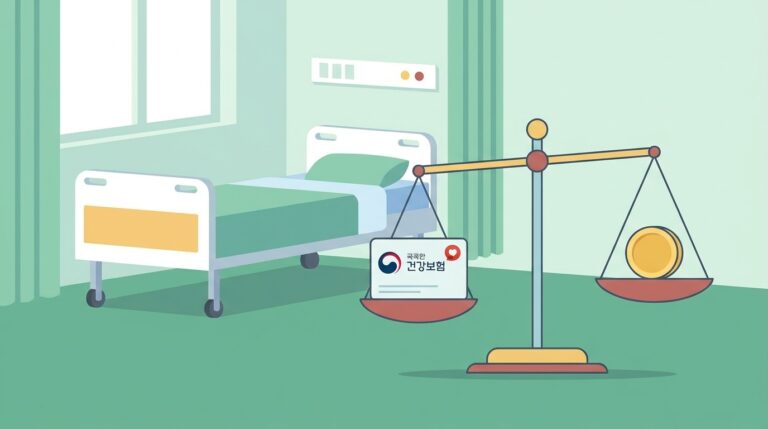
The subtitles simply translate it as a fight over money. But as a C2 learner, you know there is a massive, incredibly sensitive societal debate brewing underneath those lines. They aren’t just fighting over a hospital’s budget; they are representing the fierce, ongoing national controversy over 의료 민영화 (Medical Privatization).
South Korea takes immense pride in its National Health Insurance (국민건강보험) system. It is considered a fundamental pillar of Korean society. So, when the word ‘privatization’ enters the chat, it is not merely a political topic—it’s an emotional trigger.
If you want to move beyond ordering coffee and start engaging in deep, intellectual debates with native speakers—or simply want to understand the true socio-political subtext of your favorite dramas—you need to master this topic. Let’s dive deep into the vocabulary, the cultural nuances, and the ‘real’ Korean used when discussing medical privatization.
Phase 2: Core Expressions Deep Dive
1. 의료 민영화 (Medical Privatization)
- Pronunciation: Uiryo minyeonghwa [Oo-ryo min-young-hwa]
- Meaning: Literal: Medical privatization. Real nuance: A highly polarized buzzword implying the dismantling of public healthcare in favor of profit-driven, corporate hospital systems.
- K-Culture Moment: You will hear this in news broadcasts, university debate clubs, or even from your Korean friends complaining about potential policy changes over a pint of beer.
- Editor’s Insight: This word carries weight. While ‘privatization’ in some cultures implies efficiency, in Korea, it is overwhelmingly associated with the fear of American-style medical bills. Saying 저는 의료 민영화를 지지합니다 (I support medical privatization) in a casual setting might cause everyone at the table to drop their chopsticks in shock.
- Situation Spectrum:
- Casual debate with friends: ✅
- Academic/Business setting: ✅
- Small talk with your boss: 🚫 (Avoid heavy politics for small talk!)
- 🤔 Think About It: Why does the concept of healthcare as a public good hold such a sacred place in Korean society, compared to purely capitalistic industries?
2. 건강보험 당연지정제 (Compulsory Designation System for Health Insurance)
- Pronunciation: Geongangboheom dangyeonjijeongje [Gun-gang-bo-hum dang-yun-ji-jung-je]
- Meaning: Literal: Health insurance natural designation system. Real nuance: The law that forces ALL medical institutions in Korea to treat patients under the National Health Insurance scheme.
- K-Culture Moment: This is the absolute core of the debate. If this system breaks, hospitals can refuse national insurance and only accept private insurance for VIPs—the ultimate villain plot in a medical drama.
- Editor’s Insight: It is a mouthful, even for Koreans! But dropping this term in a discussion proves your Korean is genuinely C2 level. It shows you understand the mechanics of the issue, not just the emotions.
- Situation Spectrum:
- Casual debate with friends: ⚠️ (A bit too academic for a casual pub, better for a study group)
- Academic/Debate setting: ✅
- Official essays/News: ✅
- 🤔 Think About It: How does this system prevent the creation of ‘hospitals only for the rich’?
3. 영리병원 (For-Profit Hospital)
- Pronunciation: Yeongnibyeongwon [Young-nee-byung-won]
- Meaning: Literal: Profit hospital. Real nuance: A hospital established by external investors who can legally take the profits home.
- K-Culture Moment: In dramas, the corrupt chairman always wants to turn the foundation into a 영리병원. In reality, establishing for-profit hospitals is illegal in Korea (with very specific, heavily debated exceptions in free economic zones like Jeju Island).
- Editor’s Insight: Note the sound! It’s spelled ‘영리’ but pronounced ‘영니’ due to Korean nasalization rules.
- Situation Spectrum:
- Casual debate with friends: ✅
- Academic/Business setting: ✅
- Medical drama scripts: ✅✅✅
- 🤔 Think About It: Almost all private clinics in Korea are run by doctors for money, so they are technically making a profit. Why is the legal term ‘For-Profit Hospital’ so taboo?
Phase 3: Textbook vs. Real Korean
Discussing the consequences of privatization
* 📖 Textbook Korean: 의료비가 크게 상승할 우려가 있습니다. (Uiryobiga keuge sangseunghal uryeoga itseumnida.) – There are concerns that medical costs will rise significantly.
* 🗣️ Real Korean: 아프면 파산하는 거 아니야? (Apeumyeon pasanhaneun geo aniya?) – Doesn’t this mean we’ll go bankrupt if we get sick?
* 💡 Why it’s different: Textbook Korean focuses on objective economic outcomes. Real Korean zeroes in on the raw, existential fear of the average citizen using dramatic (but relatable) hyperbole.
Talking about hospital management
* 📖 Textbook Korean: 병원의 수익성이 우선시될 것입니다. (Byeongwonui suikseongi useonsidoel geosimnida.) – The hospital’s profitability will be prioritized.
* 🗣️ Real Korean: 병원이 돈놀이 하겠다는 거지. (Byeongwoni donnori hagetdaneun geoji.) – It just means the hospital wants to play with money.
* 💡 Why it’s different: 돈놀이 (playing with money/usury) is a derogatory slang used to criticize institutions that should be ethical but are acting like greedy loan sharks.
Bottom Note: At the C2 level, smoothly transitioning between academic terms (수익성, 민영화) and visceral idioms (돈놀이) is what separates a fluent speaker from a native-like speaker.
Phase 4: Cultural Context — K-Culture Deep Dive
4-1. Non-verbal Cues in Debates
When engaging in deep social issues like this, Korean non-verbal communication is vital. You will often notice people doing a sharp inhale through their teeth (쓰읍) or looking slightly downward and nodding slowly before disagreeing with you. This is the 눈치 (Nunchi) culture at play. Flat-out saying You are wrong is aggressive. Instead, a native speaker will say, 그것도 맞는데… (That’s true, but…) followed by their counter-argument.
4-2. The K-Drama Connection: The ‘Rich vs. Poor’ Trope
The medical privatization debate is the ultimate fuel for Korean storytellers because it perfectly encapsulates the overarching theme of modern K-Dramas: the struggle against extreme capitalism.
Think about the VIP wards in these shows. They are depicted as luxurious hotels where wealthy chaebols (conglomerate heirs) hide to avoid criminal investigations, guarded by private security. Meanwhile, the ER is a chaotic mess overflowing with ordinary people who can barely afford treatment. When you discuss 의료 민영화 with Koreans, you aren’t just discussing a policy; you are tapping into a deeply ingrained cultural anxiety about class division (양극화) that they have seen dramatized hundreds of times on television.
Phase 5: Real-Life Roleplay Scenario
Setting: A Friday night at a bustling Makgeolli pub in Sinchon. You are having drinks with your Korean study group members after watching a documentary on Korea’s medical system.
Characters:
* YOU: An advanced Korean learner, highly interested in global health policies.
* Jihoon (28): A pragmatic law student who likes to play devil’s advocate.
* Soojin (27): A passionate sociology major who strongly defends the current public health system.
Dialogue:
Jihoon: 솔직히 한국 의료계도 경쟁력을 키우려면 영리병원 도입을 진지하게 고민해야 하는 거 아니야?
(Soljikhi hanguk uiryogyedo gyeongjaengnyeogeul kiuryeomyeon yeongnibyeongwon doibeul jinjihage gominhaeya haneun geo aniya?)
[Honestly, shouldn’t Korea seriously consider introducing for-profit hospitals to increase the competitiveness of the medical sector?]
Soojin: 야, 너 그러다 미국처럼 맹장수술 하나에 몇천만 원씩 나오면 어쩌려고 그래? 공공성이 무너지잖아!
(Ya, neo geureoda migukcheoreom maengjangsusul hana-e myeotcheonman wonssik naomyeon eojjeoryeogo geurae? Gonggongseongi muneojijana!)
[Hey, what if an appendectomy ends up costing tens of millions of won like in the US? The public good will collapse!]
Jihoon: 모든 병원을 그렇게 하자는 게 아니라, 외국인 의료 관광객이나 VIP를 타깃으로 한 특구부터 시작하자는 거지.
(Modeun byeongwoneul geureoke hajaneun ge anira, oegugin uiryo gwangwanggaegina VIP-reul tagiseuro han teukgubuteo sijakhajaneun geoji.)
[I’m not saying we do it for all hospitals, but starting with special zones targeting foreign medical tourists or VIPs.]
Soojin: 그게 의료 민영화의 신호탄이라니까. (She turns to you) 넌 어떻게 생각해? 외부 투자 들어오는 거.
(Geuge uiryo minyeonghwaui sinhotaniranikka. Neon eotteoke saenggakhae? Oebu tuja deureooneun geo.)
[I’m telling you, that’s the signal flare for medical privatization. What do you think about bringing in external investments?]
🔀 Your Turn! How do you respond?
* A) 전 잘 모르겠어요. 너무 어려운 주제네요. (Jeon jal moreugesseoyo. Neomu eoryeoun jujeneyo.) – I don’t really know. It’s too difficult a topic.
* B) 투자 유치도 중요하지만, 건강보험 당연지정제는 절대 건드리면 안 된다고 봐요. (Tuja yuchido jungyohajiman, geongangboheom dangyeonjijeongjeneun jeoldae geondeurimyeon an doendago bwayo.) – Attracting investment is important, but I believe the compulsory health insurance designation system should never be touched.
* C) 병원도 결국 돈을 벌어야 하는 기업 아닌가요? 민영화에 찬성해요! (Byeongwondo gyeolguk doneul beoreoya haneun gieop aningayo? Minyeonghwa-e chanseonghaeyo!) – Isn’t a hospital ultimately a business that needs to make money? I agree with privatization!✅ Best Choice: B — Reason: This is a brilliant, C2-level diplomatic answer. You acknowledge Jihoon’s point (investment) while validating Soojin’s core fear (protecting the insurance system). It keeps the debate intellectually stimulating without offending anyone.
⚠️ Choice C Analysis: While valid as a personal opinion, delivering it this bluntly might spark genuine anger from Soojin. Korean debates require a bit more cushioning (e.g., I understand the concerns, but…).
Phase 6: 10-Second Shadowing Drill
Ready to sound like a news anchor or a compelling K-Drama lead? Practice this sentence. Pay attention to the pauses (/)!
😤 단호하게 (Firmly / Convincingly)
의료 서비스는 / 단순한 상품이 아니라 / 국민의 기본권이라고 / 생각합니다.
(Uiryo seobiseuneun / dansunhan sangpumi anira / gungminui gibonggwonirago / saenggakhamnida.)
I believe that medical services are / not simply commodities, but / a fundamental right of the citizens.
Phase 7: K-Culture Mini Dictionary
1. 눈치 (Nunchi)
* Romanization: Nunchi
* English: Situational awareness / Reading the room
* Context: The quintessential Korean social skill. In debates, having nunchi means knowing when to push an argument and when to back down to preserve the relationship.
2. 건보료 (Geonboryo)
* Romanization: Geonboryo
* English: National Health Insurance Premium
* Context: A highly common abbreviation for 국민건강보험료. You will often hear working adults sighing, 아, 이번 달 건보료 또 올랐어 (Ah, my health insurance premium went up again this month).
3. 밥그릇 싸움 (Bapgeureut ssaum)
* Romanization: Bapgeureut ssaum
* English: Turf war (Literal: Rice bowl fight)
* Context: A cynical term used when professional groups (like doctors, lawyers, or politicians) strike or fight over policies not for the public good, but to protect their own profits (their ‘rice bowls’).
4. 특진 (Teukjin)
* Romanization: Teukjin
* English: Special treatment / VIP consultation
* Context: Paying extra to be seen by a highly ranked specialist or professor at a university hospital, bypassing junior doctors. A subtle nod to the capitalistic elements already present in Korean healthcare.
Phase 8: Traveler Survival Kit
Even if you are debating high-level healthcare economics, if you actually get sick while traveling in Korea, you need practical survival skills!
🆘 Survival Phrases for Hospitals/Pharmacies
* 🇰🇷 “보험 처리 되나요?” (Boheom cheori doenayo?)
* 🗣️ Pronunciation: [Bo-hum chuh-ri doe-na-yo?]
* 🇺🇸 Meaning: Is this covered by insurance?
* 📍 Where to use: Hospitals, clinics, dentists.
* 💡 Pro Tip: If you have tourist travel insurance, you usually have to pay upfront and get a receipt. Ask for a 진단서 (Jindanseo – Medical Certificate) and 영수증 (Yeongsujeung – Receipt) to claim your money back home.
📌 Editor’s Travel Note:
* Pharmacies (약국): In Korea, you cannot buy strong painkillers (like high-dose Ibuprofen) or antibiotics at a convenience store. You must go to a pharmacy. Look for the big red 약 sign.
* Fast Service: Korean hospitals are incredibly fast. You can walk into a local clinic (내과 – Internal Medicine) without an appointment, see a doctor, get a prescription, and buy medicine, all within 30 minutes for around $20-30 USD even without national insurance.
Phase 9: Critical Thinking Corner — “Going One Step Deeper”
🧠 Think Deeper: Media vs. Reality
K-Dramas often portray the medical privatization debate as a simple battle of Good vs. Evil. The greedy hospital director is the villain, and the selfless doctor fighting for public healthcare is the hero. However, the reality of Korea’s medical system is vastly more complex. South Korea is facing the world’s fastest-aging population and a severely low birth rate. Because the National Health Insurance strictly controls prices, doctors are abandoning essential, life-saving fields (like pediatrics and emergency surgery) which pay less, to open highly profitable, non-insurance cosmetic and dermatology clinics. The debate isn’t just about ‘corporate greed’; it’s about how to financially sustain a world-class system before it goes bankrupt.
💬 Your Turn: How is the healthcare system structured in your home country? Is it viewed primarily as a basic human right or a private service? Share your thoughts in the comments!
Phase 10: FAQ & Common Mistakes
- Q: Can I use the term ‘밥그릇 싸움’ (Turf war) in a formal essay?
- A: NO. It is a highly informal, slightly cynical idiom. In formal writing, use 이익 집단 간의 갈등 (Conflict between interest groups) instead.
- Q: Do private hospitals exist in Korea?
- A: YES. Most clinics and hospitals in Korea are privately owned. The catch is that legally, they must operate as non-profits (cannot distribute dividends to investors) and they must accept the National Health Insurance. This is why the term 영리병원 (For-profit hospital) is the actual trigger word, not just 민간 병원 (private hospital).
❌ Common Mistake #1: Translating ‘Privatization’ merely as 개인화 (Personalization) or 사유화 (Privatization of property).
✅ Do this instead: Always use 민영화 (Minyeonghwa) when referring to public services or state-owned enterprises moving to the private sector.
Phase 11: Summary & Action Items
One-Liner Summary: Understanding the debate over 의료 민영화 (Medical Privatization) is the ultimate key to unlocking the socio-economic subtext of modern Korean society and media.
Action Mission 3 Steps:
* 🥉 Bronze (Solo): Read the 3 core expressions aloud while looking in the mirror, pretending you are a serious news anchor.
* 🥈 Silver (Online): Find a Korean news article on Naver about ‘건강보험’ (Health Insurance) and try to spot the vocabulary you learned today.
* 🥇 Gold (Real Life): Next time you watch a medical K-Drama with a Korean friend, casually say: “저러다가 영리병원 허용되는 거 아니야?” (Aren’t they going to allow for-profit hospitals at this rate?) Watch their jaw drop at your C2 fluency!
K-Culture Mission: Watch episode 1 of Life (라이프) or Hospital Playlist (슬기로운 의사생활) tonight. Pay strict attention to the board meetings. You will hear the words 수익 (Profit) and 공공성 (Public good) clashing constantly!
Phase 12: Quiz — Interactive Challenge
1. Situational Judgment:
You are at a formal university seminar discussing healthcare. Which phrase is the most appropriate to express concerns about medical costs?
* A) 병원이 돈놀이 하잖아요. (Hospitals are just playing with money.)
* B) 의료비 상승으로 인한 서민들의 피해가 우려됩니다. (There are concerns about the damage to ordinary citizens due to rising medical costs.)
* C) 건보료 너무 비싸요! (Health insurance premiums are too expensive!)
* Hint: Look for the ‘Textbook’ Korean.
2. True or False – K-Culture Edition:
* In South Korea, it is completely legal for major corporations to build hospitals and distribute the massive profits to their shareholders as dividends. (T / F)
(Answers: 1: B – A and C are too casual for a formal seminar. 2: False. This is exactly what a 영리병원 is, and it is currently prohibited, forming the core of the privatization controversy!)
Frequently Asked Questions (FAQ)
Q: What does "의료 민영화 (Medical Privatization)" mean in Korean and how do you pronounce it?
A: In Korean, "의료 민영화 (Medical Privatization)" is pronounced [Uiryo minyeonghwa [Oo-ryo min-young-hwa] and means: Literal: Medical privatization. Real nuance: A highly polarized buzzword implying the dismantling of public healthcare in favor of profit-driven, corporate hospital systems.
Q: What does "건강보험 당연지정제 (Compulsory Designation System for Health Insurance)" mean in Korean and how do you pronounce it?
A: In Korean, "건강보험 당연지정제 (Compulsory Designation System for Health Insurance)" is pronounced [Geongangboheom dangyeonjijeongje [Gun-gang-bo-hum dang-yun-ji-jung-je] and means: Literal: Health insurance natural designation system. Real nuance: The law that forces ALL medical institutions in Korea to treat patients under the National Health Insurance scheme.
Q: What does "영리병원 (For-Profit Hospital)" mean in Korean and how do you pronounce it?
A: In Korean, "영리병원 (For-Profit Hospital)" is pronounced [Yeongnibyeongwon [Young-nee-byung-won] and means: Literal: Profit hospital. Real nuance: A hospital established by external investors who can legally take the profits home.






