

Phase 1: The Dual World of Korean Media
Hello! I am the Lead Editor of Daily Hangul.
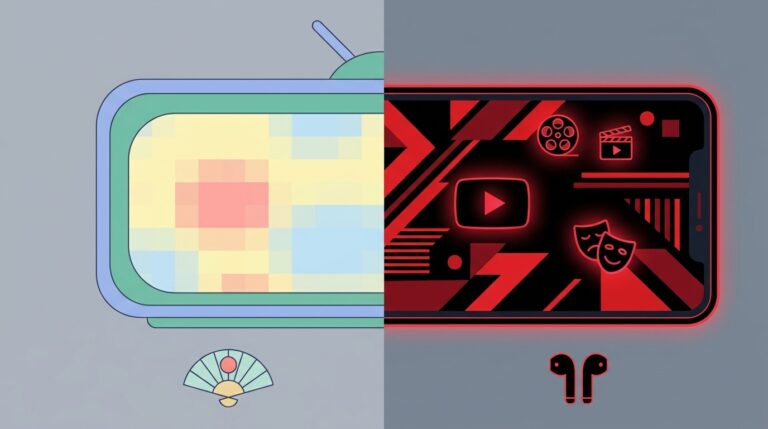
Picture this: You are watching a standard Korean rom-com on terrestrial TV (like KBS or SBS). A character is furious, slamming their fists, but the subtitles say something like You jerk! while the actor yells a heavily sanitized insult. The villain is holding a knife, but it is comically blurred into a pixelated blob. Fast forward to your evening binge-watching session. You turn on a Netflix Korea original. Suddenly, the F-bombs are flying, cigarettes are everywhere, and the dialogue feels intensely raw. You might wonder… Wait, do Koreans actually talk like this? And how is this allowed on Korean screens?
Welcome to the double life of Korean media. As an advanced (C2) learner of Korean, you probably already realize that the language taught in textbooks does not always match the grit of real life. Understanding the gap between strictly censored broadcast TV and the uncensored realm of OTT (Over-The-Top) platforms is crucial. It reveals not just vocabulary, but the deep-seated societal boundaries of what is considered acceptable in public versus private spaces. Let us dive into the uncensored truth of K-Contents!
Phase 2: Core Expressions – Decoding the Ratings
1. 수위가 세다 / 높다
- Pronunciation: suwiga seda / nopda
- Meaning: Literal: The water level is strong/high. Real nuance: The level of explicitness (violence, sexual content, or language) is very intense.
- K-Culture Moment: You are discussing the latest revenge thriller with your Korean friends. Someone mentions a specific torture scene, and everyone simultaneously winces. This is the exact phrase you use to describe that scene.
- Editor’s Insight: 수위 (Suwi) originally means water level, but in media, it is the ultimate metric for how provocative something is. If a show is 수위가 높다, it means it pushes the boundaries of censorship.
- Situation Spectrum:
- Casual (Friends): ✅
- Semi-formal (Coworkers): ✅
- Formal (Elders/Bosses): ⚠️ (Depending on the context, discussing explicit content might be inappropriate)
- 🤔 Think About It: Why do Koreans use a metaphor related to water (수위) to discuss explicitness? Does your native language have a similar physical metaphor for media intensity?
2. 모자이크 처리하다
- Pronunciation: mojaikeu cheorihada
- Meaning: Literal/Real: To process with a mosaic (to blur or pixelate).
- K-Culture Moment: Watching a terrestrial broadcast of a movie where a character smokes. Suddenly, a floating blur covers the cigarette. It looks ridiculous, but it is the law!
- Editor’s Insight: On standard Korean TV, knives, cigarettes, tattoos, and even brand logos must be blurred. This action of pixelating is universally called 모자이크 처리.
- Situation Spectrum:
- Casual (Friends): ✅
- Semi-formal (Coworkers): ✅
- Formal (Elders/Bosses): ✅
- 🤔 Think About It: Does hiding a cigarette with a blur actually prevent youth from knowing the character is smoking? What does this performative censorship tell us about the Korean government’s approach to media influence?
3. 심의에 걸리다
- Pronunciation: simuie geollida
- Meaning: Literal: To get caught in deliberation. Real nuance: To violate censorship board regulations; to be flagged by the broadcasting standards commission.
- K-Culture Moment: A highly anticipated K-Pop music video is banned from KBS because the lyrics contain a specific brand name or a mild slang word. Fans sigh and say, 아, 또 심의에 걸렸네. (Ugh, it got flagged by the censorship board again.)
- Editor’s Insight: This is a highly advanced, professional term used frequently in daily conversation when discussing why a show or song had to be altered. It highlights the omnipresent power of the Korea Communications Standards Commission.
- Situation Spectrum:
- Casual (Friends): ✅
- Semi-formal (Coworkers): ✅
- Formal (Elders/Bosses): ✅
- 🤔 Think About It: The standards for 심의 change every decade. What was considered scandalous in the 90s is now family-friendly. How does media censorship reflect the shifting morals of a society?
4. 청불 (청소년 관람불가)
- Pronunciation: cheongbul (cheongsonyeon gwallambulga)
- Meaning: Literal: Youth viewing prohibited. Real nuance: R-rated / Rated 19+.
- K-Culture Moment: You try to watch a gritty noir film on a Korean streaming site, but a giant pop-up blocks your screen demanding 성인 인증 (Adult Verification). Yes, it is a 청불 movie.
- Editor’s Insight: 청불 is the perfect abbreviation. Koreans love shortening long administrative terms. Instead of saying the full five syllables, just drop a 청불 영화 in your sentence to sound like a true local.
- Situation Spectrum:
- Casual (Friends): ✅
- Semi-formal (Coworkers): ✅
- Formal (Elders/Bosses): ✅
- 🤔 Think About It: In Korea, turning 19 (international age) unlocks the ability to watch 청불 content. Do you feel the strict age-gating on the internet is effective?
Phase 3: Textbook vs. Real Korean
[Describing an Intense Scene]
* 📖 Textbook: 이 드라마는 폭력적인 장면이 많습니다. (This drama has many violent scenes.)
* 🗣️ Real Korean: 와, 이거 수위 장난 아닌데? 잔인해서 못 보겠어. (Wow, the explicitness is no joke. I can’t watch because it’s so gory.)
* 💡 Why is it different?: 장난 아니다 (It’s no joke) is the quintessential Korean way to express that something has exceeded normal expectations.
[Talking About Censorship]
* 📖 Textbook: 담배가 화면에서 가려졌습니다. (The cigarette was covered on the screen.)
* 🗣️ Real Korean: 또 칼 모자이크 처리했네. 몰입 다 깨지게. (They blurred the knife again. It totally breaks the immersion.)
* 💡 Why is it different?: Advanced learners must know the word 몰입 (immersion). Complaining about censorship ruining the 몰입 is a very common viewer sentiment.
[Recommending a Mature Show]
* 📖 Textbook: 이것은 성인용 콘텐츠입니다.
* 🗣️ Real Korean: 이거 완전 19금 청불이야. 애들 잘 때 봐야 돼.
* 💡 Why is it different?: Using the abbreviations 19금 (19-Gold/Restricted) and 청불 makes the conversation flow naturally without sounding like a newscaster.
Phase 4: Cultural Context — K-Culture Deep Dive
4-1. Non-Verbal Cues: The Nunchi of Watching TV
When watching a slightly inappropriate or highly explicit scene with older family members in Korea, there is a profound silence. No one speaks. Everyone suddenly pretends to look at their phones or coughs awkwardly. This is the ultimate test of 눈치 (Nunchi). If an explicit scene comes on during a family gathering, the person holding the remote is expected to quickly change the channel or fast-forward.
4-2. The K-Drama vs. OTT Divide
If you watch a terrestrial drama (지상파 드라마), notice the product placements (PPL). They will blatantly eat a specific brand of ginseng or apply a certain lip balm. However, if a brand did not pay for placement, the logo is aggressively covered with black tape (테이프 붙이기).
Conversely, OTT platforms like Netflix operate outside the strict Korean Broadcasting Act (방송법). This is why directors flock to OTTs: they can finally show blood, swearing (욕설), and unfiltered societal issues without the KCSC breathing down their necks. However, this creates a bizarre reality where foreign fans learn heavily censored, polite Korean from TV dramas, only to be shell-shocked by the aggressive street slang featured in OTT hits.
Phase 5: Real-Life Roleplay Scenario
Setting: Friday, 8:00 PM. A noisy craft beer pub in Itaewon. You and your Korean coworkers are having a casual get-together after a long week. The topic shifts to a new, highly controversial crime thriller on Netflix.
Characters:
– YOU: An expat who loves Korean noir films but is still adjusting to the brutal slang.
– 지훈 (Ji-hoon): 34, a coworker who is a huge movie buff. Loves complaining about terrestrial TV.
Dialogue:
지훈: 00씨, 주말에 새로 나온 넷플릭스 오리지널 봤어요?
(00-ssi, jumare saero naon netpeullikseu orijineol bwasseoyo?)
[English] Did you watch the new Netflix original over the weekend?
(Stage Direction: Ji-hoon leans in, looking excited)
YOU: 네, 정주행 다 했어요! 근데 진짜 놀랐어요.
(Ne, jeongjuhaeng da haesseoyo! Geunde jinjja nollasseoyo.)
[English] Yes, I binge-watched the whole thing! But I was really shocked.
지훈: 그쵸? 한국 드라마치고 수위가 진짜 높지 않아요?
(Geuchyo? Hanguk deuramachigo suwiga jinjja nopji anayo?)
[English] Right? For a Korean drama, isn’t the explicitness really high?
YOU: 맞아요. 지상파였으면 다 모자이크 처리됐을 텐데요.
(Majayo. Jisangpayeosseumyeon da mojaikeu cheoridwaesseul tendeyo.)
[English] Exactly. If it were terrestrial TV, everything would have been blurred out.
지훈: 내 말이! 난 공중파에서 칼 찌를 때 블러 처리하는 거 진짜 몰입 깨지더라고요.
(Nae mari! Nan gongjungpaeseo kal jjireul ttae beulleo cheorihaneun geo jinjja morip kkaejideoragoyo.)
[English] That’s what I’m saying! When they blur the stabbing scenes on public broadcast, it totally ruins my immersion.
YOU: 근데 거기 나오는 욕설들… 한국 사람들 실제로 화나면 그렇게 말해요?
(Geunde geogi naoneun yokseoldeul… Hanguk saramdeul siljero hwanamyeon geureoke malhaeyo?)
[English] But the swearing in there… do Korean people actually talk like that when they get mad?
지훈: 하하, 완전 리얼하죠. 물론 회사에서는 절대 안 쓰지만, 친구들끼리 싸울 때는 그 정도 하죠.
(Haha, wanjeon rieolhajyo. Mullon hoesaeseoneun jeoldae an sseujiman, chingudeulkkiri ssaul ttaeneun geu jeongdo hajyo.)
[English] Haha, it’s totally realistic. Of course, we never use it at work, but when fighting with friends, we might go that far.
🔀 Your Turn! How do you respond?
– A) 와, 무섭네요. 저는 그런 나쁜 말은 절대 안 배울 거예요. (A bit too literal and kills the fun mood.)
– B) 아, 그럼 다음 회식 때 지훈 대리님 화나게 하면 안 되겠네요! (Witty, shows great conversational Nunchi and humor.)
– C) 지훈씨, 저한테 그 욕 한번 해보세요! (Extremely risky and inappropriate for a coworker.)✅ Best Choice: B — Reason: It uses a lighthearted joke to acknowledge the cultural insight while maintaining a friendly atmosphere. Koreans love banter that involves playful workplace dynamics.
⚠️ Choice C Analysis: Even in a casual pub, asking a coworker to swear at you crosses a major professional boundary.
지훈: 에이~ 제가 화낼 일이 뭐가 있겠어요. 맥주나 한잔 더 합시다!
(Ei~ Jega hwanael iri mwoga iggesseoyo. Maekjuna hanjan deo hapsida!)
[English] Hey now~ What reason would I have to get mad? Let’s just have another beer!
(Stage Direction: Ji-hoon laughs and clinks his glass with yours)
Phase 6: 10-Second Shadowing Drill
Practice expressing your preference for realistic media like a native speaker! Pay attention to the pauses and emotional delivery.
😤 저는 / 지상파 드라마보다 / OTT 오리지널이 / 훨씬 현실적이라서 / 좋아요!
(jeo-neun / jisangpa deuramaboda / o-ti-ti orijineori / hwolssin hyeonsiljeogiraseo / joayo!)
I like OTT originals much more than terrestrial dramas because they are far more realistic!
Phase 7: K-Culture Mini Dictionary
Expand your advanced media vocabulary with these critical terms:
1. 방심위 (bangsimwi)
* English: Korea Communications Standards Commission (KCSC)
* Context: The ultimate watchdog of Korean broadcasting. If a show gets too spicy, the 방심위 issues warnings or fines.
2. 선정성 (seonjeongseong)
* English: Sensationalism / Sexual explicitness
* Context: A formal term used in news and reviews to describe content that is overly provocative or sexually suggestive.
3. 정주행 (jeongjuhaeng)
* English: Binge-watching
* Context: Literally driving in a straight line. Used when you watch a drama from episode 1 to the end without stopping.
4. 성인 인증 (seongin injeung)
* English: Adult verification
* Context: The digital roadblock requiring your phone number and ARC to prove you are 19+ before accessing restricted content online.
Phase 8: Traveler & Expat Survival Kit
If you live in or travel to Korea, you will inevitably hit the digital wall of age-restricted content. Here is how to navigate it.
🆘 Survival Expression #1: Asking about ratings
– 🇰🇷 “이거 청불인가요? 신분증 확인해요?” (igeo cheongburingayo? sinbunjeung hwaginhaeyo?)
– 🗣️ Pronunciation: [ee-geo chuhng-bool-in-ga-yo? shin-boon-jeung hwa-gin-hae-yo?]
– 📍 Where to use: Cinemas, PC Bangs, DVD Rooms.
– 💡 Pro Tip: If you look young, always carry your ARC or passport. Digital IDs on foreign phones are rarely accepted.🆘 Survival Expression #2: Navigating online verification
– 🇰🇷 “성인 인증이 자꾸 실패하는데, 어떻게 해야 하나요?” (seongin injeungi jakku silpaehaneunde, eotteoke haeya hanayo?)
– 🗣️ Pronunciation: [sung-in in-jeung-ee ja-kkoo shil-pae-ha-neun-de, uh-tuh-ke hae-ya ha-na-yo?]
– 📍 Where to use: Calling customer service for a streaming app or ticketing site.📌 Editor’s Expat Note
– The ARC Match: Your name in the telecom provider’s database MUST perfectly match the name on your ARC (usually all caps, Last Name First Name). If there is even one space out of place, you cannot pass 성인 인증 to watch OTT content on Korean platforms like TVING or Wavve.
Phase 9: Critical Thinking — “One Step Deeper”
🧠 Think Deeper: Media vs Reality
The stark contrast between standard Korean TV and OTT platforms highlights a fascinating hypocrisy in Korean media. On KBS, characters speak with refined grammar, never smoke, and criminals use sanitized insults. It portrays the Korea that the government wants the world to see: polite, orderly, and harmonious. However, the explosive global success of gritty OTT K-Dramas proves that audiences crave the hidden reality. The raw swearing, systemic corruption, and intense violence shown on streaming platforms reflect the unspoken frustrations of modern Korean society. By strictly censoring public TV while allowing OTTs to run wild, Korea maintains a dual identity: the polite public face and the brutally honest private reality.
💬 Your Turn: How does your home country handle censorship? Is there a big difference between public television and streaming platforms in your culture? Share in the comments!
Phase 10: FAQ & Avoiding Misunderstandings
Q: I heard some amazing insults in a Netflix drama. Can I use them with my close Korean friends for a laugh?
A: NO! The swearing you hear in OTT thrillers (like 개새끼, 씨발) is extremely aggressive. Even among friends, dropping these words suddenly will completely ruin the mood and make you seem threatening, not funny. Keep the drama dialogue in the drama!
Q: Why do they blur out knives but show people getting beaten up?
A: Welcome to the paradox of Korean censorship. Weapons that can be easily acquired (like kitchen knives) are blurred to prevent copycat crimes (모방 위험). However, physical brawling is often considered less of an immediate copycat threat by the review boards.
❌ Common Mistake #1: Trying to bypass Korean age verification online by just clicking Yes.
✅ How to fix it: Unlike Western sites where you just click “I am over 18,” Korea requires cryptographic proof via your mobile carrier. Make sure your phone plan is registered exactly under your legal name.
Phase 11: Summary & Action Items
- One-Liner Summary: Korean media operates in two distinct worlds: strictly censored public TV and explicitly raw OTT platforms, and knowing the vocabulary for both is key to advanced fluency.
-
Action Mission:
- 🥉 Bronze (Solo): Read the 10-second shadowing drill aloud 3 times, focusing on your intonation.
- 🥈 Silver (Online): Go to a Korean drama forum (or Twitter) and search for the keywords 수위 or 청불 to see how natives discuss their favorite shows.
- 🥇 Gold (Action): The next time you watch a K-Drama with a Korean friend, point out a censored moment and say, “아, 또 모자이크 처리했네!”
- K-Culture Mission: Watch episode 1 of a public broadcast drama (like on KBS World) and episode 1 of a Netflix original thriller. Count how many times you notice censorship (blurring, taped logos) versus explicit content. The contrast will amaze you!
Engagement: What was the most shocking difference you noticed when you watched your first uncensored Korean OTT show? Drop a comment below!
Phase 12: Interactive Quiz
1. Situational Judgment: You are watching a highly violent zombie show with your Korean friend. Which expression sounds the most natural and advanced to express your shock?
– A) 이 비디오는 나빠요.
– B) 모자이크 처리해 주세요.
– C) 와, 이거 진짜 수위 장난 아니다.
– D) 방심위가 좋아할 거예요.
2. T/F – K-Culture Edition: On Korean terrestrial TV, characters are allowed to smoke cigarettes as long as the brand logo is hidden. (True / False)
3. Fill in the Blank:
“아, 이 영화 보고 싶은데 19금이라서
_________ 을/를 해야 돼. 외국인 등록증 어딨지?”
(Ah, I want to watch this movie but it’s 19+ so I have to do _________. Where is my ARC?)
Click for Answers
1. C (It perfectly captures the native way of expressing shock at the level of explicitness).
2. False (Smoking is completely banned on standard broadcast TV, regardless of logos. It must be blurred or cut entirely).
3. 성인 인증 (Adult verification is required for all R-rated online content in Korea).
Frequently Asked Questions (FAQ)
Q: What does "수위가 세다 / 높다" mean in Korean and how do you pronounce it?
A: In Korean, "수위가 세다 / 높다" is pronounced [suwiga seda / nopda] and means: Literal: The water level is strong/high. Real nuance: The level of explicitness (violence, sexual content, or language) is very intense.
Q: What does "모자이크 처리하다" mean in Korean and how do you pronounce it?
A: In Korean, "모자이크 처리하다" is pronounced [mojaikeu cheorihada] and means: Literal/Real: To process with a mosaic (to blur or pixelate).
Q: What does "심의에 걸리다" mean in Korean and how do you pronounce it?
A: In Korean, "심의에 걸리다" is pronounced [simuie geollida] and means: Literal: To get caught in deliberation. Real nuance: To violate censorship board regulations; to be flagged by the broadcasting standards commission.
Q: What does "청불 (청소년 관람불가)" mean in Korean and how do you pronounce it?
A: In Korean, "청불 (청소년 관람불가)" is pronounced [cheongbul (cheongsonyeon gwallambulga] and means: Literal: Youth viewing prohibited. Real nuance: R-rated / Rated 19+.






