

Hello! I am the Lead Editor at Daily Hangul.
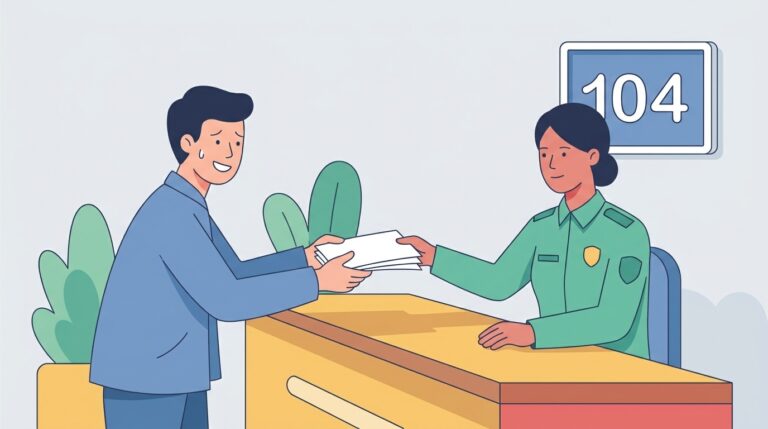
Imagine this: It’s your first month in Seoul. You’re sitting in the brightly lit waiting room of the Korean Immigration Office (출입국관리사무소). “Ding-dong!” A voice announces a number. You look at the ticket in your sweaty hands. It’s your turn. Walking up to that counter can feel like you’re the protagonist in a K-Drama facing a strict boss. They speak so fast, and all you want is that little plastic card—your Alien Registration Card (ARC, or Residence Card)—that officially makes you a ‘local.’
If you don’t know the right phrases, you might end up making three separate trips just because of a missing signature or a misunderstood question. But don’t worry! As someone who has helped hundreds of students navigate this exact scenario, I’m here to give you the cheat codes. Let’s turn this stressful bureaucratic hurdle into a breeze.
This guide is based on real struggles from my A2-level students. Let’s get that ID card together!
Phase 2: Core Expressions Deep Dive
Here are the lifesaver phrases you actually need when sitting at that counter.
1. 외국인 등록증 만들러 왔어요.
- Pronunciation: oe-gu-gin deung-nok-jeung man-deul-leo wa-sseo-yo.
- Sound-alike: “way-goo-gin” / “man-deul-leo” (sounds like ‘mandala’ but with an ‘uh’ sound)
- Meaning: I came to make an Alien Registration Card. (Literal: Alien registration card / in order to make / I came.)
- K-Culture Moment: In K-Dramas, when a detective walks into a room, they always state their purpose using “~러 왔어요” (I came in order to…). It sounds active and clear. You’re on a mission!
- Editor’s Insight: This is much more natural than saying “I want an ARC.” It immediately tells the busy officer exactly what to do with your application.
- Situation Spectrum:
- Casual (Friends): 🚫
- Semi-formal (Clerks/Staff): ✅
- Formal (Bosses): ⚠️
- 🤔 Think About It: Korean is a highly action-oriented language. Why do you think Koreans prefer to say “I came to do X” rather than “I want X” in official settings?
2. 서류 여기 있어요.
- Pronunciation: seo-ryu yeo-gi i-sseo-yo.
- Sound-alike: ‘seo’ sounds like ‘saw’. ‘yeo-gi’ sounds like ‘yogi’ (bear).
- Meaning: Here are the documents.
- K-Culture Moment: You will hand over a mountain of papers (passport, photo, housing contract). Imagine you are handing over a secret dossier in a spy movie.
- Editor’s Insight: When you say this, the unwritten rule is that you must hand the papers over with two hands. It shows respect!
- Situation Spectrum:
- Casual: ✅ (without ‘yo’)
- Semi-formal: ✅
- Formal: ✅
- 🤔 Think About It: Why does Korean have a specific word for “documents” (서류) instead of just saying “paper” (종이)?
3. 언제 나와요?
- Pronunciation: eon-je na-wa-yo?
- Sound-alike: ‘un-jay’ / ‘nah-wah-yo’
- Meaning: When does it come out? (When will it be ready?)
- K-Culture Moment: You can use this everywhere! Waiting for your food at a Korean BBQ place? Waiting for a concert ticket to drop? “언제 나와요?” is your go-to phrase for anything you are eagerly waiting to be produced or delivered.
- Editor’s Insight: A textbook will teach you “언제 받을 수 있습니까?” (When can I receive it?). But native speakers almost always treat the card/food/item as the subject: “When does it come out?”
- Situation Spectrum:
- Casual: ✅ (언제 나와?)
- Semi-formal: ✅
- Formal: ⚠️
- 🤔 Think About It: Notice how the object (the card) becomes the subject of the sentence? What does this say about how Koreans view actions and results?
Phase 3: Textbook vs Real Korean
Let’s compare what the books say to what you’ll actually hear at the office.
[Situation 1: Giving your documents]
* 📖 Textbook Korean: 제 서류를 제출하겠습니다. (I will submit my documents.)
* 🗣️ Real Korean: 서류 여기 있어요. / 서류 다 가져왔어요. (Here are the documents / I brought everything.)
* 💡 Why is it different?: Using big vocabulary like “제출하다” (submit) makes you sound like a robot. Simple verbs like “있다” (to be/have) and “가져오다” (to bring) sound much friendlier and softer.
[Situation 2: The Officer telling you to wait]
* 📖 Textbook Korean: 저쪽 의자에 앉아서 대기해 주시길 바랍니다. (Please sit in the chair over there and wait.)
* 🗣️ Real Korean: 번호표 뽑고 기다리세요. (Take a number and wait.)
* 💡 Why is it different?: Efficiency! Korea’s famous “Ppalli-ppalli” (hurry up) culture means officers use direct, clear instructions without unnecessary fluff.
Bottom Note: At the A2 level, focus on clear, polite sentence endings (
~요or~시겠어요?) rather than complex formal structures (~습니다). It’s perfectly polite and much easier to remember!
Phase 4: Cultural Context — K-Culture Deep Dive
4-1. Non-verbal Communication: The “Two-Hand” Rule
Language is only half the battle. In a Korean public office, Nunchi (눈치 – the ability to read the room) and body language are crucial. When you hand over your passport and application form, do not slide it across the desk with one hand while looking at your phone. Hold the documents with both hands, make brief eye contact, bow your head slightly, and say “서류 여기 있어요.” This instantly transforms you from a “confused tourist” to a “respectful resident.” The officer will subconsciously be much more willing to help you!
4-2. The K-Travel Connection: The Almighty “번호표” (Number Ticket)
If you’ve traveled around Korea, you’ve probably noticed something: Koreans love queuing, but they hate standing in lines. Enter the 번호표 (Number Ticket) system.
Whether you are at the immigration office, a local bank, or waiting for a table at the trendiest cafe in Seongsu-dong (like London Bagel Museum!), you will find a little machine dispensing numbers.
- Survival Tip: Never just walk up to a counter in Korea. Look for the machine first. If you don’t see it, ask: “번호표 어디에 있어요?” (Where is the number ticket?)
Phase 5: Real-Life Roleplay Scenario
Setting: Tuesday morning, 10:00 AM. Sejongno Immigration Office. The room is dead silent except for the constant “Ding-dong!” of the number boards. Your number (104) just flashed on screen at Counter 3.
Characters:
– YOU: An A2 Korean learner, nervous but prepared, clutching a plastic folder of documents.
– Officer Kim (45): Efficient, looks tired, typing incredibly fast on his keyboard.
Dialogue:
Officer Kim: 104번 손님, 이쪽으로 오세요.
(104-beon sonnim, ijjogeuro oseyo.)
[Customer 104, please come this way.]
(🎭 Stage Direction: Officer Kim doesn’t look up from his screen yet.)
YOU: 안녕하세요. 외국인 등록증 만들러 왔어요.
(Annyeonghaseyo. Oegugin deungnokjeung mandeulleo wasseoyo.)
[Hello. I came to make an Alien Registration Card.]
Officer Kim: 네, 여권이랑 신청서 주세요.
(Ne, yeogwonirang sincheongseo juseyo.)
[Yes, please give me your passport and application form.]
YOU: 네, 서류 여기 있어요. 다 가져왔어요.
(Ne, seoryu yeogi isseoyo. Da gajyeowasseoyo.)
[Yes, here are the documents. I brought everything.]
(🎭 Stage Direction: You hand them over with two hands.)
Officer Kim: (Flipping through papers) …수입인지 샀어요?
(…Suibinji sasseoyo?)
[Did you buy the revenue stamp?]
YOU: 수입인지요? 아, 저기 ATM에서 샀어요. 여기요.
(Suibinjiyo? Ah, jeogi ATM-eseo sasseoyo. Yeogiyo.)
[The revenue stamp? Ah, I bought it at the ATM over there. Here you go.]
Officer Kim: 네, 좋습니다. 여기에 사인해 주세요.
(Ne, joseumnida. Yeogie sainhae juseyo.)
[Yes, good. Please sign here.]
(🎭 Stage Direction: He points to a digital pad.)
YOU: 네, 했어요. 저기… 언제 나와요?
(Ne, haesseoyo. Jeogi… eonje nawayo?)
[Yes, I did. Excuse me… when will it come out?]
🔀 Your Turn! The officer says it will take 3 weeks. How do you respond to show off your Korean manners?
– A) “너무 늦어요!” (Too late!)
– B) “네, 알겠습니다. 감사합니다!” (Yes, I understand. Thank you!)
– C) “대박… 왜 이렇게 오래 걸려요?” (Daebak… why does it take so long?)✅ Best Choice: B — Polite and standard.
⚠️ Choice C Analysis: “대박” (Daebak – wow/crazy) is for friends or K-Pop concerts, never for immigration officers! They will think you are being rude or complaining.
Officer Kim: 3주 뒤에 문자로 알려드릴게요. 수고하셨습니다.
(Sam-ju dwie munjaro allyeodeurilgeyo. Sugohasyeotseumnida.)
[I will notify you by text in 3 weeks. Good job/Thank you for your effort.]
YOU: 감사합니다. 안녕히 계세요!
(Gamsahamnida. Annyeonghi gyeseyo!)
[Thank you. Goodbye!]
Phase 6: 10-Second Shadowing Drill
Practice this out loud. Pay attention to the pauses (/) and the emotion tags!
🥺 저기요, / 외국인 등록증 / 만들러 왔는데요.
(jeogiyo, / oegugin deungnokjeung / mandeulleo wanneundeyo.)
Meaning: Excuse me, I came to make my ARC…
😊 네, / 서류 / 다~ 가져왔어요!
(ne, / seo-ryu / da~ gajyeowasseoyo!)
Meaning: Yes, I brought a~ll the documents!
Phase 7: K-Culture Mini Dictionary
| Korean | Romanization | English | Context |
|---|---|---|---|
| 눈치 | nunchi | Social awareness / Reading the room | Crucial when knowing when to approach the counter. |
| 번호표 | beonhopyo | Number ticket | You need to pull this before talking to anyone at an office or bank. |
| 수입인지 | suibinji | Revenue stamp | A fee you usually have to pay at an ATM inside the office before applying. |
| 빨리빨리 | ppalli-ppalli | Hurry-hurry | The speed at which Korean public offices operate. Be ready! |
Phase 8: Traveler Survival Kit
Even if you are just traveling and not moving to Korea, you might need to visit a public office (like a lost and found at a police station) or handle official travel documents. Here are your lifesavers:
🆘 Survival Phrase #1: “다시 한번 말씀해 주세요.”
– 🇰🇷 (dasi hanbeon malsseumhae juseyo.)
– 🗣️ Meaning: Please say that one more time.
– 📍 Where to use: Offices, airports, check-in counters.
– 💡 Pro Tip: Don’t just say “뭐라고요?” (What?). It sounds like you want to start a fight! Use this polite version instead.🆘 Survival Phrase #2: “여권 여기 있어요.”
– 🇰🇷 (yeogwon yeogi isseoyo.)
– 🗣️ Meaning: Here is my passport.🆘 Survival Phrase #3: “어디에 사인해요?”
– 🇰🇷 (eodie sainhaeyo?)
– 🗣️ Meaning: Where do I sign?
📌 Editor’s Travel Note:
– HiKorea App: If you are actually getting an ARC, you MUST make a reservation online via the HiKorea website first. You cannot just walk in!
– Cash is King: While Korea is a card-only society, the ‘Revenue Stamp’ (fee for the card) at the office ATM often requires physical cash. Bring about 30,000 to 40,000 KRW just in case!
Phase 9: Critical Thinking Corner — “One Step Deeper”
Media vs Reality: The K-Drama Illusion
🧠 Think Deeper:
If you watch K-Dramas, government offices are often depicted as places of high drama—detectives yelling, people begging on their knees, or corrupt officials plotting in back rooms.
However, the reality of Korean public offices is strikingly different. They are often incredibly quiet, hyper-efficient, and systematized down to the second. The language used reflects this: it is dry, polite, and heavily relies on fixed formulas (like “여기에 사인해 주세요”). This stark contrast shows that while media loves explosive emotions, Korean society actually highly values public order, speed (빨리빨리), and emotional restraint in professional settings.💬 Your Turn: Are government offices in your country slow and chatty, or fast and silent like in Korea? Share in the comments!
Phase 10: FAQ & Avoiding Misunderstandings
- Q: Can I say “안녕” (Annyeong) to the officer?
- No! “안녕” is only for close friends. Always use “안녕하세요” (Annyeonghaseyo) in public offices.
- Q: Do I need to speak perfect Korean to get my card?
- Maybe not. Many officers speak some English, especially in Seoul. However, greeting them and trying to use basic Korean phrases like “서류 여기 있어요” shows immense respect and usually results in much friendlier service!
- Q: How do I call the officer? “아저씨” (Mister)?
- No! Do not use “아저씨” (Ajeossi) or “아줌마” (Ajumma) at a public office. Simply use “저기요” (Excuse me) or wait for them to call your number.
❌ Common Mistake: Walking up to an empty counter without pulling a number ticket (번호표) first.
✅ Do this instead: The moment you enter the room, look for the machine, take a ticket, and sit down. Wait for the “Ding-dong!”
Phase 11: Summary & Action Items
- One-Liner Summary: Bring your documents, pull a number ticket, use two hands, and say “외국인 등록증 만들러 왔어요!”
Action Mission 3 Steps:
– 🥉 Bronze (Solo): Stand in front of your mirror, hold a book with two hands, bow slightly, and practice saying “서류 여기 있어요.”
– 🥈 Silver (Online): Write “외국인 등록증 언제 나와요?” in your Korean study group chat!
– 🥇 Gold (Real-world): Use one of these phrases at an actual office, bank, or even when handing over a loyalty card at a Korean cafe!
K-Culture Mission:
Go to the HiKorea website and switch the language toggle to “한국어” (Korean) just for 2 minutes. Try to spot the word “신청” (Application) or “예약” (Reservation). Familiarizing yourself with the look of the Korean site will make the real thing less scary!
Phase 12: Quiz — Interactive Challenge
1. Situational Judgment: You arrive at the immigration office. The counter looks empty. What should you do first?
– A) Run to the counter and say “안녕하세요!”
– B) Look for the 번호표 (Number ticket) machine.
– C) Yell “저기요!” to get attention.
(Answer: B. Always get a ticket first!)
2. Fill in the Blank:
“외국인 등록증 ________ 왔어요.” (I came to make an ARC.)
– A) 만들러 (mandeulleo)
– B) 하고 (hago)
– C) 먹으러 (meogeureo)
(Answer: A)
3. True or False – K-Culture Edition:
“It is perfectly fine to slide your passport to the officer with one hand while holding your iced Americano in the other.”
(Answer: False. Always use two hands for important documents in Korea to show respect!)
Great job today! You are now fully prepared to survive the Korean Immigration Office. 화이팅 (Hwaiting)!
Frequently Asked Questions (FAQ)
Q: What does "외국인 등록증 만들러 왔어요." mean in Korean and how do you pronounce it?
A: In Korean, "외국인 등록증 만들러 왔어요." is pronounced [oe-gu-gin deung-nok-jeung man-deul-leo wa-sseo-yo.] and means: I came to make an Alien Registration Card. (Literal: Alien registration card / in order to make / I came.)
Q: What does "서류 여기 있어요." mean in Korean and how do you pronounce it?
A: In Korean, "서류 여기 있어요." is pronounced [seo-ryu yeo-gi i-sseo-yo.] and means: Here are the documents.
Q: What does "언제 나와요?" mean in Korean and how do you pronounce it?
A: In Korean, "언제 나와요?" is pronounced [eon-je na-wa-yo?] and means: When does it come out? (When will it be ready?)







