

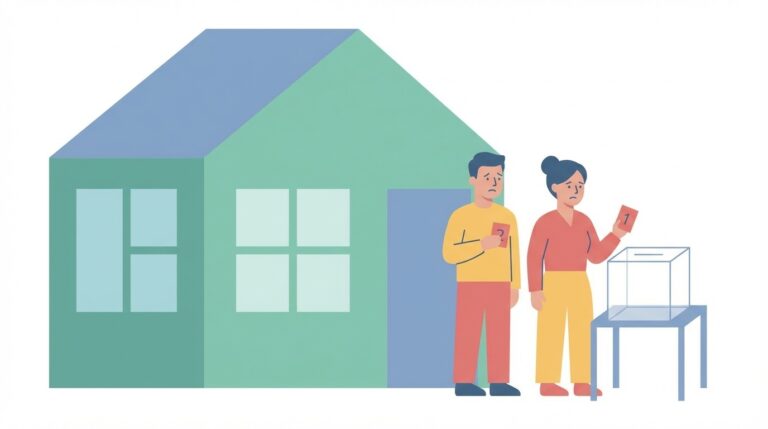
Phase 1: Empathy (The Coffee Shop Standoff)
Hello there! I’m your Daily Hangul Editor, your local Korean friend and veteran tutor.
Imagine this: You walk into a beautifully aesthetic brunch cafe in Gangnam on a Tuesday morning. Instead of relaxing with their iced Americanos, a group of moms are sitting at the corner table, intensely glaring at their smartphones. Someone gasps. Someone else lets out a deep sigh. Did BTS just announce a surprise reunion concert? Are they trying to score front-row tickets?
Nope. They are trying to get their 4-year-olds into preschool.
Welcome to Korea’s English Kindergarten Lottery War. If you’ve watched K-Dramas like SKY Castle or Green Mothers’ Club, you might think the intense education fever is exaggerated for TV. Trust me, the reality is just as dramatic!
Even if you don’t have kids, understanding this culture gives you a massive VIP pass into Korean society. The vocabulary born from this intense competition is actually used by young Koreans every single day for restaurant waitlists, concert ticketing, and job hunting. Let’s dive into the fascinating world of Korea’s educational hunger games, and learn some incredibly useful expressions along the way!
Phase 2: Core Expressions Deep Dive
Let’s look at the absolute must-know words that fuel this lottery war.
1. 영유
- Pronunciation: [yeong-yu] (The ‘yeong’ sounds like the English word ‘young’, and ‘yu’ sounds like ‘you’. Young-You!)
- Meaning: English Kindergarten (Literal) vs. Premium English-immersion preschools (Real nuance)
- K-Culture Moment: You’ll hear this constantly in mom cafes. “Did you decide on a Yeong-yu for Ji-hoon?”
- Editor’s Insight: This is an abbreviation for 영어 유치원 (yeong-eo yu-chi-won). Koreans LOVE shortening words. In a fast-paced ‘Pali-Pali’ (hurry up) society, nobody has time to say all five syllables!
- Situation Spectrum:
- Friends (Casual): ✅
- Co-workers (Semi-formal): ✅
- Boss/Elders (Formal): ⚠️ (It’s slang, so use the full word with strict elders)
- 🤔 Think About It: Why do Koreans love abbreviations (줄임말) so much? Does your culture shorten long, institutional names into cute two-syllable words?
2. 대기 타다
- Pronunciation: [dae-gi ta-da] (‘dae’ sounds like ‘day’, ‘gi’ rhymes with ‘see’, ‘ta-da’ like the magic word ‘Tada!’)
- Meaning: To get on the waitlist (Literal) vs. To anxiously wait for an opening (Real nuance)
- K-Culture Moment: When a popular English kindergarten opens its waitlist, parents will ‘dae-gi ta-da’ for years. Some even register when the baby is still in the womb!
- Editor’s Insight: ‘대기’ means waitlist, and ‘타다’ means to ride. You are “riding the waitlist.” It implies an active, slightly anxious state of waiting.
- Situation Spectrum:
- Friends (Casual): ✅
- Co-workers (Semi-formal): ✅
- Boss/Elders (Formal): 🚫
- 🤔 Think About It: Notice how Koreans use the verb ‘to ride’ (타다) for abstract concepts like waitlists or even emotions (like ‘riding a good mood’).
3. 경쟁률 장난 아니야
- Pronunciation: [gyeong-jaeng-ryul jang-nan a-ni-ya] (‘jang-nan’ sounds like ‘jang’ rhyming with ‘bang’ + ‘nan’)
- Meaning: The competition rate is no joke.
- K-Culture Moment: Used when someone asks if getting into a certain school is easy.
- Editor’s Insight: ‘장난’ means a joke or prank. By saying “It’s not a joke,” you’re emphasizing how fierce and serious the situation is.
- Situation Spectrum:
- Friends (Casual): ✅
- Co-workers (Semi-formal): ⚠️
- Boss/Elders (Formal): 🚫
Phase 3: Textbook vs. Real Korean
Here’s how textbook Korean differs from the real, survival Korean you’ll hear outside English kindergartens.
[Situation 1: Asking about school plans]
* 📖 Textbook Korean: 자녀를 영어 유치원에 보내실 계획입니까? (Do you plan to send your child to an English kindergarten?)
* 🗣️ Real Korean: 애 영유 보낼 거예요? (Are you sending the kid to a yeong-yu?)
* 💡 Why the difference?: Real conversation drops the formal subjects and objects. We rely heavily on context and quick, efficient syllables.
[Situation 2: Describing a difficult process]
* 📖 Textbook Korean: 그곳은 들어가기 매우 어렵습니다. (That place is very difficult to enter.)
* 🗣️ Real Korean: 거기 경쟁률 박터져요. (The competition there is bursting open.)
* 💡 Why the difference?: Koreans love using dynamic, physical metaphors (like ‘박터지다’ – a gourd bursting) to express intensity.
Phase 4: K-Culture Deep Dive – Beyond the Language
4-1. The ‘Nunchi’ of the Playground
It’s not just about passing the lottery. Once you are in the playground, the ultimate Nunchi (눈치) game begins. Nunchi is the subtle Korean art of reading the room. Moms will subtly check what brand of stroller others are using, what English phonics books the kids are reading, and form alliances. If you lack Nunchi, you might miss out on the secret study group invitations!
4-2. The K-Drama Reality Check
In dramas like SKY Castle or Penthouse, you see parents literally bowing to tutors or engaging in criminal activities to secure spots. While the illegal parts are fiction, the emotional desperation is real. English in Korea isn’t just a language; it’s seen as a golden ticket to elite universities and high-paying jobs. The ‘Yeong-yu’ lottery is considered the very first step of a 15-year race.
Phase 5: Real-Life Roleplay Scenario
Let’s put you in the hot seat.
- Setting: Friday afternoon, 3 PM. A chic bakery cafe in Bundang. The smell of freshly baked salt bread fills the air.
- Characters:
- YOU: An expat living in Korea, trying to understand your friend’s stress.
- Sujin (34): Your Korean friend, mother of a 5-year-old. Usually bubbly, but today she looks exhausted.
Sujin: 하아… 나 오늘 완전 우울해. 😢
(Haa… na oneul wanjeon u-ul-hae.)
[Sigh… I’m so depressed today.]
YOU: 왜요? 무슨 일 있어요?
(Wae-yo? Mu-seun il is-seo-yo?)
[Why? Did something happen?]
Sujin: 지훈이 영유 추첨 떨어졌어.
(Ji-hun-i yeong-yu chu-cheom tteo-reo-jyeos-seo.)
[Ji-hoon failed the English kindergarten lottery.]
YOU: 헉, 진짜요? 경쟁률이 그렇게 높아요?
(Heok, jin-jja-yo? Gyeong-jaeng-ryul-i geu-reo-ke no-pa-yo?)
[Gasp, really? Is the competition that high?]
Sujin: 장난 아니야. 대기 50번 받았어.
(Jang-nan a-ni-ya. Dae-gi o-sip-beon ba-das-seo.)
[It’s no joke. I got waitlist number 50.]
🔀 YOUR TURN! How should you respond?
– A) “아, 축하해요! 50번도 좋은 숫자네요!” (Oh, congratulations! 50 is a good number!)
– B) “진짜요? 헐, 그럼 이제 어떡해요?” (Really? OMG, what are you going to do now?)
– C) “50번이요? 에이, 금방 빠질 거예요. 너무 걱정 마세요!” (Number 50? Hey, the waitlist will drop fast. Don’t worry too much!)✅ Best Choice: C — Koreans deeply value empathy and optimistic reassurance in stressful situations. Telling her “the waitlist will shrink fast” (금방 빠질 거예요) shows high cultural intelligence!
⚠️ Choice A Analysis: Total disaster. Being 50th on a waitlist for a kindergarten means it’s basically impossible.
YOU: 50번이요? 에이, 금방 빠질 거예요. 너무 걱정 마세요!
(O-sip-beon-i-yo? E-i, geum-bang ppa-jil geo-ye-yo. Neo-mu geok-jeong ma-se-yo!)
Sujin: 고마워. 일단 다른 곳 레테(레벨테스트) 예약해 놨어.
(Go-ma-wo. Il-dan da-reun got re-te ye-yak-hae nwas-seo.)
[Thanks. For now, I booked a level test (re-te) at another place.]
YOU: 5살이 벌써 시험을 봐요? 한국 부모님들 진짜 대단해요.
(Da-seot-sal-i beol-sseo si-heom-eul bwa-yo? Han-guk bu-mo-nim-deul jin-jja dae-dan-hae-yo.)
[A 5-year-old already takes exams? Korean parents are truly amazing.]
Sujin: 내 말이… 오늘 달달한 케이크 내가 쏠게. 먹고 힘내야지!
(Nae mal-i… oneul dal-dal-han ke-i-keu nae-ga ssol-ge. Meok-go him-nae-ya-ji!)
[Tell me about it… I’ll treat us to sweet cake today. Gotta eat and cheer up!]
Phase 6: 10-Second Shadowing Drill
Let’s practice the intonation! Follow the emotion tags and slash marks.
😢 아쉽게 (Sadly): 저 / 이번에 / 영유 추첨 / 떨어졌어요…
(jeo / i-beon-e / yeong-yu chu-cheom / tteo-reo-jyeos-seo-yo…)
😤 단호하게 (Emphatically): 거기 / 경쟁률 / 장~난 아니에요!
(geo-gi / gyeong-jaeng-ryul / jang~nan a-ni-e-yo!)
Phase 7: K-Culture Mini-Dictionary
| Korean | Romanization | English | Cultural Context |
|---|---|---|---|
| 영유 | yeong-yu | English Kindergarten | The battleground for early childhood education in Korea. |
| 레테 | re-te | Level Test | Slang for ‘Level Test’. Yes, toddlers must pass tests to enter good academies. |
| 맘카페 | mam-ka-pe | Mom Cafe | Online portal forums where mothers share highly classified local school and neighborhood intel. |
| 광클 | gwang-keul | Crazy Clicking | Clicking the mouse like a madman to secure a spot online (used for K-pop tickets and school registrations). |
| 눈치 | nunchi | Nunchi | The emotional intelligence to read a room or situation. Essential for survival in Korean society! |
Phase 8: Traveler’s Survival Kit
You might be thinking: “I’m just visiting Seoul for two weeks, why do I care about kindergartens?”
Because the exact same vocabulary is used when you try to eat at any famous restaurant in Korea! The ‘Waitlist War’ is everywhere.
🆘 Survival Expressions for Travelers
– 🇰🇷 “대기 얼마나 걸려요?” (Dae-gi eol-ma-na geol-lyeo-yo?)
– 🗣️ How long is the waitlist/wait time?
– 📍 Where to use: London Bagel Museum, trendy BBQ joints, Michelin spots.📌 Editor’s Travel Note
– The App You Need: Download “CatchTable” (캐치테이블). In Korea, you rarely stand in line physically anymore. You enter your phone number into an iPad at the restaurant door to “대기 타다” (get on the waitlist).
– No Korean Phone Number?: Don’t panic! Most modern iPads have an “Email” or “QR code” option for tourists. If not, nicely ask the staff: “외국인인데 대기 어떻게 해요?” (I’m a foreigner, how do I waitlist?)
Phase 9: Critical Thinking — “One Step Deeper”
🨀 Think Deeper: Media vs. Reality – Are all Korean parents like SKY Castle?
When you see the ‘Yeong-yu’ war, it’s easy to think all Koreans are obsessed with status. However, this fierce competition reflects a deeper societal anxiety. Korea has a highly concentrated job market where entering a top university often dictates one’s entire socioeconomic future. The English kindergarten lottery isn’t just about learning the alphabet; it’s parents desperately trying to give their kids a safety net in a hyper-competitive society. While the media exaggerates the villainy of these parents, the underlying love and fear for their children’s future is a very real, universal human emotion.
💬 Your Turn: Does your culture have a similar “hyper-competitive” phase in education? How do parents in your country handle preschools? Share your thoughts in the comments!
Phase 10: FAQ & Avoiding Common Mistakes
Q: Can I use “장난 아니야” (It’s no joke) to my boss?
A: NO! It’s considered casual slang. If your boss asks about a project’s difficulty, use the formal textbook version: “경쟁이 매우 심합니다” (The competition is very severe).
Q: Are “English Kindergartens” actually kindergartens?
A: Legally, no! The Korean government categorizes them as “Private Language Academies” (학원 – Hagwons). But socially, everyone treats them as kindergartens.
❌ Common Mistake #1: Saying “유치원” (Yu-chi-won) when you mean an English academy.
✅ Do This Instead: If you are talking about the expensive, English-immersion ones, specifically say “영유” (Yeong-yu). Regular state kindergartens are totally different!
Phase 11: Summary & Action Items
💡 One-Liner Summary: Whether you’re trying to get a toddler into an elite Yeong-yu or just trying to eat a bagel in Bukchon, mastering the words for “Lottery” (추첨) and “Waitlist” (대기) is essential in Korea!
🚀 Your Action Missions:
– 🥉 Bronze: Say “대기 번호 15번입니다” (Waitlist number 15) out loud 3 times.
– 🥈 Silver: Leave a comment below using the word “장난 아니야” (It’s no joke).
– 🥇 Gold: Use the phrase “대기 얼마나 걸려요?” (How long is the waitlist?) at a Korean restaurant!
🎥 K-Culture Mission: Watch episode 1 of Green Mothers’ Club or SKY Castle and try to spot the moment a mom stresses over her child’s education. Look at her facial expressions and Nunchi!
Phase 12: Interactive Quiz!
Test your new K-Culture knowledge!
1. You want to eat at a very famous Korean BBQ place. You walk in and see a long line. What should you ask the staff?
A) 여기 영유 어디예요?
B) 대기 얼마나 걸려요?
C) 장난 아니야!
2. True or False: “Yeong-yu” (English Kindergartens) are legally recognized as standard national kindergartens by the Korean government.
A) True
B) False
3. Fill in the blank: The competition rate for this K-pop concert is no joke!
“이번 콘서트 티켓팅 경쟁률 ______ 아니야!”
A) 추첨 (chu-cheom)
B) 대기 (dae-gi)
C) 장난 (jang-nan)
(Answers: 1:B, 2:False – they are hagwons!, 3:C)
Frequently Asked Questions (FAQ)
Q: What does "영유" mean in Korean and how do you pronounce it?
A: In Korean, "영유" is pronounced [yeong-yu] and means: English Kindergarten (Literal) vs. Premium English-immersion preschools (Real nuance)
Q: What does "대기 타다" mean in Korean and how do you pronounce it?
A: In Korean, "대기 타다" is pronounced [dae-gi ta-da] and means: To get on the waitlist (Literal) vs. To anxiously wait for an opening (Real nuance)
Q: What does "경쟁률 장난 아니야" mean in Korean and how do you pronounce it?
A: In Korean, "경쟁률 장난 아니야" is pronounced [gyeong-jaeng-ryul jang-nan a-ni-ya] and means: The competition rate is no joke.







