

Phase 1: Empathy & K-Culture Cold Open
Hello there! It’s your Lead Editor from Daily Hangul.
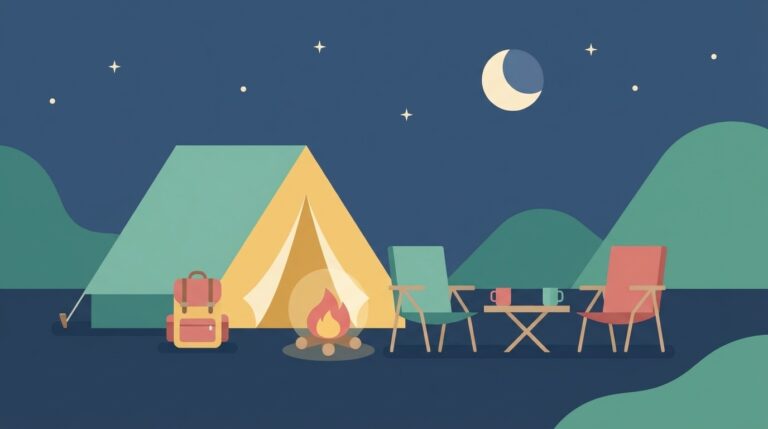
Picture this: You’re watching an episode of Hospital Playlist, and the characters are sitting outside their perfectly set up tent. The campfire is crackling, a massive pot of ramyun is boiling, and they are surrounded by the most aesthetic, high-end camping chairs and lanterns. You think to yourself, ‘Wow, I want to do that.’
Fast forward to reality: You’ve just spent three hours refreshing a website to book a campsite in Gyeonggi-do (which is harder than getting K-Pop concert tickets, by the way), and your Coupang cart is overflowing with titanium mugs, mood lamps, and a $300 cooler.
Welcome to the Korean camping experience! In Korea, hobbies aren’t just activities; they are passionate lifestyles often accompanied by a serious shopping habit. If you tell a Korean friend, “My hobby is camping” using a textbook phrase, they’ll nod politely. But if you know how to talk about the gear, the struggle, and the vibe like a true insider, their eyes will light up.
Today, based on real conversations from our B1 learners who got dragged into the Korean outdoor craze, we’ll learn how to talk about your new, slightly expensive hobby like a true local.
Phase 2: Core Expressions Deep Dive
Let’s look at the three most essential expressions you need when talking about picking up a gear-heavy hobby.
1. 요즘 [캠핑 장비] 모으는 취미가 생겼어요.
- Pronunciation: yojeum [caemping jangbi] moeuneun chwimiga saenggyeosseoyo. [yo-jeum / cam-ping jang-bee / mo-eu-neun / chee-mee-gah / saeng-gyeoss-eo-yo]
- Meaning: I’ve recently gotten into the hobby of collecting [camping gear]. (Literal: A hobby of gathering gear has appeared to me).
- K-Culture Moment: You meet a coworker at the office on Monday. Instead of the basic “주말에 뭐 했어요?” (What did you do over the weekend?), they notice you browsing outdoor brands online. You drop this line, and instantly, a bond is formed.
- Editor’s Insight: Notice the verb 생겼어요 (saenggyeosseoyo – occurred/came to be). Koreans love using this passive-feeling structure instead of “I started a hobby.” It sounds more natural, almost as if the hobby naturally found its way into your life!
- Situation Spectrum:
- Friends (Casual): ✅ (Drop the 요: 생겼어!)
- Coworkers (Semi-formal): ✅
- Boss/Elders (Formal): ✅
- 🤔 Think About It: Why does Korean use “생겼다” (it appeared/occurred) for starting a hobby? Does it reflect a cultural view that our interests are things we naturally encounter rather than forcefully choose?
2. 저 완전 장비병에 걸렸잖아요.
- Pronunciation: jeo wanjeon jangbibyeonge geollyeotjanayo. [juh / wan-jeon / jang-bee-byeong-eh / geol-lyeot-jah-na-yo]
- Meaning: I totally caught the ‘gear disease’.
- K-Culture Moment: This is the ultimate Korean hobby slang. You just bought a $500 coffee machine even though you can barely make instant coffee. Or you bought professional hiking poles for a 20-minute walk up a local hill. You say this while laughing at yourself.
- Editor’s Insight: 장비 (jangbi) means equipment, and 병 (byeong) means disease. “장비병” is a humorous, self-deprecating way to admit you are obsessed with buying the gear for a hobby before actually mastering the hobby itself.
- Situation Spectrum:
- Friends (Casual): ✅
- Coworkers (Semi-formal): ✅
- Boss/Elders (Formal): ⚠️ (Okay if you are close and making a joke about yourself, but keep the tone light!)
- 🤔 Think About It: In your culture, is there a specific word for people who buy all the professional gear before learning the skill? How does this reflect consumer culture?
3. 주말에 불멍하면서 힐링하려고요.
- Pronunciation: jumare bulmeonghamyeonseo hillingharyeogoyo. [joo-mal-eh / bul-meong-ha-myeon-seo / hil-ling-ha-ryeo-go-yo]
- Meaning: I’m planning to heal while spacing out looking at the campfire this weekend.
- K-Culture Moment: You’re explaining why you go camping. It’s not just to sleep outside; it’s to sit quietly in front of the fire, holding a hot cup of Maxim instant coffee, resetting your brain after a stressful week in Seoul.
- Editor’s Insight: 불 (bul – fire) + 멍 (meong – spacing out). The “meong” culture is huge in Korea (there’s even ‘mul-meong’ for staring at water). It perfectly captures the mental exhaustion of modern life and the need to literally empty one’s mind.
- Situation Spectrum:
- Friends (Casual): ✅
- Coworkers (Semi-formal): ✅
- Boss/Elders (Formal): ⚠️ (Some older folks might not know the slang ‘불멍’, though it’s very mainstream now).
- 🤔 Think About It: Why is “spacing out” considered a luxury and a healing activity in fast-paced Korean society?
Phase 3: Textbook vs. Real Korean
Let’s upgrade your B1 skills by replacing textbook sentences with what people actually say at a camping site or a gear shop.
[Explaining your hobby]
* 📖 Textbook Korean: 제 취미는 캠핑입니다. (My hobby is camping.)
* 🗣️ Real Korean: 요즘 차박에 완전히 빠졌어요. (I’m totally hooked on car camping these days.)
* 💡 Why the difference?: “빠졌어요” (fell into) sounds much more passionate and conversational than “~입니다.”
[Admitting you bought a lot of stuff]
* 📖 Textbook Korean: 저는 캠핑 물건을 많이 샀습니다. (I bought many camping items.)
* 🗣️ Real Korean: 이번에 캠핑 장비빨 좀 세워봤어요. (I boosted my gear-power this time.)
* 💡 Why the difference?: “장비빨” (gear-power/advantage) playfully acknowledges that your cool gear makes you look like a better camper than you actually are.
[Saying it’s hard to book a place]
* 📖 Textbook Korean: 캠핑장 예약이 어렵습니다. (Campsite reservation is difficult.)
* 🗣️ Real Korean: 주말 캠핑장 예약은 하늘의 별 따기예요. (Booking a weekend campsite is like plucking a star from the sky.)
* 💡 Why the difference?: “하늘의 별 따기” is a classic idiom used daily by Koreans to describe anything nearly impossible (like ticketing, job hunting, or real estate).
Bottom Note: For B1 learners, using idioms like “하늘의 별 따기” or mild slang like “장비병” instantly elevates your Korean from “student” to “resident.”
Phase 4: Cultural Context — K-Culture Deep Dive
4-1. Non-verbal Nunchi at the Campsite
When you go camping in Korea, Nunchi (눈치) is everything. Korean campsites are usually packed quite close together. Nunchi means keeping your voice down after 10 PM (known as 매너타임 – Manner Time). It also means taking a small plate of the extra pancakes (Jeon) or strawberries you brought to the neighboring tent. This unspoken rule of sharing food is a classic way Koreans show affection and build temporary communities!
4-2. The K-Food Connection: Why do we camp? To eat!
If you watch any K-Drama or variety show involving camping, what are they doing? Eating.
In Korea, camping isn’t about surviving in the wilderness on protein bars. It’s an outdoor culinary festival. A typical sequence goes like this:
1. Set up the tent.
2. Immediately eat Samgyeopsal (pork belly) cooked on a massive cast-iron griddle (그리들).
3. Fry rice in the leftover pork fat (K-Dessert).
4. At night, boil Ramyun while doing bul-meong.
5. Wake up and make drip coffee with a perfectly matching titanium gear set.
Koreans view eating together as the ultimate bonding experience, so naturally, the hobby of camping has evolved into a highly aesthetic, outdoor dining experience.
Phase 5: Real-Life Roleplay Scenario
Setting: Friday afternoon, 4 PM. The office break room in Gangnam. You are sipping an iced Americano. You’ve got two giant Coupang boxes next to your desk, and your Korean coworker, Min-ji, walks in.
Characters:
– YOU: A B1 Korean learner who just bought a tent, a lantern, and a portable stove. You haven’t actually gone camping yet.
– Min-ji (29): Your friendly coworker who goes camping every weekend.
Dialogue:
Min-ji: 앗, OO씨! 그 큰 박스들은 뭐예요? 설마… 캠핑 장비? 📦
(at, OOssi! geu keun bakseudeureun mwoyeyo? seolma… caemping jangbi?)
[Oh, OO! What are those huge boxes? Don’t tell me… camping gear?]
YOU: 네, 맞아요. 요즘 캠핑 장비 모으는 취미가 생겼어요.
(ne, majayo. yojeum caemping jangbi moeuneun chwimiga saenggyeosseoyo.)
[Yes, that’s right. I’ve recently gotten into the hobby of collecting camping gear.]
Min-ji: 오~ 언제부터 캠핑 다니셨어요?
(o~ eonjebuteo caemping danisyeosseoyo?)
[Oh~ Since when have you been going camping?]
YOU: 사실 아직 한 번도 안 가봤어요. 방구석 캠퍼예요. 😅
(sasil ajik han beondo an gabwasseoyo. bangguseok caempeoyeyo.)
[Actually, I haven’t been even once yet. I’m a ‘corner-of-the-room’ camper.]
Min-ji: 빵 터짐 ㅋㅋㅋ 아, 아직 시작도 안 하셨구나! 장비만 엄청 사셨네요?
(ppang teojim kkk a, ajik sijakdo an hasyeotguna! jangbiman eomcheong sasyeonneyo?)
[(Bursts out laughing) Ah, you haven’t even started yet! You just bought a ton of gear?]
🔀 Your Turn! How should you respond?
– A) 네, 저는 물건을 사는 것을 좋아합니다. (Yes, I like buying things.)
– B) 네, 맞아요. 저 완전 장비병에 걸렸잖아요! (Yes, you’re right. I totally caught the gear disease!)
– C) 내돈내산이니까 상관없어요! (I bought it with my own money so it doesn’t matter!)✅ Best Choice: B — This is the perfect moment for self-deprecating humor. By calling yourself out for having “Jangbi-byeong,” you sound incredibly natural and funny.
⚠️ Choice C Analysis: “내돈내산” (My money, my purchase) is a great slang term, but using it with “상관없어요” (It doesn’t matter/Mind your business) sounds defensive and rude to a coworker!
YOU: (Choosing B) 네, 맞아요. 저 완전 장비병에 걸렸잖아요!
Min-ji: 아 진짜 웃겨요. 그래도 주말에 불멍하면서 힐링하면 최고죠. 캠핑장 예약은 하셨어요?
(a jinjja utgyeoyo. geuraedo jumare bulmeonghamyeonseo hillinghamyeon choegojyo. caempingjang yeyageun hasyeosseoyo?)
[Ah, that’s so funny. Still, healing while looking at the fire on the weekend is the best. Did you book a campsite?]
YOU: 아니요, 캠핑장 예약하기가 하늘의 별 따기더라고요…
(aniyo, caempingjang yeyakagiga haneurui byeol ttagideoragoyo…)
[No, booking a campsite is like plucking a star from the sky…]
(🎭 Stage Direction: Min-ji pats your shoulder in deep sympathy.)
Phase 6: 10-Second Shadowing Drill
Let’s practice the most crucial sentence with the right emotion. Imagine you are playfully admitting your shopping addiction to a friend.
😆 저 완전 / 장비병 / 걸렸잖아요!
(jeo wanjeon / jang-bee-byeong / geol-lyeot-jah-na-yo!)
Shadowing Tips:
1. 완전 (wanjeon): Stretch the first syllable a bit for emphasis. (waaaan-jeon)
2. 장비병 (jangbibyeong): Say this clearly as a single block.
3. 걸렸잖아요 (geollyeotjanayo): The “~잖아요” ending means “you know!” or “as you can see!”. Say it with a slightly defensive but laughing tone.
Phase 7: K-Culture Mini Dictionary
Here are 4 words you MUST know if you want to understand Korean hobby culture:
| 한국어 | Romanization | English | Cultural Context |
|---|---|---|---|
| 장비병 | jangbibyeong | Gear Disease | The obsession with buying high-end equipment before mastering a hobby. Very common in golf, cycling, and camping. |
| 불멍 | bulmeong | Fire Spacing-out | Sitting silently in front of a campfire. Considered a primary method of mental healing in Korea. |
| 차박 | chabak | Car Camping | Sleeping in your car (usually an SUV with the seats folded down). Became a massive trend in Korea recently. |
| 매너타임 | maeneotaim | Manner Time | Usually from 10 PM to 7 AM at campsites where talking loudly or playing music is strictly prohibited. |
Phase 8: Traveler Survival Kit 🏕️
If you’re visiting Korea and want to try “Glamping” (Glamorous Camping – where everything is set up for you), you’ll need these survival phrases when talking to the site owner.
🆘 Survival Phrase #1: Asking for firewood
– 🇰🇷 “사장님, 여기 장작 팔아요?” (sajangnim, yeogi jangjak parayo?)
– 🗣️ English Guide: [sah-jang-nim, yeo-gee jang-jak pa-ra-yo?]
– 📍 Where to use: At the campsite office/store.
– 💡 Pro Tip: Call the owner “사장님” (Boss). You’ll need “장작” (firewood) to do your bul-meong!🆘 Survival Phrase #2: Asking about Manner Time
– 🇰🇷 “매너타임은 몇 시부터예요?” (maeneotaimeun myeot sibuteoyeyo?)
– 🗣️ English Guide: [mae-neo-ta-im-eun myeot shi-boo-teo-ye-yo?]
– 📍 Where to use: Checking in.
– 💡 Pro Tip: Breaking Manner Time in Korea is a huge social faux pas. Always double-check!📌 Editor’s Travel Note
– Apps: Download Naver Map or Kakao Map to find “글램핑장” (Glamping sites) near Seoul.
– Transportation: Most deep-nature campsites require a rental car (Socar is a popular app), but many glamping sites in Gapyeong or Chuncheon offer a ‘Pickup Service’ from the local subway station or mart!
Phase 9: Critical Thinking — “One Step Deeper”
Language & Power / Media vs Reality: The K-Gear Phenomenon
If you hike a small mountain in Seoul, you’ll see Koreans dressed head-to-toe in professional Himalayan expedition gear. If they go camping, they bring portable air conditioners and cinema projectors. Why do Koreans invest so heavily in the ‘gear’ of a hobby?
🧠 Think Deeper:
This phenomenon is closely tied to Korea’s fast-paced, highly visual society. In a culture where “doing it right” and presenting oneself well are deeply valued, having the right gear shows respect for the activity and the group you are doing it with. Furthermore, the rise of SNS (Instagram) has turned hobbies from private leisure into public performances. “Jangbi-byeong” isn’t just about showing off; it’s about wanting to create the perfect, aesthetic experience during the very short weekends Koreans have to escape their intense work lives.💬 Your Turn: Does your culture have a similar “gear first, skills later” mentality? Or do people prefer a minimalist approach to new hobbies? Let me know in the comments!
Phase 10: FAQ & Avoiding Mistakes
Q: Can I use “장비병” (gear disease) to describe my boss?
A: NO! 🚫 While it’s okay to use it on yourself as a joke, telling your boss “부장님 장비병 걸리셨네요” (You caught the gear disease, boss) might sound like you are judging their spending habits. Keep it self-deprecating!
Q: Do I say “캠핑을 해요” (I do camping)?
A: Usually, no. Koreans say “캠핑을 가요” (I go camping) or “캠핑을 다녀요” (I attend/regularly go camping).
❌ Common Mistake #1: Saying “제 취미는 캠핑을 하는 것입니다.” (Too robotic!)
✅ Do this instead: “저는 주말마다 캠핑 다녀요.” (I go camping every weekend.)
Phase 11: Summary & Action Items
- One-Liner Summary: To sound like a local when talking about your new hobby, use expressions like 생겼어요 (started/occurred) and don’t be afraid to playfully admit your 장비병 (gear obsession)!
Action Mission 3 Steps:
– 🥉 Bronze (Solo): Look at your own room. Point to an item you bought for a hobby and say “장비병에 걸렸어요” out loud.
– 🥈 Silver (Online): Go to a YouTube video about Korean camping (차박) and leave a comment: “불멍하면서 힐링하고 싶어요!”
– 🥇 Gold (Real Life): Next time a Korean friend asks about your weekend, tell them “요즘 [Your Hobby] 장비 모으는 취미가 생겼어요.”
K-Culture Mission:
Search “캠핑 불멍” on YouTube tonight. Play it on your TV or monitor, turn off the lights, and experience a 5-minute virtual K-healing session.
What is a hobby you recently bought too much gear for? Confess your jangbi-byeong in the comments below! 👇
Phase 12: Quiz — Interactive Challenge
1. Situational Judgment:
You finally arrived at the campsite. It’s night, and you want to sit quietly by the fire. What should you say to your friend?
– A) “불꽃놀이 하자!” (Let’s do fireworks!)
– B) “우리 불멍 때릴까?” (Shall we space out at the fire?)
– C) “장비병 걸렸어.” (I caught gear disease.)
2. True or False – K-Culture Edition:
– At a Korean campsite, it is considered perfectly fine to play loud music until 2 AM to show your passion for camping. (T/F)
3. Fill in the Blank:
– “요즘 주말마다 캠핑장 예약하는 건 정말 하늘의 ( _______ ) 따기예요.”
(Answers: 1. B / 2. False! Remember ‘Manner Time’ / 3. 별)
Frequently Asked Questions (FAQ)
Q: What does "요즘 [캠핑 장비] 모으는 취미가 생겼어요." mean in Korean and how do you pronounce it?
A: In Korean, "요즘 [캠핑 장비] 모으는 취미가 생겼어요." is pronounced [yojeum [caemping jangbi] and means: I've recently gotten into the hobby of collecting [camping gear]. (Literal: A hobby of gathering gear has appeared to me).
Q: What does "저 완전 장비병에 걸렸잖아요." mean in Korean and how do you pronounce it?
A: In Korean, "저 완전 장비병에 걸렸잖아요." is pronounced [jeo wanjeon jangbibyeonge geollyeotjanayo. [juh / wan-jeon / jang-bee-byeong-eh / geol-lyeot-jah-na-yo] and means: I totally caught the 'gear disease'.
Q: What does "주말에 불멍하면서 힐링하려고요." mean in Korean and how do you pronounce it?
A: In Korean, "주말에 불멍하면서 힐링하려고요." is pronounced [jumare bulmeonghamyeonseo hillingharyeogoyo. [joo-mal-eh / bul-meong-ha-myeon-seo / hil-ling-ha-ryeo-go-yo] and means: I'm planning to heal while spacing out looking at the campfire this weekend.







