

Phase 1: Empathy (Immersive Open)
Hello! This is your Daily Hangul Editor.
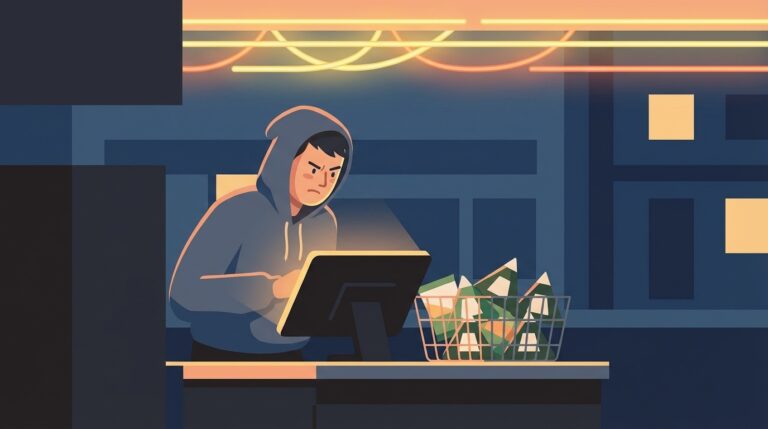
Imagine this: It’s 2:00 AM. The neon sign of a GS25 convenience store hums in the quiet Seoul night. In a K-Drama, this is the exact moment the struggling protagonist sighs, looks at the cash register, and realizes the money doesn’t add up. Or perhaps they are sitting in the corner, eating a triangle kimbap that expired exactly two minutes ago, while the soft, acoustic OST plays in the background.
Working a part-time job—an alba (아르바이트)—is practically a rite of passage for young adults in Korea. If you’ve reached an advanced (C2) level of Korean, you already know how to order coffee or ask for directions. But do you know the gritty, insider jargon of a convenience store worker? What happens when the cash drawer is short? How do you officially ‘claim’ an expired lunchbox?
If you don’t know these terms, you’re missing a massive piece of youth culture. Knowing them doesn’t just mean you understand vocabulary; it means you understand the very real pressure, hierarchy, and small joys of the Korean working class. Let’s step behind the counter and look at the real language of the pyeonuijeom (편의점).
Phase 2: Deep Dive into Core Expressions
At a C2 level, we are moving beyond simple vocabulary into highly situational jargon.
1. 시재가 안 맞다 / 빵꾸나다
- Pronunciation: sijae-ga an matda / ppang-kku-nada
- Sound-alike guide: ‘shee-jae-gah ahn mat-dah’ / ‘ppahng-koo-nah-dah’
- Meaning: Literal: “The cash on hand doesn’t fit / To get a puncture.” Real Nuance: “The register is short / I’m missing money from the till.”
- K-Culture Moment: You are handing over your shift (교대). The next worker counts the cash. It’s short 5,000 won. The sheer panic sets in because, in many strict stores, the worker has to cover the shortage with their own money (사비로 채우다). You might text your friend, “야, 오늘 포스기 빵꾸났어… 내 돈으로 메꿨다” (Hey, the register was short today… I filled it with my own money).
- Editor’s Insight: Sijae (시재) is formal retail terminology for ‘cash on hand.’ Ppangkku comes from the Japanese pronunciation of ‘puncture’ (like a flat tire) and is heavy slang for a deficit, a missing person in a schedule, or a failure.
- Situation Spectrum:
- Casual with friends/co-workers: ✅ (빵꾸났다)
- Semi-formal (Reporting to Manager): ⚠️ (시재가 안 맞습니다)
- Formal/Corporate: 🚫 (Never use 빵꾸 here)
- 🤔 Think About It: The fact that a word for a “flat tire” (빵꾸) is used for a financial deficit shows how a missing amount in the till brings everything to a grinding halt. How do you describe a register shortage in your native language? Is it a technical term or slang?
2. 폐기(를) 찍다
- Pronunciation: pegi(-reul) jjikda
- Sound-alike guide: ‘peh-gee-reul jjik-dah’
- Meaning: Literal: “To scan disposal.” Real Nuance: “To scan an item as expired/waste (often so the worker can eat it).”
- K-Culture Moment: It’s 11:30 PM. The fresh food (kimbap, dosirak) expires at midnight. The moment the clock strikes, the barcode scanner won’t let you sell it. You scan it under the “waste” category (폐기 등록). This “pegi meal” is the bittersweet perk of the alba worker. In dramas, rich characters often misunderstand why the protagonist is eating “trash,” but to the worker, it’s a free meal.
- Editor’s Insight: The verb jjikda (찍다) literally means to stamp or press, but in modern Korean, it refers to scanning a barcode, tapping a transportation card, or taking a photo. It’s a crucial high-frequency C2 verb.
- Situation Spectrum:
- Casual among workers: ✅
- Semi-formal: ✅
- Formal: ✅ (It is the official system term, though eating it is informal culture)
- 🤔 Think About It: Why is sharing an expired dosirak (lunchbox) in a drama considered an intimate or bonding moment? It signifies shared struggle and lowering one’s guard.
Phase 3: Textbook vs. Real Korean
Let’s look at how the textbook handles these situations versus how tired part-timers actually speak at 3 AM.
[Situation 1: Reporting a register shortage to the boss]
* 📖 Textbook Korean: 점장님, 현금출납기의 잔액이 3천 원 부족합니다. (Manager, the balance of the cash register is lacking 3,000 won.)
* 🗣️ Real Korean: 점장님, 포스기 시재 확인했는데 3천 원이 비어요. (Manager, I checked the POS till and it’s empty/short by 3,000 won.)
* 💡 Why the difference?: No one says ‘현금출납기’ (cash register) in real life. It’s always ‘포스기’ (POS machine). Using “비다” (to be empty) expresses a shortage much more naturally than the academic “부족하다”.
[Situation 2: Warning a customer about an expiration date]
* 📖 Textbook Korean: 손님, 이 상품은 유통기한이 지났기 때문에 판매할 수 없습니다. (Customer, because this product’s expiration date has passed, it cannot be sold.)
* 🗣️ Real Korean: 아, 손님 죄송한데 이거 (유통)시간 지나서 결제가 안 되거든요. 다른 걸로 가져오시겠어요? (Ah, customer, sorry but the time passed on this so payment won’t go through. Would you like to grab another one?)
* 💡 Why the difference?: Real retail Korean focuses on softening the blow. Instead of an aggressive “I can’t sell this,” workers blame the machine (“payment won’t go through”) to maintain a polite, non-confrontational atmosphere.
Bottom Note: For C2 learners, mastering the ‘soft rejection’—blaming systems or rules rather than saying a direct “No”—is key to achieving native-like fluency and nunchi.
Phase 4: Cultural Context — K-Culture Deep Dive
4-1. Non-Verbal Elements & Nunchi
When dealing with a sijae (till) shortage, eye contact with the jeomjangnim (manager) should be apologetic. You don’t shrug it off. In Korea, handling someone else’s business money carries a heavy weight of trust. Also, if you are eating pegi (expired food) in the store, nunchi dictates you shouldn’t eat it prominently at the main counter while customers are checking out. You eat it quickly in the back room or during very quiet hours.
4-2. The K-Drama Trope: The “Pegi” Romance
If you watch a drama involving a convenience store (like Backstreet Rookie or My Mister), the ‘pegi’ food is a recurring motif. It represents the harsh reality of the working class. But it’s also a tool for romance. When a worker saves their favorite premium dosirak (lunchbox) from being thrown away just to give it to their crush who studies late at night, it’s a profound act of care.
Critical Viewpoint: Dramas often romanticize this poverty. In reality, living off high-sodium expired convenience store food is a major health concern for many college students and part-timers in Korea. It’s not always a cute bonding moment; it’s a survival tactic.
Phase 5: Interactive Roleplay Scenario
Scenario A: The Handover Crisis
- Setting: 11:00 PM. A busy convenience store in Hongdae. The bell chimes as slightly tipsy students buy hangover drinks. It’s time for the shift change (교대 시간).
- Characters:
- YOU: An exchange student who has been working here for 3 months to practice Korean. You’re exhausted.
- Ji-hoon (23): The night shift worker. He is meticulous, a bit blunt, but generally a good guy.
Ji-hoon: (Tapping the POS screen rapidly) 형/누나, 수고하셨어요. 시재부터 맞출게요.
(Hyeong/Nuna, sugo-hasyeosseoyo. Sijae-buteo matchulgeyo.)
[Translation: Good work. I’ll check the till balance first.]
(🎭 Stage Direction: Ji-hoon counts the 10,000 won bills, then the coins. He frowns.)
Ji-hoon: 어? 이상하다. 두 번 셌는데 천 원이 비는데요? 빵꾸난 거 같은데.
(Eo? Isanghada. Du beon senneunde cheon won-i bineundeyo? Ppang-kku-nan geo gateunde.)
[Translation: Huh? Weird. I counted twice but it’s short a thousand won. I think there’s a deficit.]
🔀 Your Turn! How do you respond?
– A) “헐, 진짜요? 제가 만 원짜리 거스름돈 잘못 줬나 봐요. 제 지갑에서 천 원 채워 넣을게요.”
– B) “네? 그럴 리가 없어요. 기계가 고장 난 거 아니에요?”
– C) “아, 몰라요. 저 퇴근할 시간 지났어요. 내일 점장님한테 말하세요.”✅ Best Choice: A — In convenience store culture, a small deficit is often quietly covered by the worker’s own money (사비로 채우다) to avoid managerial scolding or complex accounting. It shows responsibility.
⚠️ Choice B Analysis: Blaming the POS machine for a 1,000 won shortage is unrealistic and sounds defensive. It’s almost always human error with change.
🚫 Choice C Analysis: This is extremely rude and violates the unwritten rule of the shift change. The incoming worker will not take responsibility for your shortage.
Scenario B: Bonus Roleplay – The Expiration Date Shift
Ji-hoon: 아 맞다, 삼각김밥 11시 반에 폐기 난 거 있죠?
(A matda, samgak-gimbap yeol-han-si ban-e pegi nan geo itjyo?)
[Translation: Ah right, there are triangle kimbaps that expired at 11:30, right?]
YOU: 네, 참치마요 두 개 폐기 찍고 저기 뒤에 빼놨어요. 하나 드실래요?
(Ne, chamchi-mayo du gae pegi jjikgo jeogi dwie ppaenwasseoyo. Hana deusillaeyo?)
[Translation: Yes, I scanned two Tuna Mayo as waste and set them aside in the back. Want to eat one?]
Ji-hoon: 오, 나이스. 잘 먹을게요! 퇴근 조심해서 하세요.
(O, naiseu. Jal meogeulgeyo! Toegeun josimhaeseo haseyo.)
[Translation: Oh, nice. I’ll eat it well! Get home safely.]
Phase 6: 10-Second Shadowing Drill
Let’s practice the crucial apology and action sentence when dealing with a register shortage. Pay attention to the pauses and polite tone.
😢 점장님, / 죄송하지만 / 포스기 시재가 / 조금 안 맞아서요. / 제가 다시 한번 / 확인해 보겠습니다.
(jeomjangnim, / joesong-hajiman / poseugi sijae-ga / jogeum an majaseoyo. / jega dasi hanbeon / hwaginhae bogetseumnida.)
Emotion Tag: Speak with a slightly lowered, apologetic tone (😢), but maintain professionalism. The slight pause after ‘안 맞아서요’ shows your hesitation before taking action.
Phase 7: K-Culture Mini-Dictionary
| Korean | Romanization | English | Context/Explanation |
|---|---|---|---|
| 시재 | sijae | Till balance / Cash on hand | The physical cash in the POS machine that must match the system’s recorded sales. |
| 폐기 | pegi | Waste / Expired goods | Refers to scanning items out of inventory due to expiration. Often becomes the worker’s meal. |
| 포스기 | poseugi | POS machine | The cash register terminal. Short for Point Of Sale. |
| 교대 | gyodae | Shift change | The critical moment where the outgoing worker proves the till is balanced to the incoming worker. |
| 진상 | jinsang | An unreasonable/rude customer | The bane of every alba worker’s existence. Someone who demands impossible things or causes a scene. |
| 대타 | daeta | Substitute worker | Asking someone to cover your shift (대타를 뛰다). |
Phase 8: Traveler Survival Kit
Even if you aren’t working behind the counter, as a traveler, you will interact with alba workers constantly. Here are C2-level survival phrases for when you’re on the customer side.
🆘 Survival Phrases for the Convenience Store
– 🇰🇷 “이거 1+1 (원플러스원) 교차 지원 되나요?” (igeo won-peulleoseu-won gyocha jiwon doenayo?)
– 🗣️ Meaning: “Can I mix and match flavors for this Buy-1-Get-1-Free deal?”
– 🇰🇷 “영수증은 버려주세요.” (yeongsujeung-eun beoryeojuseyo.)
– 🗣️ Meaning: “Please throw away the receipt.” (Saves the worker time).
– 🇰🇷 “봉투 20원이죠? 카드 결제할 때 같이 찍어주세요.” (bongtu isibwon-ijyo? kadeu gyeolje-hal ttae gachi jjigeojuseyo.)
– 🗣️ Meaning: “The bag is 20 won, right? Please scan it together when I pay with my card.”📌 Editor’s Travel Note
– Sell-by vs. Use-by: In 2024, Korea officially transitioned from 유통기한 (sell-by date) to 소비기한 (use-by date). If a product is past its 소비기한, absolutely do not eat it.
– Self-Checkout: Late at night, many convenience stores operate as unmanned stores (무인 점포). You must scan a Korean credit card or a QR code to enter the door.
Phase 9: Critical Thinking — “One Step Deeper”
Language & Power (갑질 문화와 감정 노동)
Let’s analyze the language dynamic at the checkout counter. The part-time worker, often making minimum wage, is required to use the highest level of honorifics (하십시오체/해요체) toward the customer. “봉투 필요하십니까?” (Do you need a bag?), “결제 도와드리겠습니다” (I will help you with the payment). Notice the use of “도와드리다” (to humbly offer help). The transaction isn’t just an exchange of goods; linguistically, the worker is placing themselves in a subservient position to ‘serve’ the customer.
This linguistic structure can sometimes embolden rude customers (jinsang) who exploit this power dynamic—a phenomenon known as Gapjil (갑질, abuse of power). The extreme politeness required by corporate manuals forces the worker into emotional labor, masking their own stress (like a short till or eating expired food in the back) behind a rigidly polite grammatical structure.
💬 Your Turn: In your home country, what is the language dynamic between a cashier and a customer? Is it strictly polite and formal, or casual and peer-to-peer? Share in the comments!
Phase 10: FAQ & Avoiding Misunderstandings
- Q: Can I use “빵꾸났다” to my manager to sound like a local?
- A: No! While it makes you sound fluent, it’s slang. If money is missing, it’s a serious matter. Use formal language: “시재가 안 맞습니다” (The balance doesn’t match) to show you are taking the situation seriously.
- Q: If I see a worker eating an expired lunchbox, can I ask for one?
- A: Absolutely not. Pegi food is strictly regulated. Giving it to a customer is a massive liability issue for the store, and the worker could get fired.
❌ Common Mistake #1: Saying “유통기한” instead of “소비기한” for newer products.
✅ Do This: Be aware that Korea changed its food labeling laws in 2024. While people still colloquially say yutong-gihan (sell-by), the accurate legal term you’ll see printed on packages now is sobi-gihan (use-by date). C2 learners should know this legal-linguistic shift!
Phase 11: Summary & Action Items
One-Liner Summary: Mastering convenience store jargon like ‘시재’ (till balance) and ‘폐기’ (expired waste) unlocks a deep understanding of the trials, errors, and daily life of Korean youth culture.
Action Mission 3 Steps:
– 🥉 Bronze (Solo): Look at a receipt from a Korean store (or find one online) and locate the words “판매” (Sale), “과세” (Tax), and imagine checking the POS machine.
– 🥈 Silver (Online): Write a short 3-sentence diary entry in Korean imagining you are an alba whose till was short 500 won today.
– 🥇 Gold (Real World): Next time you buy something at a Korean convenience store, listen carefully to the worker. Do they say “결제 도와드리겠습니다”? Notice the exact verbs they use when scanning items.
K-Culture Mission: Watch an episode of a Korean drama featuring a convenience store (like Itaewon Class or Backstreet Rookie). Pinpoint the exact moment they do the shift handover (교대). What is the atmosphere like?
Phase 12: Quiz — Interactive Challenge
1. Situational Judgment: You are working the night shift. You count the till and it has 10,000 won more than it should. What is the most appropriate and natural thing to say to the manager the next day?
– A) 점장님, 포스기에 만 원 빵꾸났어요.
– B) 점장님, 시재가 안 맞는데, 만 원이 남아요.
– C) 점장님, 이 만 원은 제 사비로 할게요.
2. True or False – K-Culture Edition:
As of 2024, the printed date on most Korean food products indicates the date the store must stop selling it (유통기한), not the date it goes bad.
(Answers: 1. B – “빵꾸” is for a deficit, not a surplus. You must report a surplus too! 2. False – Korea transitioned to 소비기한, which is the use-by date, meaning the date it actually goes bad.)
Frequently Asked Questions (FAQ)
Q: What does "시재가 안 맞다 / 빵꾸나다" mean in Korean and how do you pronounce it?
A: In Korean, "시재가 안 맞다 / 빵꾸나다" is pronounced [sijae-ga an matda / ppang-kku-nada] and means: Literal: "The cash on hand doesn't fit / To get a puncture." Real Nuance: "The register is short / I'm missing money from the till."
Q: What does "폐기(를) 찍다" mean in Korean and how do you pronounce it?
A: In Korean, "폐기(를) 찍다" is pronounced [pegi(-reul] and means: Literal: "To scan disposal." Real Nuance: "To scan an item as expired/waste (often so the worker can eat it)."






