안녕하세요! 매일한글 에디터입니다.
Phase 1: 공감 (The K-Culture Cold Open)
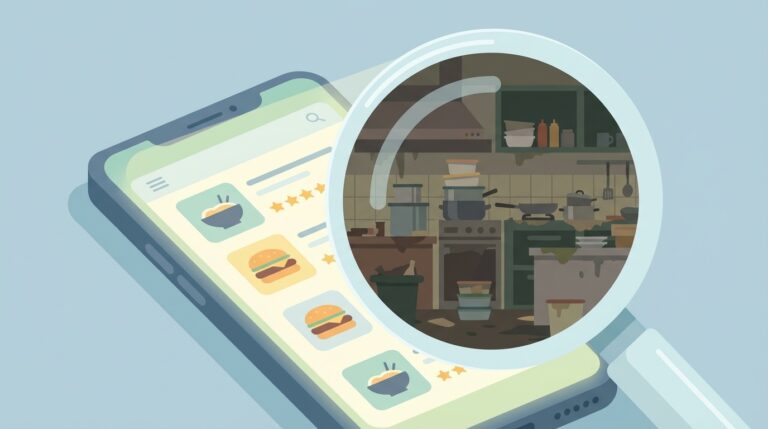
It’s 11 PM on a Friday in Seoul. You’re binge-watching the latest K-Drama, and naturally, the characters are eating mouth-watering fried chicken. You open your favorite delivery app (like Baemin or Yogiyo). The photos are gorgeous, the name is trendy—something like “Urban Chicken Boutique”—and you hit order. But have you ever tried searching for that restaurant on a map app?
Sometimes… it doesn’t exist. At least, not as a place with tables, chairs, and a storefront. Welcome to the hidden world of 공유 주방 (Ghost Kitchens / Shared Kitchens).
While the sharing economy (공유 경제) has brought incredible convenience to Korea’s delivery-obsessed culture, it has also birthed a dark side: the 위생 관리 사각지대 (hygiene management blind spot). At a C2 level, you aren’t just learning how to order food; you are navigating the complex socio-economic realities of modern Korea. Knowing how to read between the lines of a restaurant’s profile and reviews will not only save your stomach but earn you ultimate ‘Insider’ (인싸) status among your Korean friends. Let’s dive in!
Phase 2: 핵심 표현 심층 분석 (Core Expressions Deep Dive)
1. 위생 사각지대
- Pronunciation: [wisaeng sagakjidae] (Sounds like: wee-seng sah-gak-jee-deh)
- Meaning: (Literal) Hygiene blind spot / (Real nuance) Regulatory loophole where sanitary conditions go unchecked.
- K-Culture Moment: You’ll hear this on 8 PM news broadcasts reporting on ghost kitchens that operate multiple “virtual” restaurants out of one unsanitary basement.
- Editor’s Insight: 사각지대 (blind spot) is a high-level, sophisticated term you can use for any systemic issue (e.g., 복지 사각지대 – welfare blind spot). Using this proves your Korean is advanced.
- Situation Spectrum:
[🚫 절대 금지] ———— [⚠️ 주의] ———— [✅ 자유롭게]
- Casual with friends: ⚠️ (A bit too formal, but okay for intellectual debates)
- Coworkers/Semi-formal: ✅
- Formal/News/Essays: ✅
- 🤔 Think About It: Why does Korean rely heavily on spatial metaphors (like ‘blind spot’) to describe administrative or legal failures? How does your native language describe systemic oversights?
2. 배달 전문점 (or 샵인샵)
- Pronunciation: [baedal jeonmunjeom / syabin-syap] (Sounds like: beh-dal jeon-moon-jeom / shop-in-shop)
- Meaning: Delivery-only restaurant / A kitchen running multiple virtual brands.
- K-Culture Moment: When a Korean friend checks the app information tab and says, “Wait, this place sells sushi, pizza, and tteokbokki? It’s a shop-in-shop. Let’s pass.”
- Editor’s Insight: 배달 전문점 is neutral. But 샵인샵 (Shop-in-shop) in the context of delivery apps often carries a negative nuance, implying a factory-style kitchen lacking specialization and hygiene.
- Situation Spectrum:
[🚫 절대 금지] ———— [⚠️ 주의] ———— [✅ 자유롭게]
- All situations: ✅
- 🤔 Think About It: The “pali-pali” (hurry-hurry) culture demands maximum efficiency. Does hyper-efficiency always come at the cost of quality?
3. 믿고 거르다
- Pronunciation: [mitgo georeuda] (Sounds like: mit-go guh-reu-dah)
- Meaning: (Literal) Trust and filter out / (Real nuance) I don’t even need to verify; I’m skipping this one because it has a known red flag.
- K-Culture Moment: “A 5-star review but no photos and generic text? 이건 믿고 거르지 (I’m skipping this without a doubt).”
- Editor’s Insight: This is top-tier C2 internet slang. It perfectly captures the skepticism modern Koreans have towards manipulated online information.
- Situation Spectrum:
[🚫 절대 금지] ———— [⚠️ 주의] ———— [✅ 자유롭게]
- Casual with friends: ✅
- Coworkers: ✅ (Informal settings)
- Boss/Formal: 🚫 (Too slangy)
- 🤔 Think About It: In an era of “review events” where people get free cheese balls for a 5-star rating, trust is broken. How has consumer trust evolved in the digital age?
Phase 3: 교과서 vs 진짜 한국어
| 상황 | 📖 교과서 한국어 | 🗣️ 진짜 한국어 | 💡 왜 다를까? |
|---|---|---|---|
| Rating is fake | 평점이 조작되었습니다. | 여기 리뷰 알바 쓴 거 티 나요. (It’s obvious they used review bots/part-timers) | Koreans often use ‘알바’ (part-timer) as a slang for paid fake reviews. |
| Poor hygiene | 주방이 위생적이지 않아요. | 주방 상태 완전 헬(Hell)이래요. | Mixing English slang (‘Hell’) emphasizes extreme negativity informally. |
| Dodging a bad place | 이곳은 주문하지 맙시다. | 여긴 믿고 거르자. (Let’s definitely skip this one) | Efficiency in communication: ‘믿고 거르다’ instantly conveys shared skepticism. |
Bottom Note for C2 Learners: You already know the textbook grammar perfectly. The key to mastering C2 is knowing when to drop the formalities and use vivid, culturally ingrained slang like 티 나다 (to be obvious) or 믿고 거르다.
Phase 4: 문화적 맥락 — K-Culture 딥다이브
4-1. 비언어적 요소: The ‘Nunchi’ of Reviews
In Korea, reading delivery app reviews requires intense Nunchi (눈치). Because of strict defamation laws (사실적시 명예훼손 – defamation by true facts), people are legally afraid to write brutally honest bad reviews, even if the ghost kitchen was filthy.
Instead, they leave passive-aggressive hints. A 3-star review saying, “The delivery was fast, but the packaging was very… unique 😊” often means, “The food was terrible, but I don’t want to get sued.” Understanding this subtle subtext is crucial.
4-2. K-Food Connection: The “Review Event” (리뷰 이벤트) Paradox
If you order food in Korea, you will see “리뷰 이벤트” (Review Event). You promise a 5-star review, and the restaurant gives you a free soft drink or side dish. This creates an artificial utopia of 4.9-star restaurants. However, ghost kitchens with poor hygiene often aggressively use these events to bury bad reviews. Korean consumers now look for the lowest ratings first to find the “real” hygiene status of a shared kitchen.
Phase 5: 실전 롤플레이 시나리오
시나리오 A: The Office Lunch Dilemma
Setting: 11:30 AM. A sleek tech office in Pangyo. You and your Korean coworkers are scrolling through Baemin to order lunch.
Characters:
– YOU: A C2-level expat working as a project manager.
– Jimin (지민): Your coworker (28). Loves trendy food, easily swayed by photos.
– Min-woo (민우): Your senior colleague (35). A cynical foodie.
지민: 대리님, 여기 새로 생긴 마라탕 집 어때요? 별점 5점 만점이에요! 🍲
(daerinim, yeogi saero saengin maratang jip eottaeyo? byeoljeom o-jeom manjeomieyo!)
[Assistant Manager, how about this new Malatang place? It has a perfect 5-star rating!]
민우: 어디 봐봐. 에이… 상호명은 마라탕인데, 사업자 정보 보니까 피자도 팔고 국밥도 파네.
(eodi bwabwa. ei… sanghomyeong-eun maratang-inde, saeopja jeongbo bonikka pijado palgo gukbapdo pane.)
[Let me see. Ah… The name says Malatang, but looking at the business info, they sell pizza and soup too.]
YOU: 아, 전형적인 배달 전문 공유 주방이네요.
(a, jeonhyeongjeogin baedal jeonmun gongyu jubang-ineyo.)
[Ah, a typical delivery-only shared kitchen.]
민우: 맞아. 이런 샵인샵은 위생 관리가 제대로 안 되는 사각지대일 확률이 높아.
(maja. ireon syabin-syap-eun wisaeng gwalliga jedaero an doeneun sagakjidae-il hwangnyul-i nopa.)
[Right. These shop-in-shops have a high chance of being a hygiene blind spot where things aren’t managed properly.]
🔀 당신의 차례! 어떻게 대답할까요?
– A) “그래도 사진은 맛있어 보이니 한 번 시켜볼까요?” (Optimistic, but ignores Min-woo’s valid concern)
– B) “그럼 여긴 믿고 거르시죠. 제가 다른 곳 찾아볼게요.” (Shows high-level cultural understanding and vocabulary)
– C) “위생이 불량한 식당은 법적 처벌을 받아야 합니다!” (Too serious and textbook-like for picking lunch)✅ Best Choice: B — You smoothly acknowledge the hidden reality of ghost kitchens and take the initiative using natural slang.
시나리오 B: The Hotel Delivery
Setting: A hotel lobby. You ordered late-night food, but the delivery driver is confused because multiple “restaurants” share the same ghost kitchen address.
Driver: 손님, 영수증에 ‘돈까스 천국’이라고 되어있는데, 제가 픽업한 공유주방엔 그 상호가 없어서요.
(Customer, the receipt says ‘Tonkatsu Heaven’, but that name isn’t at the shared kitchen I picked this up from.)
YOU: 아, 거기 샵인샵이라 배달 앱 이름이랑 실제 간판이 다를 거예요. 사업자 번호 확인해 주시겠어요?
(Ah, it’s a shop-in-shop so the delivery app name and the actual signboard are probably different. Could you check the business registration number?)
Phase 6: 10초 섀도잉 드릴
Read this aloud to sound exactly like a skeptical local reviewing a ghost kitchen on an app!
😤 여기는 / 별점이 5점인데 / 리뷰 알바 쓴 티가 / 너~무 나요. / 여긴 / 믿고 거를게요!
(yeogineun / byeoljeomi o-jeominde / ribyu alba sseun tiga / neo~mu nayo. / yeogin / mitgo georeulgeyo!)
[This place has 5 stars, but it’s so obvious they used fake reviews. I’m definitely skipping this one!]
Phase 7: K-Culture 미니 사전
| 한국어 | Romanization | 영어 | 맥락 설명 |
|---|---|---|---|
| 별점 테러 | byeoljeom tereo | Review bombing | Leaving malicious 1-star reviews to ruin a business. |
| 샵인샵 | syabin-syap | Shop-in-shop | One physical kitchen operating multiple delivery brands (Ghost kitchen). |
| 리뷰 알바 | ribyu alba | Paid fake reviewer | People hired to artificially boost an app rating. |
| 식약처 | sigyakcheo | MFDS | Ministry of Food and Drug Safety. The agency cracking down on unhygienic shared kitchens. |
Phase 8: 여행자 서바이벌 키트
Even as a traveler, you will likely use food delivery apps to your hotel. But navigating the sharing economy’s blind spots is essential.
🆘 서바이벌 표현 #1
– 🇰🇷 “여기 매장 식사도 가능한가요?” (yeogi maejang siksado ganeunghangayo?)
– 🗣️ Meaning: Is dine-in available here?
– 📍 쓰는 곳: Calling a restaurant or checking online.
– 💡 Pro Tip: If they say “배달만 합니다” (Delivery only), check their hygiene rating (식약처 위생등급) on the app. If it’s empty, order at your own risk!📌 Editor’s Travel Note
– App Check: On Baemin, scroll to the bottom of the menu page to find ‘사업자 정보’ (Business Info). If one address has 10 different restaurant names listed, it’s a massive ghost kitchen.
– Hotel Rules: Most Korean hotels do not allow delivery drivers to go up to your room for security reasons. You must meet them in the lobby (로비에서 뵐게요 – I’ll see you in the lobby).
Phase 9: 비판적 사고 코너 — “한 발 더 깊이”
🧠 Think Deeper: 언어와 권력 (Language & Power) — The Power of the Consumer
The shared economy in Korea has given immense power to consumers via digital platforms. A single “별점 테러” (review bomb) can bankrupt a ghost kitchen. However, this power dynamic is highly regulated by Korea’s strict defamation laws. You cannot simply write “This kitchen is disgusting and filthy” without risking legal action, even if you are telling the truth. Therefore, the Korean language on review apps has evolved into a highly nuanced, polite, yet deeply sarcastic code. Consumers reclaim their power not through yelling, but through subtle linguistic hints that only other in-group members can read.
💬 Your Turn: Does your country have ghost kitchens? How do consumers in your culture expose unhygienic restaurants—are they direct and aggressive, or subtle like in Korea? Share in the comments!
Phase 10: FAQ & 오해 방지
Q: Can I use “믿고 거르다” in a formal business meeting about competitors?
A: No! It is strictly internet slang. In a formal meeting, you should say, “그 업체는 신뢰성에 문제가 있어 배제하는 것이 좋겠습니다.” (It is best to exclude that company as there are issues with reliability.)
Q: If I get food poisoning from a ghost kitchen, can I leave a furious review?
A: Be very careful. In Korea, stating facts that harm someone’s business reputation can theoretically lead to legal trouble (사실적시 명예훼손). Always contact the app’s customer service or the Ministry of Food and Drug Safety (식약처) directly rather than raging in the public review section.
❌ 흔한 실수 #1: Trusting the 5-star rating blindly.
✅ 이렇게 하세요: Sort reviews by “최신순” (Newest) or “별점 낮은 순” (Lowest rating). The real hygiene status of a ghost kitchen hides in the 1 and 2-star reviews!
Phase 11: 요약 및 액션 아이템
One-Liner Summary: Not all 5-star delivery restaurants exist in reality; mastering terms like 위생 사각지대 and 믿고 거르다 will help you navigate Korea’s complex ghost kitchen culture safely.
Action Mission:
– 🥉 Bronze: Say “여긴 믿고 거를게요” out loud 3 times with a skeptical face.
– 🥈 Silver: Next time you watch a K-Drama where they order delivery, try to guess if the place is a real restaurant or a ghost kitchen.
– 🥇 Gold: Open a Korean delivery app (or look up screenshots online). Find the ‘사업자 정보’ (Business Info) of a restaurant and check if it’s a 샵인샵!
K-Culture Mission: Go to Google Maps or Naver Map. Type in the address of a highly-rated delivery place you found online. Go to Street View. Is there a storefront, or is it a windowless basement? You’ve just become a digital detective!
Phase 12: 퀴즈 — 인터랙티브 챌린지
1. 상황 판단 문제: You are telling your friend that a specific delivery app restaurant runs 5 different brands from one dirty basement, so they shouldn’t order from it. Which sentence is the most natural for a C2 speaker?
– A) 그 식당은 위생 사각지대니까 주문을 지양합시다.
– B) 거기 샵인샵인데 위생 별로래. 믿고 거르자.
– C) 식약처에 신고해야 하는 배달 전문점입니다.
2. True or False — K-Culture 에디션:
– In Korea, writing a completely truthful but negative review about a restaurant’s dirty kitchen cannot get you into any legal trouble because it is the truth. (T / F)
(Answers: 1. B – A is too formal like a news anchor, C is too aggressive. / 2. False – Korea’s defamation laws can sometimes penalize public statements that damage a business, even if true!)
Frequently Asked Questions (FAQ)
Q: What does "위생 사각지대" mean in Korean and how do you pronounce it?
A: In Korean, "위생 사각지대" is pronounced [wisaeng sagakjidae] and means: (Literal) Hygiene blind spot / (Real nuance) Regulatory loophole where sanitary conditions go unchecked.
Q: What does "배달 전문점 (or 샵인샵)" mean in Korean and how do you pronounce it?
A: In Korean, "배달 전문점 (or 샵인샵)" is pronounced [baedal jeonmunjeom / syabin-syap] and means: Delivery-only restaurant / A kitchen running multiple virtual brands.
Q: What does "믿고 거르다" mean in Korean and how do you pronounce it?
A: In Korean, "믿고 거르다" is pronounced [mitgo georeuda] and means: (Literal) Trust and filter out / (Real nuance) I don't even need to verify; I'm skipping this one because it has a known red flag.