

Phase 1: Empathy & Opening
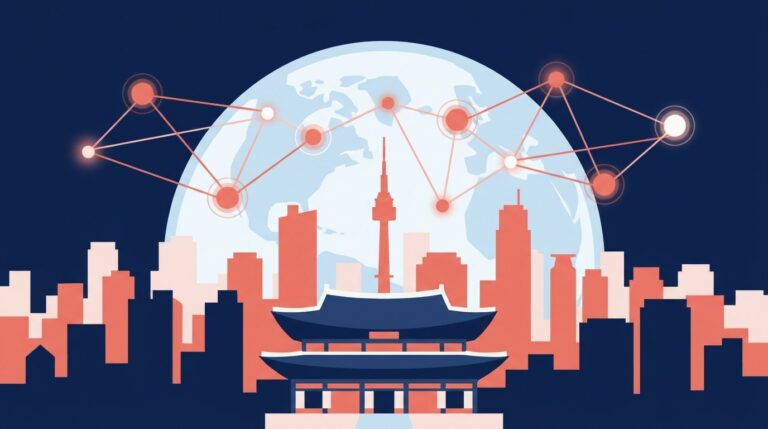
Hello! 안녕하세요! 매일한글 에디터입니다. (Annyeonghaseyo! Maeil Hangeul editeoimnida.) Watching a sharp K-drama political thriller like The Whirlwind or tuning into Korean current affairs panels can feel overwhelming when hosts suddenly debate post-Cold War unipolarity collapsing into acute global governance fragmentation. Even advanced learners hit a wall when moving from daily small talk to nuanced geopolitical blocs and emerging security norms. Drawing from real feedback by our Level 6 learners preparing for diplomacy and think-tank forums in Seoul, this guide breaks down authentic, boardroom-ready Korean so you can debate multipolarity with total confidence.
Phase 2: Deep Dive into 3 Core Expressions
1. 다극화 체제로의 재편 (Dageukhwa chejero-ui jaepyeon)
- Pronunciation: Da-geuk-hwa che-je-ro-ui jae-pyeon (Sounds like “Dah-gook-hwah cheh-jeh-roh-eh jeh-pyuhn”—keep the “geuk” short and crisp, like the middle of “good” without rounding your lips, and let “jae-pyeon” snap neatly like “jay-pyun”).
- Meaning: Literally “reorganization into a multipolar system.” In real usage, it conveys a seismic, ongoing structural shift where a single superpower no longer calls all the shots.
- K-Culture Moment: Picture a tense Blue House briefing scene in a Korean political drama like Designated Survivor: 60 Days (60일, 지정생존자). The National Security Advisor taps a glowing world map and warns the acting president that global powers are no longer following one playbook.
- Editor’s Insight: Notice the Sino-Korean noun stack here! Koreans love pairing 체제 (cheje, system/order) with 재편 (jaepyeon, realignment/restructuring) because it sounds far more analytical and policy-accurate than simple words like 변화 (byeonhwa, change). If you drop this in a seminar at Yonsei or Korea University, locals will immediately assume you read Korean editorials for breakfast!
- Situation Spectrum: Casual 🚫 | Semi-formal ⚠️ (fine in serious late-night chimaek debates with grad school friends) | Formal ✅
- 🤔 Think About It: English often relies on active verbs like “fragmenting” or “shifting,” whereas Korean academic and policy speech favors heavy Sino-Korean nominalization (-으로의 재편). How does turning a chaotic global transition into a single structured noun phrase change the emotional tone of a debate compared to your native language?
2. 규범의 파편화가 심화되다 (Gyubeom-ui papyeonhwaga simhwadoeda)
- Pronunciation: Gyu-beom-ui pa-pyeon-hwa-ga sim-hwa-doe-da (Say “Gyoo-buhm-eh pah-pyuhn-hwah-gah sheem-hwah-dweh-dah”—make “pa” punchy with a slight puff of air, like “pah!” in surprise, and glide smoothly through “doe” like “dway”).
- Meaning: Literally “the fragmentation of norms is deepening.” It describes international rules—covering pandemics, food supply chains, or space—shattering into competing, incompatible rulebooks.
- K-Culture Moment: Imagine watching a Korean current affairs roundtable like Issue Pick with the Teacher (이슈 픽 쌤과 함께), where an international law professor shakes her head while explaining why countries cannot even agree on satellite debris rules anymore.
- Editor’s Insight: 파편화 (papyeonhwa) literally evokes shards of broken glass (파편, papyeon). Pairing it with 심화되다 (simhwadoeda, to intensify/deepen) instead of 나빠지다 (nappajida, to get worse) keeps your Korean strictly objective, scholarly, and razor-sharp.
- Situation Spectrum: Casual 🚫 | Semi-formal ⚠️ | Formal ✅
- 🤔 Think About It: When Korean speakers use physical disaster or shattering metaphors (파편화) for diplomatic rules, it subtly frames global order as fragile porcelain. What metaphors does your native language use for international governance?
3. 지정학적 블록화 (Jijeonghakjeok beullokhwa)
- Pronunciation: Ji-jeong-hak-jeok beul-lok-hwa (Sounds like “Jee-juhng-hahk-juhk bool-lohk-hwah”—don’t insert a vowel between “l” and “k”; hold the “k” briefly in your throat before releasing “hwa”).
- Meaning: Literally “geopolitical bloc-ification.” It refers to nations locking themselves into rival economic, tech, and security cliques.
- K-Culture Moment: Think of an investigative documentary on KBS or a chaebol boardroom clash in Reborn Rich (재벌집 막내아들), where executives panic over semiconductor supply chains splitting cleanly down Cold War-style fault lines.
- Editor’s Insight: Adding -화 (-hwa, -ization) to loanwords like 블록 (bloc) is a classic Korean superpower at Level 6! You’ll hear 블록화 (beullokhwa) alongside 자국 우선주의 (jaguk useonjuui, nationalism/”own-country-first-ism”) in almost every Seoul economic forum.
- Situation Spectrum: Casual ⚠️ (common among news-savvy friends) | Semi-formal ✅ | Formal ✅
- 🤔 Think About It: Why do you think South Korean media talks about 블록화 with such urgency? Considering Korea’s export-driven economy sits right between major powers, how does geography shape vocabulary?
Phase 3: Textbook Korean vs. Real Korean
Situation 1: Explaining why global cooperation is breaking down
- 📖 Textbook Korean: 세계 여러 나라들이 서로 협력하지 않아서 문제가 커지고 있습니다. (Segye yeoreo naradeuri seoro hyeopryeokhaji anaseo munjega keojigo itseumnida. — Because various countries in the world don’t cooperate, the problem is growing.)
- 🗣️ Real Korean (Boardroom & Policy Wonk): 단극 체제가 흔들리면서 글로벌 거버넌스가 사실상 각자도생 국면으로 접어들었죠. (Dangeuk chejega heundeullimyeonseo geulleobeol geobeoneonseuga sasilsang gakjadosaeng gungmyeoneuro jeobeodeureotjyo. — As the unipolar system wobbles, global governance has essentially entered an “every nation for itself” phase.)
- 💡 Why the difference? Textbooks play it safe with literal verbs, while real Korean intellectuals borrow vivid four-character idioms like 각자도생 (gakjadosaeng, everyone fending for their own survival) to capture the cynical mood of multipolar competition in two seconds flat.
Situation 2: Questioning whether new international rules can actually work
- 📖 Textbook Korean: 새로운 국제 규칙을 만드는 것이 매우 어려울 것 같습니다. (Saeroun gukje gyuchigeul mandeuneun geosi maeu eoryeoul geot gatseumnida. — Making new international rules seems like it will be very difficult.)
- 🗣️ Real Korean (Sharp Panel Discussion): 이해관계가 첨예하게 엇갈리는 마당에 구속력 있는 규범 도출이 과연 가능할까요? (Ihaegwangyega cheomyehage eotgallineun madange gusongnyeok inneun gyubeom dochuri gwayeon ganeunghalkkayo? — With interests clashing so sharply, is deriving binding norms even realistic?)
- 💡 Why the difference? Real-world Korean rhetoric thrives on 첨예하게 엇갈리다 (cheomyehage eotgallida, to clash acutely) and 구속력 (gusongnyeok, binding force)—precision tools that signal you understand not just what is hard, but why enforcement fails.
Phase 4: K-Culture Deep Dive & Non-Verbal Manners
4-1. Nunchi (눈치) & Gestures in High-Level Korean Debates
In South Korea, discussing sensitive topics like geopolitical blocs or emerging security isn’t just about vocabulary—it’s a masterclass in 눈치 (nunchi, social/situational awareness). In Western seminars, interrupting passionately signals engagement. In Seoul policy roundtables, however, leaning slightly forward with calm, folded hands and waiting half a beat after a senior speaker finishes signals intellectual maturity. Avoid pointing fingers when referencing rival blocs; instead, use an open, palm-down sweeping gesture when saying 전반적인 판도 (jeonbanjeogin pando, the overall landscape), and maintain steady, respectful eye contact paired with subtle nods (고개 끄덕임, gogae kkeudeogim) while listening—even if you are about to respectfully dismantle their argument!
4-2. Cultural Code: Korean Political Thrillers & Current Affairs Panels
If you want to absorb this vocabulary effortlessly, skip basic sitcoms and dive into Korea’s golden era of geopolitical K-dramas and infotainment. Series like Netflix’s The Whirlwind (돌풍) or Designated Survivor: 60 Days (60일, 지정생존자) mirror South Korea’s real-life obsession with balancing superpowers while safeguarding national security. Equally addictive are Korean talk shows like Ssulzun (썰전) or KBS Issue Pick, where former diplomats and professors banter over coffee about space governance, pandemic treaties, and food security—proving that in Korea, heavy geopolitics is practically a national pastime!
Phase 5: Interactive Roleplay Scenario
Setting & Characters
- Setting: A sleek sunlit lounge at the Seoul Defense Dialogue in Yongsan, with espresso cups clinking softly and screens displaying global maritime and space governance panels.
- NPC: Dr. Park Ji-hoon (박지훈 박사), a sharp yet approachable senior fellow at a Seoul foreign-policy think tank wearing round wire-rimmed glasses and a charcoal blazer.
Dialogue (8 Turns)
- Dr. Park: 오늘 우주 안보와 식량 규범 세션, 생각보다 논쟁이 치열했죠? (Oneul uju anbowa singnyang gyubeom sesyeon, saenggakboda nonjaengi chiyeolhaetjyo?) — Today’s space security and food norm session had fiercer debate than expected, didn’t it?
🎭 (Sets down his espresso cup and adjusts his glasses with a wry smile.) - You: 정말 흥미로웠어요. 특히 다극화 체제로의 재편을 다룬 부분이 인상 깊었습니다. (Jeongmal heungmiroweosseoyo. Teukhi dageukhwa chejero-ui jaepyeoneul darun bubuni insang gipeotseumnida.) — It was fascinating. The part covering realignment toward a multipolar system was especially striking.
🎭 (Nods thoughtfully while holding your conference badge.) - Dr. Park: 맞아요. 냉전 이후의 단극 질서가 흔들리니까 기존 국제 기구들이 힘을 못 쓰고 있어요. (Majayo. Naengjeon ihu-ui dangeuk jilseoga heundeullinikka gijon gukje gigudeuri himeul mot sseugo isseoyo.) — Right. As the post-Cold War unipolar order shakes, existing international institutions are losing clout.
🎭 (Leans in slightly, lowering his voice to conversational seminar volume.) - You: 그러게 말이에요. 지정학적 블록화가 진행되면서 규범의 파편화가 심화되고 있는 것 같아요. (Geureoge marieyo. Jijeonghakjeok beullokhwaga jinhaengdoemyeonseo gyubeom-ui papyeonhwaga simhwadoego inneun geot gatayo.) — Tell me about it. As geopolitical bloc formation progresses, norm fragmentation seems to be intensifying.
🎭 (Gestures smoothly with an open hand to illustrate dividing lines.) - Dr. Park: 정확히 보셨네요. 팬데믹 대응이나 우주 궤도 규범처럼 국경을 초월한 신흥안보 영역일수록 타격이 크죠. (Jeonghwakhi bosyeotneyo. Paendemik daeeungina uju gwedo gyubeomcheoreom gukgyeongeul chowolhan sinheunganbo yeongyeogilsurok tagyeogi keujyo.) — Spot on. The more an emerging security domain transcends borders—like pandemic response or space orbit norms—the harder the hit.
🎭 (Raises his eyebrows appreciatively at your phrasing.) - You: 한국 같은 중견국은 이런 소다자주의 협의체에서 어떤 가교 역할을 할 수 있을까요? (Hanguk gateun junggyeongugeun ireon sodajajuui hyeobuiche-eseo eotteon gagyo yeokhareul hal su isseulkkayo?) — What bridging role could a middle power like Korea play in these minilateral frameworks?
🎭 (Tilts head inquisitively, inviting his expert take.) - Dr. Park: 아주 핵심적인 질문입니다. 거대 담론보다는 기술 표준이나 식량 공급망 같은 실용적 규범부터 엮어 내는 게 관건이죠. (Aju haeksimjeogin jilmunimnida. Geodae damnombodaneun gisul pyojunina singnyang gonggeupmang gateun siryongjeok gyubeombuteo yeokkeo naeneun ge gwangeonijyo.) — That’s the core question. Rather than grand rhetoric, weaving together practical norms—like tech standards or food supply chains—is key.
🎭 (Taps his notebook twice to emphasize “practical norms.”) - You: 듣고 보니 거버넌스 재구축의 실마리가 조금 보이네요. 귀한 통찰 감사합니다! (Deutgo boni geobeoneonseu jaeguchugui silmariga jogeum boineyo. Gwihan tongchal gamsahamnida!) — Hearing that, I can actually see a thread toward rebuilding governance. Thank you for the valuable insight!
🎭 (Offers a polite, warm bow of appreciation as the next bell chimes.)
🔀 Interactive Branching Point
Right after Turn 5, Dr. Park asks what you think of a major superpower walking away from a global food-security pact. How do you respond?
* Option A: “자국 우선주의가 심해지니 이해관계가 엇갈리는 건 불가피한 측면이 있죠.” (Jaguk useonjuuiga simhaejini ihaegwangyega eotgallineun geon bulgapihan cheungmyeoni itjyo. — “As nationalism intensifies, diverging interests have an inevitable side to them.”) -> ✅ Best! Balanced, analytical, and diplomatically neutral. You validate the friction without sounding partisan, earning Dr. Park’s full respect.
* Option B: “그 나라는 진짜 이기적이고 무책임해서 다 같이 망하는 거예요.” (Geu naraneun jinjja igijeogigo muchaegimhaeseo da gachi manghaneun geoyeyo. — “That country is so selfish and irresponsible that everyone’s doomed.”) -> 🚫 Bad! Way too emotional and colloquial (다 같이 망하다) for a diplomatic lounge. You’ll look biased and lose credibility.
* Option C: “글쎄요, 다 알아서 잘 해결되겠죠 뭐.” (Geulsseyo, da araseo jal haegyeoldoegetjyo mwo. — “Well, I’m sure it’ll all sort itself out somehow.”) -> ⚠️ Risk! Overly dismissive and casual (뭐 at the end sounds flippant). It abruptly kills a promising intellectual connection.
Phase 6: 10-Second Emotional Shadowing Drill
Read these aloud, pausing briefly at every / and matching the emotional cue!
[🧐 Analytically & urgently]
단극 체제가 흔들리면서 / 글로벌 거버넌스의 파편화가 / 전례 없이 심화되고 있습니다.
(Dangeuk chejega heundeullimyeonseo / geulleobeol geobeoneonseu-ui papyeonhwaga / jeollye eopsi simhwadoego itseumnida.)
Meaning: As the unipolar system shakes, the fragmentation of global governance is intensifying unprecedentedly.-
[🤝 Thoughtfully & diplomatically]
지정학적 블록화 속에서도 / 신흥안보 분야의 최소한의 규범만큼은 / 반드시 지켜져야 합니다.
(Jijeonghakjeok beullokhwa sogeseodo / sinheunganbo bunya-ui choesohanui gyubeommankeumeun / bandeusi jikyeojyeoya hamnida.)
Meaning: Even amid geopolitical bloc formation, at least minimal norms in emerging security domains must be upheld. -
[💡 With sudden clarity & conviction]
결국 파편화된 질서를 잇는 해법은 / 중견국들의 유연한 소다자 협력에 / 달려 있다고 봅니다.
(Gyeolguk papyeonhwadoen jilseoreul inneun haebeobeun / junggyeongukdeurui yuyeonhan sodaja hyeopryeoge / dallyeo itdago bomnida.)
Meaning: Ultimately, I believe the solution connecting a fragmented order lies in flexible minilateral cooperation among middle powers.
Phase 7: K-Culture Mini Dictionary
- 신흥안보 (Sinheunganbo) | Emerging Security | Unlike traditional military tanks-and-missiles security, this covers pandemics, food supply chains, AI, climate, and outer space—a massive buzzword in Korean think tanks and news briefs.
- 패권 경쟁 (Paegwon gyeongjaeng) | Hegemonic Rivalry | Used daily in Korean business news and drama subplots whenever superpowers clash over chips, trade routes, or global influence.
- 각자도생 (Gakjadosaeng) | Every Man/Nation for Himself | Originally a survivalist idiom, Koreans now apply it effortlessly to everything from chaotic real-estate markets to fractured multilateral treaties.
- 소다자주의 (Sodajajuui) | Minilateralism | When global UN-style 다자주의 (dajajuui, multilateralism) stalls, small, agile coalitions of 3–5 nations step in—a favorite topic in Seoul foreign-policy circles.
Phase 8: Traveler’s Survival Kit
Top 3 Survival Expressions for Policy & News Conversations
- 요즘 국제 정세가 워낙 급변해서요. (Yojeum gukje jeongsega wonak geupbyeonhaeseoyo.) — “The international situation is changing so rapidly these days.” Pro Tip: The ultimate safe icebreaker with professors, taxi drivers, or Korean colleagues when news comes up.
- 실무적인 관점에서 보면 어떨까요? (Silmujeogin gwanjeomeseo bomyeon eotteolkkayo?) — “How does it look from a practical/working-level perspective?” Pro Tip: Magic phrase to steer a theoretical debate toward concrete, real-world solutions.
- 다각도로 검토할 필요가 있겠네요. (Dagakdoro geomtohal piryoga itgenneyo.) — “It seems we need to examine this from multiple angles.” Pro Tip: Polite, diplomatic gold when you mildly disagree without causing awkwardness.
Editor’s Travel Note
Heading to Seoul for a conference at COEX, Yonsei, or the National Assembly in Yeouido? First, skip Google Maps for walking directions and [Download the Naver Map App for Real-Time Seoul Transit] so you won’t miss a panel! For nationwide forums in Daejeon (Korea’s science & space hub!) or Busan, [Book High-Speed KTX Tickets via Korail Talk] in advance. Also, grab a Climate Card (기후동행카드) or classic T-money card at any GS25 convenience store, and keep Kakao T handy for late-night rides after intense networking dinners!
Phase 9: “One Step Deeper”
There is an old Korean proverb: 고래 싸움에 새우 등 터진다 (gorae ssaume saeu deung teojinda — “when whales fight, the shrimp’s back bursts”). For generations, that metaphor captured Korea’s painful vulnerability caught between rival empires. Yet today, as unipolarity gives way to multipolarity, South Korea’s vocabulary has visibly evolved from passive survival toward 가교 역할 (gagyo yeokhal, bridging role) and 규범 형성국 (gyubeom hyeongseongguk, norm-shaping state). Language always mirrors national confidence—and mastering Level 6 diplomatic Korean lets you witness a society actively rewriting its place in a fractured world.
💬 Your Turn: Does your native language have a proverb similar to “whales fighting and a shrimp getting hurt”? Drop it in the comments and tell us how your country talks about global shifts!
Phase 10: FAQ & Common Mistakes
Q: Can I use Sino-Korean terms like 파편화 (fragmentation) in casual conversations with Korean friends?
A: You can, especially if you’re debating current events over coffee or beer, and your friends will definitely be impressed! However, using too many formal -화 (-ization) words when talking about everyday plans (like deciding where to eat) sounds stiff and comical—save them for news, essays, and serious discussions.
Q: What is the difference between 다극화 (multipolarity) and 다자주의 (multilateralism)?
A: Great catch! 다극화 (dageukhwa) describes the power structure of the world—multiple competing centers of power instead of one. 다자주의 (dajajuui) describes a diplomatic method—many countries cooperating together through shared rules and institutions.
Q: Why do Korean news anchors say 글로벌 거버넌스 (global governance) in loanwords instead of pure Korean?
A: In Korean policy and academia, English loanwords like 거버넌스 (governance), 블록 (bloc), and 네트워크 (network) carry specific international-relations precision that traditional Korean terms like 통치 (tongchi, rule) lack.
🚨 Common Mistakes Alert
- Mistake: Saying 세계가 깨지고 있어요 (Segyega kkaejigo isseoyo — “The world is breaking”) in a formal presentation.
- Correct Action: Use 글로벌 거버넌스의 파편화가 심화되고 있습니다 (Geulleobeol geobeoneonseu-ui papyeonhwaga simhwadoego itseumnida) to sound analytical rather than apocalyptic.
- Mistake: Mixing up 규범 (gyubeom, norms) and 법률 (beomnyul, statutory laws).
- Correct Action: Remember that emerging domains like outer space or AI often lack strict enforceable 법률, so use 국제 규범 (gukje gyubeom, international norms) or 연성법 (yeonseongbeop, soft law).
- Mistake: Translating “bloc” as 블럭 (beulleok) with an “eo” vowel.
- Correct Action: Standard Korean spelling for geopolitical blocs is 블록 (beullok) with ㅗ (o)—keep 블록화 (beullokhwa) crisp!
Phase 11: Action Mission & Participation
- 🥉 Bronze Mission (Solo Practice): Record a 15-second voice memo reading the 3 Phase 6 shadowing sentences aloud, focusing on smooth pauses at each
/. - 🥈 Silver Mission (Share Online): Summarize a recent international news headline in one Korean sentence using 파편화 or 다극화 and share it with your study community or on social media.
- 🥇 Gold Mission (Real-World Use): Next time you talk with a Korean tutor or friend, seamlessly drop 지정학적 블록화 (geopolitical bloc formation) or 각자도생 (every nation for itself) into a conversation about current affairs!
🎮 K-Culture Mission: Watch 10 minutes of a Korean current affairs YouTube channel (like KBS News or Syuka World / 슈카월드) with Korean subtitles on, and tally how many times you spot 다극화, 블록화, or 안보 (security)!
Phase 12: Interactive Quiz Challenge
1. Situational Judgment
At an international forum in Seoul, a Korean diplomat remarks on why nations are ignoring old space-debris guidelines and forming exclusive tech alliances. Which expression best captures her point?
A) 다극화 체제로의 재편과 규범의 파편화가 동시에 진행 중입니다.
B) 다들 그냥 기분이 상해서 각자 놀고 있네요.
C) 국제 규범이 너무 친절해서 문제가 생겼습니다.
👉 Click to reveal Answer & Explanation
Answer: A!
* A: Spot-on Level 6 expression connecting multipolar realignment (다극화 체제로의 재편) and norm fragmentation (규범의 파편화).
* B: Way too childish and casual (각자 놀고 있네요 = “playing separately”).
* C: Makes no logical sense (친절해서 = “too kind”).
2. Fill in the Blank
Complete this Korean editorial sentence with the most natural Level 6 term:
냉전 이후의 단극 질서가 흔들리면서, 세계는 다시 경쟁적인 [ ______ ] 국면으로 접어들고 있다.
(As the post-Cold War unipolar order shakes, the world is entering a phase of competitive [ ______ ] again.)
👉 Click to reveal Answer & Explanation
Answer: 지정학적 블록화 (jijeonghakjeok beullokhwa) or 패권 경쟁 (paegwon gyeongjaeng)!
Both fit seamlessly before 국면 (gungmyeon, phase/situation) to describe nations grouping into competing geopolitical blocs or vying for hegemony.
3. True / False Culture Quiz
Statement: In South Korean academic and diplomatic debates, interrupting a senior speaker mid-sentence with a loud “Actually, I disagree!” is seen as the best way to show sharp critical thinking.
👉 Click to reveal Answer & Explanation
Answer: False!
In Korean 눈치 (nunchi) etiquette, letting the speaker finish, nodding attentively, and then opening calmly with “좋은 말씀 감사합니다만, 다른 관점에서 보면…” (Thank you for the great point, though from another perspective…) earns far greater respect and influence.
🎬 Watch Our Daily Videos! (Daily Hangul Official Instagram)
Review the expressions you learned in this article with our fun daily short videos! Check out native pronunciation and real-life nuances in action.
- Instagram @dailyhangul_en







