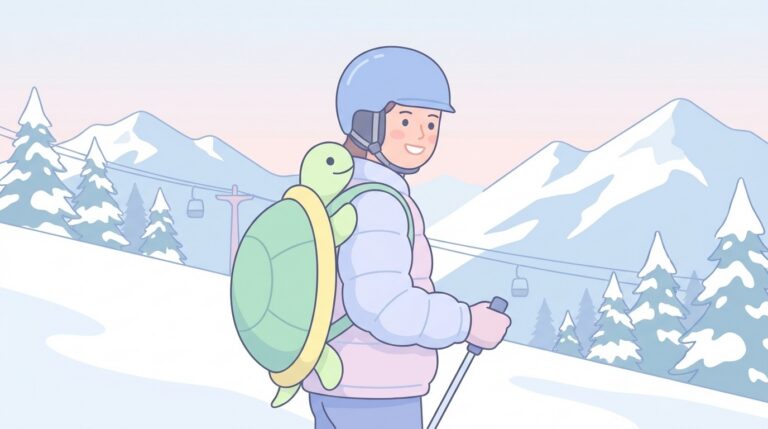
Phase 1: Why Safety Gear Is Your Best Friend on Korean Slopes
안녕하세요! 매일한글 에디터입니다. (Annyeonghaseyo! Hello, this is the Daily Hangul Editor!) Imagine stepping off the KTX in snowy Gangwon-do, ready to live out your winter K-Drama fantasy. You grab your lift pass, rent sleek skis, and think, “Do I really need a clunky helmet and padded guards?” Well, trust me—I learned the hard way during my first trip when I bruised my tailbone on an icy beginner slope! Korean instructors and rental shops take safety seriously, and knowing how to ask for protective gear is crucial. Based on real feedback from intermediate learners who struggled at busy rental counters, this guide gives you the exact Korean phrases to gear up smoothly, impress locals, and stay safe on the slopes.
Phase 2: Top 3 Key Expressions Deep Dive
1. 선택이 아니라 필수예요 (seontaegi anira pilsuyeyo)
- Pronunciation: [seon-tae-gi a-ni-ra pil-su-ye-yo] (sounds like “sun-teh-gi ah-nee-ra pill-soo-yeh-yo”—let the final ‘g’ flow smoothly into ‘i’!)
- Meaning: Literal: “It is not a choice, it is a necessity.” / Natural: “It’s a must, not an option.”
- K-Culture Moment: In winter episodes of Korean variety shows like 2 Days & 1 Night or Running Man, production staff practically chant this phrase while handing out helmets and pads before any snow or ice challenge begins.
- Editor’s Insight: The intermediate connector -이/가 아니라 (not A, but B) gives your sentence sharp, persuasive contrast. Pairing 선택 (choice) with 필수 (essential/mandatory) is a classic, super-natural Korean collocation used everywhere from ski slopes to skincare routines!
- Situation Spectrum: Casual ⚠️ (drop the -예요 to make it 필수야) | Semi-formal ✅ | Formal ✅ (use 필수입니다)
- 🤔 Think About It: In English, safety advice is often framed around personal freedom (“You really ought to wear one”). Why do you think Korean leans toward clear, collective rules using words like 필수 (mandatory)?
2. 안전 사고를 예방하려면 (anjeon sagoreul yebangharyeomyeon)
- Pronunciation: [an-jeon sa-go-reul ye-bang-ha-ryeo-myeon] (sounds like “ahn-jun sah-go-reul yeh-bahng-ha-ryuh-myun”—keep ‘ryeo’ crisp and light)
- Meaning: Literal: “If you intend to prevent safety accidents” / Natural: “To prevent injuries and stay safe”
- K-Culture Moment: Walk into any Gangwon ski resort—like Yongpyong or Vivaldi Park—and you will hear this exact phrase over the gondola speakers and at the start of every beginner-intermediate ski lesson.
- Editor’s Insight: At Level 3, mastering -(으)려면 (“in order to / if you intend to”) instantly levels up your speaking. Also, using the verb 예방하다 (to prevent beforehand) instead of 피하다 (to avoid) makes you sound thoughtful, prepared, and articulate.
- Situation Spectrum: Casual ⚠️ | Semi-formal ✅ | Formal ✅
- 🤔 Think About It: Korean pairs “safety” and “accident” together in the compound noun 안전 사고 (safety accident), whereas English just says “injury” or “accident.” How does putting the word “safety” first reflect Korea’s preventive mindset?
3. 보호대 꼭 착용하셔야 해요 (bohodae kkok chagyonghasyeoya haeyo)
- Pronunciation: [bo-ho-dae kkok cha-gyong-ha-syeo-ya hae-yo] (sounds like “bo-ho-deh kkok chah-gyung-ha-shyuh-ya heh-yo”—give kkok a firm, bouncy stop!)
- Meaning: Literal: “You must definitely wear protectors” / Natural: “Make sure you put on your protective gear.”
- K-Culture Moment: Just like coaches in sports K-Dramas such as Weightlifting Fairy Kim Bok-joo or winter survival shows, Korean ski instructors always check your head, wrists, and hips before letting you near the lift.
- Editor’s Insight: Here’s a classic Level 3 nuance: Korean uses different verbs for “to wear.” You use 입다 for jackets, 쓰다 for helmets, and 끼다 for gloves—but 착용하다 (to wear/put on gear or accessories) covers ALL protective equipment neatly! Adding the honorific -시- (착용하셔야) keeps the reminder polite rather than bossy.
- Situation Spectrum: Casual 🚫 (too formal for besties) | Semi-formal ✅ | Formal ✅
- 🤔 Think About It: English lets you “wear” everything from a hat to wrist guards. What kind of clarity does Korean gain by having specialized verbs like 착용하다?
Phase 3: Textbook Korean vs. Real Korean
Situation 1: Talking about hip pads before hitting the slopes
- 📖 교과서 한국어: 엉덩이 보호대를 착용해 주세요. (Eongdeongi bohodae-reul chagyonghae juseyo.) — Please wear the hip protector.
- 🗣️ 진짜 한국어: 엉덩이 쿠션 안 차면 엉덩방아 찧을 때 진짜 아파요! (Eongdeongi kusyeon an chamyeon eongdeongbanga jjieul ttae jinjja apayo!) — If you don’t strap on the butt cushion, it’s gonna hurt like crazy when you wipe out on your butt!
- 💡 왜 다를까?: Nobody casually calls hip pads “protectors” with friends! Locals call them 엉덩이 쿠션 (butt cushions) or 거북이 보호대 (turtle pads), use the verb 차다 (to strap/buckle on), and love the vivid idiom 엉덩방아를 찧다 (to fall flat on your behind).
Situation 2: Asking for a helmet and wrist guards at the rental counter
- 📖 교과서 한국어: 저는 헬멧과 손목 보호대가 필요합니다. (Jeoneun helmetgwa sonmok bohodaega piryohamnida.) — I need a helmet and wrist guards.
- 🗣️ 진짜 한국어: 사장님, 헬멧이랑 손목 보호대도 같이 챙겨 주세요! (Sajangnim, helmet-irang sonmok bohodaedo gachi chaenggyeo juseyo!) — Boss, please pack a helmet and wrist guards for me too!
- 💡 왜 다를까?: Calling the shop owner 사장님 (Boss) and using 챙겨 주다 (to thoughtfully pack or look out for someone) taps into Korean 정 (jeong—warm human connection). Trust me, you’re way more likely to get newer, cleaner gear this way!
Phase 4: K-Culture Deep Dive & Non-Verbal Manners
4-1. 눈치 (Nunchi) & Gestures at the Rental Shop
Gangwon ski rental shops are chaotic hubs between 8:00 AM and 9:30 AM! Good 눈치 (nunchi—social awareness) means being ready with your shoe size in millimeters (e.g., 260mm) and height/weight before stepping up. When asking for safety gear, make friendly eye contact, give a slight nod, and lightly tap the top of your head (헬멧) and your wrists (손목 보호대) to bridge any noise from clattering ski boots. Always hand over your ID or deposit card with two hands (or support your right forearm with your left hand), and never toss rental boots onto the floor—line them up neatly by the bench when you’re done!
4-2. Cultural Code: Slopes as a Runway vs. The “Turtle Pad” Pride
In K-Travel culture, a Gangwon ski trip is equal parts sport, food festival (hello, slope-side 어묵 fish cake soup!), and winter fashion runway. Inspired by K-Pop idols’ winter pictorials, skiers love coordinated neon jackets and sleek goggles. Yet Koreans are famously practical when it comes to avoiding hospital bills and missing work on Monday! That is why you will see full-grown adults proudly strapping giant plush 거북이 보호대 (turtle-shaped hip and knee pads) onto their backsides. Looking adorable and goofy beats bruising your 꼬리뼈 (tailbone) every single time!
Phase 5: Real-Life Roleplay Scenario
Setting: A bustling ski rental shop near Yongpyong Resort in Gangwon-do. Cold mountain air rushes in whenever the door opens, smelling faintly of pine trees and hot coffee.
NPC: 민준 (Min-jun), a cheerful, energetic 32-year-old Korean ski instructor who speaks quickly but flashes a reassuring thumbs-up.
- 민준: 어서 오세요! 오늘 초중급 강습 신청하신 분 맞으시죠? (Eoseo oseyo! Oneul chojunggeup gangseup sincheonghasin bun majeusijyo?) 🎭 Checks a clipboard with a bright smile while handing you a boot sizing tray.
- “Welcome! You’re the one who signed up for today’s beginner-intermediate lesson, right?”
- 나 (You): 네, 맞아요! 리프트권이랑 스키 장비는 여기서 바로 빌리면 되나요? (Ne, majayo! Ripeuteugwon-irang seuki jangbineun yeogiseo baro billimyeon doenayo?) 🎭 Adjusts your scarf and points toward the ski rack.
- “Yes, that’s me! Can I rent the lift pass and ski gear right here?”
- 민준: 네, 부츠 사이즈 말씀해 주시고요. 혹시 헬멧이랑 보호대는 챙기셨어요? (Ne, bucheu saijeu malsseumhae jusigoyo. Hoksi helmet-irang bohodaeneun chaenggisyeosseoyo?) 🎭 Taps his own wrist while scanning the safety gear shelf.
- “Yes, tell me your boot size. By any chance, did you grab a helmet and protective guards?”
- 나 (You): 아, 저는 천천히 탈 거라서 헬멧만 쓰면 되지 않을까요? (A, jeoneun cheoncheonhi tal georaseo helmetman sseumyeon doeji aneulkkayo?) 🎭 Rubs the back of your neck shyly.
- “Ah, since I’ll ski slowly, wouldn’t just wearing a helmet be enough?”
- 민준: 하하, 절대 안 돼요! 안전 사고를 예방하려면 헬멧이랑 손목·엉덩이 보호대는 선택이 아니라 필수예요! (Haha, jeoldae an dwaeyo! Anjeon sagoreul yebangharyeomyeon helmet-irang sonmok·eongdeongi bohodaeneun seontaegi anira pilsuyeyo!) 🎭 Shakes his head firmly with a playful grin, holding up a pair of wrist guards.
- “Haha, no way! To prevent injuries, a helmet plus wrist and hip guards are a must, not an option!”
- 나 (You): 아, 그렇군요! 초보자는 넘어질 때 손목을 제일 많이 다친다고 들었어요. (A, geureokunyo! Chobojaneun neomeojil ttae sonmogeul jeil mani dachindago deureosseoyo.) 🎭 Nods thoughtfully and looks at the padded hip guards.
- “Oh, I see! I heard beginners hurt their wrists the most when they fall.”
- 민준: 맞아요! 손목이랑 엉덩이 보호대 꼭 착용하셔야 해요. 제가 맞는 사이즈로 골라 드릴게요! (Majayo! Sonmogirang eongdeongi bohodae kkok chagyonghasyeoya haeyo. Jega manneun saijeuro golla deurilgeyo!) 🎭 Walks over to the rack and pulls out a fresh set of gear.
- “Exactly! You definitely need to wear wrist and hip guards. I’ll pick out the right size for you!”
- 나 (You): 감사합니다! 덕분에 안심하고 탈 수 있겠어요. (Gamsahamnida! Deokbune ansimhago tal su itgesseoyo.) 🎭 Takes the gear with two hands and smiles.
- “Thank you! Thanks to you, I can ride with peace of mind.”
🔀 Interactive Branching Point: Min-jun hands you the gear, but the wrist guard straps feel way too tight. How do you respond?
- A: 강사님, 손목 보호대가 너무 꽉 끼는데 한 치수 큰 걸로 바꿀 수 있을까요? (Gangsanim, sonmok bohodaega neomu kkwak kkineunde han chisu keun geollo bakkul su isseulkkayo?) — “Instructor, the wrist guards feel too tight; could I swap for one size up?”
- Feedback (Best! ✅): Polite, natural, and uses awesome intermediate vocabulary (꽉 끼다 = fit too tightly, 한 치수 = one size). Min-jun will happily swap them immediately!
- B: 이거 너무 작아! 다른 거 줘. (Igeo neomu jaga! Dareun geo jwo.) — “This is too small! Give me another one.”
- Feedback (Bad! 🚫): Using casual Banmal with an instructor you just met sounds rude and demanding. Always keep
-요polite endings at rental shops!
- Feedback (Bad! 🚫): Using casual Banmal with an instructor you just met sounds rude and demanding. Always keep
- C: 괜찮아요, 그냥 대충 느슨하게 풀고 탈게요. (Gwaenchanayo, geunyang daechung neuseunhage pulgo talgeyo.) — “It’s fine, I’ll just loosen it loosely and ride.”
- Feedback (Risk! ⚠️): Grammatically fine, but wearing loose guards won’t protect your wrists if you fall—and Min-jun will worry about your safety!
Phase 6: 10-Second Emotion Shadowing Drill
Read these out loud! Pause briefly at each / and match the emotion in the brackets.
- [😮 Concerned & warningly] 안전 사고를 예방하려면 / 보호대 착용은 / 선택이 아니라 필수예요! (Anjeon sagoreul yebangharyeomyeon / bohodae chagyongeun / seontaegi anira pilsuyeyo!) — To prevent injuries, wearing protective gear is a must, not an option!
- [😊 Cheerfully & energetically] 사장님! / 헬멧이랑 엉덩이 보호대도 / 같이 챙겨 주세요! (Sajangnim! / Helmet-irang eongdeongi bohodaedo / gachi chaenggyeo juseyo!) — Boss! Please pack a helmet and hip guards for me too!
- [😎 Confidently & politely] 헬멧이랑 손목 보호대 덕분에 / 오늘 스키장에서도 / 안심하고 탈 수 있겠어요. (Helmet-irang sonmok bohodae deokbune / oneul seukijangeseodo / ansimhago tal su itgesseoyo.) — Thanks to the helmet and wrist guards, I’ll be able to ski with peace of mind today too.
Phase 7: K-Culture Mini Dictionary (4 Essential Keywords)
- 리프트권 (ripeuteugwon) | Lift pass / ticket | Short for “lift ticket.” At Gangwon resorts, you’ll choose between 오전권 (morning pass), 오후권 (afternoon pass), or 야간권 (night skiing pass—a huge favorite for couples!).
- 강습 (gangseup) | Lesson / instruction | Used for hands-on sports or hobby classes like skiing, snowboarding, or swimming (e.g., 초중급 강습, beginner-intermediate lesson).
- 거북이 보호대 (geobugi bohodae) | Plush turtle hip/knee pads | Iconic green or pink stuffed turtle cushions strapped over ski pants. Cute, Instagrammable, and saves your tailbone!
- 슬로프 (seullopeu) | Ski slope / trail | Korean resorts divide slopes into 초급 (beginner), 중급 (intermediate), and 상급 (advanced). Always check the sign before riding the lift!
Phase 8: Traveler’s Survival Kit
Top 3 Survival Phrases
- 초보자가 타기 좋은 슬로프가 어디예요? (Chobojaga tagi joheun seullopeuga eodiyeyo?) — Where is a good slope for beginners? (Pro Tip: Ask this before hopping on a random lift—Korean intermediate slopes can be surprisingly steep!)
- 부츠가 발에 잘 안 맞아서 바꿔 주세요. (Bucheuga bare jal an majaseo bakkwo juseyo.) — The boots don’t fit my feet well, please swap them. (Pro Tip: Ski boots should feel snug, not painful. Say this immediately before leaving the shop!)
- 보증금이랑 신분증 필요해요? (Bojeunggeum-irang sinbunjeung piryohaeyo?) — Do you need a deposit and an ID? (Pro Tip: Outside rental shops near resorts often hold an ID card or a small deposit until you return the gear.)
Editor’s Travel Note
- Apps to Grab: Before heading to Gangwon-do, Download Naver Map for Gangwon Shuttle & Bus Routes and check out Kakao T for Booking Taxis in Ski Towns, as Google Maps doesn’t give reliable walking or transit directions in Korea.
- Payment & Warmth Tips: Most resort kiosks accept international cards and WOWPASS / T-money for lockers and snacks. Before hitting the lift, stop by a nearby convenience store (편의점) and grab 핫팩 (hot packs / hand warmers)—slip one into your ski jacket pocket so your phone battery doesn’t freeze in the Gangwon wind!
Phase 9: “One Step Deeper” (Thought Question)
In Korea, you might notice that ski instructors, bus drivers, and even rental shop owners seem unusually hands-on about your safety—sometimes checking your helmet straps as if they were your older sibling! This comes from Korea’s deeply rooted communal 챙겨주다 (looking out for one another) culture, combined with a strong modern emphasis on 안전 제일 (safety first). Rather than leaving beginners to figure things out alone, locals feel a shared responsibility to make sure you finish the day healthy and smiling. When someone insists you wear wrist and hip guards, it’s not meant to limit your freedom—it’s actually how they show they care about your trip.
💬 Your Turn: Have you ever experienced a moment where someone in Korea (or your own country) went out of their way to warn you about safety? Drop a comment below—we’d love to hear your funniest wipeout or warmest travel story!
Phase 10: FAQ & Myth-Busting
Q: Is renting a helmet actually mandatory at Gangwon ski resorts?
A: Yes! Almost all major Gangwon-do resorts (such as Yongpyong, High1, and Vivaldi Park) strictly enforce helmet policies on lifts and slopes. Even if an outside rental shop doesn’t automatically hand you one, resort staff can block you from boarding the lift without a helmet—so always ask for one!
Q: Are ski passes and gear rented together at the resort?
A: Not always! You can rent gear inside the resort’s main rental house, or at cheaper local rental shops lining the road right outside the resort (often bundled with discounted lift passes, 리프트권 패키지). Ask your instructor or check your package details before paying twice.
Q: Should I use 존댓말 (polite speech) with my ski instructor even if we are the same age?
A: Definitely yes! Unless you and the instructor become close friends and explicitly agree to switch to casual speech (말 놓다), stick to polite -아요/-어요 endings. It keeps the lesson respectful and smooth.
🚨 Common Mistakes TOP 3
- Mistake: Saying “헬멧 입어요” (wearing a helmet using 입다, the verb for shirts/pants).
- Correct Action: Use 헬멧을 쓰다 (wear on the head) or 헬멧을 착용하다 (wear safety gear).
- Mistake: Saying “필요 없어요” (“I don’t need it”) bluntly when offered protective gear.
- Correct Action: Even if you already brought your own gear, smile and say, “저는 제 거 챙겨 왔어요, 감사합니다!” (“I brought my own, thank you!”) so it doesn’t sound dismissive.
- Mistake: Ordering your boot size in US/EU sizes (e.g., “Size 9” or “42”).
- Correct Action: Korea uses millimeters (밀리, mm)! Convert your size beforehand (e.g., US Men’s 8 = 260mm, US Women’s 7 = 240mm).
Phase 11: Action Mission & Engagement
- 🥉 Bronze Mission (Solo Practice): Stand in front of a mirror, pretend you’re holding a ski helmet, and say “안전 사고를 예방하려면 보호대는 선택이 아니라 필수예요!” three times smoothly without looking at the Romanization.
- 🥈 Silver Mission (Share with Friends): Tag a friend you want to visit Gangwon-do with on social media and teach them what 거북이 보호대 (turtle hip pad) means!
- 🥇 Gold Mission (Real-World Use): Next time you visit a Korean ski resort, skating rink, or bike rental shop, ask the staff: “헬멧이랑 보호대도 같이 챙겨 주세요!”
- 🎮 K-Culture Mission: Search YouTube for a Korean vlog about 강원도 스키장 브이로그 (Gangwon ski resort vlog) and see if you can spot the words 리프트권, 슬로프, or 보호대 in the captions!
Phase 12: Interactive Quiz Challenge
Quiz 1 (Situational Judgment): You’re at a Gangwon rental shop and the staff forgot to include wrist guards with your skis. What is the most natural and polite way to ask?
A) 손목 보호대 줘!
B) 사장님, 손목 보호대도 같이 챙겨 주세요!
C) 손목 보호대는 선택이에요.
Quiz 2 (Fill in the Blank): Complete this intermediate sentence meaning “To prevent injuries, wearing a helmet is a must, not an option”:
안전 사고를 예방_______ 헬멧 착용은 선택이 _______ 필수예요.
Quiz 3 (True or False): In Korea, it’s considered super uncool for adults to wear cute padded 거북이 보호대 (turtle pads) on beginner or intermediate slopes.
Click to reveal answers & explanations!
- Quiz 1 Answer: B — Calling the owner 사장님 and saying 같이 챙겨 주세요 sounds warm, natural, and polite! Option A is rude casual speech, and Option C says wrist guards are just a choice.
- Quiz 2 Answer: 하려면 / 아니라 — Full sentence: 안전 사고를 예방하려면 헬멧 착용은 선택이 아니라 필수예요. Great job using
-(으)려면and-이/가 아니라! - Quiz 3 Answer: False! — Adults in Korea proudly wear cute plush turtle pads all the time to protect their tailbones and wrists—safety (and avoiding sore bruises!) comes first!
🎬 Watch Our Daily Videos! (Daily Hangul Official Instagram)
Review the expressions you learned in this article with our fun daily short videos! Check out native pronunciation and real-life nuances in action.
- Instagram @dailyhangul_en