

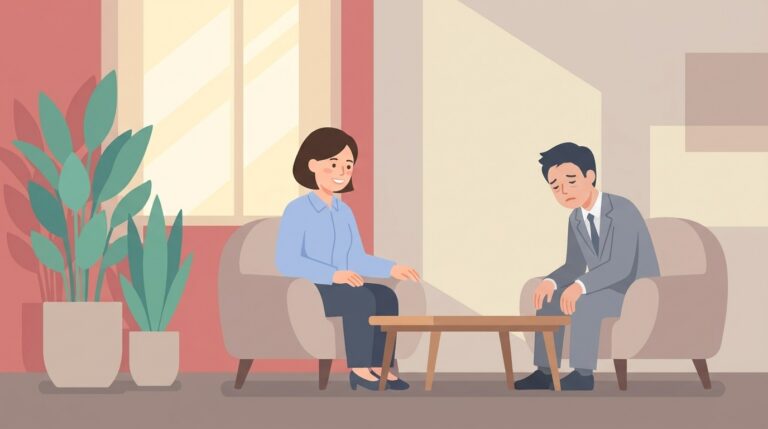
Phase 1: Empathy & Opening
안녕하세요! 매일한글 에디터입니다. (Annyeonghaseyo! Daily Hangul Editor here!) Have you ever felt like a character in Daily Dose of Sunshine or My Mister, staring at the ceiling at 3 AM while work pressure makes your heart pound? When insomnia and chest tightness linger for months, visiting a Korean psychiatric clinic can feel intimidating—even at an intermediate level. Based on real learner feedback from expats in Seoul, knowing the right nuanced phrases helps you feel genuinely heard. Let’s take a deep breath and prepare for your first consultation together!
Phase 2: Deep Dive into 3 Key Expressions
1. 가슴이 두근거리다 (gaseumi dugeungeorida)
- Pronunciation: gaseumi dugeungeorida (Sounds like “gah-seu-mee doo-geun-guh-ree-dah,” where “dugeun” mimics the steady thump-thump of a racing heart)
- Meaning: Literally “my chest is thumping” vs. Actual Nuance: Describes heart palpitations or a fluttering chest. Depending on context, it means romantic butterflies or physical anxiety—in a clinic, it clearly communicates anxious palpitations.
- K-Culture Moment: Think of scenes in the hit K-Drama Daily Dose of Sunshine (정신병동에도 아침이 와요), where overwhelmed office workers grip their chests in a quiet hallway as a panic wave hits.
- Editor’s Insight: Intermediate learners often say
심장이 빨리 뛰어요(simjangi ppalli ttwieoyo – My heart beats fast), which sounds like you just ran a marathon.두근거리다(dugeungeorida) specifically captures that uneasy, pounding sensation doctors look for when assessing anxiety.- Situation Spectrum: Casual ✅ (
가슴이 자꾸 두근거려– gaseumi jakku dugeungeoryeo) / Semi-formal ✅ (가슴이 두근거려요– gaseumi dugeungeoryeoyo) / Formal ✅ (가슴이 두근거립니다– gaseumi dugeungeorimnida)- 🤔 Think About It: Korean relies heavily on mimetic sound words (
두근두근– dugeundugeun) even in serious medical consultations. How does your native language describe physical sensations of anxiety?2. 잠을 설친 지 꽤 됐어요 (jameul seolchin ji kkwae dwaesseoyo)
- Pronunciation: jameul seolchin ji kkwae dwaesseoyo (Sounds like “jah-meul suhl-chin jee kkweh dweh-ssuh-yoh,” with a crisp, tense “kkweh” like the “qu” in “quake”)
- Meaning: Literally “it has become quite a while since I disturbed my sleep” vs. Actual Nuance: “I’ve been sleeping very poorly for quite a while now.”
잠을 설치다(jameul seolchida) specifically means tossing, turning, and getting fragmented, unrefreshing sleep.- K-Culture Moment: In Misaeng (미생), exhausted corporate employees sigh this phrase over morning iced Americanos after pulling stressful weeks with restless nights.
- Editor’s Insight: Combining
잠을 설치다with-(으)ㄴ 지 꽤 되다(it’s been quite a while since…) immediately signals to your psychiatrist that your sleep disturbance is chronic, rather than just one bad night.- Situation Spectrum: Casual ✅ (
잠을 설친 지 꽤 됐어– jameul seolchin ji kkwae dwaesseo) / Semi-formal ✅ (잠을 설친 지 꽤 됐어요– jameul seolchin ji kkwae dwaesseoyo) / Formal ⚠️ (Switch ending to됐습니다– dwaetseumnida)- 🤔 Think About It: Korean makes a sharp distinction between not being able to fall asleep (
잠이 안 오다– jami an oda) and getting broken, restless sleep (잠을 설치다). Does your language capture that difference in a single verb?3. 업무 압박감 때문에 버거워요 (eommu apbakgam ttaemune beogeowoyo)
- Pronunciation: eommu apbakgam ttaemune beogeowoyo (Sounds like “uhm-moo ahp-bahk-gahm tteh-moo-neh buh-guh-wuh-yoh”—notice how
업무blends smoothly into “uhm-moo”)- Meaning: Literally “because of work pressure, it is heavy to handle” vs. Actual Nuance: “I feel overwhelmed because of the pressure at work.”
버겁다(beogeopda) conveys mental and emotional overload—feeling like a burden exceeds your capacity—without sounding complaining.- K-Culture Moment: Mirrors late-night office scenes in Agency (대행사) or Work Later, Drink Now (술꾼도시여자들), where relentless deadlines push characters toward burnout.
- Editor’s Insight: Moving from basic
힘들어요(himdeureoyo – It’s hard) to버거워요(beogeowoyo – It’s overwhelming/too much to bear) is a hallmark Level 4 upgrade. It communicates psychological strain clearly and maturely.- Situation Spectrum: Casual ⚠️ (
버거워– beogeowo) / Semi-formal ✅ (버거워요– beogeowoyo) / Formal ✅ (버겁습니다– beogeopseumnida)- 🤔 Think About It: In Korea’s fast-paced work culture, admitting something feels
버겁다carries quiet honesty and vulnerability. How do workplace norms in your country shape how openly people talk about burnout?
Phase 3: Textbook Korean vs. Real Korean
Situation 1: Explaining Chronic Stress & Mental Exhaustion
- 📖 교과서 한국어 (Textbook Korean): 저는 최근에 스트레스를 많이 받아서 불안합니다. (Jeoneun choegeune seuteureseureul mani badaseo buranhamnida. – Recently, I received a lot of stress so I am anxious.)
- 🗣️ 진짜 한국어 (Real Korean): 요새 일 때문에 신경을 너무 썼더니 마음이 편치 않아요. (Yosae il ttaemune singyeongeul neomu sseotteoni maeumi pyeonchi anayo. – Lately I’ve been stressing so much over work that I don’t feel at ease.)
- 💡 왜 다를까? (Why is it different?): Natives rarely just announce “I am anxious” robotically. Instead, they use
신경을 쓰다(to spend mental energy/worry) paired with the softer phrasing마음이 편치 않다(one’s mind isn’t at ease) to express ongoing emotional tension naturally.
Situation 2: Asking About Medication Side Effects
- 📖 교과서 한국어 (Textbook Korean): 이 약을 먹으면 졸립습니까? (I yageul meogeumyeon jollipseumnikka? – If I take this medicine, am I sleepy?)
- 🗣️ 진짜 한국어 (Real Korean): 혹시 이 약 먹으면 낮에 몽롱하거나 졸릴까요? (Hoksi i yak meogeumyeon naje mongnonghageona jollilkkayo? – By any chance, if I take this medicine, might I feel groggy or sleepy during the day?)
- 💡 왜 다를까? (Why is it different?): Starting with
혹시(by any chance) and ending with-ㄹ까요?softens a question to a doctor politely, while몽롱하다(mongnonghada – groggy/brain-fogged) accurately describes daytime drowsiness from sleep or anxiety medication.
Phase 4: K-Culture Deep Dive & Non-Verbal Manners
4-1. Nunchi (눈치) & Gestures
When you step into a Korean 정신건강의학과 (jeongsinganganguihakgwa – Department of Mental Health), clinics are intentionally quiet, private, and calming. Give a gentle nod and say 안녕하세요 (Annyeonghaseyo – Hello) as you sit down. If you get nervous and forget a word, placing your hand lightly over your chest when saying 가슴이 두근거려요 (gaseumi dugeungeoryeoyo – My heart palpitates) bridges the gap immediately. Also, Korean doctors truly appreciate it if you jot down a brief timeline of your symptoms on your phone (메모 – memo) and politely show it—this shows thoughtful preparation rather than poor Korean!
4-2. Cultural Code Analysis: From Stigma to Ma-eum Care
If you watched Daily Dose of Sunshine (정신병동에도 아침이 와요) or It’s Okay to Not Be Okay (사이코지만 괜찮아), you saw how deeply Korea is reshaping its view of mental health. Years ago, clinics were called 정신과 (psychiatry), which carried heavy stigma. Korea officially renamed the field 정신건강의학과 (Department of Mental Health Medicine) to reflect holistic care. Today, young professionals in Seoul casually call them 마음 클리닉 (ma-eum keullinik – mind clinics), openly seeking help for 번아웃 (burnout) and sleep disorders—and under Korean medical law, your records remain strictly confidential.
Phase 5: Real-Life Roleplay Scenario
Setting: A serene, softly lit 정신건강의학과 consultation room in Seoul with gentle instrumental music playing outside.
Characters:
* Dr. Han (한 선생님): A warm, observant psychiatrist in her late 30s.
* Alex (알렉스): An intermediate Korean learner working in marketing, exhausted from months of overtime.
- Dr. Han: 어서 오세요, 알렉스 씨. 초진이시네요. 오늘 어떤 일로 오셨어요? (Eoseo oseyo, Allekeu ssi. Chojinisineyo. Oneul eotteon illo osyeosseoyo? – Welcome, Alex. I see it’s your first visit. What brings you in today?)
🎭 Dr. Han gestures kindly toward the chair and looks up from the tablet with a calm smile. - Alex: 안녕하세요, 선생님. 최근 몇 달간 업무 압박감 때문에 너무 버거워서요. (Annyeonghaseyo, seonsaengnim. Choegeun myeoch dalgan eommu apbakgam ttaemune neomu beogeowoseoyo. – Hello, Doctor. Over the past few months, I’ve felt so overwhelmed by work pressure.)
🎭 Alex sits down, clasps both hands on their lap, and lets out a small, tired sigh. - Dr. Han: 그러셨군요. 구체적으로 몸이나 마음에 어떤 증상이 나타나나요? (Geureosyeotgunyo. Guchejeogeuro momina maeume eotteon jeungsangi natananayo? – I see. Specifically, what symptoms are showing up physically or emotionally?)
🎭 Dr. Han leans in attentively, nodding slowly to encourage Alex. - Alex: 밤에 잠을 설친 지 꽤 됐어요. 그리고 이유 없이 가슴이 자꾸 두근거려요. (Bame jameul seolchin ji kkwae dwaesseoyo. Geurigo iyu eopsi gaseumi jakku dugeungeoryeoyo. – It’s been quite a while since I’ve slept properly at night. And my heart keeps racing for no reason.)
🎭 Alex places a hand lightly against their chest to show the uncomfortable pounding. - Dr. Han: 잠드는 것 자체가 힘드신가요, 아니면 자다가 중간에 자주 깨시나요? (Jamdeuneun geot jachega himdeusingayo, animyeon jadaga junggane jaju kkaesinayo? – Is it hard to fall asleep in the first place, or do you wake up frequently in the middle of sleeping?)
🎭 Dr. Han takes brief notes while keeping warm, steady eye contact. - Alex: 누우면 회사 생각이 꼬리를 물어서 잠들기까지 한두 시간은 걸려요. (Nuumyeon hoesa saenggagi kkorireul mureoseo jamdeulgikkaji handu siganeun geollyeoyo. – When I lie down, thoughts about work keep piling up one after another, so it takes one or two hours just to fall asleep.)
🎭 Alex rubs their temples slightly, looking visibly drained. - Dr. Han: 그동안 많이 지치셨겠어요. 생활 습관 교정과 함께 가벼운 약물 치료를 병행해 볼까요? (Geudongan mani jichisyeotgesseoyo. Saenghwal seupkwan gyojeonggwa hamkke gabyeoun yangmul chiryoreul byeonghaenghae bolkkayo? – You must have been exhausted all this time. Shall we try combining lifestyle adjustments with a mild medication treatment?)
🎭 Dr. Han speaks in a soothing, reassuring tone. - Alex: 네, 좋아요. 혹시 약을 먹으면 낮에 몽롱하거나 업무에 지장이 있을까요? (Ne, joayo. Hoksi yageul meogeumyeon naje mongnonghageona eommue jijangi isseulkkayo? – Yes, sounds good. By any chance, if I take the medicine, will I feel groggy during the day or have it interfere with work?)
🎭 Alex tilts their head slightly, looking curious yet relieved.
🔀 Interactive Branching Point
Dr. Han asks you a follow-up question: “혹시 이런 불안감이 생길 때 특별히 더 심해지는 상황이 있나요?” (Hoksi ireon burangami saenggil ttae teukbyeolhi deo simhaejineun sanghwangi innayo? – Are there any specific situations where this anxiety gets noticeably worse?) How do you respond?
- Option A: “네, 상사한테 연락이 오거나 마감 기한이 다가올 때마다 숨이 가빠지는 것 같아요.” (Ne, sangsahante yeollagi ogeona magam gihani dagaol ttaemada sumi gappajineun geot gatayo. – Yes, whenever my boss contacts me or a deadline approaches, I feel short of breath.)
- Feedback (🏆 Best): Clear, specific, and natural! Using
~ㄹ 때마다(whenever…) and숨이 가빠지다(feel short of breath) gives your doctor exact clinical triggers.
- Feedback (🏆 Best): Clear, specific, and natural! Using
- Option B: “그냥 다 싫어요. 회사 가기 싫고 아무것도 하기 싫어요.” (Geunyang da sireoyo. Hoesa gagi silko amugeotdo hagi sireoyo. – I just hate everything. I hate going to work and don’t want to do anything.)
- Feedback (⚠️ Risk): While honest about burnout (
무기력감– lethargy), it sounds a bit abrupt in a first consultation. Adding요즘 너무 지쳐서...(Because I’m so exhausted lately…) softens the tone and helps the doctor gauge depression vs. anxiety.
- Feedback (⚠️ Risk): While honest about burnout (
- Option C: “아뇨, 저는 괜찮아요. 그냥 잠만 좀 자면 다 나을 거예요.” (Anyo, jeoneun gwaenchanayo. Geunyang jamman jom jamyeon da naeul geoyeyo. – No, I’m fine. If I just sleep a little, everything will be cured.)
- Feedback (🚫 Bad): Classic “I’m fine” habit! Minimizing your symptoms during a consultation makes it harder for the doctor to prescribe the right care. Remember, this room is your safe space to be honest.
Phase 6: 10-Second Emotional Shadowing Drill
Practice these out loud with the pauses (/) and emotional cues to build natural rhythm!
- [😟 Exhausted and honest]
요즘 일 때문에 / 너무 버거워서 / 잠을 설친 지 꽤 됐어요.
(Yojeum il ttaemune / neomu beogeowoseo / jameul seolchin ji kkwae dwaesseoyo. – Lately I’m so overwhelmed by work that I’ve been sleeping poorly for quite a while.) - [😰 Anxious and vulnerable]
특별한 이유도 없는데 / 자꾸 가슴이 두근거리고 / 마음이 편치 않아요.
(Teukbyeolhan iyudo eomneunde / jakku gaseumi dugeungeorigo / maeumi pyeonchi anayo. – Even without a special reason, my heart keeps pounding and I don’t feel at ease.) - [😌 Hopeful and polite]
선생님 말씀 들으니까 / 조금 안심이 되네요. / 처방해 주신 대로 해 볼게요.
(Seonsaengnim malsseum deureunikka / jogeum ansimi doeneyo. / Cheobanghae jusin daero hae bolgeyo. – Hearing what you said makes me feel a bit relieved. I’ll try following what you prescribed.)
Phase 7: K-Culture Mini Dictionary (4 Key Words)
- 초진 (chojin) | First-time medical visit | Essential at any clinic reception desk! Simply say
초진이에요(Chojinieyo – It’s my first visit) when handing over your ID so staff give you the intake questionnaire (문진표– munjinpyo). - 불면증 (bulmyeonjeung) | Insomnia | Used both casually among coworkers (
나 요즘 불면증인가 봐– I think I have insomnia lately) and formally in clinical diagnoses. - 번아웃 (beonaut) | Burnout | A super common loanword in Korean offices, variety shows, and counseling sessions (
번아웃이 온 것 같아요– I think I’m experiencing burnout). - 처방전 (cheobangjeon) | Medical prescription | After paying at the clinic desk, you take this paper slip to a nearby
약국(yakguk – pharmacy) to receive your medication.
Phase 8: Traveler’s & Expat’s Survival Kit
Survival Phrases TOP 3
- 초진인데, 수면과 스트레스 상담받고 싶어요. (Chojininde, sumyeongwa seuteureseu sangdambatgo sipeoyo.)
- Meaning: It’s my first visit, and I’d like a consultation for sleep and stress.
- 💡 Pro Tip: Say this right at the reception desk (
접수처– jeopsucheo) if you didn’t book online.
- 진료 기록은 비공개인가요? (Jillyo girogeun bigonggaeingayo?)
- Meaning: Are my medical records confidential?
- 💡 Pro Tip: Great for peace of mind—in Korea, third parties cannot access your records without your written consent.
- 한국어에 서툴러서 천천히 말씀해 주시면 감사하겠습니다. (Hangugeoe seotulleoseo cheoncheonhi malsseumhae jusimyeon gamsahagetseumnida.)
- Meaning: My Korean isn’t fluent, so I’d appreciate it if you could speak slowly.
- 💡 Pro Tip: Doctors immediately slow down and switch to simpler vocabulary when they hear this polite request!
Editor’s Travel Note
Before heading out, use the Download Naver Map App for Clinic Search guide to search 정신건강의학과 (psychiatry) or 심리상담센터 (counseling center) near your neighborhood—you can filter by clinics open late on weekdays (야간진료 – yaganjillyo) so you don’t have to miss work! For an effortless ride when you’re feeling drained, Check Kakao T App for Easy Clinic Transit to hail a taxi straight to the building. Don’t forget to bring your Alien Registration Card (ARC / 외국인등록증) or passport; if you have Korean National Health Insurance (건강보험 – geongangboheom), a first consultation typically costs only around 15,000 to 30,000 KRW. Pay at the clinic desk (수납 – sunap), collect your 처방전, and walk into any nearby 약국 (pharmacy) with your T-money or credit card!
Phase 9: One Step Deeper
In traditional Korean society, shaped by 우리 (uri – collective “we”) culture and 인내 (innae – quiet endurance), pushing through exhaustion without troubling others was often praised as diligence. Many people worried about 체면 (chemyeon – saving face), hesitating to admit when work or life became too heavy. Thankfully, modern Korea is rewriting that narrative, recognizing that caring for your mind (마음 챙김 – ma-eum chaenggim) is just as vital as treating a physical fever. Reaching out for help in a new language isn’t a sign of weakness—it’s an act of quiet courage and self-respect.
💬 Your Turn: How is mental health or work burnout talked about in your home country compared to Korea? Share your thoughts or your favorite comforting Korean phrase in the comments below!
Phase 10: FAQ & Common Mistakes
Q: Will visiting a psychiatric clinic in Korea go on my company record or affect my visa?
A: No! Under Korea’s Medical Service Act, psychiatric medical records are strictly protected and cannot be viewed by your employer, school, or immigration without your explicit written authorization. Even if you use National Health Insurance, your company only sees overall anonymized insurance contributions—not what clinics you visited or what diagnosis you received.
Q: Do I need a referral letter to visit a 정신건강의학과 in Korea?
A: No referral is needed for neighborhood clinics (의원 – uiwon) or mid-sized hospitals! You can walk in or book an appointment directly via phone or Naver Reservation. You only need a referral (진료의뢰서) if you choose to go straight to a massive university hospital (상급종합병원).
Q: What is the difference between a 정신건강의학과 and a 심리상담센터?
A: A 정신건강의학과 (Psychiatry Clinic) is staffed by medical doctors (의사) who can diagnose sleep/anxiety disorders, prescribe medication, and accept Korean National Health Insurance. A 심리상담센터 (Psychological Counseling Center) is staffed by licensed counselors who focus purely on talk therapy (usually 50-minute sessions) without prescribing medication and typically out-of-pocket.
🚨 Common Mistakes Alert (TOP 3)
- Using harsh slang like
정신병(mental illness stigma) or미치다(go crazy) to joke about stress -> Correct Action: Use neutral, respectful expressions like마음이 힘들어요(My mind is having a hard time) or불안 증상이 있어요(I have anxiety symptoms). - Stopping prescribed medication abruptly on your own if you feel drowsy -> Correct Action: Never quit cold turkey! Call or revisit your doctor and say
약이 저한테 좀 센 것 같아요(Yagi jeohante jom sen geot gatayo – I think the medicine is a bit strong for me) so they can safely adjust the dosage. - Only saying
잠을 못 자요(I can’t sleep) without explaining the pattern -> Correct Action: Specify how your sleep is disrupted:잠드는 데 오래 걸려요(It takes a long time to fall asleep) vs.자다가 자꾸 깨요(I keep waking up during sleep).
Phase 11: Action Mission & Engagement
- 🥉 Bronze Mission (Solo Practice): Stand in front of a mirror and read the 3 Phase 6 shadowing sentences aloud three times, focusing on slow pacing and steady breathing.
- 🥈 Silver Mission (Share & Connect): Post one new vocabulary word from today (like
버겁다or잠을 설치다) on your study Instagram or language journal with an example sentence of your own. - 🥇 Gold Mission (Real-World Action): Save a local
정신건강의학과or심리상담센터in your Naver Map favorites just in case you or a friend ever need it, and practice describing your stress levels for 1 minute with a Korean tutor or language exchange partner. - 🎮 K-Culture Mission: Listen to IU’s healing ballad Knees (무릎 – Mureup), which softly portrays sleepless nights and longing for rest, or watch an episode of Daily Dose of Sunshine to spot words like
불면증(insomnia) and불안(anxiety) in real dialogue!
Phase 12: Interactive Quiz Challenge
Quiz 1 (Situational Judgment): You’ve been tossing and turning every night for two months and waking up exhausted. What is the most natural intermediate Korean phrase to tell your doctor?
A) 어제 잠을 안 잤어요. (Eoje jameul an jasseoyo.)
B) 잠을 설친 지 꽤 됐어요. (Jameul seolchin ji kkwae dwaesseoyo.)
C) 이 약 먹으면 몽롱할까요? (I yak meogeumyeon mongnonghalkkayo?)
Click to see Answer & Explanation
Answer: B) 잠을 설친 지 꽤 됐어요.
* Why B is right: 잠을 설치다 means sleeping fitfully/poorly, and -(으)ㄴ 지 꽤 됐어요 indicates it has been happening for quite a while.
* Why A & C are wrong: A means “I didn’t sleep yesterday” (just one night), and C is a question about medication side effects!
Quiz 2 (Fill in the Blank): Complete the sentence expressing work overload:
“최근 업무 압박감 때문에 너무 ( _________ ).” (Choegeun eommu apbakgam ttaemune neomu _________.)
Click to see Answer & Explanation
Answer: 버거워요 (beogeowoyo) (or 버거워요 / 힘들어요, though 버거워요 is today’s key Level 4 nuance!)
* Explanation: 버겁다 conjugates to 버거워요 (ㅂ-irregular conjugation!) and accurately captures feeling overwhelmed by pressure.
Quiz 3 (True / False Culture Quiz):
“In Korea, if you visit a 정신건강의학과 using your National Health Insurance, your employer is automatically notified about your diagnosis.”
Click to see Answer & Explanation
Answer: False!
* Explanation: Medical confidentiality laws strictly protect your psychiatric records. Neither your company nor immigration can view your diagnosis or clinic visits without your explicit consent.
🎬 Watch Our Daily Videos! (Daily Hangul Official Instagram)
Review the expressions you learned in this article with our fun daily short videos! Check out native pronunciation and real-life nuances in action.
- Instagram @dailyhangul_en







