

Phase 1: Empathy (The K-Culture Cold Open)
Hello everyone! I’m the Chief Editor of Daily Hangul, your veteran Korean tutor and local culture navigator.
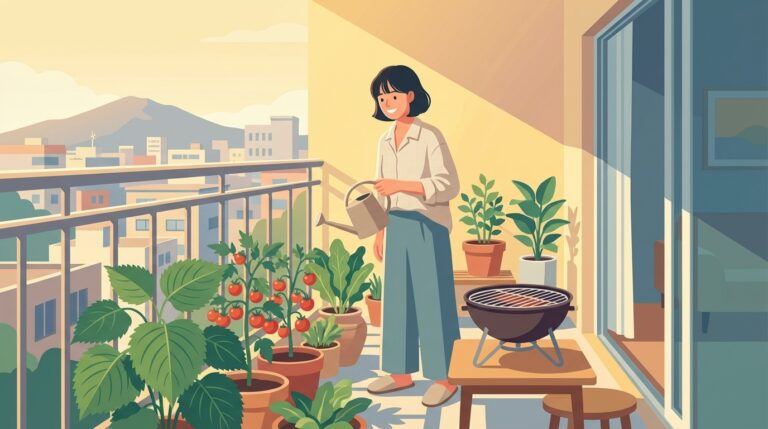
Picture this: You are watching a slice-of-life K-Drama. The main character, exhausted from a long day at a Seoul corporate office, steps out onto their tiny apartment balcony. Instead of looking at the city lights, they gently touch the leaves of a cherry tomato plant and whisper, ‘You grew a lot today, didn’t you?’ This isn’t just a quirky character trait; it’s a massive cultural trend in Korea right now known as 반려식물 (Pet Plants) and 베란다 텃밭 (Balcony Vegetable Gardens).
If you live in Korea, or if you’re just fascinated by how Koreans blend modern city life with an agrarian soul, you’ll notice that every other millennial or Gen Z is calling themselves a 식집사 (Plant Butler). But when they talk about their plants, they don’t use textbook biology terms. They use highly specific, almost emotional vocabulary to describe their green companions.
If you want to move beyond intermediate Korean and truly sound like a C1 advanced speaker, mastering this ‘Planterior’ and ‘Home-farming’ vocabulary is your secret weapon. Let’s dig in!
Phase 2: Core Expressions Deep Dive
Here are the top 3 advanced expressions you must know to talk about your balcony garden like a true Korean 식집사.
1. 과습 주의하셔야 해요.
- Pronunciation: [Gwaseup juuihasyeoya haeyo.] / Gwa-seup sounds like ‘Gwa’ (as in guacamole) + ‘seup’ (like a quick ‘soup’ with a tight mouth).
- Meaning: Literal: You must be careful of over-humidity. / Real Nuance: Watch out for overwatering!
- K-Culture Moment: You are at a trendy plant cafe in Yeonnam-dong buying a Monstera. The barista/florist hands it to you with a serious look, as if handing over a baby, and gives you this stern warning.
- Editor’s Insight: 과습 (過濕) is a Hanja word meaning ‘excessive moisture.’ Korean plant lovers use this constantly because the humid Korean summer (장마철 – monsoon season) combined with overzealous watering is the #1 plant killer. It feels much more professional than simply saying ‘물을 너무 많이 주지 마세요’ (Don’t give it too much water).
- Situation Spectrum:
[🚫 Avoid] ———— [⚠️ Careful] ———— [✅ Free to use]
- Close Friends (Casual): ✅ (과습 조심해!)
- Co-workers (Semi-formal): ✅ (과습 주의하세요.)
- Elders/Boss (Formal): ✅ (과습을 주의하셔야 합니다.)
- 🤔 Think About It: Notice how Korean uses a noun-heavy Hanja word (과습) to describe a state, rather than a verb phrase. How does your native language handle technical but common hobby terms?
2. 햇빛이 부족해서 애들이 웃자랐어요.
- Pronunciation: [Haetbichi bujokaeseo aedeuri utjarasseoyo.] / Ut sounds like the ‘oot’ in ‘foot’, ja-ra-sseo-yo flows with a soft ‘j’.
- Meaning: Literal: Because sunlight is lacking, the kids grew upwards. / Real Nuance: My plants got leggy/spindly because they didn’t get enough sun.
- K-Culture Moment: You post a picture of your sad, droopy basil on a Korean gardening forum. Within minutes, a veteran Korean grandma replies with this exact diagnosis.
- Editor’s Insight: 웃자라다 is a beautifully descriptive pure Korean verb. It means a plant grew too fast upwards without thickening its stem, usually reaching desperately for light. Also, notice the word 애들 (kids/children)? Koreans personify their plants affectionately.
- Situation Spectrum:
[🚫 Avoid] ———— [⚠️ Careful] ———— [✅ Free to use]
- Close Friends (Casual): ✅
- Co-workers (Semi-formal): ✅
- Elders/Boss (Formal): ⚠️ (Use ‘식물이’ instead of ‘애들이’ with elders to maintain formality.)
- 🤔 Think About It: Calling plants ‘kids’ (애들) shows the deep emotional attachment Koreans have to living things. Does your culture treat house plants as decorative objects or living companions?
3. 상추가 너무 빽빽하면 좀 솎아내야 돼요.
- Pronunciation: [Sangchuga neomu ppaekppaekamyeon jom sokkanaeya dwaeyo.] / Sok-ka-nae-da – the ‘sok’ requires a sharp, tense ‘s’ sound.
- Meaning: Literal: If the lettuce is too dense, you must pick some out. / Real Nuance: You need to thin out the lettuce seedlings if they are overcrowded.
- K-Culture Moment: It’s late spring. You are growing lettuce on your veranda specifically for your weekend K-BBQ (Samgyeopsal) night. Your neighbor peeks over and gives you this vital farming advice.
- Editor’s Insight: 솎아내다 is an advanced C1 verb meaning ‘to thin out’. It’s an essential agricultural term that urban farmers use. If you use this word, Koreans will immediately assume you are a serious gardener.
- Situation Spectrum:
[🚫 Avoid] ———— [⚠️ Careful] ———— [✅ Free to use]
- Close Friends (Casual): ✅
- Co-workers (Semi-formal): ✅
- Elders/Boss (Formal): ✅
- 🤔 Think About It: ‘솎아내다’ is also used metaphorically in Korean business or sports to mean ‘weeding out’ weak candidates. Isn’t it fascinating how agricultural roots permeate modern Korean corporate jargon?
Phase 3: Textbook vs. Real Korean
Let’s see how textbook Korean evolves into real-life urban farming slang.
| Situation | 📖 Textbook Korean | 🗣️ Real Korean | 💡 Why the difference? |
|---|---|---|---|
| Warning about overwatering | 물을 너무 많이 주면 안 됩니다. | 과습 오면 훅 가요. (If overwatering hits, it dies instantly.) | ‘훅 가다’ is a common slang for dying/failing suddenly, reflecting dramatic emotional investment. |
| Describing a dying plant | 식물이 시들고 있습니다. | 애가 영 기운이 없네요. (The kid has absolutely no energy.) | Personification! Plants are treated as living family members (반려식물). |
| Checking soil moisture | 흙이 말랐을 때 물을 주세요. | 겉흙 마르면 듬뿍 주세요. (When the topsoil dries, give it plenty.) | ‘겉흙’ (topsoil) is a specific compound word preferred for precision and brevity. |
| Repotting a plant | 다른 화분으로 옮겨 심어야 합니다. | 분갈이 해줄 때가 됐네요. (It’s time to do a repotting for it.) | ‘분갈이’ is the dedicated noun, and ‘-해 주다’ implies doing a favor for the plant. |
Bottom Note for C1 Learners: Using words like ‘훅 가다’ might be a bit casual for the office, but in a hobby club or online community, it makes you sound like a native insider!
Phase 4: Cultural Context — K-Culture Deep Dive
4-1. Non-verbal Communication: The ‘Nunchi’ of Plant Care
When buying plants at a traditional Korean flower market, 눈치 (Nunchi) is key. Don’t touch the leaves roughly! Korean vendors treat their seedlings like delicate merchandise. Always point and ask, ‘사장님, 이거 만져봐도 돼요?’ (Boss, may I touch this?). Also, handing over cash or your card with two hands to the older vendor shows immense respect and might even earn you some free fertilizer!
4-2. K-Food Connection: The “Ssam” (쌈) Obsession
Why do Koreans bother growing vegetables on tiny 15th-floor balconies? It all comes down to K-Food, specifically K-BBQ and Ssam (쌈) culture.
Wrapping grilled pork belly (삼겹살) in fresh lettuce (상추) and perilla leaves (깻잎) is a national pastime. During times when vegetable prices soar (often called 금추 – gold lettuce), Koreans resort to ‘홈파밍’ (Home-farming). Growing your own Ssam leaves isn’t just a hobby; it’s a practical, delicious defense mechanism against inflation, and an excuse to host a BBQ party at home. In dramas, you’ll often see families gathering around a portable gas stove on newspapers laid out on the living room floor, proudly eating the lettuce they grew themselves.
Phase 5: Real-Life Roleplay Scenario
Setting: Saturday morning, 10:00 AM. You are at the bustling Yangjae Flower Market (양재꽃시장) in Seoul. The air is thick with the smell of damp earth and blooming orchids. You want to start a balcony garden to grow your own K-BBQ leaves.
Characters:
– YOU: An expat who loves Korean BBQ and wants to grow perilla leaves (깻잎).
– 사장님 (Vendor): A 60-something Korean man in an apron, tending to trays of vibrant green seedlings.
Dialogue:
YOU: 사장님, 안녕하세요! 베란다에서 키울 깻잎 모종 좀 찾고 있는데요. 🌱
(Sajangnim, annyeonghaseyo! Berandaeseo kiul kkaennip mojong jom chatgo inneundeyo.)
[Hello Boss! I’m looking for some perilla leaf seedlings to grow on my balcony.]
사장님: 아이고, 깻잎? 깻잎은 햇빛 쨍쨍한 데서 키워야 향이 진하게 나는데. 베란다에 볕은 잘 들고?
(Aigo, kkaennip? Kkaennipeun haetbit jjaengjjaenghan deseo kiwoya hyangi jinhage naneunde. Beranda-e byeoteun jal deulgo?)
[Oh, perilla leaves? They need to be grown in blazing sunlight to get a strong aroma. Does your balcony get good sun?]
YOU: 네, 남향이라서 오후 내내 해가 잘 들어요.
(Ne, namhyangiraseo ohu naenae haega jal deureoyo.)
[Yes, it’s south-facing, so it gets great sun all afternoon.]
사장님: 그럼 딱이네! 자, 이거 가져가. 물은 겉흙 마르면 흠뻑 주고, 절대 과습하면 안 돼.
(Geureom ttagine! Ja, igeo gajyeoga. Mureun geot-heuk mareumyeon heumppeok jugo, jeoldae gwaseuphamyeon an dwae.)
[That’s perfect then! Here, take this. Give it plenty of water when the topsoil dries, and absolutely do not overwater it.]
YOU: 아, 과습 주의요! 명심할게요. 이거 세 개 주시고요, 혹시 상추 모종도 있어요?
(Ah, gwaseup ju-uiyo! Myeongsimhalgeyo. Igeo se gae jusigoyo, hoksi sangchu mojongdo isseoyo?)
[Ah, watch out for overwatering! I’ll keep that in mind. I’ll take three of these, and by any chance do you have lettuce seedlings too?]
사장님: 상추는 저기 있지. 고기 구워 먹으려고?
(Sangchuneun jeogi itji. Gogi guwo meogeuryeogo?)
[Lettuce is over there. Planning to roast some meat?]
(🎭 Stage Direction: The vendor chuckles knowingly, wiping his hands on his apron.)
🔀 Your Turn! How should you respond?
– A) “네, 그냥 먹으려고요.” (Yes, just to eat.)
– B) “당연하죠! 오늘 저녁에 삼겹살 파티 할 거예요!” (Of course! I’m having a pork belly party tonight!)
– C) “아닙니다. 식물 관찰용입니다.” (No. It is for botanical observation.)✅ Best Choice: B — Korean vendors love enthusiastic customers who share their food culture. Mentioning ‘Samgyeopsal’ creates an instant bond. He might even throw in an extra seedling for free (덤)!
⚠️ Choice A & C Analysis: A is too dry and abrupt. C sounds like a robot or a scientist, completely missing the cultural joy of balcony farming.
YOU: 당연하죠! 오늘 저녁에 삼겹살 파티 할 거예요! 🥩
(Dangyeonhajyo! Oneul jeonyeoge samgyeopsal pati hal geoyeyo!)
[Of course! I’m having a pork belly party tonight!]
사장님: 하하! 외국인 아가씨(총각)가 먹을 줄 아네. 자, 이거 상추 두 개는 내가 서비스(덤)로 줄게. 맛있게 싸 먹어!
(Haha! Waegugin agassi(chonggak)ga meogeul jul ane. Ja, igeo sangchu du gaeneun naega seobiseu(deom)ro julge. Masitge ssa meogeo!)
[Haha! This foreigner knows how to eat. Here, I’ll give you these two lettuce seedlings as a bonus. Enjoy wrapping your meat!]
YOU: 우와, 진짜요? 대박! 사장님 최고! 잘 키워서 맛있게 먹겠습니다!
(Uwa, jinjjayo? Daebak! Sajangnim choego! Jal kiwoseo masitge meokgetseumnida!)
[Wow, really? Awesome! You’re the best, Boss! I’ll grow them well and eat them deliciously!]
Phase 6: 10-Second Shadowing Drill
Speak like a native by mastering the rhythm and intonation. Follow the slashes for natural pauses!
😤 단호하게 (Firmly):
베란다 텃밭은 / 통풍이 / 제~~~일 중요해요!
(Beranda teotbateun / tongpung-i / je~~~il jung-yohaeyo!)
[For a balcony garden, ventilation is the mooost important!]
🥺 걱정스럽게 (Worriedly):
햇빛을 못 봐서 / 애들이 너무 / 웃자랐어요 ㅠㅠ
(Haetbicheul mot bwaseo / aedeuri neomu / utjarasseoyo ㅠㅠ)
[Because they couldn’t get sunlight, the kids grew too leggy ㅠㅠ]
Phase 7: K-Culture Mini Dictionary
| Korean | Romanization | English | Contextual Meaning |
|---|---|---|---|
| 반려식물 | ballyeosikmul | Pet Plant | Treating plants like companion animals. A huge trend among single households in Korea. |
| 식집사 | sikjipsa | Plant Butler | A portmanteau of 식물 (plant) and 집사 (butler). Someone who devotes themselves to serving their plants. |
| 홈파밍 | hompaming | Home Farming | Growing edible crops at home. Exploded in popularity during times of high vegetable inflation. |
| 파테크 | patekeu | Green Onion Tech | 파 (green onion) + 재테크 (investment). When green onion prices skyrocket, Koreans grow their own to save money, calling it a financial investment. |
| 덤 (서비스) | deom (seobiseu) | Extra / On the house | A cultural concept of generosity in traditional Korean markets. Vendors often give an extra item for free if they like you! |
Phase 8: Traveler Survival Kit
Even if you’re just traveling to Korea, visiting massive botanical cafes (식물 카페) or the Yangjae Flower Market is a trendy itinerary item. Here are survival phrases you’ll need!
🆘 Survival Phrases for Plant Markets/Cafes
– 🇰🇷 “이거 키우기 까다롭나요?” (igeo kiugi kkadaronnayo?) – Is this difficult/fussy to grow?
– 🇰🇷 “햇빛은 얼마나 봐야 돼요?” (haetbicheun eolmana bwaya dwaeyo?) – How much sunlight does it need?
– 🇰🇷 “기내 반입이 되나요?” (ginae banibi doenayo?) – Can I bring this on the airplane? (Crucial for tourists!)📌 Editor’s Travel Note
– Customs Warning: Do NOT try to bring live soil or plants back to your home country without checking strict agricultural customs laws. If you want a souvenir, buy cute gardening tools (like the famous Korean ‘Ho-mi’ 호미) or ceramic pots instead!
– Navigation: Use Naver Map or KakaoMap to find ‘양재꽃시장’ (Yangjae Flower Market) or search ‘식물원 카페’ (Botanical garden cafe) in the suburbs of Seoul like Paju or Gimpo.
Phase 9: Critical Thinking — “One Step Deeper”
🧠 Think Deeper: Food & Identity (음식과 정체성)
Have you ever wondered why Koreans, living in some of the most densely populated, hyper-modern high-rise apartments in the world, insist on growing dirt-filled pots of perilla leaves on their tiny balconies? It reflects a profound connection between Food and Identity. The Korean ‘Ssam’ (쌈 – wrapping meat in leaves) culture isn’t just a recipe; it’s a communal ritual. Wrapping a Ssam and placing it in someone else’s mouth is an ultimate gesture of affection. By bringing the ‘farm’ into the concrete jungle, modern Koreans maintain a psychological tether to their agricultural roots and the communal warmth (정 – Jeong) associated with sharing a meal. The balcony garden is a miniature sanctuary of tradition.💬 Your Turn: In your culture, is there a specific food or ingredient people try to grow at home to preserve their cultural identity? Share it in the comments!
Phase 10: FAQ & Avoiding Misunderstandings
Q: Can I use the word ‘애들’ (kids) for my plants when talking to my boss?
A: Maybe, but be careful. While calling plants ‘애들’ is common, it’s a very casual, affectionate term. If you are in a formal setting or speaking to a strict boss, it’s safer to use ‘식물들’ (plants) or ‘화분들’ (pots) to maintain a professional tone.
Q: In Korea, can I ask for ‘덤’ (freebies) at a supermarket?
A: No! The culture of ‘덤’ (giving extras) only applies to traditional markets (시장), street vendors, or small independent shops. If you ask for ‘덤’ at an E-Mart or a convenience store, the cashier will be extremely confused.
❌ Common Mistake #1: Confusing 흙 (Dirt/Soil) with 거름 (Fertilizer/Manure)
✅ How to fix it: If you ask a vendor for “거름 좀 주세요” thinking you are asking for potting soil, they might hand you a stinky bag of manure! Always ask for 분갈이 흙 (repotting soil) or 배양토 (potting mix) for indoor plants.
Phase 11: Summary & Action Items
One-Liner Summary: To be a true Korean 식집사 (Plant Butler), master terms like 과습 (overwatering) and 웃자라다 (leggy growth), and don’t forget to grow your own K-BBQ leaves!
Action Mission 3 Steps:
– 🥉 Bronze (Solo): Look at your houseplant right now and tell it out loud: “과습 조심할게!” (I’ll be careful not to overwater you!)
– 🥈 Silver (Online): Find a Korean planterior YouTube video (search: 베란다 텃밭 브이로그) and leave a comment: “식물들이 너무 예뻐요!”
– 🥇 Gold (Real World): Visit a Korean market or a local nursery, point to a plant, and ask: “이거 키우기 까다롭나요?”
K-Culture Mission:
Tonight, buy some pork belly (Samgyeopsal) and fresh lettuce. Try eating it Korean style (Ssam) while visualizing your future Korean balcony garden!
Phase 12: Quiz — Interactive Challenge
1. Situational Judgment:
Your Korean friend’s monstera plant is dying because they watered it every single day. What is the most natural, C1-level thing to say?
A) 물을 너무 많이 줬네요. (You gave too much water.)
B) 헐, 완전 과습이에요! (Omg, it’s total overwatering!)
C) 식물이 아픕니다. (The plant is sick.)
Answer: B. It uses the exact insider vocabulary (과습) and natural conversational tone.
2. Fill in the Blank:
Korean: 햇빛이 부족해서 식물이 위로 길게 ( _______ ) ㅠㅠ
English: Because of the lack of sunlight, the plant grew leggy ㅠㅠ
Answer: 웃자랐어요 (from 웃자라다)
3. True or False – K-Culture Edition:
It is common and socially acceptable to ask for a little bit of “서비스” or “덤” (freebie) when buying multiple items at a modern corporate supermarket like Lotte Mart. (T/F)
Answer: False. This is only acceptable in traditional markets or small mom-and-pop stores.
4. Roleplay Consequence:
In Phase 5, if you had chosen Option C (“It is for botanical observation”) to the vendor, what would likely happen?
Answer: The vendor would probably awkwardly nod and hand you the plants in silence. You’d completely miss out on the cultural bonding over K-Food, and definitely wouldn’t get the free lettuce (덤)!
Frequently Asked Questions (FAQ)
Q: What does "과습 주의하셔야 해요." mean in Korean and how do you pronounce it?
A: In Korean, "과습 주의하셔야 해요." is pronounced [Gwaseup juuihasyeoya haeyo.] and means: Literal: You must be careful of over-humidity. / Real Nuance: Watch out for overwatering!
Q: What does "햇빛이 부족해서 애들이 웃자랐어요." mean in Korean and how do you pronounce it?
A: In Korean, "햇빛이 부족해서 애들이 웃자랐어요." is pronounced [Haetbichi bujokaeseo aedeuri utjarasseoyo.] and means: Literal: Because sunlight is lacking, the kids grew upwards. / Real Nuance: My plants got leggy/spindly because they didn't get enough sun.
Q: What does "상추가 너무 빽빽하면 좀 솎아내야 돼요." mean in Korean and how do you pronounce it?
A: In Korean, "상추가 너무 빽빽하면 좀 솎아내야 돼요." is pronounced [Sangchuga neomu ppaekppaekamyeon jom sokkanaeya dwaeyo.] and means: Literal: If the lettuce is too dense, you must pick some out. / Real Nuance: You need to thin out the lettuce seedlings if they are overcrowded.







