

Phase 1: Empathy (Welcome to the “I Can’t Be Bothered” Club)
Hello! I’m your Daily Hangul Editor.
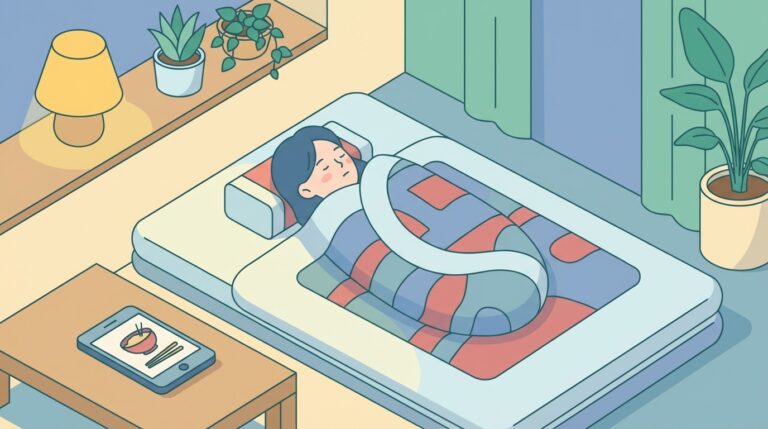
Imagine this K-Drama scene: It’s Saturday morning. The main character is lying on the living room floor wrapped in a blanket like a human burrito. Their friend calls and asks, “Are you coming out today?” The character sighs a deep, heavy sigh and says, “Ah… gwichana…”
Subtitles usually translate this as “I’m feeling lazy.” But is it really just “lazy”?
When foreign learners want to say they are having a lazy day, they often use the dictionary word 게으르다 (to be lazy). But if you tell your Korean friends, “저는 게을러요 (I am lazy),” they might look at you with concern. Why? Because in Korea’s fast-paced culture, calling yourself “lazy” can sound like a confession of a bad personality trait, rather than just a weekend mood!
Today, as your veteran tutor and local Seoul guide, I will teach you the real ways Koreans talk about being lazy. Let’s learn how to express your inner couch potato without sounding rude!
Phase 2: Core Expressions Deep Dive
Let’s look at the top 3 expressions you actually need.
1. 게을러요 (To have a lazy personality)
- Pronunciation: ge-eul-leo-yo
- (Tip: The ‘으 (eu)’ sounds like the disgusted sound you make when you step in gum! “Ugh!”)
- Meaning: I am a lazy person (Literal) / I have a lazy personality (Real nuance)
- K-Culture Moment: You usually hear this in K-Dramas when a strict mother is scolding her teenager who sleeps until 2 PM. “You are so lazy!”
- Editor’s Insight: This describes a permanent personality trait. It sounds a bit negative. If you use this about yourself at work, people might think you are a bad worker!
- Situation Spectrum:
[🚫 Never] ———— [⚠️ Be Careful] ———— [✅ Freely]
- Close Friends (Casual): ✅ (Self-deprecating joke)
- Coworkers (Semi-formal): ⚠️
- Boss/Elders (Formal): 🚫 (Never say this in a job interview!)
- 🤔 Think About It: Why is calling someone “lazy” a big insult in Korea? How does this connect to Korea’s rapid economic growth in the 1970s and 80s?
2. 귀찮아요 (To feel lazy / To not want to be bothered)
- Pronunciation: gwi-chan-a-yo
- Meaning: It’s annoying (Literal) / I can’t be bothered, I’m feeling lazy right now (Real nuance)
- K-Culture Moment: This is the ultimate Korean weekend mood. When you are hungry but cooking takes too much effort? “아, 요리하기 귀찮아요 (Ah, cooking is gwichanayo). Let’s order delivery!”
- Editor’s Insight: This is the secret weapon! It focuses on your temporary feeling or the situation, not your personality. It means “The task requires too much energy and I don’t want to do it.”
- Situation Spectrum:
[🚫 Never] ———— [⚠️ Be Careful] ———— [✅ Freely]
- Close Friends (Casual): ✅ (Used 100 times a day)
- Coworkers (Semi-formal): ⚠️ (Only with work besties)
- Boss/Elders (Formal): 🚫 (Sounds like you are complaining)
- 🤔 Think About It: Does your native language have a word that specifically means “I don’t have the energy to do this specific task right now”?
3. 집순이 / 집돌이 (Homebody)
- Pronunciation: jip-sun-i (for women) / jip-dol-i (for men)
- Meaning: House-girl / House-boy (Literal) / A person who loves staying home (Real nuance)
- K-Culture Moment: On a K-Pop idol’s V-Live (Weverse stream), fans might ask, “What are your hobbies?” and the idol replies, “I’m a total jip-sun-i, I just watch Netflix in bed.”
- Editor’s Insight: This is a very cute, positive way to say you are “lazy” about going out. It just means your home is your safe zone.
- Situation Spectrum:
[🚫 Never] ———— [⚠️ Be Careful] ———— [✅ Freely]
- Close Friends (Casual): ✅
- Coworkers (Semi-formal): ✅ (Great small talk topic!)
- Boss/Elders (Formal): ✅ (Totally safe and polite)
- 🤔 Think About It: Why do Koreans add “순이(sun-i)” or “돌이(dol-i)” to words? It’s an old-fashioned naming style that has become a cute slang suffix!
Phase 3: Textbook vs. Real Korean
| Situation | 📖 Textbook Korean | 🗣️ Real Korean | 💡 Why is it different? |
|---|---|---|---|
| Explaining your weekend | 저는 주말에 게을렀습니다. (I was lazy on the weekend) | 아, 주말에 아무것도 안 했어요. 완전 귀찮았어요. (I did nothing. I couldn’t be bothered.) | “게으르다” sounds like a confession of a sin. “귀찮다” is just a relatable weekend mood. |
| Declining an invitation | 저는 게으른 사람이라서 안 나갑니다. (I am a lazy person so I won’t go out) | 저 완전 집돌이/집순이잖아요~ 다음에 봐요! (You know I’m a total homebody~ See you next time!) | Using cute slang softens the rejection and protects everyone’s feelings (Nunchi). |
| Wanting to order food | 요리하기 싫습니다. (I dislike cooking.) | 아, 밥 하기 귀찮아. 배달 시킬까? (Ah, cooking is too much work. Should we order delivery?) | Delivery apps literally run on “Gwichanism” (the philosophy of being lazy)! |
Phase 4: Cultural Context — K-Culture Deep Dive
4-1. Non-Verbal Cues: The Art of the Heavy Sigh
When you use 귀찮아 (gwi-chan-a), the body language is 50% of the meaning. You cannot say it with a bright, energetic smile. You must drop your shoulders, let out a long sigh (“Hyu…”), and drag out the last syllable: “아… 귀찮아 (Ah… gwi-chan-a)”.
4-2. K-Food Connection: The Birth of “Baedal” (Delivery) Culture
Why is Korea’s food delivery (배달 – baedal) system so incredibly advanced? Why can you get fried chicken delivered to a park by the Han River at 1 AM?
It’s a beautiful collision of two Korean traits: 빨리빨리 (Pali-Pali / Hurry Hurry) culture and 귀차니즘 (Gwichanism / The state of being extremely bothered by everything).
After working so fast and hard all week, Koreans experience extreme Gwichanism on the weekends. We are too lazy to cook, too lazy to wash dishes, and sometimes too lazy to even sit at a table. We want amazing food, but we want it right now, without moving. Next time you use a Korean delivery app, remember: you are participating in a proud cultural tradition of being gloriously lazy!
Phase 5: Practical Roleplay Scenario
Scenario A: Monday Morning Office Chat
- Setting: Monday 9:00 AM. The office pantry room in Gangnam. You are making a cup of instant Maxim coffee.
- Characters:
- YOU: A foreign worker who spent the entire weekend doing absolutely nothing.
- Min-su (32): Your friendly Korean coworker.
Min-su: 좋은 아침이에요! 주말 잘 보냈어요? ☕️
(joeun achimieyo! jumal jal bonaesseoyo?)
[Good morning! Did you have a good weekend?]
YOU: 네! 민수 씨는요?
(ne! minsu ssineunyo?)
[Yes! How about you, Min-su?]
Min-su: 저는 친구들 만나서 한강에서 자전거 탔어요. OO씨는 뭐 했어요?
(jeoneun chingudeul mannaseo hangangeseo jajeongeo tasseoyo. OOssineun mwo haesseoyo?)
[I met friends and rode bikes at the Han River. What did you do?]
(🎭 Stage Direction: Min-su looks at you with bright, energetic eyes)
YOU: 저는 주말에 집에만 있었어요.
(jeoneun jumare jibeman isseosseoyo.)
[I just stayed home all weekend.]
Min-su: 아 진짜요? 안 답답했어요? 날씨 엄청 좋았는데!
(a jinjjayo? an dapdapaesseoyo? nalssi eomcheong joanneunde!)
[Oh really? Weren’t you feeling stuffy? The weather was so good!]
🔀 Your Turn! How should you reply?
– A) “네, 저는 게으른 사람이에요.” (Yes, I am a lazy person.)
– B) “아, 나가기 너무 귀찮았어요. 저 완전 집돌이/집순이거든요.” (Ah, it was too much of a hassle to go out. I’m a total homebody, you know.)
– C) “민수 씨가 너무 부지런하네요.” (You are too diligent, Min-su.)✅ Best Choice: B — Reason: It perfectly captures the relatable feeling of weekend laziness without making you sound like a bad employee. Min-su will definitely laugh and agree!
⚠️ Choice A Analysis: Too serious! It sounds like a deep personal flaw.
YOU (Choosing B): 아, 나가기 너무 귀찮았어요. 저 완전 집돌이/집순이거든요. 😅
(a, nagagi neomu gwichanasseoyo. jeo wanjeon jipdori/jipsunigeodeunyo.)
[Ah, going out was too much of a hassle. I’m a total homebody, you know.]
Min-su: 아하하, 맞아요. 가끔은 침대에 누워있는 게 최고죠!
(ahaha, majayo. gakkeumeun chimdaee nuwoinneun ge choegojyo!)
[Hahaha, right. Sometimes lying in bed is the best!]
Scenario B: Bonus K-Culture Roleplay (The Hotel Delivery)
- Setting: Your hotel room in Seoul. 8 PM. You walked 20,000 steps today and your feet hurt.
- Characters: YOU and your travel buddy.
Buddy: 야, 밖에서 삼겹살 먹을래?
(ya, bakkeseo samgyeopsal meogeullae?)
[Hey, wanna go out and eat pork belly?]
YOU: 아… 나 오늘 너무 많이 걸어서 나가기 귀찮아.
(a… na oneul neomu mani georeoseo nagagi gwichana.)
[Ah… I walked too much today, so I can’t be bothered to go out.]
Buddy: 그럼 어떡해? 나 배고픈데!
(geureom eotteokae? na baegopeunde!)
[Then what should we do? I’m hungry!]
YOU: 배달 앱으로 치킨 시키자!
(baedal aebeuro chikin sikija!)
[Let’s order fried chicken with a delivery app!]
Phase 6: 10-Second Shadowing Drill
Practice making your voice sound appropriately tired and cozy!
- 😩 Tired: 아~ / 오늘 진짜 / 아무것도 하기 / 귀찮아요.
(A~ / oneul jinjja / amugeotdo hagi / gwi-chan-a-yo.)
(Ah~ today really doing anything is a hassle.) -
😊 Proudly: 저는 / 완전 / 집순이(집돌이)예요!
(jeo-neun / wan-jeon / jip-sun-i(jip-dol-i)-ye-yo!)
(I am a total homebody!)
Phase 7: K-Culture Mini Dictionary
| Korean | Romanization | English | Cultural Context |
|---|---|---|---|
| 귀차니즘 | gwichanism | The philosophy of laziness | A funny internet slang word combining ‘귀찮다’ and ‘-ism’. It means you are too lazy to do anything. |
| 빨리빨리 | pali-pali | Hurry hurry | The core Korean mindset of doing things quickly. The exact opposite of being lazy! |
| 집콕 | jip-kok | Stuck at home | Slang for staying completely shut inside your house, like a hermit. |
| 배달 | baedal | Delivery | The lifesaver for all lazy days in Korea. |
Phase 8: Traveler Survival Kit 🧳
Are you having a “lazy day” during your Korea trip? Sometimes you just need a rest day at your Airbnb or hotel. Here are your survival phrases!
🆘 Survival Phrases for Lazy Travel Days
– 🇰🇷 “배달 시켜 먹을까요?” (baedal sikyeo meogeulkkayo?)
– 🗣️ Meaning: Shall we order delivery?
– 📍 Use it: When you and your friend are too tired to leave the hotel.
– 🇰🇷 “테이크아웃 할게요.” (teikeu-aut halgeyo.)
– 🗣️ Meaning: I’ll take it to go.
– 📍 Use it: When you want to buy coffee/food quickly and run back to your cozy bed.
– 🇰🇷 “오늘은 그냥 쉴게요.” (oneureun geunyang swilgeyo.)
– 🗣️ Meaning: I will just rest today.
– 📍 Use it: When declining a busy tour schedule.📌 Editor’s Travel Note
– Delivery Apps: To be properly lazy in Korea, download “Yogiyo” or “Baedal Minjok” (Baemin). However, as a tourist, you might struggle with phone number verification.
– Pro Tip: If you can’t use the apps, go down to a convenience store (CU, GS25), buy ramyeon and triangle kimbap, and have a cozy “lazy meal” in your room while watching K-Dramas. It’s a true local experience!
Phase 9: Critical Thinking — “One Step Deeper”
🧠 Think Deeper: Media vs Reality (The Burnout Generation)
In many K-Dramas, you see young people who seem completely unmotivated, lying on the floor in messy rooms, constantly complaining that everything is “귀찮아 (gwichana)”. But is the young Korean generation really lazy?
Actually, it’s the opposite. Korea has some of the longest working and studying hours in the world. The intense competition starts from elementary school and continues into the corporate world. Therefore, the “laziness” you see on weekends or in dramas isn’t a lack of ambition—it’s a coping mechanism for burnout. Being a “homebody (집순이)” is a way to recharge in a society that constantly demands 100% energy.
💬 Your Turn: Does your culture value “hustle” or “relaxation” more? How do people in your country recover from burnout? Share in the comments!
Phase 10: FAQ & Common Mistakes
Q: Can I tell my boss “아, 귀찮아요” when they give me extra work?
A: NO! 🚫 Unless you are ready to pack your desk! While it’s common to say this to friends, saying it to a superior sounds like “I refuse to do my job because it’s annoying.”
Q: What if I want to tell a friend THEY are being lazy?
A: You can say “너 너무 게을러! (You are too lazy!)” playfully, but only to very close friends of the same age.
❌ Common Mistake #1: Saying “저는 게을러요” in a self-introduction.
✅ Do this instead: Say “저는 쉴 때 주로 집에 있어요” (When I rest, I usually stay at home). It sounds peaceful, not incompetent!
Phase 11: Summary & Action Items
💡 One-Liner Summary: Use 귀찮아요 for the feeling of being lazy about a task, and 집순이/집돌이 to proudly claim your homebody lifestyle!
🎬 Your Action Missions:
– 🥉 Bronze (Solo): Sigh deeply and say “아, 귀찮아~~” to the mirror 3 times.
– 🥈 Silver (Online): Leave a comment below saying what task is the most gwichana for you today. (e.g., “Studying grammar is gwichanayo!”)
– 🥇 Gold (Real World): Tell a Korean friend that you are a total 집순이/집돌이!
🎧 K-Culture Mission:
Watch one episode of any K-Drama this week. Count how many times a character sighs and says “귀찮아” when someone asks them to do a favor!
Phase 12: Quiz — Interactive Challenge
Test your “Gwichanism” knowledge!
1. Fill in the blank:
Your friend wants to hike a mountain at 6 AM on Sunday. You want to sleep.
You: “아, 등산하기 너무 __________.”
A) 게을러요 (ge-eul-leo-yo)
B) 귀찮아요 (gwi-chan-a-yo)
2. True or False – K-Culture Edition:
Because Koreans love Pali-pali (hurry hurry) culture, there are no delivery services available late at night.
3. Situational Judgment:
You are at a job interview. The interviewer asks what your weakness is. Is it a good idea to say “저는 게으른 사람입니다” (I am a lazy person)?
A) Yes, Koreans love honesty.
B) No, it sounds like you have a bad work ethic.
(Answers: 1: B, 2: False – Delivery apps are 24/7 because of our laziness!, 3: B)
Frequently Asked Questions (FAQ)
Q: What does "게을러요 (To have a lazy personality)" mean in Korean and how do you pronounce it?
A: In Korean, "게을러요 (To have a lazy personality)" is pronounced [ge-eul-leo-yo] and means: I am a lazy person (Literal) / I have a lazy personality (Real nuance)
Q: What does "귀찮아요 (To feel lazy / To not want to be bothered)" mean in Korean and how do you pronounce it?
A: In Korean, "귀찮아요 (To feel lazy / To not want to be bothered)" is pronounced [gwi-chan-a-yo] and means: It's annoying (Literal) / I can't be bothered, I'm feeling lazy right now (Real nuance)
Q: What does "집순이 / 집돌이 (Homebody)" mean in Korean and how do you pronounce it?
A: In Korean, "집순이 / 집돌이 (Homebody)" is pronounced [jip-sun-i (for women] and means: House-girl / House-boy (Literal) / A person who loves staying home (Real nuance)







