

Surviving the ‘Banjiha’: How to Talk About Dampness & Housing in Korea Like a Local
Phase 1: Immersive Hook (Welcome to the Real K-Drama Life)
Hello! I’m your lead editor and cultural navigator at Daily Hangul.
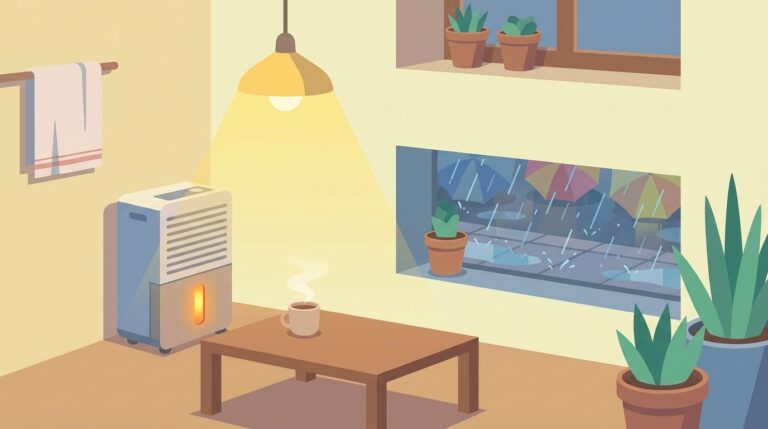
Imagine this: You’ve finally moved to Seoul! To save some rent money, you found a cozy Banjiha (semi-basement) just like you saw in the movie Parasite, or maybe an Oktapbang (rooftop room) straight out of a K-Drama rom-com. It’s summer, the monsoon season (Jangma) hits, and suddenly… your clothes won’t dry, the air feels heavier than a wet sponge, and your romantic K-Drama life feels more like a survival reality show.
In textbooks, you might learn to say, “방에 습기가 많습니다” (There is a lot of humidity in the room). But if you say that to a Korean friend over a glass of Soju, it sounds like a weather report!
Today, we are going to learn the real, raw Korean expressions to vent about the dampness, complain like a local, and survive the infamous Korean summer humidity. Let’s dive in!
Phase 2: Deep Dive into Core Expressions
Let’s learn how to complain about humidity with true Korean flavor. (B1 Level Alert: We’re moving beyond simple adjectives and using expressive verbs!)
1. 방이 너무 꿉꿉해요.
- Pronunciation: [bangi neomu kkupkkuphaeyo] (kkup-kkup sounds like the squishy sound of stepping on a wet sponge)
- Meaning: (Literal) The room is very damp. / (Real Nuance) It’s so sticky, damp, and uncomfortable in here!
- K-Culture Moment: You walk into your semi-basement after it rains all day. You turn on the light, feel the sticky floor sticking to your bare feet, and let out a deep sigh. This is the exact word you mutter to yourself.
- Editor’s Insight: 꿉꿉하다 is purely experiential. It’s not just about scientific humidity; it’s the feeling of sticky discomfort. It’s an absolute must-know word for Korean summers!
- Situation Spectrum:
[🚫 ---------------- [⚠️] -------- [✅]]
- Casual with friends: ✅
- Co-workers: ✅
- Formal/Boss: ⚠️ (You can use it, but add “요” at the end. e.g., “오늘 날씨가 참 꿉꿉하네요.”)
- 🤔 Think About It: Korean has countless onomatopoeic (sound) and mimetic (shape/feeling) words like 꿉꿉하다. Does your language have a specific word just for the “feeling of a sticky, damp room”?
2. 습기 때문에 미치겠어요.
- Pronunciation: [seupgi ttaemune michigesseoyo]
- Meaning: (Literal) I will go crazy because of the moisture. / (Real Nuance) This dampness is driving me absolutely insane!
- K-Culture Moment: You are on the phone with your best friend. Your freshly washed laundry smells like a wet dog because it won’t dry in your Banjiha.
- Editor’s Insight: Koreans love using “미치겠어요” (I’m going crazy) or “죽겠어요” (I’m dying) to exaggerate their feelings. It shows a high level of natural fluency!
- Situation Spectrum:
[🚫 -------- [⚠️] ---------------- [✅]]
- Casual with friends: ✅ (미치겠어!)
- Co-workers (close): ✅
- Formal/Landlord: 🚫 (Too aggressive. Use “습기가 너무 심해요” instead.)
- 🤔 Think About It: Why do Koreans use extreme expressions like “dying” or “going crazy” for minor inconveniences? It’s often to seek empathy and bonding through shared suffering!
3. 벽에 곰팡이가 폈어요.
- Pronunciation: [byeoge gompangiga pyeosseoyo]
- Meaning: (Literal) Mold has bloomed on the wall. / (Real Nuance) There’s mold growing on the wall.
- K-Culture Moment: The dreaded text message you have to send to your Jipjuin (집주인 – Landlord) with a photo of the dark spots in the corner of your wallpaper.
- Editor’s Insight: Notice the verb 피다 (to bloom)? Yes, the same verb used for beautiful cherry blossoms (벚꽃이 피다) is used for mold (곰팡이가 피다). The mold is literally “blossoming” on your wall!
- Situation Spectrum:
[🚫 ------------------------ [✅] --------]
- This is a factual statement, completely fine to use with your landlord or real estate agent (부동산).
Phase 3: Textbook vs Real Korean
| Situation | 📖 Textbook Korean | 🗣️ Real Korean | 💡 Why the difference? |
|---|---|---|---|
| Complaining about humidity | 습도가 높습니다. (The humidity is high.) | 아, 진짜 꿉꿉해 죽겠어. (Ah, I’m dying of stickiness.) | Koreans prefer expressive, emotional exaggerations over clinical facts in daily chats. |
| Dealing with moisture | 제습기를 사용하세요. (Please use a dehumidifier.) | 제습기 풀가동 중이에요. (The dehumidifier is running on full blast.) | “풀가동” (Full operation) is a very trendy, common slang for running an appliance non-stop. |
| Buying moisture absorbers | 습기 제거제를 사고 싶습니다. | 다이소 가서 물먹는 하마 사야 돼. (Gotta go to Daiso and buy ‘Thirsty Hippos’.) | People often use the most famous brand name (“Thirsty Hippo”) to refer to all moisture absorbers! |
Phase 4: Cultural Deep Dive
4-1. Non-verbal Communication: The “Ahyu” and the Hand Fan
When complaining about the heat or dampness, words aren’t enough. You must let out a deep sigh: “아휴…” (Ahyu…) while using your hand to fan your face or pulling your shirt collar back and forth to let air in. This physical expression instantly makes you look 100% local.
4-2. K-Culture Connection: The “Banjiha” Reality vs. The Boiler Hack
You’ve probably seen a Banjiha in Parasite. While the movie highlighted the social divide, for many university students and young workers in Seoul, living in a Banjiha or an Oktapbang is a common rite of passage due to astronomical housing deposits (보증금 – Bojeunggeum).
The Ultimate Korean Life Hack: If your room gets incredibly damp in the summer, your Korean friends will tell you: “여름인데 보일러 좀 때!” (Turn on the boiler even though it’s summer!)
Wait, heating in summer?! Yes! The Korean Ondol (floor heating) system bakes the moisture right out of the floor. You turn it on for an hour, leave the house (because it becomes an oven), and come back to a wonderfully dry, crispy room!
Phase 5: Immersive Roleplay
Scenario: It’s mid-July. You meet your Korean colleague, Min-su, at a cafe in Yeonnam-dong. It’s been pouring rain for 3 days (Jangma). You just moved into a Banjiha last month, and you are exhausted.
Characters:
– YOU: A foreign professional working in Seoul, currently losing the war against mold.
– Min-su (32): Your friendly, slightly dramatic Korean co-worker.
Dialogue:
Min-su: 비가 미친 듯이 오네요. 이사한 집은 좀 어때요?
(Biga michin deusi oneyo. Isahan jibeun jom eottaeyo?)
[It’s raining like crazy. How’s the house you moved into?]
YOU: 말도 마세요. 습기 때문에 미치겠어요.
(Maldo maseyo. Seupgi ttaemune michigesseoyo.)
[Don’t even get me started. The dampness is driving me crazy.]
Min-su: 아… 반지하라고 했죠? 힘들겠다. 방이 많이 꿉꿉해요?
(Ah… banjiharago haetjyo? Himdeulgetda. Bangi mani kkupkkuphaeyo?)
[Ah… you said it’s a semi-basement, right? That must be tough. Is the room really sticky/damp?]
YOU: 네, 옷이 하나도 안 마르고… 벽에 곰팡이가 폈어요.
(Ne, osi hanado an mareugo… byeoge gompangiga pyeosseoyo.)
[Yeah, none of my clothes are drying… and mold bloomed on the wall.]
Min-su: 헉, 진짜요? 집주인한테 연락했어요?
(Heok, jinjjayo? Jipjuinhante yeollakhaesseoyo?)
[Gasp, really? Did you contact the landlord?]
🔀 Your Turn! How should you respond?
– A) 네, 집주인이 나쁜 사람이에요. (Yes, the landlord is a bad person.)
– B) 아니요, 어떻게 말해야 할지 몰라서요.
(No, I don’t know how to say it.)
– C) 네, 제습기 풀가동 중이에요!
(Yes, my dehumidifier is on full blast! – Wait, this doesn’t answer the question!)✅ Best Choice: B — It’s honest and prompts Min-su to give you advice.
If you chose A: Koreans rarely speak this directly about someone to a colleague unless they are super close. It sounds a bit unnatural!
(Continuing with B)
Min-su: 에이, 사진 찍어서 문자로 빨리 보내요! 그리고 오늘 집에 가면 보일러 1시간만 틀어봐요. 싹 말라요!
(Ei, sajin jjigeoseo munjaro ppalli bonaeyo! Geurigo oneul jibe gamyeon boilleo 1siganman teureobwayo. Ssak mallayo!)
[Hey, take a picture and text them right away! And when you go home today, turn on the boiler for just an hour. It’ll dry completely!]
Phase 6: 10-Second Shadowing Drill
Practice this sentence to sound like a local venting about the weather. Focus on the pauses / and intonation!
😤 아휴, / 요즘 비가 와서 / 방이 너~무 / 꿉.꿉.해.요!
(Ahyu, / yojeum biga waseo / bangi neo~mu / kkup.kkup.hae.yo!)
Sigh, because it’s raining lately, the room is sooooo sticky/damp!
(Pro tip: Emphasize each syllable of 꿉꿉해요 to show your frustration!)
Phase 7: K-Culture Glossary
| Korean | Romanization | English | Contextual Meaning |
|---|---|---|---|
| 반지하 | banjiha | Semi-basement | A housing unit half above and half below street level. Cheap but prone to dampness and lack of sunlight. |
| 장마 | jangma | Monsoon season | The prolonged rainy season in Korea, usually late June to mid-July. The ultimate enemy of Banjiha residents. |
| 꿉꿉하다 | kkupkkuphaeyo | Sticky/Damp | The uncomfortable, sticky feeling of high humidity. |
| 보일러 | boilleo | Boiler | The Korean floor heating system. Used in winter for heat, and occasionally in summer to dry out damp rooms! |
| 다이소 | daiso | Daiso | The holy grail of cheap household items in Korea. Essential for buying cheap dehumidifier tools. |
Phase 8: Traveler’s Survival Kit (Guesthouse / Housing Edition)
Whether you are renting an Airbnb, a guesthouse, or your first apartment in Korea, these are survival phrases for housing issues!
🆘 Survival Phrases for Housing
– 🇰🇷 “방에 곰팡이가 생겼어요.” (bange gompangiga saenggyeosseoyo)
– Meaning: Mold grew in the room. (Polite way to tell the landlord).
– 🇰🇷 “에어컨에서 물이 떨어져요.” (eeokeoneseo muri tteoreojyeoyo)
– Meaning: Water is dripping from the AC.
– 🇰🇷 “환풍기가 고장 났어요.” (hwanpung-giga gojang nasseoyo)
– Meaning: The ventilation fan is broken.📌 Editor’s Pro Tip: The Daiso Hack
Go to any Daiso in Korea and ask: “습기 제거제 어디 있어요?” (Where are the moisture absorbers?). Buy the plastic tubs (often looking like little hippos) and put them in your closet. They will fill up with water in a week! It’s cheap and saves your clothes from ruining.
Phase 9: Think Deeper – K-Drama Romance vs. Reality
🧠 Think Deeper: Media vs Reality in Korean Housing
In K-Dramas, the Oktapbang (rooftop room) is often portrayed as a romantic place where the main characters drink beer while looking at the glittering city skyline. The Banjiha is often shown as a quirky starting point for young dreamers.
However, the reality of Korean weather (scorching, humid summers and freezing, dry winters) makes these cheap housing options incredibly physically demanding. The gap between the media’s romanticization of poverty/struggle and the actual reality of living with black mold and zero insulation is a hot topic among Korean youth today.💬 Your Turn: Have you ever experienced a gap between how your country’s housing/lifestyle is shown in movies versus the reality? Share in the comments!
Phase 10: FAQ & Troubleshooting
Q: Can I yell at my landlord to fix the mold?
Editor says: No. In Korea, the Landlord (집주인) historically holds a lot of power. Even if you are frustrated, you must use polite forms (존댓말). Sending pictures with a polite request like “사장님, 여기 곰팡이가 너무 심해서 확인 부탁드립니다” (Boss, the mold here is very severe, please check it) is the best approach. Aggression will make them uncooperative.
❌ Common Mistake #1:
Translating “My house is humid” directly to “우리 집은 습합니다.”
✅ Do this instead: While grammatically correct, it sounds like a documentary. Say “집이 꿉꿉해요” or “습기가 많아요.”
❌ Common Mistake #2:
Saying “비가 오다” (It’s raining) when referring to water dripping inside the house.
✅ Do this instead: If water is leaking into your basement, say “물이 새요” (Water is leaking). Raining inside the house sounds magical, but we know it’s a nightmare!
Phase 11: Wrap-up & Action Items
🔥 One-Liner Summary: When the Korean summer turns your room into a swamp, sigh deeply and say, “아휴, 방이 꿉꿉해서 미치겠어요!”
Action Mission:
– 🥉 Bronze (Solo): Stand in front of your mirror, sigh deeply, fan yourself, and say “꿉꿉해 죽겠네” 3 times.
– 🥈 Silver (Online): Leave a comment in Korean below describing the weather in your city right now using today’s vocabulary.
– 🥇 Gold (Real Life): If you are in Korea, go to Daiso, find the moisture absorbers, and confidently ask the staff, “제습제 어디 있어요?”
🎬 K-Culture Mission:
Watch the movie Parasite or the drama Fight for My Way. Notice the scenes where they are inside their homes. Can you spot any fans, dehumidifiers, or signs of dampness?
Phase 12: Interactive Quiz
1. It’s a rainy July day in Seoul. You walk into a cafe, shaking your umbrella. What is the most natural thing to say to your friend?
A) 오늘 한국의 습도가 80%입니다.
B) 진짜 꿉꿉해서 미치겠어.
C) 내 집에 비가 오고 있어.
2. True or False: If your Korean room is too damp in the summer, a common local trick is to turn on the Boiler (floor heating) for an hour.
3. Fill in the blank:
Your landlord asks why you want to move out. You say politely, “벽에 _________ 폈어요.” (Mold grew on the wall.)
(Answers below – highlight to read!)
- B (A is a weather report, C means it’s literally raining inside your house!)
- True! It’s the ultimate Ondol life hack.
- 곰팡이가 (gompangiga)
Frequently Asked Questions (FAQ)
Q: What does "방이 너무 꿉꿉해요." mean in Korean and how do you pronounce it?
A: In Korean, "방이 너무 꿉꿉해요." is pronounced [bangi neomu kkupkkuphaeyo] and means: (Literal) The room is very damp. / (Real Nuance) It’s so sticky, damp, and uncomfortable in here!
Q: What does "습기 때문에 미치겠어요." mean in Korean and how do you pronounce it?
A: In Korean, "습기 때문에 미치겠어요." is pronounced [seupgi ttaemune michigesseoyo] and means: (Literal) I will go crazy because of the moisture. / (Real Nuance) This dampness is driving me absolutely insane!
Q: What does "벽에 곰팡이가 폈어요." mean in Korean and how do you pronounce it?
A: In Korean, "벽에 곰팡이가 폈어요." is pronounced [byeoge gompangiga pyeosseoyo] and means: (Literal) Mold has bloomed on the wall. / (Real Nuance) There's mold growing on the wall.







