

Phase 1: Immersive Hook
Hello there! It’s your Daily Hangul Editor.
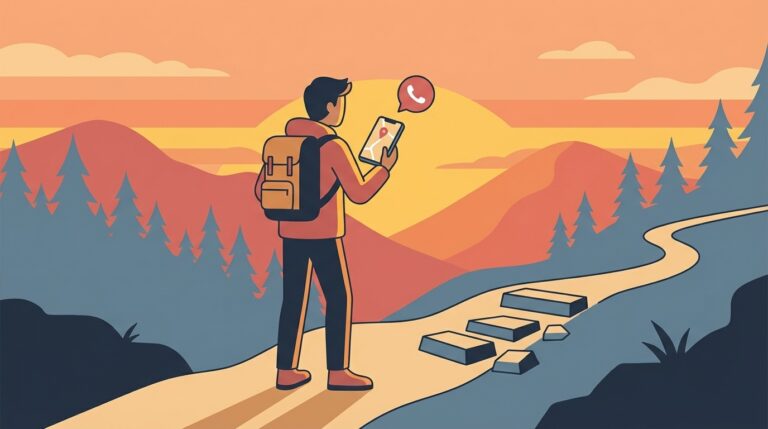
Picture this: You’re watching a classic K-Drama like Jirisan or Crash Landing on You. The protagonist is wandering through a dense, beautiful Korean mountain. Suddenly, it starts raining, the dramatic OST swells, and they slip, twisting their ankle. They shout a desperate line into the echoing valley… but wait, what exactly are they saying? Is it just a simple “Help me”?
If you live in or visit Korea, hiking (등산) is practically a national pastime. The trails of Bukhansan or Seoraksan are breathtaking, but what happens if the K-Drama scenario becomes your reality? What if you get lost or injured and need to send a distress signal? At a C1 level, simply knowing “도와주세요” (Help me) isn’t enough. You need precise, urgent, and culturally accurate language to secure the ‘Golden Time’ (골든타임) for your rescue.
This guide isn’t just about vocabulary; it’s a survival manual based on real questions from expats who found themselves in a pinch. Let’s learn how to navigate a crisis like a true local.
Phase 2: Deep Dive into Core Expressions
Let’s break down the vital expressions you need when things go south.
1. 조난을 당했어요. 현재 위치를 모르겠어요.
- Pronunciation: jonaneul danghaesseoyo. hyeonjae wichireul moreugesseoyo. (Sound-alike: jo-nan-eul dang-hess-uh-yo. hyun-jae wee-chi-reul mo-reu-gess-uh-yo)
- Meaning: Literal: “I have suffered distress. I do not know my current location.” / Real nuance: “I am stranded/lost and I don’t know where I am.”
- K-Culture Moment: This is the exact phrase K-Drama characters should use when they call the emergency center before their phone battery dramatically dies at 1%.
- Editor’s Insight: The word ‘조난’ (jonan) is advanced C1 vocabulary meaning ‘distress’ or ‘being stranded’ (usually in mountains or at sea). Using this word immediately signals to the operator that this is a search-and-rescue mission, not just a simple lost tourist situation.
- Situation Spectrum:
[🚫 절대 금지] ———— [⚠️ 주의] ———— [✅ 자유롭게]
- Casual (Lost in a mall): 🚫 (Too dramatic!)
- Formal/Emergency Call: ✅
- 🤔 Think About It: Notice the passive structure ‘당하다’ (to suffer/experience something negative). Why do Koreans use ‘당하다’ for accidents (사고를 당하다) rather than saying “I made an accident”? How does your native language frame being the victim of a circumstance?
2. 119에 신고 좀 해주세요!
- Pronunciation: il-il-gu-e singo jom hae-juseyo! (Sound-alike: ill-ill-goo-eh shin-go johm heh-joo-seh-yo!)
- Meaning: Literal: “Please do a report to 119!” / Real nuance: “Please call 119!”
- K-Culture Moment: You’ve seen this in medical K-Dramas like Hospital Playlist. Someone collapses on the street, and a doctor immediately points at a bystander shouting this exact phrase.
- Editor’s Insight: “신고하다” means to report (to the police or fire department). In Korea, you don’t “call” the police (전화하다); you “report” to them (신고하다). Also, our emergency number is 119, not 911!
- Situation Spectrum:
[🚫 절대 금지] ———— [⚠️ 주의] ———— [✅ 자유롭게]
- Everyday favor: 🚫
- Life-threatening emergency: ✅
- 🤔 Think About It: The word ‘좀’ means ‘a little’, but here it acts as a cultural buffer to soften a command, even in an emergency. Why is maintaining a shred of politeness ingrained even in panic?
3. 사람 살려! / 살려주세요!
- Pronunciation: saram sallyeo! / sallyeo-juseyo! (Sound-alike: sah-ram sal-lyuh! / sal-lyuh joo-seh-yo!)
- Meaning: Literal: “Save a person! / Please let me live!” / Real nuance: “HELP! (Life or death situation)”
- K-Culture Moment: The ultimate cliffhanger line. The villain approaches, or the hero dangles off a building edge.
- Editor’s Insight: Unlike “도와주세요” (Could you help me carry this box?), “살려주세요” is extreme. It literally means “save my life.” If you scream this in a Korean alleyway, people will come running—or immediately call the cops.
- Situation Spectrum:
[🚫 절대 금지] ———— [⚠️ 주의] ———— [✅ 자유롭게]
- Need help finding a subway: 🚫 (People will panic!)
- Real physical danger: ✅
Phase 3: Textbook vs Real Life
| Situation | 📖 Textbook Korean | 🗣️ Real Korean | 💡 Why the difference? |
|---|---|---|---|
| Calling for help | 도움을 요청합니다. (I request help.) | 도와주세요! / 살려주세요! | “요청하다” (request) is for formal emails. Emergencies require raw emotion and speed. |
| Asking a bystander | 구급차를 불러 주시겠습니까? (Would you please call an ambulance?) | 저기요, 119 좀 불러주세요! | Long honorifics waste time. “저기요” grabs attention instantly. |
| Describing an injury | 저는 다리에 부상을 입었습니다. (I have sustained an injury to my leg.) | 저 다리가 부러진 것 같아요. (I think my leg is broken.) | Everyday spoken Korean relies on simpler descriptive verbs rather than formal nouns like ‘부상’ (injury). |
Phase 4: Cultural Deep Dive
4-1. Non-verbal Communication & The “Nunchi” of Emergencies
In a crisis, Korean Nunchi (눈치 – the ability to read the room) can sometimes backfire due to the “Bystander Effect.” Because Koreans are polite and cautious about interfering in others’ business (or fearing legal complications), a crowd might just watch unless you break the barrier.
Pro Tip: Don’t just yell to the void. Point at someone specific. “거기 빨간 모자 쓰신 분, 119 신고해 주세요!” (You there in the red hat, please call 119!) This directly assigns responsibility, overriding their hesitation.
4-2. K-Travel Connection: The Lifesaving Yellow Signs
If you hike in Korea, you’ll notice small yellow signs on poles every 500 meters or so. These contain the 국가지점번호 (National Point Number). It’s a grid coordinate system. If you are stranded (조난), you don’t need to describe the trees around you. Just find the nearest yellow sign and read the 10-digit alphanumeric code to the 119 operator. They will pinpoint your exact GPS location instantly.
Phase 5: Immersive Roleplay
Scenario A: The Mountain Mishap
Setting: Saturday afternoon. You are hiking down Bukhansan. The trail is rocky and wet from yesterday’s rain. You slip and hear a sharp crack in your ankle. You can’t stand. An older Korean hiker in full neon hiking gear (an Ajussi) approaches you.
Characters:
– YOU: A foreign resident who speaks C1-level Korean, but is currently in extreme pain.
– Ajussi (Mr. Kim, 55): An experienced hiker, friendly but speaks fast, heavily accented Korean.
Dialogue:
Ajussi: 아이고, 학생! 괜찮아요? 발목 접질렸어? 😨
(aigo, haksaeng! gwaenchanayo? balmok jeopjillyeosseo?)
[Oh my, student! Are you okay? Did you sprain your ankle?]
YOU: 윽… 네, 발목을 삔 것 같아요. 너무 아파서 못 일어서겠어요. 😭
(euk… ne, balmog-eul ppin geot gatayo. neomu apaseo mot ireoseogesseoyo.)
[Ugh… Yes, I think I sprained my ankle. It hurts too much to stand up.]
Ajussi: 어떡해, 퉁퉁 부었네! 내가 업어줄까?
(eotteokhae, tungtung bueonne! naega eobeojulkka?)
[What should we do, it’s completely swollen! Should I carry you on my back?]
YOU: 아니요, 길이 가파라서 위험해요. 119에 신고 좀 해주시겠어요?
(aniyo, giri gaparaseo wiheomhaeyo. 119-e singo jom haejusigesseoyo?)
[No, the path is steep so it’s dangerous. Could you please call 119?]
Ajussi: 아차! 내 핸드폰이 방전됐네. 학생 폰 줘봐, 내가 대신 말해줄게!
(acha! nae haendeuponi bangjeondwaenne. haksaeng pon jwobwa, naega daesin malhaejulge!)
[Oops! My phone battery is dead. Give me your phone, I’ll talk to them for you!]
(🎭 Stage Direction: You hand him your phone. He dials 119, but then looks around confused.)
Ajussi: 여보세요, 119죠? 여기 북한산인데 외국인이 다쳤어요! 위치요? 어… 큰 바위 옆인데…
(yeoboseyo, 119-jyo? yeogi bukhansaninde oegugini dachyeosseoyo! wichiyo? eo… keun bawi yeopinde…)
[Hello, 119? We’re at Bukhansan and a foreigner is injured! Location? Uh… next to a big rock…]
YOU: 저기요 아저씨, 제가 저쪽에서 노란색 표지판을 봤어요!
(jeogiyo ajeossi, jega jeojjogeseo noransaek pyojipaneul bwasseoyo!)
[Excuse me sir, I saw a yellow sign over there!]
🔀 Your Turn! How should you tell him to use the location marker?
– A) “나무 번호를 알려주세요.” (Please tell them the tree number.)
– B) “국가지점번호를 불러주세요!” (Please read them the National Point Number!)
– C) “GPS를 켜주세요.” (Please turn on GPS.)✅ Best Choice: B — This shows true C1 cultural fluency! Emergency operators in mountains rely on the 국가지점번호.
⚠️ Choice C Analysis: GPS is helpful, but in mountainous terrain with weak signals, the physical National Point Number is the golden standard for Korean rescue teams.
Scenario B: Bonus – The Street Emergency
Setting: Gangnam Station Exit 10. A pedestrian suddenly collapses. People are staring.
– YOU: 거기 안경 쓰신 분! 사진 찍지 마시고 119에 신고 좀 해주세요!
(Hey, you with the glasses! Stop taking photos and please call 119!)
– Bystander: 아, 네! 알겠습니다!
(Ah, yes! Understood!)
– YOU: 저는 심폐소생술(CPR) 할게요. 자동심장충격기(AED) 좀 찾아주세요!
(I will do CPR. Please find an AED!)
Phase 6: 10-Second Shadowing Drill
Practice this until it becomes muscle memory. You won’t have time to think about grammar when adrenaline kicks in!
😤 저기요! / 사진 찍지 마시고 / 119에 / 신고 좀 / 해주세요!
(jeogiyo! / sajin jjikji masigo / il-il-gu-e / singo jom / hae-juseyo!)
[Excuse me! Stop taking photos and please call 119!]
Phase 7: K-Culture Glossary
| Korean | Romanization | English | Cultural Context |
|---|---|---|---|
| 조난 | jonan | distress/stranded | Often used in news reports when hikers go missing. |
| 119 | il-il-gu | Korean Emergency Num | Equivalent to 911. Dispatches both fire and ambulance. |
| 112 | il-il-i | Korean Police Num | Call this for crimes, theft, or assault. |
| 골든타임 | goldeun-taim | Golden Time | The crucial window of time for medical intervention. |
| 심폐소생술 | simpye-sosaengsul | CPR | Often taught in Korean military and schools. |
| 등산 | deungsan | Hiking | A massive culture in Korea, complete with specialized gear. |
Phase 8: Traveler’s Survival Kit
🆘 Survival Phrases TOP 3 for Medical Emergencies
– 🇰🇷 “영어 할 줄 아는 사람 있어요?” (yeong-eo hal jul aneun saram isseoyo?)
– 🗣️ “Is there anyone who speaks English?”
– 📍 Where to use: In a crowd when you need a translator immediately.
- 🇰🇷 “구급차 좀 불러주세요!” (gugeupcha jom bulleo-juseyo!)
- 🗣️ “Please call an ambulance!”
- 📍 Where to use: When someone is injured on the street.
🇰🇷 “알레르기가 있어요. 쇼크가 올 수 있어요.” (allereugiga isseoyo. syokeuga ol su isseoyo.)
- 🗣️ “I have an allergy. I could go into shock.”
- 📍 Where to use: At a restaurant or hospital if you have severe anaphylaxis.
📌 Editor’s Travel Note:
– Will 119 speak English? Yes! If you call 119, they have a three-way translation system with interpreters available 24/7. Don’t panic if they answer in Korean; just say “English, please.”
– Ambulance Cost: In Korea, dialing 119 and taking a public emergency ambulance to the hospital is FREE. Do not hesitate to call if it’s a true emergency.
– App to Download: ‘119신고’ app. It automatically sends your GPS location to the emergency center when you press the button.
Phase 9: Think Deeper — “One Step Further”
🧠 Language & Power: Politeness in Panic
In Korean, the hierarchy of politeness dictates almost every interaction. But what happens when you are literally dying? Interestingly, the rules bend, but rarely break completely. If a character in a K-Drama is dangling off a cliff, they drop all honorifics and scream “사람 살려!” (Save a person! – plain form). However, when asking a bystander to call an ambulance, Koreans instinctively append ‘요’ (yo) or ‘주세요’ (juseyo) even while bleeding: “119 좀 불러주세요!” This reveals a deep-seated cultural truth: even in a crisis, recognizing the social contract and showing a baseline of respect is perceived as the best way to elicit cooperation from strangers.
💬 Your Turn: Does politeness go completely out the window during an emergency in your culture? Share your thoughts in the comments!
Phase 10: FAQ & Troubleshooting
- Q: “Can I just say 911? Will they understand?”
- A: Most Koreans know 911 from Hollywood movies, so they will understand you are in an emergency. However, to get immediate action without confusion, you must say “119 (일일구)”.
- Q: “What if I don’t know my exact location on the street?”
- A: Look for the nearest convenience store (CU, GS25, 7-Eleven). Korean emergency operators can pinpoint your location if you tell them the exact branch name written on the store’s sign (e.g., GS25 강남본점).
❌ Common Mistake #1: Yelling “도와주세요!” when you are just trying to get a waiter’s attention in a busy restaurant.
✅ Do this instead: Say “저기요!” (Excuse me) or “사장님!” (Boss) to waiters. Save “도와주세요” for real trouble!
Phase 11: Wrap-up & Action Items
One-Liner Summary: In a Korean emergency, be direct, point at a specific bystander, and say “119에 신고 좀 해주세요!”
Action Mission 3 Stages:
– 🥉 Bronze (Solo): Read the shadowing drill out loud 3 times with a sense of urgency.
– 🥈 Silver (Online): Look up the Korean 119 App on your app store and see how the interface works.
– 🥇 Gold (Real Life): Next time you walk down a Korean street or hike a mountain, try to spot a AED machine, a convenience store branch name, or a yellow 국가지점번호 sign.
K-Culture Mission: Watch a medical K-Drama (like Dr. Romantic or Hospital Playlist) and listen carefully for the phrase “119에 신고해!” when an accident happens.
Have you ever faced a mini-emergency in a foreign country? How did you handle the language barrier? Let me know below! 👇
Phase 12: Interactive Quiz
1. Situational Judgment: You are hiking Seoraksan and your friend faints. What is the most effective thing to shout to a passing hiker?
– A) 죄송하지만, 제 친구가 아파요. (I’m sorry, but my friend is sick.)
– B) 저기요! 조난 당했어요! 119에 신고 좀 해주세요! (Excuse me! We’re stranded! Please call 119!)
– C) 도와주실 수 있나요? (Can you help?)
(Answer: B. It’s direct, uses exact terminology, and gives a clear command.)
2. True or False – K-Culture Edition: Calling a 119 ambulance in Korea will cost you a massive hospital bill.
(Answer: False. The 119 ambulance transport itself is free in Korea as a public service, though you will pay for hospital treatments depending on your insurance.)
3. Fill in the Blank: Yelling “_____ 살려!” means “Save me / Help!” in a life-or-death situation.
(Answer: 사람 – saram)
Frequently Asked Questions (FAQ)
Q: What does "조난을 당했어요. 현재 위치를 모르겠어요." mean in Korean and how do you pronounce it?
A: In Korean, "조난을 당했어요. 현재 위치를 모르겠어요." is pronounced [jonaneul danghaesseoyo. hyeonjae wichireul moreugesseoyo. (Sound-alike: jo-nan-eul dang-hess-uh-yo. hyun-jae wee-chi-reul mo-reu-gess-uh-yo] and means: Literal: "I have suffered distress. I do not know my current location." / Real nuance: "I am stranded/lost and I don't know where I am."
Q: What does "119에 신고 좀 해주세요!" mean in Korean and how do you pronounce it?
A: In Korean, "119에 신고 좀 해주세요!" is pronounced [il-il-gu-e singo jom hae-juseyo! (Sound-alike: ill-ill-goo-eh shin-go johm heh-joo-seh-yo!] and means: Literal: "Please do a report to 119!" / Real nuance: "Please call 119!"
Q: What does "사람 살려! / 살려주세요!" mean in Korean and how do you pronounce it?
A: In Korean, "사람 살려! / 살려주세요!" is pronounced [saram sallyeo! / sallyeo-juseyo! (Sound-alike: sah-ram sal-lyuh! / sal-lyuh joo-seh-yo!] and means: Literal: "Save a person! / Please let me live!" / Real nuance: "HELP! (Life or death situation)"







