

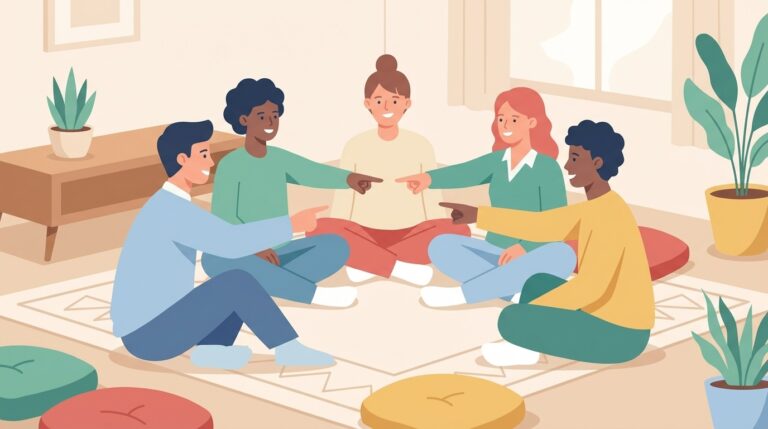
Phase 1: 공감 — 몰입형 오프닝 (Immersive Hook)
Hello! I’m the Senior Editor of Daily Hangul. Have you ever watched a Korean variety show like Running Man, New Journey to the West, or idol shows like Run BTS or Going Seventeen? If you have, you definitely know the sheer chaos that unfolds when the cast plays games.
The subtitles simply read: [Explaining the rules] or [Game starts]. But you can hear the cast chanting in a strange rhythm, clapping their hands, and shouting phrases that seem to completely change the mood of the room.
What if you get invited to a Korean university MT (Membership Training) or a company dinner (회식), and suddenly someone yells, “Let’s play a game!”? You can’t just freeze! Knowing how to explain, follow, and react to Korean game rules isn’t just about playing—it’s the ultimate icebreaker that turns you from a ‘foreign guest’ into a ‘true insider.’
Today, we’re going to look at the exact expressions used to navigate this chaotic, fun, and highly rhythmic part of K-Culture. Let’s dive in!
Phase 2: 핵심 표현 심층 분석 (Deep Dive)
1. 룰은 간단해 (The rule is simple)
- Pronunciation: Rureun gandanhae [Roo-reun gahn-dahn-hae]
- Meaning: The rule is simple (Literal) / Here’s how you play (Real nuance)
- K-Culture Moment: Picture an idol group gathered around a table. The designated MC of the group claps their hands to get attention and says this before introducing a new chaotic game.
- Editor’s Insight: We use the English loanword ‘룰’ (rule) much more often than the pure Korean word ‘규칙’ (gyuchik) when playing casual games. It sets a fast-paced, exciting tone.
- Situation Spectrum:
[🚫 절대 금지] ———— [⚠️ 주의] ———— [✅ 자유롭게]- Friends (Casual): ✅
- Co-workers (Semi-formal): ⚠️ (Add ~요: 룰은 간단해요)
- Boss/Elders (Formal): 🚫 (Better to say: 규칙을 설명해 드리겠습니다)
- 🤔 Think About It: Why do Koreans use so many English loanwords like ‘룰’ (rule), ‘팀’ (team), and ‘패스’ (pass) in casual settings instead of native words? How does it affect the ‘vibe’ of the conversation?
2. 시범 (한 번) 보여줄게 (I’ll show you a demonstration)
- Pronunciation: Sibeom (han beon) boyeojulge [Shee-beom han beon bo-yeo-jul-geh]
- Meaning: I’ll show a demonstration (Literal) / Let me show you how it’s done (Real nuance)
- K-Culture Moment: In K-Dramas, when a character is trying to teach a complex drinking game (like the Strawberry Game) to a clueless foreigner or newbie, they don’t just talk. They say this and physically act it out with a partner.
- Editor’s Insight: Korean games are highly rhythmic. Explaining with words is often useless. This phrase is your lifesaver when you want people to just watch and learn through action.
- Situation Spectrum:
[🚫 절대 금지] ———— [⚠️ 주의] ———— [✅ 자유롭게]- Friends (Casual): ✅
- Co-workers (Semi-formal): ⚠️ (Use 보여줄게요)
- Boss/Elders (Formal): 🚫 (Use 보여드리겠습니다)
- 🤔 Think About It: Korean culture is very ‘context-high’ and visually oriented. How does ‘showing rather than telling’ reflect the broader Korean communication style?
3. 걸리면 벌칙! (If you get caught, it’s a penalty!)
- Pronunciation: Geollimyeon beolchik! [Geol-li-myeon beol-cheek!]
- Meaning: If you are caught, penalty (Literal) / Whoever loses takes the penalty! (Real nuance)
- K-Culture Moment: You’ve seen this in almost every variety show. A spinning roulette, a pop-up pirate, or a Nunchi game. The stakes are high because the ‘벌칙’ (penalty) could be anything from drinking a shot of soju to getting flicked on the forehead (딱밤).
- Editor’s Insight: ‘걸리다’ usually means ‘to be caught’ or ‘to get sick’, but in games, it means ‘to be the loser’ or ‘to trigger the trap’.
- Situation Spectrum:
[🚫 절대 금지] ———— [⚠️ 주의] ———— [✅ 자유롭게]- Friends (Casual): ✅
- Co-workers (Semi-formal): ✅ (Surprisingly okay in casual team dinners!)
- Boss/Elders (Formal): 🚫
- 🤔 Think About It: Stakes and penalties are almost mandatory in Korean games, even among close friends. Why is there always a ‘loser’ taking a penalty rather than just playing for fun?
Phase 3: 교과서 vs 진짜 한국어 (Textbook vs Real Life)
| 상황 | 📖 교과서 한국어 | 🗣️ 진짜 한국어 | 💡 왜 다를까? |
|---|---|---|---|
| Starting the explanation | 게임 규칙을 설명하겠습니다. | 자, 룰 설명 들어간다! (Alright, rule explanation incoming!) | Real Korean games require hype! ‘들어간다’ creates a sense of action and excitement. |
| Asking if they understand | 이해하셨습니까? | 다들 알겠지? 모르면 맞아야지! (Everyone got it? If not, you get hit!) | A common variety-show style joke. It playfully threatens a penalty for not paying attention. |
| Suggesting a practice round | 연습 게임을 해 봅시다. | 본 게임 전에 연습 게임 한 판! (One practice round before the main game!) | Using ‘한 판’ (one round) sounds much more natural and enthusiastic than the formal ‘해 봅시다’. |
Phase 4: 문화적 맥락 — K-Culture 딥다이브 (Cultural Deep Dive)
4-1. 비언어적 요소 (Non-verbal Communication)
Rhythm is EVERYTHING in Korean variety and drinking games. You cannot just speak the words; you must match the beat. Often, the table is used as a drum (slapping the table twice, clapping hands twice). Additionally, Nunchi (눈치) is heavily involved. You must constantly read the room, make eye contact, and anticipate who will speak next to avoid speaking at the same time and taking the penalty!
4-2. K-Culture 연결 고리 (K-Culture Connection)
Variety Shows & MT Culture:
If you watch Running Man or idol reality shows, you’ll notice that games are never just games. They are a tool to break the ice and momentarily suspend the strict Korean social hierarchy. At a university MT (Membership Training) or a company 회식 (hoeshik – dinner), games allow a junior employee to (playfully) defeat their boss or a younger student to flick the forehead of a senior. The phrase “게임 시작!” (Game start!) is like a magic spell that temporarily erases age and rank, replacing them with pure survival of the fittest!
Phase 5: 실전 롤플레이 시나리오 (Immersive Roleplay)
시나리오 A: 메인 롤플레이 (Main Scenario)
Setting: Friday night, 8 PM. A smoky BBQ restaurant near Gangnam Station. Empty soju bottles are lining up. You are with three Korean friends/colleagues. The vibe is getting a bit sleepy, so someone suggests a game.
Characters:
– YOU: An international student/worker, eager to fit in but still learning the ropes.
– Minsu (32): The energetic mood-maker of the group.
– Jiwon (28): Friendly, but very competitive when it comes to games.
Dialogue:
민수: 아, 분위기 너무 처지는데? 게임 하나 하자! 배스킨라빈스 31 어때?
(Ah, bunwigiga neomu cheojineunde? Geim hana haja! Baeseukinrabinseu 31 eottae?)
[Ah, the mood is dragging. Let’s play a game! How about Baskin Robbins 31?]
YOU: 배스킨라빈스요? 아이스크림 먹으러 가요?
(Baeseukinrabinseuyo? Aiseukeurim meogeureo gayo?)
[Baskin Robbins? Are we going to eat ice cream?]
지원: ㅋㅋㅋ 아니, 게임 이름이야! 룰은 간단해.
(Kkk ani, geim ireumiya! Rureun gandanhae.)
[Lol no, it’s the name of a game! The rule is simple.]
민수: 내가 시범 한 번 보여줄게. 혼자서 숫자 1부터 3개까지 말할 수 있어.
(Naega sibeom han beon boyeojulge. Honjaseo sutja 1buteo 3gaekkaji malhal su isseo.)
[I’ll show you a demonstration. One person can say up to 3 numbers starting from 1.]
지원: 그래서 마지막에 ’31’을 말하는 사람이 지는 거야. 걸리면 벌칙은 소주 원샷!
(Geuraeseo majimage ’31’eul malhaneun sarami jineun geoya. Geolrimyeon beolchigeun soju wonsyat!)
[So the person who says ’31’ at the end loses. If you get caught, the penalty is a shot of soju!]
YOU: 아하, 오케이! 다 이해했어요.
(Aha, okei! Da ihaehaesseoyo.)
[Aha, okay! I understood everything.]
(🎭 Stage Direction: The game goes around the table. The tension builds. The number is at 29, and it’s your turn!)
민수: 28, 29!
🔀 당신의 차례! 어떻게 대답할까요? (Your turn! How will you respond?)
– A) “30, 31!” (You proudly shout the numbers)
– B) “30!” (You only say one number)
– C) “패스할게요!” (I’ll pass!)
✅ Best Choice: B — If you say 30, the next person (Jiwon) is forced to say 31 and take the penalty!
⚠️ Choice A & C 분석: If you choose A, you said 31, so YOU lose! If you choose C, there is no ‘pass’ in this game. Breaking the rule means an immediate penalty for you!
시나리오 B: K-Travel 보너스 롤플레이 (Bonus Scenario)
Setting: You are sitting by the Han River with a Korean friend. You both want Ramyeon, but no one wants to walk to the convenience store.
YOU: 라면 먹고 싶은데, 누가 사러 갈까?
(Ramyeon meokgo sipeunde, nuga sareo galkka?)
[I want to eat ramyeon, who should go buy it?]
친구: 가위바위보로 정하자! 진 사람이 갔다 오기. 콜?
(Gawibawiboro jeonghaja! Jin sarami gatda ogi. Kol?)
[Let’s decide by Rock-Paper-Scissors! The loser goes and comes back. Deal?]
YOU: 콜! 안 내면 진 거, 가위 바위 보!
(Kol! An naemyeon jin geo, gawi bawi bo!)
[Deal! If you don’t throw, you lose, rock paper scissors!]
Phase 6: 10초 섀도잉 드릴 (Shadowing Drill)
Let’s practice the classic chant to start a game. Rhythm is key here! Tap your desk as you say it.
😤 자~ / 지금부터 / 게임을 / 시작하지!
(ja~ / jigeumbuteo / geimeul / sijakaji!)
Alright~ / from now on / the game / will begin!🥺 한 번만 / 봐주세요~ / 네?
(han beonman / bwajuseyo~ / ne?)
Please let it slide / just this once~ / yeah?
Phase 7: K-Culture 미니 사전 (K-Culture Glossary)
| 한국어 | Romanization | 영어 | 맥락 설명 |
|---|---|---|---|
| 벌칙 | beolchik | Penalty | The punishment for losing a game. Could be drinking, getting flicked on the forehead, or doing a silly dance. |
| 가위바위보 | gawi bawi bo | Rock-Paper-Scissors | The universal conflict resolution tool in Korea. Used for everything from paying bills to doing chores. |
| 흑기사 / 흑장미 | heukgisa / heukjangmi | Black Knight / Black Rose | Someone who volunteers to take your drinking penalty for you (usually in exchange for a wish you must grant them later). |
| 눈치게임 | nunchi geim | Nunchi Game | A popular game where people must call out numbers in order without two people speaking at the same time. Requires ultimate room-reading skills. |
| 인디안밥 | indianbap | Indian Bap | A classic physical penalty where the loser crouches and others lightly slap their back like a drum. |
Phase 8: 여행자 서바이벌 키트 (Traveler’s Survival Kit)
Even if you’re not at a university MT, games are used daily among travelers in Korea to make decisions (like who pays the bill or who gets the biggest bed in the Airbnb).
🆘 서바이벌 표현 (Survival Phrases for Betting & Deciding)
– 🇰🇷 “내기 할까요?” (naegi halkkayo?) – Shall we make a bet?
– 🇰🇷 “가위바위보로 정해요.” (gawibawiboro jeonghaeyo.) – Let’s decide by rock-paper-scissors.
– 🇰🇷 “제가 쏠게요!” (jaega ssolgeyo!) – I’ll pay/treat you!📌 Editor’s Travel Note
– Splitting the bill (더치페이): While betting to see who pays the entire bill (몰아주기) is fun and common among friends, splitting the bill evenly is completely normal in Korea. Just say “따로 계산해 주세요” (Please calculate separately) at the counter!
Phase 9: 비판적 사고 코너 — “한 발 더 깊이” (Think Deeper)
언어와 권력 (Language & Power): The Magic of “Game Start!”
Korean society is built on a strict age and hierarchical system, reflected deeply in its honorific language (존댓말). However, variety show games and drinking games serve as a fascinating cultural loophole. During a game, especially if a “야자타임” (Yaja Time – a designated time where hierarchy is reversed or dropped) is called, a 22-year-old junior can speak entirely in informal language (반말) to their 40-year-old boss. Games act as a social equalizer, releasing the pressure of strict etiquette and allowing people to bond on a purely human level.
💬 Your Turn: Does your culture have a specific activity or situation where social ranks and rules are temporarily suspended? Share it in the comments!
Phase 10: FAQ & 오해 방지 (Troubleshooting)
Q: “Can I use informal language (반말) to an older person while explaining game rules?”
A: ⚠️ Not automatically! While games are more relaxed, you still use honorifics (존댓말) to your boss or seniors unless someone explicitly announces “야자타임” (Yaja Time – no honorifics allowed). If you’re unsure, just attach ‘~요’ to the end of your sentences (e.g., 룰은 간단해요).
Q: “What if I don’t want to drink as a penalty?”
A: ✅ That is completely fine! Korea’s drinking culture has changed massively. Just say “저는 물 마실게요” (I’ll drink water) or ask for a “흑기사” (Black Knight) to take the drink for you. No one will force you.
❌ 흔한 실수 (Common Mistake): Explaining rules too logically and formally like a textbook.
✅ 이렇게 하세요 (Do this instead): Be loud, use gestures, and just say “시범 보여줄게!” (I’ll show you!). Koreans learn games by doing, not by listening to a lecture!
Phase 11: 요약 및 액션 아이템 (Wrap-up)
🎯 One-Liner Summary: To survive Korean variety games, ditch the textbook, embrace the rhythm, and remember: “룰은 간단해, 걸리면 벌칙!” (The rule is simple, if you’re caught, penalty!)
🏃♂️ Action Mission:
– 🥉 Bronze: Stand in front of a mirror, clap your hands twice, and say “자, 룰은 간단해!”
– 🥈 Silver: Leave a comment below telling us what penalty (벌칙) you would give your friends if they lost your game.
– 🥇 Gold: Next time you need to decide something with a friend, say “가위바위보로 정하자!” (Let’s decide by Rock-Paper-Scissors) and play it Korean style.
📺 K-Culture Mission: Go watch an episode of Running Man or Run BTS. Listen carefully—can you hear them shout “벌칙” or “시범 보여줄게” before the chaos begins?
Phase 12: 퀴즈 — 인터랙티브 챌린지 (Interactive Quiz)
1. You want to teach a Korean game to your friends, but it’s hard to explain with words. What should you say?
A) 게임 규칙을 설명하겠습니다.
B) 시범 한 번 보여줄게.
C) 걸리면 벌칙이야.
2. Fill in the blank:
“The rule is simple!” -> “____은/는 간단해!”
3. True or False – K-Culture Edition:
During a game at a company dinner, you are always allowed to speak informally (반말) to your boss because it’s just a game.
(Answers: 1: B, 2: 룰 (Rule), 3: False! Unless a ‘Yaja Time’ is explicitly called, you should maintain polite language, though the vibe can be much more relaxed.)
Frequently Asked Questions (FAQ)
Q: What does "룰은 간단해 (The rule is simple)" mean in Korean and how do you pronounce it?
A: In Korean, "룰은 간단해 (The rule is simple)" is pronounced [Rureun gandanhae [Roo-reun gahn-dahn-hae] and means: The rule is simple (Literal) / Here's how you play (Real nuance)
Q: What does "시범 (한 번) 보여줄게 (I'll show you a demonstration)" mean in Korean and how do you pronounce it?
A: In Korean, "시범 (한 번) 보여줄게 (I'll show you a demonstration)" is pronounced [Sibeom (han beon] and means: I'll show a demonstration (Literal) / Let me show you how it's done (Real nuance)
Q: What does "걸리면 벌칙! (If you get caught, it's a penalty!)" mean in Korean and how do you pronounce it?
A: In Korean, "걸리면 벌칙! (If you get caught, it's a penalty!)" is pronounced [Geollimyeon beolchik! [Geol-li-myeon beol-cheek!] and means: If you are caught, penalty (Literal) / Whoever loses takes the penalty! (Real nuance)







