

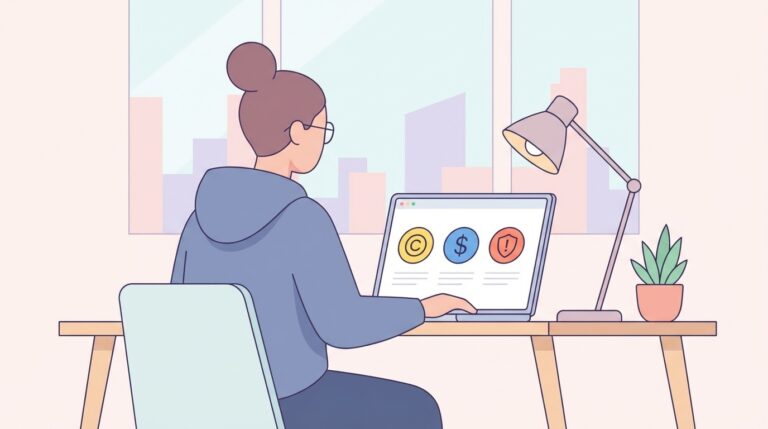
Phase 1: The Creator’s Nightmare — That Dreaded “Strike”
Hello, Daily Hangul creators! It’s your editor here.
Imagine this: You’ve spent 10 hours editing your vlog about your trip to Jeonju. The visuals are perfect—the Hanok village looks serene, the Bibimbap looks delicious. You upload it to YouTube, and boom! 🚫 “Copyright Claim.” Your video is blocked or demonetized.
In the world of K-Culture content creation, whether you are making K-Pop reaction videos or aesthetic vlogs, navigating Jeojakgwon (Copyright) is a battlefield. You’ve probably seen K-Pop fans on Twitter screaming about their accounts being suspended, or YouTubers complaining about the “Yellow Icon” (No-tak).
Today, we aren’t just learning words; we are learning survival skills for the Korean digital ecosystem. To search for safe materials on Korean platforms like Naver or to understand the terms of use, you need specific high-level vocabulary. Let’s make sure your hard work doesn’t get deleted.
Phase 2: Deep Dive — The Safe Search Keywords
Since you are C1 learners, we will look at terms that appear in legal disclaimers and search filters.
1. 상업적 이용 가능 (Sang-eop-jeok I-yong Ga-neung)
- Pronunciation: [Sang-eop-jeok I-yong Ga-neung]
- Meaning: Commercial Use Allowed
- Context: This is the “Golden Ticket” phrase. If you see this, you can monetize your video. If it says 비상업적 (Bi-sang-eop-jeok), you can use it, but you can’t make money from it.
- K-Culture Moment: Think of those “fancam” channels. Many masters allow reposting, but strictly forbid commercial use. If you sell photocards using their pictures, that’s a lawsuit waiting to happen.
- Situation Spectrum:
[🚫 Restricted] ———— [⚠️ Non-Commercial Only] ———— [✅ Commercial OK]
(Look for: 무료 (Free) vs. 유료 (Paid))- 🤔 Think About It: Why does Korean internet culture distinguish so heavily between “sharing for fun” and “sharing for profit”? It relates to the communal spirit of early Korean internet (like Cyworld), where sharing was caring, until money got involved.
2. 출처를 밝히다 / 남기다 (Chul-cheo-reul Bal-ki-da / Nam-gi-da)
- Pronunciation: [Chul-cheo-reul Bal-ki-da] + (Sounds like ‘bal-ki-da’ as in shedding light on something)
- Meaning: To reveal/state the source (Give credit)
- Editor’s Insight: Bal-ki-da implies making something clear or public. You will often see the phrase “출처 표기 필수” (Source citation required). Ignoring this is considered extremely rude, not just illegal.
- Nuance: It’s not just about the law; it’s about Sang-do-deok (Business ethics).
3. 무단 도용 (Mu-dan Do-yong)
- Pronunciation: [Mu-dan Do-yong]
- Meaning: Unauthorized theft/use
- Breakdown: Mu-dan (Without permission/notice) + Do-yong (Surreptitious use).
- K-Culture Moment: You know when a K-Drama prop photo turns out to be a stolen real-life wedding photo? Netizens go crazy accusing the production team of Mudan Doyong.
- Situation Spectrum:
[🚫 STRICTLY ILLEGAL] ———— [⚠️ Risky] ———— [✅ Licensed]
Phase 3: Textbook vs. Real Life (Digital Edition)
| Situation | 📖 Textbook / Legal Korean | 🗣️ Real Creator Slang | 💡 Context |
|---|---|---|---|
| Illegal Copying | 저작권 침해 (Copyright Infringement) | 불펌 (Bulpeom) | Short for ‘Illegal (Bul) + Scrapping/Pumping (Peom)’. Even C1 speakers should know this slang to read comments. |
| Demonetization | 수익 창출 제한 (Restriction on revenue generation) | 노란 딱지 (No-ran Ddak-ji) | Lit. “Yellow Sticker/Tag”. Refers to YouTube’s yellow monetization icon. |
| Sharing | 공유 (Sharing) | 퍼가요 (Peo-ga-yo) | Old school Cyworld slang still used to mean “I’m taking this to my page!” |
💡 Why the difference? Bulpeom carries a stronger emotional nuance of “stealing” within the community, whereas Jeojakgwon Chimhae sounds like a cold legal threat.
Phase 4: Cultural Deep Dive — The “Nunchi” of Reposting
4-1. The “Master” Culture (Homma)
In K-Pop, “Home Masters” (Homma – fansite masters with expensive cameras) own their photos. Even if you credit them (Chul-cheo), editing their photos (cropping logos, changing filters) is often a capital offense in fandom culture. This is called “2차 가공 금지” (No secondary editing).
- Critical Tip: Before you use a fan photo for your blog thumbnail, check their bio. If it says Do Not Edit, respect it. No amount of “I’m sorry” will save you from the wrath of K-Twitter.
4-2. The “Free” Trap in Korea
When searching on Naver, just because an image appears in a blog post doesn’t mean it’s public domain. Korean bloggers are very sensitive about their photos being used without permission. Unlike the US where “Fair Use” is broad, Korea is stricter.
Phase 5: Immersive Roleplay — The Editing Room Crisis
Setting: A hip shared workspace in Seongsu-dong, Friday 11 PM. You and your Korean editor, Min-su, are finalizing a video that goes live tomorrow morning.
Characters:
* YOU: A lifestyle Vlogger based in Seoul.
* Min-su: Your meticulous Korean video editor who fears copyright strikes.
(Scene: Min-su suddenly stops typing and sighs deeply.)
Min-su: 작가님, 이 배경음악 어디서 다운받으셨어요? 느낌이 좀 쎄한데요.
(Jakga-nim, i bae-gyeong-eum-ak eo-di-seo da-un-ba-deu-syeo-sseo-yo? Neu-kkim-i jom sse-han-de-yo.)
(Writer [You], where did you download this BGM? I have a bad feeling about it.)
YOU: 아, 이거요? 유튜브에서 ‘Free BGM’ 검색해서 찾았는데요?
(Ah, i-geo-yo? YouTube-e-seo ‘Free BGM’ geom-saek-hae-seo cha-ja-neun-de-yo?)
(Oh, this? I searched ‘Free BGM’ on YouTube and found it.)
Min-su: 제목에 ‘Free’라고 써있어도 설명창 잘 봐야 해요. 상업적 이용은 유료인 경우가 많거든요. 혹시 출처는 남기셨어요?
(Je-mok-e ‘Free’-ra-go sseo-i-sseo-do seol-myeong-chang jal bwa-ya hae-yo. Sang-eop-jeok i-yong-eun yu-ryo-in gyeong-u-ga man-keo-deun-yo. Hok-si chul-cheo-neun nam-gi-syeo-sseo-yo?)
(Even if it says ‘Free’, you have to check the description box. Often, commercial use is paid. Did you list the source?)
🔀 Decision Point: How do you respond?
- A) “아, 몰랐어요. 그냥 쓸까요? 설마 걸리겠어요?” (Risk it)
- B) “아차! 다시 확인해 볼게요. 만약 유료면 다른 곡으로 바꿔요.” (Safe & Professional)
- C) “저작권 없는 척하고 올리죠 뭐.” (Unethical)
✅ Best Choice: B. Creating content in Korea requires strict adherence to these rules. Option A is a shortcut to a “No-tak” (Demonetization).
YOU (Option B): 아차! 다시 확인해 볼게요. 만약 유료면 다른 곡으로 바꿔요. 저작권 침해로 신고당하면 골치 아프니까요.
(Acha! Dasi hwagin-hae bol-ge-yo. Manyak yuryo-myeon dareun gok-eu-ro bak-kwo-yo. Jeojakgwon chimhae-ro singo-dang-ha-myeon golchi a-peu-ni-kka-yo.)
(Oops! I’ll check again. If it’s paid, let’s switch songs. Getting reported for copyright infringement is a headache.)
Phase 6: 10-Second Shadowing Drill
Practice this sentence to sound like a pro creator when discussing collaborations or assets.
😤 Serious & Professional Tone:
“이 자료는 / 상업적 이용이 가능한지 / 꼭 확인해야 해요.”
(I ja-ryo-neun / sang-eop-jeok i-yong-i ga-neung-han-ji / kkok hwa-gin-hae-ya hae-yo.)
“We must check / if this material allows / commercial use.”
Phase 7: K-Culture Mini Glossary (Creator Edition)
| Korean | Romanization | Meaning | Context |
|---|---|---|---|
| 불펌 | Bulpeom | Illegal scraping | Reposting without permission. The cardinal sin of the internet. |
| 퍼가요 | Peogayo | “I’m taking this” | A nostalgic comment left when saving someone’s post (polite scrapping). |
| 2차 가공 | 2-cha Gagong | Secondary Editing | Editing an existing work (filters, crop). Often forbidden by creators. |
| 공공누리 | Gong-gong Nuri | Korea OGL | Korea Open Government License. Useful for finding free images of Korean landmarks. |
Phase 8: Traveler’s Survival Kit (Digital Nomad Edition)
Even if you aren’t a YouTuber, you might want to take photos in a “No Photography” zone in Korea (like some cafes or museums).
📸 Survival Phrase #1: Taking Photos
* 🇰🇷 “여기서 촬영해도 되나요?” (Yeogi-seo chwal-yeong-hae-do doe-na-yo?)
* 🗣️ Meaning: “Am I allowed to film/shoot here?”
* 📍 Where: Hip cafes, art galleries, shops.
* 💡 Pro Tip: Some cafes forbid commercial shooting (shopping mall models) but allow personal selfies. Clarify: “개인 소장용이에요” (It’s for personal collection/use).📌 Editor’s Note:
Be careful filming people in the background. Korea has very strict Portrait Rights (Chosang-gwon) laws. If you upload a vlog where a stranger’s face is clearly visible, they can legally ask you to take it down.
Phase 9: Think Deeper — Intellectual Property & Community
Shared Ownership vs. Individual Rights:
Historically, Korean village culture valued communal labor and sharing (Pum-a-si). In the early digital age (2000s), this translated to a culture where everyone downloaded and shared music/movies freely. However, as K-Content became a global export worth billions, the government and society shifted aggressively towards protecting IP.
🧠 Think Deeper:
Today, younger Koreans are hyper-sensitive to copyright, often “policing” others online. Do you think this strictness stifles creativity (like remix culture), or is it the only way to protect artists? How does this compare to “Fair Use” in your country?
Phase 10: FAQ & Troubleshooting
Q: Can I use K-Pop songs in my background if it’s less than 15 seconds?
A: NO. This is a myth. Technically, even 1 second is copyright infringement. However, copyright holders often allow the video to stay up but claim the revenue (ads). You won’t get paid, but the video remains.
Q: I found an image on Google Images. Can I use it?
A: Generally, no. In Korea, look for the CCL (Creative Commons License) mark. Search specifically on sites like ‘Pixabay’ using Korean keywords like ‘저작권 무료’ (Copyright free).
❌ Common Mistake: Writing “Source: Naver” or “Source: Internet”.
✅ Correction: You must link to the specific original creator or URL. “Source: Naver” is considered lazy and disrespectful.
Phase 11: Wrap-up & Mission
One-Liner: Knowing terms like ‘상업적 이용 가능’ and ‘출처 표기’ safeguards your channel and shows respect to fellow creators.
🚀 Action Mission:
* 🥉 Bronze: Go to a Korean YouTube video description and find the phrase “출처” or “Music by”.
* 🥈 Silver: Search for a photo of “Hanok Village” on a Korean site (like Naver Blog) and try to find if the user allows “Bulpeom” (usually they don’t!).
* 🥇 Gold: Post a photo on your SNS, and in the caption, practice writing the source in Korean: “사진 출처: [Name]” (Photo Source: [Name]).
🎬 K-Culture Mission:
Next time you watch a Korean variety show on YouTube (like Workman or Going Seventeen), look for the blurred logos on people’s t-shirts. That is Jeojakgwon and Sangpyogwon (Trademark) law in action!
Phase 12: Quiz — The Savvy Creator Challenge
- Situation: You found a beautiful font for your video subtitles. The license says “개인 용도만 가능 (Personal use only).” You plan to monetize your YouTube video. Can you use it?
- A) Yes, YouTube is personal.
- B) No, monetized YouTube is considered commercial.
- True or False: In Korea, if you take a video of a stranger on the subway and upload it, you might be violating their ‘Chosang-gwon’ (Portrait Rights).
- (True / False)
- Fill in the Blank: Copying content without permission is called [ ______ ]. (Hint: Starts with B)
Answer Key:
1. B. Monetization = Commercial. You need a commercial license.
2. True. Be very careful with faces in public!
3. 불펌 (Bulpeom)
Frequently Asked Questions (FAQ)
Q: What does "상업적 이용 가능 (Sang-eop-jeok I-yong Ga-neung)" mean in Korean and how do you pronounce it?
A: In Korean, "상업적 이용 가능 (Sang-eop-jeok I-yong Ga-neung)" is pronounced [Sang-eop-jeok I-yong Ga-neung] and means: Commercial Use Allowed
Q: What does "출처를 밝히다 / 남기다 (Chul-cheo-reul Bal-ki-da / Nam-gi-da)" mean in Korean and how do you pronounce it?
A: In Korean, "출처를 밝히다 / 남기다 (Chul-cheo-reul Bal-ki-da / Nam-gi-da)" is pronounced [Chul-cheo-reul Bal-ki-da] and means: To reveal/state the source (Give credit)
Q: What does "무단 도용 (Mu-dan Do-yong)" mean in Korean and how do you pronounce it?
A: In Korean, "무단 도용 (Mu-dan Do-yong)" is pronounced [Mu-dan Do-yong] and means: Unauthorized theft/use







