

Hello, Daily Hangul family! 👋
This is your Daily Hangul Senior Editor, reporting for duty.
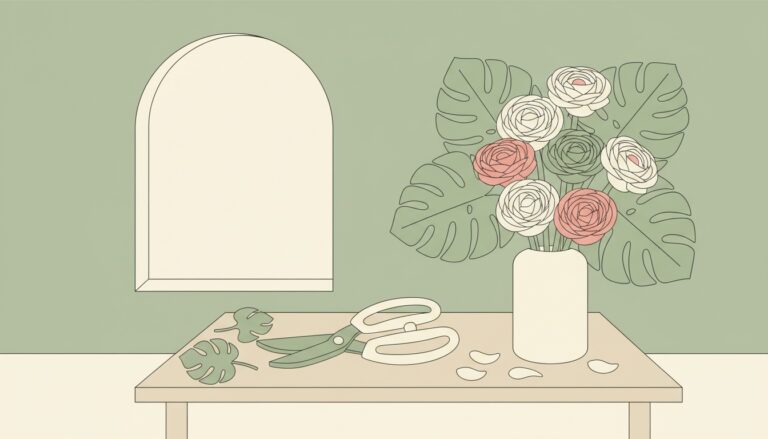
Imagine this: You’ve signed up for a chic ‘One-Day Flower Class’ (원데이 클래스) in Sinsa-dong. You are surrounded by fragrant eucalyptus and imported roses. The teacher, a stylish florist, looks at your bouquet and says, “여기는 좀 더 과감하게 잘라주세요.”
You freeze. You know ‘자르다’ means ‘to cut,’ but ‘Gwa-gam-ha-ge’? Is she angry? Is she passionate?
As a C1 learner, you’ve moved past simple survival Korean. Now, you need sophistication. In the world of Korean gardening and floristry, language isn’t just about communicating facts; it’s about describing aesthetics, texture, and feeling.
Today, we are ditching the textbook “This flower is red.” We are diving into the vocabulary that will make your teacher think, “Wow, this person has artistic soul (예술적 영혼).”
Phase 2: Core Expressions Deep Dive 🧐
Here are three expressions that will instantly upgrade your status from ‘Foreigner Student’ to ‘Aspiring Artist.’
1. 물올림 (Mul-ol-lim)
- Pronunciation:
[Mul-ol-lim](Sounds like Mool – All – Lim)- Meaning: Water uptake / Conditioning
- Editor’s Insight: Literally “raising the water.” Beginners say “물을 주다” (give water). But in a class, you talk about preparing the flower to drink water effectively. If a flower is wilting, a Korean florist will panic and say, “물올림이 잘 안 됐어요!” (The water uptake didn’t go well!)
- Situation Check: Formal & Professional. Use this when talking about the health of the cut flowers.
2. 소재 (So-jae)
- Pronunciation:
[So-jae](So – Jae as in ‘JAZZ’ without the ‘zz’)- Meaning: Foliage / Greenery / Material
- Editor’s Insight: Stop calling everything ‘flower’ (꽃) or ‘leaf’ (잎). In a design context, anything that isn’t the main flower is often referred to as ‘소재’. It implies the texture and filler elements of your arrangement.
- Situation Check: All situations. “오늘 소재가 너무 고급스러워요.” (Today’s foliage/materials are so luxurious.)
3. 얼굴을 살리다 (Eol-gul-eul sal-li-da)
- Pronunciation:
[Eol-gul-eul sal-li-da]- Meaning: To bring out the best side (Literally: To save the face)
- Editor’s Insight: This is pure Korean gold. Flowers have ‘faces’—the most beautiful angle. You don’t just ‘put’ a flower in a vase. You arrange it to ‘save its face’ so it looks at the viewer. This verb 살리다 (to revive/save/bring alive) is essential for C1 learners.
- Situation Check: Artistic context. Used when adjusting the angle of a focal flower.
Phase 3: Textbook vs. Real Life (C1 Edition) 💥
Stop sounding like a translation app. Here is how the pros speak in a Gangnam flower studio.
| Textbook / Standard (A2-B1) | Real Korean / Professional (C1) | Nuance Check |
|---|---|---|
| 이 꽃은 예뻐요. (This flower is pretty.) |
꽃의 화형이 정말 독특하네요. (The flower form is truly unique.) |
‘Pretty’ is boring. ‘Hwa-hyeong’ (Flower form) shows expertise. |
| 줄기를 짧게 자르세요. (Cut the stem short.) |
사선으로 과감하게 쳐주세요. (Strike/cut it diagonally and boldly.) |
‘치다’ (to hit/strike) is often used for pruning instead of ‘자르다’. |
| 꽃을 여기에 넣으세요. (Put the flower here.) |
여기에 포인트를 주세요. (Give a ‘point’ [focal point] here.) |
‘Point’ is the Konglish word for emphasis or focal area. |
💡 Bottom Note: In the design world, Koreans use a lot of ‘Konglish’ concepts like “밸런스” (Balance), “텍스처” (Texture), and “무드” (Mood). Don’t be afraid to mix them with high-level Korean verbs!
Phase 4: Cultural Context & Manners 🍵
1. The “Sensei” Dynamic
Even in a casual hobby class, the teacher is often addressed as 선생님 (Teacher) or even 원장님 (Director) if it’s their own shop. Showing respect for their artistic eye is crucial. If they correct your work, don’t just say “Ne.” Say, “아, 이제 훨씬 균형이 맞아 보이네요!” (Ah, now the balance looks much better!).
2. Passing the Scissors (Essential Etiquette)
When the teacher asks for the pruning shears (전지가위), never pass them with the blades facing the other person. Hold the blades yourself and offer the handle to the teacher. This is non-verbal Korean fluency.
Phase 5: Real-Life Roleplay 🎬
Setting: A one-day florist class. The student (You) is unsure about the arrangement.
🧑🏫 Teacher: 자, 메인 꽃은 센터에서 약간 비켜나게 꽂아보세요. (Okay, try placing the main flower slightly off-center.)
👤 Student: 선생님, 이렇게요? 여백의 미를 좀 살려보고 싶어서요.
(Teacher, like this? I wanted to bring out the beauty of empty space.)
🧑🏫 Teacher: 오, 좋은데요? 근데 소재를 조금만 더 낮게 쓰면 얼굴이 더 살 것 같아요.
(Oh, that’s good! But if you use the foliage a bit lower, I think the [flower’s] face will stand out more.)
👤 Student: 아! 확실히 깊이감이 생기네요. 감사합니다.
(Ah! It definitely creates a sense of depth. Thank you.)
Acting Tip: When saying “Ah!” (아!), nod your head slightly to show realization and respect.
Phase 6: 10-Second Shadowing 🗣️
Let’s practice a sentence you can use to impress everyone with your design logic. Focus on the bold syllables for natural flow.
“전체적인 / 밸런스는 좋은데, / 색감에 / 통일감을 / 좀 더 주고 싶어요.”
- Romanization: Jeon-che-jeog-in / bal-leon-seu-neun jo-eun-de, / saek-gam-e / tong-il-gam-eul / jom deo ju-go si-peo-yo.
- Translation: The overall balance is good, but I want to give a bit more unity to the color palette.
Phase 7: FAQ & Troubleshooting ⚠️
Q: Can I use idioms like “손이 야무지다” (Hand is skillful/tight) to the teacher?
* Answer: No! “야무지다” is usually used by an older/superior person praising a younger person. Telling your teacher they are “yamujida” sounds patronizing. Instead, say “금손이세요!” (You have golden hands!) or “감각이 너무 좋으세요.” (You have great sense.)
Q: How do I say “I killed my plant” politely?
* Answer: Don’t say “죽였어요” (I killed it) directly. It sounds a bit harsh. Say “초록별로 보냈어요…” (I sent it to the green star… [slang]) or more formally, “관리를 잘 못해서 시들어버렸어요.” (I couldn’t manage it well, so it withered away.)
Phase 8: Wrap-up & Mission 🎁
One-Liner Summary: Use ‘소재’ instead of ‘leaf’, ‘얼굴’ for flower heads, and always focus on ‘물올림’ (conditioning).
🔥 Your Mission: Next time you pass a flower shop or see a garden, try to identify the ‘메인 꽃’ (Main flower) and the ‘소재’ (Foliage). Post a picture on your story and caption it: “오늘 소재 조합이 참 조화롭네.” (Today’s foliage combination is quite harmonious.)
Have you ever sent a plant to the ‘Green Star’? Tell me in the comments below! 👇
Phase 9: Pop Quiz 📝
1. Which word best describes the “greenery” or “filler” used in a bouquet?
A) 풀 (Pul)
B) 야채 (Ya-chae)
C) 소재 (So-jae)
2. What is the most natural way to say “Make the flower look its best”?
A) 꽃을 화장하다 (Make up the flower)
B) 얼굴을 살리다 (Save the face)
C) 꽃을 치료하다 (Cure the flower)
3. Your teacher tells you to cut “Gwa-gam-ha-ge” (과감하게). What should you do?
A) Cut it carefully and slowly.
B) Don’t cut it at all.
C) Cut it boldly and confidently.
(Answers: 1.C, 2.B, 3.C)
Frequently Asked Questions (FAQ)
Q: What does "물올림 (Mul-ol-lim)" mean in Korean and how do you pronounce it?
A: In Korean, "물올림 (Mul-ol-lim)" is pronounced [Mul-ol-lim] and means: Water uptake / Conditioning
Q: What does "소재 (So-jae)" mean in Korean and how do you pronounce it?
A: In Korean, "소재 (So-jae)" is pronounced [So-jae] and means: Foliage / Greenery / Material
Q: What does "얼굴을 살리다 (Eol-gul-eul sal-li-da)" mean in Korean and how do you pronounce it?
A: In Korean, "얼굴을 살리다 (Eol-gul-eul sal-li-da)" is pronounced [Eol-gul-eul sal-li-da] and means: To bring out the best side (Literally: To save the face)







