

Hello! This is your Daily Hangul Editor.
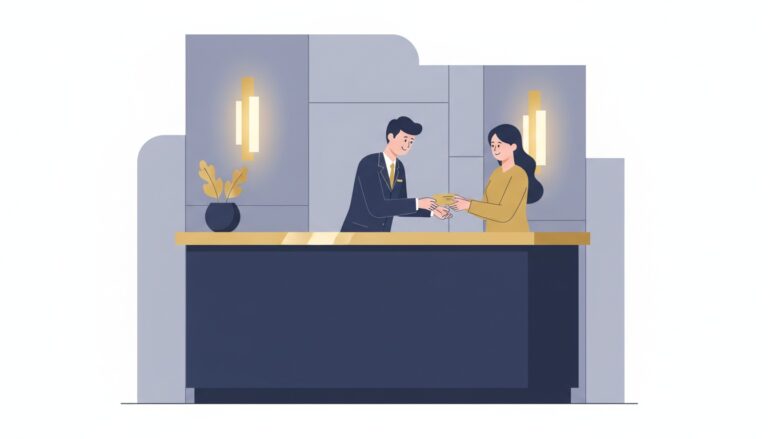
Imagine this: You are working at a high-end hotel front desk or a luxury brand store in Seoul. A guest walks in, and your system flags them as a VIP. Your heart starts racing. You know basic Korean greetings, but simply saying “안녕하세요” (Hello) feels… insufficient. You want to tell them about a secret upgrade or a special gift, but you’re afraid of sounding rude or too direct.
In the world of Korean Customer Service (CS), especially for VIPs, vocabulary choices determine the quality of your service. Using the wrong verb can turn a “Special Benefit” into a “Cheap Handout.”
Don’t worry. As a veteran tutor who has trained concierge staff, I’m here to help you upgrade your language skills from ‘Standard’ to ‘Premium.’ Let’s dive into the art of making someone feel special.
Phase 2: Deep Dive into Core Expressions
Here are the top 3 expressions you need to master for VIPs. Since you are at a B2 (Intermediate) level, we are focusing on Honorifics (존댓말) and Cushion Words (쿠션어).
1. 특별히 모시겠습니다
- Pronunciation: [Teuk-byeol-hi Mo-si-get-seum-ni-da]
(Think of ‘Mo’ like ‘More’ without the ‘re’, and ‘si’ like ‘she’.)- Meaning:
- Literal: I will attend to/serve you specially.
- Real Nuance: “We will treat you like royalty.”
- Editor’s Insight: The verb 모시다 (mosida) is the ultra-polite version of ‘to take/bring/serve’ (데리다). Use this when escorting a VIP to a lounge or announcing a personalized service. It implies you are lowering yourself to elevate them.
- Situation Check: Strictly Formal. Do not use this with friends unless you are being sarcastic!
2. 고객님만을 위해 준비했습니다
- Pronunciation: [Go-gaeng-nim-ma-neul Wi-hae Jun-bi-haet-seum-ni-da]
- Meaning:
- Literal: We prepared this for the customer only.
- Real Nuance: “This is an exclusive benefit just for you (and nobody else knows about it).”
- Editor’s Insight: The magic particle here is -만 (man), which means “only.” Combined with 위해 (for), it creates a strong sense of exclusivity. This is the ‘Golden Sentence’ when handing over a special gift or upgrade.
- Situation Check: Professional & Service settings.
3. 번거로우시겠지만
- Pronunciation: [Beon-geo-ro-u-si-get-ji-man]
(It’s a mouthful! Break it down: Beon-geo-ro / u-si / get-ji-man)- Meaning:
- Literal: It might be bothersome, but…
- Real Nuance: “I am so sorry to inconvenience you, but could you please…”
- Editor’s Insight: This is a classic Cushion Word (쿠션어). Even if you are giving them a benefit, if you need them to sign a form or show ID, you must soften the request. Direct requests can sound demanding to VIPs.
- Situation Check: Essential for B2 learners to sound fluent and polite.
Phase 3: Textbook vs. Real Life
Textbooks teach you to be correct. Real life requires you to be sensible.
| Textbook Korean (Too Direct) | Real “Service” Korean (Premium Nuance) |
|---|---|
| 이거 선물이에요. (This is a gift.) | 작은 정성을 담아 준비했습니다. (We prepared this with our sincerity/heart.) |
| 신분증 보여주세요. (Show me your ID.) | 실례지만, 신분증 확인 부탁드려도 될까요? (Excuse me, may I ask to check your ID?) |
| 여기 VIP 룸으로 가세요. (Go to the VIP room here.) | 제가 VIP 라운지로 안내해 드리겠습니다. (I will guide you to the VIP lounge personally.) |
Bottom Note: Notice how the “Real Life” versions often end with a question (~될까요?) or use humble verbs (드리다). This creates a ‘soft’ atmosphere.
Phase 4: Cultural Context & Manners
1. The Art of Non-Verbal “Nunchi” (눈치)
In VIP service, words are only 50%. The rest is attitude. When you say “고객님만을 위해 (For you only),” lower your voice slightly. It implies this is a secret privilege, making the customer feel like an insider.
2. The “Two-Hand” Rule
When presenting a voucher, card, or pointing direction, always use two hands. Or, support your right elbow with your left hand. Pointing with one finger (especially the index finger) is a huge taboo in high-end service.
Phase 5: Real-Life Scenario (Roleplay)
Setting: A hotel check-in counter. A VIP guest, Mr. Smith, is checking in.
- Staff: (Smiling warmly, two hands on the counter) 스미스 고객님, 방문해 주셔서 감사합니다.
- (Seu-mi-seu go-gaeng-nim, bang-mun-hae ju-syeo-seo gam-sa-ham-ni-da.)
- Thank you for visiting us, Mr. Smith.
- Guest: 네, 예약 확인해 주세요.
- Yes, please check my reservation.
- Staff: (Checking screen) 네, 확인되었습니다. 오늘은 특별히 스위트룸으로 업그레이드해 드리겠습니다.
- (Ne, hwa-gin-doe-eot-seum-ni-da. O-neu-reun teuk-byeol-hi seu-wi-teu-ru-meu-ro eop-geu-re-i-deu-hae deu-ri-get-seum-ni-da.)
- Confirmed. Today, we will specially upgrade you to a suite room.
- Guest: 오, 정말요? 고마워요.
- Oh, really? Thanks.
- Staff: (Handing key card with two hands) 고객님만을 위한 혜택입니다. 편안한 시간 되시길 바랍니다.
- (Go-gaeng-nim-ma-neul wi-han hye-taek-im-ni-da. Pyeo-nan-han si-gan doe-si-gil ba-ram-ni-da.)
- This is a benefit exclusively for you. I hope you have a comfortable stay.
Phase 6: 10-Second Shadowing
Let’s practice the “Premium Service” intonation. Don’t rush. Speak elegantly.
“이번 행사는 / VIP 고객님께만 / 적용되는 / 특별 혜택입니다.”
(I-beon haeng-sa-neun / VIP go-gaeng-nim-kke-man / jeo-gyong-doe-neun / teuk-byeol hye-taek-im-ni-da.)
Meaning: This event is a special benefit applied only to VIP customers.
Key Point: Pause slightly after 고객님께만 to emphasize the exclusivity!
Phase 7: FAQ & Troubleshooting
- Q: Can I use informal language (Banmal) if the VIP jokes with me first?
- A: Absolutely NO. Even if the customer says “편하게 말해요” (Speak comfortably), you must maintain the polite form (존댓말). It keeps the professional line.
- Q: Is it okay to say “수고하세요” (Work hard) to a VIP?
- A: No! “수고하세요” is usually said to someone working for you or a peer. Saying this to a VIP implies they have work to do. Instead, say “편안한 시간 보내세요” (Have a relaxing time).
Phase 8: Wrap-up & Action Item
Summary: To treat a VIP well, use the verb 모시다, emphasize exclusivity with -만, and soften requests with 번거로우시겠지만.
Daily Mission: Next time you give something to a friend (even a cup of coffee), jokingly try using the two-hand gesture and say, “널 위해 특별히 준비했어” (I prepared this specially for you). Get used to the feeling!
Question: Have you ever received “VIP treatment” in Korea? What did they say to you? Let me know in the comments!
Phase 9: Pop Quiz
1. Which verb is the most polite way to say “to serve/attend” a customer?
A) 데리다
B) 모시다
C) 주다
2. What is the best “Cushion Word” before asking a VIP to sign a paper?
A) 빨리 해주세요 (Do it quickly)
B) 안 하면 안 됩니다 (You must do it)
C) 번거로우시겠지만 (It might be bothersome, but…)
3. Which particle means “Only” to emphasize exclusivity?
A) -도 (also)
B) -만 (only)
C) -가 (subject marker)
Click to see answers
1. B) 모시다
2. C) 번거로우시겠지만
3. B) -만
Frequently Asked Questions (FAQ)
Q: What does "특별히 모시겠습니다" mean in Korean and how do you pronounce it?
A: In Korean, "특별히 모시겠습니다" is pronounced [Teuk-byeol-hi Mo-si-get-seum-ni-da] and means: Literal: I will attend to/serve you specially.
Q: What does "고객님만을 위해 준비했습니다" mean in Korean and how do you pronounce it?
A: In Korean, "고객님만을 위해 준비했습니다" is pronounced [Go-gaeng-nim-ma-neul Wi-hae Jun-bi-haet-seum-ni-da] and means: Literal: We prepared this for the customer only.
Q: What does "번거로우시겠지만" mean in Korean and how do you pronounce it?
A: In Korean, "번거로우시겠지만" is pronounced [Beon-geo-ro-u-si-get-ji-man] and means: Literal: It might be bothersome, but...







