

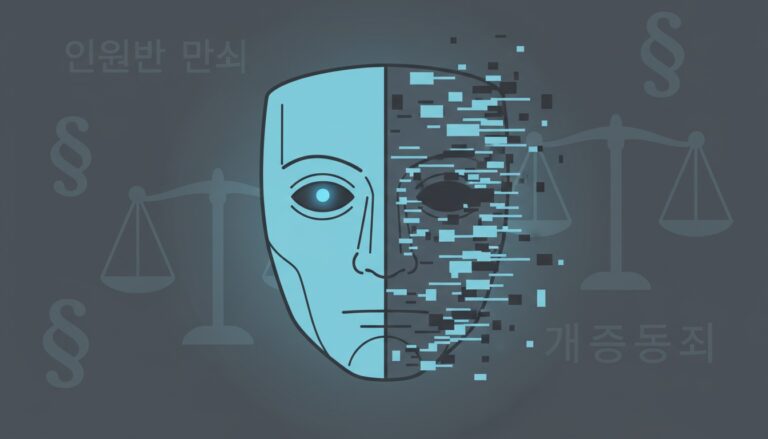
Unit: Discussing the Dark Side of Tech – Deepfakes & Ethics
Phase 1: The Hook & Introduction
Hello! This is your Senior Editor at Daily Hangul.
Welcome to the deep end of the pool. Since you are aiming for a C2 (Advanced) level, we aren’t going to talk about how to ask for the bathroom or order Bibimbap today. instead, we are diving into a topic that frequently headlines the 9 PM News in Korea: Deepfake Technology (딥페이크 기술) and Digital Ethics.
Imagine you are at a dinner party with Korean colleagues, or perhaps in a university seminar in Seoul. The topic shifts to a recent news scandal involving AI-generated fake videos. If you can only say “그거 나빠요” (That’s bad), you’re safe, but you’re invisible.
But if you can confidently discuss “legal blind spots” and “social awareness,” you stop being a “foreigner learning Korean” and start being a “thought leader participating in the conversation.”
This guide comes from real debates I’ve moderated for advanced learners who wanted to sound intellectual, persuasive, and deeply culturally aware. Let’s upgrade your vocabulary engine.
Phase 2: Deep Dive into Key Expressions
Here are the heavy-hitters. These words carry weight and authority.
1. 진위 여부 (Jinwi Yeobu)
- Pronunciation: Jin-wee Yuh-boo [Think of “Gin” like the drink + “We” / “Yuh” like ‘young’ + “Boo” like a ghost]
- Meaning: Authenticity (literally: “Truth or False status”)
- Editor’s Insight: A1 speakers ask “Is it real?” (진짜예요?). C2 speakers discuss the “determination of authenticity.” Use this when questioning if a video is a deepfake or genuine footage. It sounds incredibly professional.
- Situation Check: News analysis, business meetings, academic debates. (Too formal for chatting with a 5-year-old).
2. 사각지대 (Sagak-jidae)
- Pronunciation: Sa-gak Jee-day [“Sa” like ‘saw’ + “Gak” (sharp k) + “Jee” + “Day”]
- Meaning: Blind spot (literally: “Dead angle zone”)
- Editor’s Insight: In tech ethics, we rarely talk about physical blind spots. We talk about “Legal Blind Spots” (법적 사각지대). This is the perfect phrase to criticize how laws cannot keep up with the speed of AI development.
- Situation Check: Perfect for expressing frustration with the legal system or corporate policies.
3. 경각심 (Gyeong-gak-sim)
- Pronunciation: Gyoung-gak-shim [“Gyoung” rhymes with ‘young’ + “Gak” + “Shim”]
- Meaning: Sense of alertness / Awakening / Awareness of danger
- Editor’s Insight: You don’t just “know” about deepfakes; you need to have “alertness” toward them. We often say “경각심을 일깨우다” (to awaken a sense of alertness/alarm). It implies a moral duty to be vigilant.
- Situation Check: Editorials, public service announcements, serious warnings.
Phase 3: Textbook vs. Real Life (C2 Edition)
At the C2 level, “Textbook” isn’t wrong, but it lacks the gravitas of current affairs vocabulary.
| Textbook / Standard (B1-B2) | Real Media / Intellectual (C1-C2) | Nuance Difference |
|---|---|---|
| 가짜 영상 (Fake video) | 허위 영상물 (Fabricated video material) | “Ga-jja” sounds casual. “Heo-wi” is the legal term used in court. |
| 법을 만들어야 해요 (We need to make laws) | 제도적 장치가 시급해요 (Institutional mechanisms are urgent) | Shows you understand the structural complexity, not just the basic need. |
| 피해가 커요 (The damage is big) | 인격 살인 (Character assassination / Personality murder) | A powerful metaphor often used in Korean media to describe the impact of digital sex crimes. |
- Editor’s Note: Using words like ‘인격 살인’ (Personality Murder) is intense. Use it only when you want to emphasize the devastating psychological impact of deepfakes on victims.
Phase 4: Cultural Context & Manners (Nunchi)
1. The Weight of the Topic:
Korea has suffered significantly from digital sex crimes (e.g., the ‘Nth Room’ case). When discussing deepfakes, the tone is rarely light. Avoid making jokes about “funny” deepfakes (like swapping faces on movie stars) unless the context is clearly about entertainment. If the conversation drifts to ethics, assume a serious, somber tone.
2. The “Expert” Stance:
In Korean culture, using high-level Sino-Korean words (Hanja) like 진위 여부 or 사각지대 signals that you respect the listener’s intelligence. It changes the dynamic from “helping the foreigner speak” to “debating with an equal.”
Phase 5: Roleplay Scenario
Setting: A quiet cafe in Gangnam, discussing a recent news article with a Korean friend (Min-ji) who majors in Sociology.
Characters:
* You: An expat who follows Korean current affairs closely.
* Min-ji: Your Korean friend.
(Min-ji sighs while looking at her phone)
Min-ji: 와, 이 딥페이크 뉴스 봤어? 진짜 소름 돋는다. 뭐가 진짜인지 이제 구별도 못 하겠어.
(Wow, did you see this deepfake news? It gives me goosebumps. I can’t even distinguish what is real anymore.)
You: (Nodding seriously) 맞아요. 기술 발전 속도를 법이 못 따라가는 게 가장 큰 문제인 것 같아요.
(That’s right. I think the biggest problem is that the law can’t keep up with the speed of technological development.)
Min-ji: 그러니까 말이야. 처벌도 너무 약하고.
(Exactly. And the punishments are too weak, too.)
You: 법적 사각지대가 너무 많아서 그래요. 단순히 처벌을 강화하는 것뿐만 아니라, 플랫폼 자체의 책임을 물을 수 있는 제도적 장치가 필요해요.
(It’s because there are too many legal blind spots. We need institutional mechanisms that can hold the platforms accountable, not just strengthen punishments.)
Min-ji: (Surprised) 와… 너 나보다 한국말 더 잘한다. ‘제도적 장치’라니, 뉴스 앵커인 줄 알았어.
(Wow… You speak Korean better than I do. ‘Institutional mechanisms’? I thought you were a news anchor.)
You: (Smiling modestly) 이런 문제는 사회적 경각심을 갖는 게 중요하니까요.
(Well, it’s important to have social awareness/alertness regarding these issues.)
Phase 6: 10-Second Shadowing Drill
Read this sentence aloud to practice flow and intonation. This is a “News Anchor” style sentence.
“딥페이크 기술의 / 악용을 막기 위해서는 / 법적 규제뿐만 아니라 / 사회적 차원의 / 경각심이 필요합니다.”
Dip-pe-i-keu gi-sul-ui / a-gyong-eul mak-gi wi-hae-seo-neun / beop-jeok gyu-je-ppun-man a-ni-ra / sa-hoe-jeok cha-won-ui / gyeong-gak-sim-i pi-ryo-ham-ni-da.
(To prevent the misuse of deepfake technology, we need not only legal regulations but also awareness at a social level.)
Key Point: Pause at the /. Do not rush. Speak with a slightly lower, serious pitch.
Phase 7: FAQ & Troubleshooting
Q: Can I use the word “Deepfake” (딥페이크) in Korean?
A: Yes! It is a loanword used exactly as is. Koreans also use “AI 합성” (AI Synthesis), but “딥페이크” is the standard term in news and casual talk.
Q: Is it rude to use such difficult words like ‘사각지대’ with friends?
A: It depends on the topic. If you are talking about what to eat for lunch, yes, it’s weird. But if you are discussing news, politics, or social issues—even with close friends—using these words is perfectly natural. It shows you take the conversation seriously.
Phase 8: Wrap-up
- One-Liner: To sound like an intellectual in Korea, move beyond “It’s bad” and start discussing “Authenticity (진위 여부)” and “Blind spots (사각지대).”
- Action Mission: Next time you see a Korean news headline on Twitter or Naver about AI or scams, leave a comment (or tell yourself): “이건 법적 사각지대야.” (This is a legal blind spot.)
Phase 9: Pop Quiz
1. Which word best describes a situation where the law cannot cover a new type of crime?
A) 안전지대 (Safe zone)
B) 사각지대 (Blind spot)
C) 어린이 보호구역 (School zone)
2. How do you say “We need to be alert/aware of the danger” in a high-level context?
A) 조심해야 해요 (We must be careful)
B) 겁을 먹어야 해요 (We must be scared)
C) 경각심을 가져야 해요 (We must have a sense of alertness)
3. Which term is the formal legal equivalent of “Fake Video”?
A) 웃긴 영상 (Funny video)
B) 허위 영상물 (Fabricated video material)
C) 짝퉁 비디오 (Knock-off video)
(Answers: 1-B, 2-C, 3-B)
Frequently Asked Questions (FAQ)
Q: What does "진위 여부 (Jinwi Yeobu)" mean in Korean and how do you pronounce it?
A: In Korean, "진위 여부 (Jinwi Yeobu)" is pronounced [Jin-wee Yuh-boo [Think of "Gin" like the drink + "We" / "Yuh" like 'young' + "Boo" like a ghost] and means: Authenticity (literally: "Truth or False status")
Q: What does "사각지대 (Sagak-jidae)" mean in Korean and how do you pronounce it?
A: In Korean, "사각지대 (Sagak-jidae)" is pronounced [Sa-gak Jee-day ["Sa" like 'saw' + "Gak" (sharp k] and means: Blind spot (literally: "Dead angle zone")
Q: What does "경각심 (Gyeong-gak-sim)" mean in Korean and how do you pronounce it?
A: In Korean, "경각심 (Gyeong-gak-sim)" is pronounced [Gyoung-gak-shim ["Gyoung" rhymes with 'young' + "Gak" + "Shim"] and means: Sense of alertness / Awakening / Awareness of danger







