

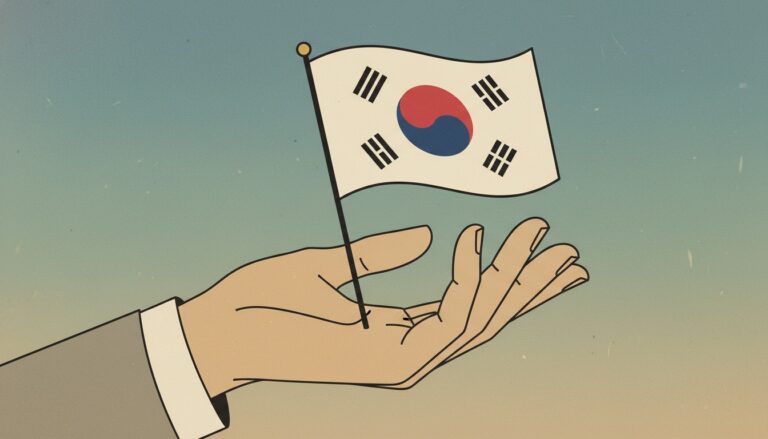
안녕하세요! This is your Senior Editor at Daily Hangul. 👋
Today, we are putting aside the K-Pop lyrics and travel guides for a moment to touch the very soul of Korea. As a C1 learner, you’ve likely mastered ordering food and making friends. But to truly understand the Korean mindset—that unique blend of Han (한, deep sorrow/resentment) and fiery resilience—you must understand the Japanese Colonial Period (일제 강점기) and the Independence Movement (독립 운동).
Have you ever watched a movie like Assassination (암살) or the drama Mr. Sunshine, and felt the subtitles didn’t quite capture the heavy, chest-tightening emotion of the actors? Or have you seen the Korean flag (Taegukgi) waving on March 1st and wondered why it feels so intense?
Today, we aren’t just learning history words; we are learning the language of resistance, memory, and identity. Let’s dive deep.
🇰🇷 Phase 1: Deep Dive into Core Expressions
At the C1 level, we move beyond simple descriptions to words that carry emotional and political weight.
1. 대한 독립 만세 (Daehan Dongnip Manse)
- Pronunciation: Dae-han Dong-nip Man-se [The ‘p’ in Dongnip is nasalized, sounding more like Dong-nim]
- Meaning: “Long live Korean Independence!” (Literal: Great Korea Independence Ten Thousand Years)
- Editor’s Insight: This isn’t just a slogan; it’s a scream of survival. You will hear this shouted in every historical drama during the March 1st Movement scenes. ‘만세 (Manse)’ literally means “ten thousand years,” implying a wish for eternal life for the nation. It’s the linguistic equivalent of raising two hands in the air—utter triumph mixed with desperation.
- Situation Check: Used in historical contexts, reenactments, or when emphatically celebrating a national sports victory (ironically derived).
2. 역사를 잊은 민족에게 미래는 없다
- Pronunciation: Yeok-sa-reul i-jeun min-jok-e-ge mi-rae-neun eop-da
- Meaning: “A nation that forgets its history has no future.”
- Editor’s Insight: If you want to sound like a true intellectual in Korea, memorize this quote. It is often attributed to the independent activist Shin Chae-ho (though debated). It is frequently used today when politicians or citizens feel that Japan has not sufficiently apologized for war crimes, or when Koreans feel they are losing their cultural roots.
- Situation Check: Formal discussions, debates, or deep conversations about politics and history.
3. 청산하다 (Cheong-san-ha-da)
- Pronunciation: Cheong-san-ha-da
- Meaning: To liquidate; to clear off (debts); to cleanse (the past).
- Editor’s Insight: You might know this word for paying off debt. But in history, it’s used in “친일 잔재를 청산하다” (to clear away the remnants of pro-Japanese collaboration). It implies a complete, painful, but necessary removal of something negative to move forward. It’s a very strong, decisive verb.
- Situation Check: News, documentaries, political debates.
⚖️ Phase 2: Textbook vs. Real Life (C1 Nuance)
At your level, you need to sound less like a Wikipedia article and more like a passionate storyteller.
| Textbook (Descriptive) | Real Life (Emotive & Narrative) |
|---|---|
| 독립운동을 했습니다. (They did independence movements.) | 조국의 독립을 위해 헌신하셨습니다. (They devoted themselves to the independence of the motherland.) |
| 사람들이 거리로 나왔습니다. (People came out to the streets.) | 거리마다 태극기 물결이 넘실댔습니다. (Every street was overflowing with waves of Taegukgi.) |
| 그는 나라를 사랑했습니다. (He loved the country.) | 그분은 나라를 되찾기 위해 목숨을 바치셨습니다. (He sacrificed his life to reclaim the country.) |
- Editor’s Note: Notice the use of honorifics (-시-) and stronger verbs (헌신하다, 바치다). When talking about independence activists (독립투사), Koreans almost always use high honorifics, even if the speaker is old.
🕯️ Phase 3: Cultural Context (The ‘Han’ & Etiquette)
1. The Weight of Silence
When visiting places like Seodaemun Prison History Hall (서대문형무소역사관) in Seoul, the vibe is solemn. If you are there with Korean friends, it is not the time for loud laughter or casual selfies. Watch their faces; many Koreans feel a vicarious pain (Han) in these spaces.
2. “Gwangbok” (광복), not just Independence
Koreans often use the word 광복 (Gwangbok) instead of just independence. It literally means “returning of the light.” It’s poetic. It signifies that the colonial period was a time of total darkness. Using Gwangbok shows you understand the metaphor.
🎬 Phase 4: Real-World Scenario
Setting: A cafe in Jongno, Seoul. Two friends are discussing a recently released movie about the independence army.
Characters:
* Mark (You): A foreigner deeply interested in Korean history.
* Ji-eun (Korean Friend): Needs to vent about the movie’s sad ending.
Dialogue:
(Mark slowly puts down his coffee mug, looking solemn)
Mark: 그 영화, 마지막 장면이 너무 먹먹하더라.
(Geu yeong-hwa, ma-ji-mak jang-myeon-i neo-mu meong-meok-ha-deo-ra.)
That movie… the last scene made me feel so choked up/numb.
Ji-eun: 맞아. 이름 없이 희생하신 분들이 그렇게 많은 줄 몰랐어.
(Ma-ja. I-reum eop-si hui-saeng-ha-sin bun-deul-i geu-reok-e man-eun jul mol-las-seo.)
Right. I didn’t realize there were so many who sacrificed themselves without leaving a name.
Mark: “역사를 잊은 민족에게 미래는 없다”는 말이 딱 떠오르더라고.
(…mal-i ttak tteo-o-reu-deo-ra-go.)
The saying “A nation that forgets its history has no future” came right to my mind.
Ji-eun: 와, 마크. 너 진짜 한국 사람 다 됐네. 그분들 덕분에 우리가 지금 이렇게 편하게 커피 마시는 거지.
(Wa, Mark. You’re practically Korean now. Thanks to them, we can drink coffee comfortably like this.)
Mark: 응, 감사한 마음을 잊지 말아야겠어.
(Eung, gam-sa-han ma-eum-eul it-ji ma-ra-ya-ges-seo.)
Yeah, we shouldn’t forget to be grateful.
🗣️ Phase 5: 10-Second Shadowing Drill
Let’s practice the intonation of a serious, reflective sentence. Focus on the pauses / to emphasize the gravity.
“우리가 누리는/ 이 자유는/ 수많은 독립운동가들의/ 피와 땀으로/ 만들어진 것입니다.”
(Uri-ga nu-ri-neun / i ja-yu-neun / su-man-eun dong-nip-un-dong-ga-deul-ui / pi-wa ttam-eu-ro / man-deul-eo-jin geot-im-ni-da.)
Meaning: “This freedom we enjoy / was created by / the blood and sweat / of countless independence activists.”
⚠️ Phase 6: FAQ & Troubleshooting
Q: Is it okay to talk about this topic with Japanese friends?
A: Proceed with caution. While history is history, the relationship between Korea and Japan is still politically sensitive. If you bring it up, frame it neutrally or focus on the Korean desire for freedom rather than just attacking Japan. However, with Korean friends, showing empathy for this period is a huge bonding moment.
Q: Can I use “만세 (Manse)” generally?
A: Yes! You can say “치킨 만세!” (Long live chicken!) or “주말 만세!” (Hooray for the weekend!). But know its roots are deep.
🎁 Phase 7: Wrap-up & Mission
One-Liner Summary:
To speak C1 Korean, you must respect the past—use words like 광복 (Light returned) and 헌신 (Devotion) to show deep empathy.
Your Mission:
Next time you pass a statue of a historical figure in Korea (like Admiral Yi or King Sejong, or an Independence activist), stop for a moment. Read the plaque. Try to find the word ‘독립’ (Independence) or ‘수호’ (Protection). Take a photo and post it with the caption: “역사를 잊지 않겠습니다.”
📝 Pop Quiz
- Which word literally means “The light returned” and refers to Korea’s Liberation Day?
a) 만세 (Manse)
b) 광복 (Gwangbok)
c) 청산 (Cheongsan) -
What is the most natural verb to use when saying we must “clear away” the negative remnants of the past?
a) 청소하다 (To clean)
b) 청산하다 (To liquidate/cleanse)
c) 잊어버리다 (To forget) -
(Fill in the blank) “________을 잊은 민족에게 미래는 없다.”
a) 역사 (History)
b) 돈 (Money)
c) 공부 (Study)
(Scroll down for answers)
Click for Answers
1. b) 광복
2. b) 청산하다 (청소하다 is for your room!)
3. a) 역사
Frequently Asked Questions (FAQ)
Q: What does "대한 독립 만세 (Daehan Dongnip Manse)" mean in Korean and how do you pronounce it?
A: In Korean, "대한 독립 만세 (Daehan Dongnip Manse)" is pronounced [Dae-han Dong-nip Man-se [The 'p' in Dongnip is nasalized, sounding more like Dong-nim] and means: "Long live Korean Independence!" (Literal: Great Korea Independence Ten Thousand Years)
Q: What does "역사를 잊은 민족에게 미래는 없다" mean in Korean and how do you pronounce it?
A: In Korean, "역사를 잊은 민족에게 미래는 없다" is pronounced [Yeok-sa-reul i-jeun min-jok-e-ge mi-rae-neun eop-da] and means: "A nation that forgets its history has no future."
Q: What does "청산하다 (Cheong-san-ha-da)" mean in Korean and how do you pronounce it?
A: In Korean, "청산하다 (Cheong-san-ha-da)" is pronounced [Cheong-san-ha-da] and means: To liquidate; to clear off (debts); to cleanse (the past).







