

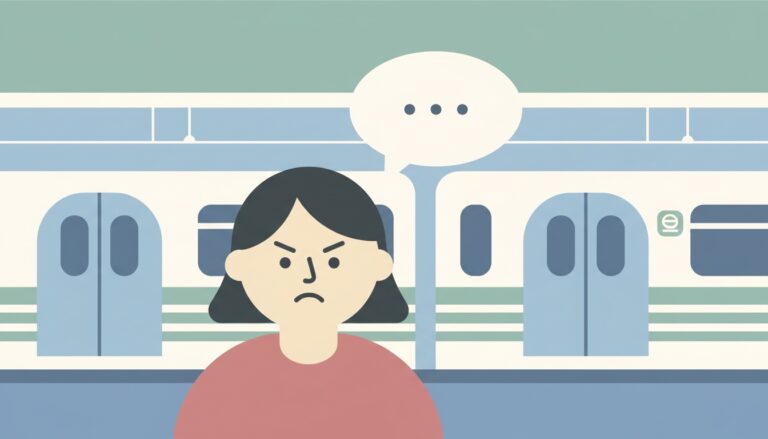
When You’re So Angry You Can’t Speak: Beyond “Hwanayo”
Introduction
Hello, this is Daily Hangul!
Have you ever been in a situation where something so ridiculous happened that your mind just went blank? Maybe someone cut in line right in front of you at a busy cafe in Seoul, or a coworker made a mistake that made absolutely no sense.
In textbooks, we learn to say “저는 화가 납니다” (I am angry). But let’s be honest—in the heat of the moment, that sounds like a robot reading a script. When you are truly stunned by audacity or absurdity, you need expressions that capture that “I can’t believe this” feeling.
📝 About Today’s Scenario:
This episode is a synthetic case study compiled from stories shared by three different Daily Hangul readers living in Korea. They all reported feeling frustrated because they didn’t know how to express “shocked anger” rather than just “madness.”
If you want to sound natural and express your feelings accurately without sounding awkward, this lesson is for you.
Summary: At a Glance
Here are today’s 3 key expressions for when you are speechless:
- 말이 안 나오네 (Mal-i an na-o-ne) – “I’m speechless.”
- 기가 막혀 (Gi-ga ma-kyeo) – “I’m dumbfounded / It’s breathtakingly absurd.”
- 어이가 없네 (Eo-i-ga eop-ne) – “This is ridiculous / I can’t believe it.”
- Safe Zone: These are mostly used as monologues (talking to yourself) or with close friends. Be careful using them directly to a stranger’s face unless you intend to confront them!
- Level: B1 (Intermediate) – Because it involves understanding nuance and emotional context beyond simple vocabulary.
Table of Contents
- Deep Dive: Core Expressions
- Textbook vs. Real Korean
- Unique Analysis: The Anger Temperature
- Role Play: The Subway Incident
- Shadowing Challenge
- FAQ & Quiz
Today’s Core Expressions Deep Dive
1. 말이 안 나오네 (Mal-i an na-o-ne)
- Meaning (English): I’m speechless / Words won’t come out.
- Literal Meaning: Words do not come out.
- Usage & Register:
- To whom: Mostly to yourself or friends.
- Tone: Frustrated mumbling.
- Tutor’s Secret Note:
- Koreans use this when the situation is so illogical that explaining it feels like a waste of energy. It’s often accompanied by a deep sigh (Ha…).
- Warning: Do not say this while smiling. It requires a serious or stunned face.
- Pronunciation Clinic:
- Note: ‘말이’ sounds like [Ma-ri] due to liaison.
- Examples:
- 너무 황당해서 말이 안 나오네. (Neo-mu hwang-dang-hae-seo mal-i an na-o-ne.)
- I’m so baffled, I’m speechless.
- 진짜 말이 안 나온다… (Jin-jja mal-i an na-on-da…)
- I seriously have no words…
- (Business) 실수한 걸 보니 말이 안 나오네요. (Sil-su-han geol bo-ni mal-i an na-o-ne-yo.)
- Seeing the mistake, I am speechless. (Polite but stern)
- 너무 황당해서 말이 안 나오네. (Neo-mu hwang-dang-hae-seo mal-i an na-o-ne.)
- Alternatives:
- 할 말을 잃었어 (Hal mal-eul il-eoss-eo) – I lost my words.
2. 기가 막혀 (Gi-ga ma-kyeo)
- Meaning (English): I’m dumbfounded / It’s absurd.
- Literal Meaning: My energy (Gi) is blocked.
- Usage & Register:
- To whom: Friends, or as an exclamation to yourself.
- Tone: High energy, shocked, sharp.
- Tutor’s Secret Note:
- Originally, this meant “breathtakingly beautiful,” but in modern conversation, it is 90% used for negative, absurd situations. It implies “I am choking from how stupid this situation is.”
- Pronunciation Clinic:
- Linking: [막혀] is pronounced as [ma-kyeo] (마켜). The ‘ㄱ’ and ‘ㅎ’ combine to make a ‘wk’ sound.
- Examples:
- 사람들이 줄을 안 서다니, 기가 막혀. (Sa-ram-deul-i jul-eul an seo-da-ni, gi-ga ma-kyeo.)
- People aren’t lining up? I’m dumbfounded.
- 가격 보고 기가 막혔어. (Ga-gyeok bo-go gi-ga ma-kyeoss-eo.)
- I was stunned after seeing the price.
- (Sarcastic) 참, 기가 막히네. (Cham, gi-ga ma-khi-ne.)
- Wow, simply unbelievable.
- 사람들이 줄을 안 서다니, 기가 막혀. (Sa-ram-deul-i jul-eul an seo-da-ni, gi-ga ma-kyeo.)
Mini Quiz: Fill in the blank (Click to see)
Q: The traffic was so bad, I was stunned.
“차가 너무 막혀서 ___ 막혀.”
Answer: 기가 (Gi-ga)
3. 어이가 없네 (Eo-i-ga eop-ne)
- Meaning (English): It’s ridiculous / Absurd.
- Literal Meaning: There is no “Eoi” (handle of a millstone).
- Usage & Register:
- To whom: Very common in conflicts or when complaining.
- Tone: Cynical, cold laugh.
- Tutor’s Secret Note:
- This is famously associated with a villain in a popular Korean movie (Veteran). When using this, you are judging the situation as “below logic.” It is stronger than just being annoyed.
- Pronunciation Clinic:
- Eo-i: Make sure to pronounce ‘Eo’ (open jaw) clearly. Don’t say “O-i” (Cucumber).
- Examples:
- 갑자기 약속을 취소하다니 어이가 없네. (Gap-ja-gi yak-sok-eul chwi-so-ha-da-ni eo-i-ga eop-ne.)
- Canceling the plan suddenly? That’s ridiculous.
- 어이없어 웃음만 나와. (Eo-i-eops-eo ut-eum-man na-wa.)
- It’s so ridiculous that I can only laugh.
- (Polite) 정말 어이가 없네요. (Jeong-mal eo-i-ga eop-ne-yo.)
- That is truly absurd.
- 갑자기 약속을 취소하다니 어이가 없네. (Gap-ja-gi yak-sok-eul chwi-so-ha-da-ni eo-i-ga eop-ne.)
Textbook vs. Real Korean
How do native speakers actually express anger compared to books?
| Context | Textbook (Book Korean) | Real Korean (Street/Casual) |
|---|---|---|
| General Anger | 화가 납니다 (Hwa-ga nam-ni-da) | 열받아 (Yeol-bad-a) (Lit: I’m receiving heat) |
| Extremely Angry | 정말 화가 나요 (Jeong-mal hwa-ga na-yo) | 뚜껑 열린다 (Ttu-kkeong yeol-lin-da) (Lit: My lid is opening / Blowing my top) |
| Speechless | 당황스럽습니다 (Dang-hwang-seu-reop-seum-ni-da) | 할 말을 잃었어 (Hal mal-eul il-eoss-eo) (Lit: I lost my words) |
💡 Situation Checklist:
* Official Meeting: Use “당황스럽습니다” (I am perplexed/flustered).
* Drinking with friends: Use “열받아” or “뚜껑 열려”.
* Monologue when shocked: Use “기가 막혀”.
🌡️ Daily Hangul’s “Anger Temperature” Analysis
In Korean, the ending of your sentence changes the “distance” and “intensity” of your anger. Let’s look at the phrase “It makes no sense” (말이 안 돼 / Mal-i an dwae).
| Level | Expression | Temperature | Nuance |
|---|---|---|---|
| Level 1 | 말이 안 돼요 (Mal-i an dwae-yo) | 😐 Cool | Polite disagreement. “That doesn’t make sense.” |
| Level 2 | 말이 안 되잖아 (Mal-i an doe-ja-na) | 😠 Warm | Argumentative. “Look, that makes no sense!” |
| Level 3 | 말이 안 된다고! (Mal-i an doen-da-go!) | 😡 Hot | Shouting. “I said it makes no sense!” |
| Level 4 | 아, 말 안 돼… (Ah, mal an dwae…) | ❄️ Icy | Giving up/Resignation. “Ugh, unbelievable…” |
| Level 5 | (Silence + Sigh) | 🌋 Volcanic | So angry that words are unnecessary. |
Real Life Scenario: Role Play
Setting: Seoul Subway Line 2 during rush hour. Someone rudely pushes you to get a seat.
Characters:
* You: A tired commuter.
* Rude Person: An older man who pushes past.
(Scene Start)
Rude Person: (Pushes hard) 비켜요! (Bi-kyeo-yo!) – Move!
You: (Shocked, stumbling) 아! 지금 뭐 하시는 거예요? (Ah! Ji-geum mwo ha-si-neun geo-ye-yo?) – Ah! What are you doing right now?
Rude Person: (Sits down and ignores you) …
You: (To yourself, loudly enough to hear) 와… 진짜 어이가 없네. (Wa… jin-jja eo-i-ga eop-ne.) – Wow… this is seriously ridiculous.
You: 사과도 안 하세요? 기가 막혀서 원… (Sa-gwa-do an ha-se-yo? Gi-ga ma-kyeo-seo won…) – You aren’t even apologizing? I’m so dumbfounded…
Rude Person: (Glances away, pretending not to hear)
You: (Shaking head) 말이 안 나오네, 진짜. (Mal-i an na-o-ne, jin-jja.) – I’m speechless, seriously.
(Scene End)
💡 Culture Tip:
In Korea, public confrontations can get messy. Often, people will mutter these phrases (monologue style) loud enough for the rude person to hear, rather than starting a direct fight. It’s a way of “shaming” them without physical altercation.
🗣️ Shadowing Challenge
Try saying this sentence 3 times. Imagine the subway situation above!
“Wow, they just left without apologizing? I’m absolutely speechless.”
Korean: 와, 사과도 없이 그냥 가요? 기가 막혀서 말이 안 나오네.
Romanization: Wa, sa-gwa-do eops-i geu-nyang ga-yo? Gi-ga ma-kyeo-seo mal-i an na-o-ne.
Checklist:
* [ ] 1st Try (Slowly, checking pronunciation)
* [ ] 2nd Try (Focus on the emotion – frown your eyebrows!)
* [ ] 3rd Try (Natural speed, like a native)
🔑 Pronunciation Key:
Make sure to link [없이] as [eop-si]. Don’t stop between the blocks!
FAQ: Frequently Asked Questions
Q1: Can I use these phrases to my boss?
A: Absolutely NOT! Even if you add “-yo” (e.g., 기가 막히네요), it implies you are judging the situation negatively. Using this to a superior suggests you think they are being ridiculous. Use “당황스럽습니다” (I am flustered) instead.
Q2: Is “Mi-chyeoss-eo” (Crazy) the same as these?
A: “Michyeosseo” (미쳤어) is much stronger and more aggressive. It attacks the person. “Giga makyeo” or “Eoi-ga eopne” attacks the situation. The latter is safer.
Conclusion & Today’s Mission
One Line Summary:
When you are shocked by rudeness or absurdity, skip “Hwaynayo” and mutter “Giga makyeo” or “Eoi-ga eopne” to sound like a local.
🚀 Today’s Mission:
Next time you watch a K-Drama, listen for when a character sighs and says “기가 막혀” or “어이가 없네.” Write down the drama name and situation in your notes!
💬 Question for You:
What was the most “ridiculous” (Eo-i-ga eop-ne) moment you experienced in your country? Tell me in the comments!
Final Quiz
Click to test your knowledge!
1. Which expression fits best when someone steals your taxi in front of you?
A) 행복해 (Haeng-bok-hae)
B) 어이가 없네 (Eo-i-ga eop-ne)
C) 감사해요 (Gam-sa-hae-yo)
2. What is the literal meaning of “Giga makyeo”?
A) My energy flow is blocked.
B) My head hurts.
C) My stomach is full.
3. Fill in the blank: “I’m so shocked, words won’t come out.”
= “너무 놀라서 ___이 안 나오네.”
Answers:
1. B
2. A
3. 말 (Mal)
Frequently Asked Questions (FAQ)
Q: What does "말이 안 나오네 (Mal-i an na-o-ne)" mean in Korean and how do you pronounce it?
A: In Korean, "말이 안 나오네 (Mal-i an na-o-ne)" is pronounced [see lesson guide] and means: Words do not come out.
Q: What does "기가 막혀 (Gi-ga ma-kyeo)" mean in Korean and how do you pronounce it?
A: In Korean, "기가 막혀 (Gi-ga ma-kyeo)" is pronounced [see lesson guide] and means: My energy (Gi) is blocked.
Q: What does "어이가 없네 (Eo-i-ga eop-ne)" mean in Korean and how do you pronounce it?
A: In Korean, "어이가 없네 (Eo-i-ga eop-ne)" is pronounced [see lesson guide] and means: There is no "Eoi" (handle of a millstone).







