

Visiting the DMZ? 3 Phrases to Keep You Safe & Polite 🇰🇷
Introduction
Hello, this is Daily Hangul!
Are you planning a trip to the DMZ (Demilitarized Zone)? It’s one of the most unique travel destinations in the world—a place where history, tension, and hope for peace coexist.
However, unlike a casual cafe hop in Seoul, a DMZ tour comes with strict rules.
⚠️ Synthetic Case Study (Based on common learner experiences):
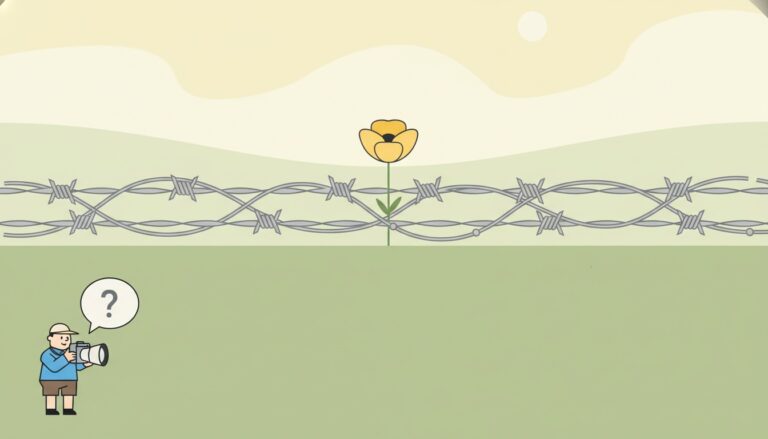
Let’s imagine a traveler named “Alex.” Alex was at a checkpoint and saw a soldier looking very cool. Without asking, Alex raised a camera to snap a photo. Suddenly, a soldier shouted something loud in Korean! Alex froze, thinking he was in serious trouble.
What the soldier likely said was a standard warning, but because of the tone and speed, it sounded scary. In high-security areas, knowing what is being said—and how to ask for permission—isn’t just about language skills; it’s about safety and respect.
Textbooks teach you “May I take a picture?”, but they don’t teach you the urgent nuance of a security guard’s warning. Today, let’s learn the real survival Korean for your DMZ tour.
At a Glance: Today’s Menu
- Key Phrases: Asking for photo permission, Understanding ID checks, Warnings.
- Best For: DMZ tours, museums, historical sites, and strict security areas.
- Level: C1 Utility (Simple grammar, but critical situational awareness).
Quick Check:
1. 사진 찍어도 돼요? (Can I take a photo?)
2. 신분증 보여주세요. (Please show your ID.)
3. 여기 들어가면 안 돼요. (You cannot enter here.)
Table of Contents
- Today’s Core Expressions: Deep Dive
- Textbook vs. Real Korean
- Analysis: The “Warning” Thermometer
- Real-Life Role Play: At the Checkpoint
- Shadowing Challenge
- FAQ & Wrap-up
Today’s Core Expressions: Deep Dive
1. 사진 찍어도 돼요?
- Romanization: Sajin jjigeodo dwaeyo?
- Meaning: Can I take a photo?
Usage & Register:
* Who: To a tour guide, soldier (if approachable), or staff.
* Style: 해요체 (Haeyo-che) – Polite informal. Friendly but respectful.
Tutor’s Secret Note 🤫:
In the DMZ, never assume. Even if others are doing it, ask first. If you point your camera at a guard post (GOP) without asking, you might hear a sharp whistle or a shout. Asking this phrase before lifting your camera shows you are a “sensible tourist.”
Pronunciation Clinic:
* 찍어도 (jjigeodo): The double consonant ㅉ (jj) needs strong tension. It sounds like a sharp ‘J’.
* Linking: It flows like [Sa-jin jji-geo-do dwae-yo].
Examples:
1. 여기서 사진 찍어도 돼요? (Yeogiseo sajin jjigeodo dwaeyo?)
* Can I take a photo here?
2. 군인은 찍으면 안 돼요. (Gunineun jjigeumyeon an dwaeyo.)
* You shouldn’t take photos of soldiers.
3. 쪽은 사진 촬영 금지예요. (Ijjogeun sajin chwaryeong geumjiyeyo.)
* Photography is prohibited on this side.
Alternatives:
* More Formal: 사진 촬영 가능한가요? (Sajin chwaryeong ganeunghangayo?)
* Casual (Friends only): 사진 찍어도 돼? (Sajin jjigeodo dwae?)
Mini Quiz (Click to see answer)
Fill in the blank: “______ 찍어도 돼요?” (Can I take a photo?)
Answer: 사진 (Sajin)
2. 신분증 / 여권
- Romanization: Sinbunjeung / Yeogwon
- Meaning: ID Card / Passport
Usage & Register:
* Who: You will hear this from soldiers or guides at checkpoints.
* Style: Nouns used in requests.
Tutor’s Secret Note 🤫:
At the DMZ, you must have your passport. The soldiers check everyone on the bus. When they board, they will say “신분증(Sinbunjeung)” or “여권(Yeogwon).” Have it open to the photo page to save time. If you fumble, the whole bus waits!
Pronunciation Clinic:
* 신분증 (Sinbunjeung): ㄴ ends the first two syllables. Make sure your tongue touches the roof of your mouth.
* 여권 (Yeogwon): 권 often sounds closer to kkwon (tensed) in natural speed.
Examples:
1. 신분증 미리 준비해 주세요. (Sinbunjeung miri junbihae juseyo.)
* Please prepare your ID in advance.
2. 여권 보여주세요. (Yeogwon boyeojuseyo.)
* Please show me your passport.
3. 여권 없으면 못 들어가요. (Yeogwon eopseumyeon mot deureogayo.)
* You can’t enter without a passport.
3. 만지지 마세요 / 들어가지 마세요
- Romanization: Manjiji maseyo / Deureogaji maseyo
- Meaning: Please do not touch / Please do not enter
Usage & Register:
* Who: Warnings found on signs or spoken by guides.
* Style: (으)세요체 – Polite command/request.
Tutor’s Secret Note 🤫:
While “Maseyo” is polite, it is a firm command. In the DMZ, landmines (Jire) are a real history. “Don’t enter” isn’t just a suggestion; it’s a safety rule. If you hear “Maseyo!” stop whatever you are doing immediately.
Pronunciation Clinic:
* 지 마세요 (ji maseyo): Do not stress the ‘ji’. Stress the ‘Ma’.
Examples:
1. 전시물은 만지지 마세요. (Jeonsimureun manjiji maseyo.)
* Please do not touch the exhibits.
2. 선 밖으로 나가지 마세요. (Seon bakkeuro nagaji maseyo.)
* Don’t go outside the line.
3. 위험하니까 들어가지 마세요. (Wiheomhanikka deureogaji maseyo.)
* It’s dangerous, so please do not enter.
Textbook vs. Real Korean
Situation: You are standing near a restricted line.
| Type | Expression | Nuance |
|---|---|---|
| 📘 Book Korean | 출입 금지 구역입니다. (Churip geumji guyeogimnida.) |
Very formal, written style. Sounds like a robotic announcement. |
| 🗣️ Real Korean | 여기 들어오시면 안 돼요! (Yeogi deureoosimyeon an dwaeyo!) |
Urgent, spoken, human. This is what a guard will actually shout to stop you. |
Checklist:
* Reading Signs: Look for “금지” (Geumji – Prohibited).
* Listening to People: Listen for “안 돼요” (An dwaeyo – Not allowed).
Unique Analysis: The “Restriction” Tone Thermometer 🌡️
How serious is the warning? Let’s check the temperature.
| Level | Expression | Romanization | Vibe | Response |
|---|---|---|---|---|
| Lv 1 (Warm) | 조심하세요. | Josimhaseyo. | “Be careful.” (Caring) | “Ne, gamsahamnida.” |
| Lv 3 (Firm) | 하지 마세요. | Haji maseyo. | “Please don’t do that.” (Instruction) | Stop immediately. |
| Lv 5 (Cold/Strict) | 절대 안 됩니다. | Jeoldae an doemnida. | “Absolutely not allowed.” (Zero tolerance) | Do not argue. |
Insight: At the DMZ, if a soldier uses Lv 5, it is a security matter. Apologize briefly (죄송합니다 – Joesonghamnida) and comply.
Real-Life Role Play: At the Imjingak Checkpoint 🚧
Situation: A tourist (Mark) is on a bus approaching the checkpoint. A soldier enters the bus.
Soldier: (Loudly) 여권 준비해 주세요. 모자 벗어 주세요.
(Yeogwon junbihae juseyo. Moja beoseo juseyo.)
Please prepare your passports. Please take off your hats.
Mark: (Whispering to Guide) 여기서 사진 찍어도 돼요?
(Yeogiseo sajin jjigeodo dwaeyo?)
Can I take a photo here?
Guide: 아니요, 지금은 안 돼요. 검문 중이에요.
(Aniyo, jigeumeun an dwaeyo. Geommun jungieyo.)
No, not right now. We are under inspection.
Soldier: (Checking Mark’s passport) 감사합니다.
(Gamsahamnida.)
Thank you.
Mark: 감사합니다.
(Gamsahamnida.)
Thank you.
💡 Culture Tip:
Removing hats and sunglasses during an ID check is standard procedure to allow the soldier to verify your face against the passport photo quickly.
Shadowing Challenge 🗣️
Scenario: Asking permission before clicking the shutter.
Script:
“저기요, 여기서 사진 찍어도 돼요?”
(Jeogiyo, yeogiseo sajin jjigeodo dwaeyo?)
Excuse me, can I take a photo here?
Checklist:
– [ ] Did you raise your intonation at the end (yo?)?
– [ ] Did you pronounce 찍 strongly as jjik?
– [ ] Repeat 3 times!
FAQ (Frequently Asked Questions)
Q1: Can I wear anything to the DMZ?
A: Not exactly. Some strict tours (like JSA) have a dress code (복장 규정 – Bokjang gyujeong). Avoid ripped jeans, camouflage, or revealing clothes. “단정한 옷” (Danjeonghan ot – tidy clothes) is best.
Q2: A soldier shouted at me. Was he angry?
A: Likely not! In the military, projecting your voice loud and clear is standard training. Don’t take it personally. Just say “죄송합니다” (Joesonghamnida) if you made a mistake.
Wrap-up & Mission
Summary: Today we learned how to ask for photo permission (찍어도 돼요?), handle ID checks (신분증), and understand warnings (하지 마세요).
Today’s Mission:
Next time you are in a museum or a strict area (even in your own country), imagine asking the guard in Korean: “여기서 사진 찍어도 돼요?”
Question for you:
Have you ever been scolded for taking a photo somewhere? Tell me your story in the comments!
Final Quiz 📝
1. Which phrase is best to ask “Can I take a photo?”
A) 사진 주세요 (Sajin juseyo)
B) 사진 찍어도 돼요? (Sajin jjigeodo dwaeyo?)
C) 사진 안 돼요 (Sajin an dwaeyo)
2. If a sign says “출입 금지 (Churip Geumji)”, what does it mean?
A) Welcome
B) Photo Zone
C) No Entry
3. Fill in the blank: “______ 보여주세요.” (Please show me your passport.)
A) 여권 (Yeogwon)
B) 김밥 (Gimbap)
C) 버스 (Beoseu)
Click to reveal answers
1. B
2. C
3. A
Frequently Asked Questions (FAQ)
Q: What does "사진 찍어도 돼요?" mean in Korean and how do you pronounce it?
A: In Korean, "사진 찍어도 돼요?" is pronounced [see lesson guide] and means: Can I take a photo?
Q: What does "신분증 / 여권" mean in Korean and how do you pronounce it?
A: In Korean, "신분증 / 여권" is pronounced [see lesson guide] and means: ID Card / Passport
Q: What does "만지지 마세요 / 들어가지 마세요" mean in Korean and how do you pronounce it?
A: In Korean, "만지지 마세요 / 들어가지 마세요" is pronounced [see lesson guide] and means: Please do not touch / Please do not enter







